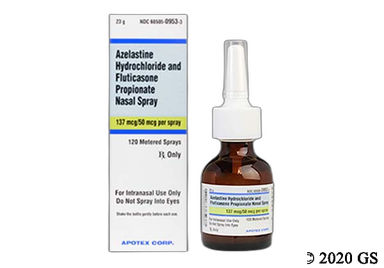
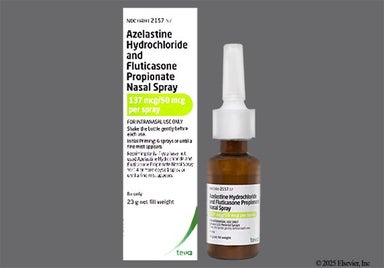
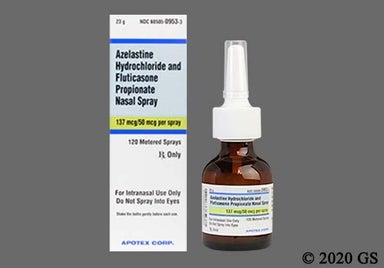
Dymista is a combination nasal spray containing azelastine (an antihistamine) and fluticasone (a corticosteroid). It's used by people ages 6 years and older to treat nasal allergy symptoms, such as runny, stuffy, or itchy nose. The typical dose is to spray one spray into each nostril twice per day. Side effects aren't common, but include headache and a bad taste in the mouth. Dymista (azelastine / fluticasone) is available as both brand-name and generic medications.
Side effects of Dymista (azelastine / fluticasone)
The following side effects may get better over time as your body gets used to the medication. Let your healthcare provider know immediately if you continue to experience these symptoms or if they worsen over time.
Azelastine in Dymista (azelastine / fluticasone) might make you feel more sleepy. It's best to avoid drinking alcohol while taking this medication doing so can worsen this side effect. Also, don't drive or do any activities that need a lot of focus and attention until you know how this medication makes you feel.
Don't use other over-the-counter intranasal steroids or antihistamines while you're taking Dymista (azelastine / fluticasone). Doing so raises your risk for side effects, including headaches and nosebleeds.
Store Dymista (azelastine / fluticasone) at room temperature in the original container to protect it from light.
You'll need to prime each new bottle of Dymista (azelastine / fluticasone) before you can use it. To do so, shake the bottle well and spray 6 times into the air away from your face, until you see a fine mist. If you haven't used Dymista (azelastine / fluticasone) for 2 weeks, you'll need to prime the bottle again by spraying 2 sprays into the air.
Before using Dymista (azelastine / fluticasone), blow your nose to clear your nostrils. This makes sure there's nothing blocking the medication's way when it's sprayed into the nose.
Shake the Dymista (azelastine / fluticasone) bottle well before each dose. Hold 1 nostril closed with a finger and insert the spray pump tip into the other nostril, pointing the tip away from the center of your nose. Tilt your head slightly forward, keep the medication bottle upright, and press to release a spray into your nose. Breathe out through your mouth. The repeat on the other side.
After using Dymista (azelastine / fluticasone), avoid blowing your nose for at least 15 minutes so the medication can stay in your nose. Also, avoid tiling your head back right away because this can cause the medication to leak into your throat.
Clean the spray pump tip at least once a week to prevent it from getting clogged. Remove the pump tip and wash it under warm tap water and allow to dry before putting it back on the bottle. You'll need to prime your Dymista (azelastine / fluticasone) bottle again before you use it.
Risks and warnings for Dymista (azelastine / fluticasone)
Dymista (azelastine / fluticasone) can cause some serious health issues. This risk may be even higher for certain groups. If this worries you, talk to your doctor or pharmacist about other options.
Sleepiness
People who took Dymista (azelastine / fluticasone) have reported sleepiness. Don't drive or do anything dangerous that requires a lot of focus or attention until you know how this medication makes you feel. It's best to avoid drinking alcohol while using this medication because doing so can worsen this side effect.
Nose bleeds, discomfort, and injury
Risk factors: Nasal surgery | Injury to the nose | Ulcers in the nose
Using Dymista (azelastine / fluticasone) can sometimes cause nose bleeds. Some people also had damage in the nose after using this medication. This damage can sometimes lead to serious injuries to the bony cartilage between your nostrils (the nasal septum). Using Dymista (azelastine / fluticasone) can also make it more difficult for any injuries or damage to the inside of the nose to heal.
Contact your primary care provider if you experience painful discomfort in your nose, have regular nosebleeds, hear a whistling sound from your nose when you breathe, or have painful sores in your nose as you use Dymista (azelastine / fluticasone).
Risk of infection
Risk factors: Using Dymista (azelastine / fluticasone) for several months | Taking other medications that weakens your immune system | Currently have an infection
Taking corticosteroids, like fluticasone in Dymista, can raise your risk for getting an infection. These infections can include fungal infections in the nose or throat area, which are more likely to happen when you use corticosteroid nasal sprays for several months. Other possible infections include viral infections like chickenpox. Once you develop an infection, you might have a harder time recovering from your illness.
Although there haven't been any reports of serious infections linked directly with Dymista (azelastine / fluticasone), be on the lookout for any signs of infection while you're using this medication. Stop using Dymista (azelastine / fluticasone) and contact your primary care provider if you have a fever, pain, aches, or chills, pain while swallowing, redness in the mouth, or white patches in your nose or throat. You might need to stop using Dymista (azelastine / fluticasone) and take prescribed medication to treat the infection.
Altered stress hormone levels
Risk factors: Using Dymista (azelastine / fluticasone) for a long time | Using too much of Dymista (azelastine / fluticasone)
Using Dymista (azelastine / fluticasone) for long periods of time or using too much of it can cause more medication to get absorbed into the body. This can affect your body in different ways since corticosteroids like fluticasone in Dymista act similarly to cortisol, a natural stress hormone made by your body.
When your body absorbs more of the medication than intended, you might experience symptoms of too much cortisol. These symptoms include weight gain around your gut, fatty deposits around your face and upper back, and fat loss around the arms and legs.
On the other hand, fluticasone can also cause your body to make less natural cortisol. Symptoms of low cortisol include muscle weakness, loss of appetite, nausea, and vomiting.
If either problem is severe enough, you might need additional medical treatment. Use Dymista (azelastine / fluticasone) only as directed and don't use more than the maximum number of sprays per day. Use the lowest dose possible for the shortest amount of time.
Delayed growth in children
Risk factors: Using higher-than-recommended doses of Dymista (azelastine / fluticasone)
Corticosteroids like fluticasone in Dymista might cause slower growth in children. To lower this risk, children should use the lowest dose of Dymista (azelastine / fluticasone) for the shortest amount of time needed to treat their symptoms. Discuss with your child's pediatrician or primary care provider if you're concerned about how Dymista (azelastine / fluticasone) might affect your child's growth. Speak with them about whether this medication is right for your child.
Allergic reactions
Allergic reactions to Dymista (azelastine / fluticasone) are possible. These reactions can include life-threatening facial swelling, shock, and anaphylaxis (closing of the throat). Get medical attention right away if you notice hives, rash, red skin, swelling of the lips or tongue, or difficulty breathing after you use Dymista (azelastine / fluticasone).
Eye and vision problems
Risk factors: History of glaucoma or cataracts | History of high pressure in the eye
Although it's not common, fluticasone in Dymista can raise the pressure in your eyes and cause vision problems, including glaucoma or cataracts. Talk to your optometrist (eye specialist) before you use Dymista (azelastine / fluticasone) if you have glaucoma or cataracts. Contact your optometrist if you notice any concerning changes to your vision while you're using the medication.
Dymista (azelastine / fluticasone) dosage
The average cost for 1 nasal spray of 23g of 137mcg/50mcg of Dymista (azelastine / fluticasone) is $47.18 with a free GoodRx coupon. This is 69.58% off the average retail price of $155.09.
What are alternatives to Dymista (azelastine / fluticasone)?
There are a number of medications that your doctor can prescribe in place of Dymista (azelastine / fluticasone). Compare a few possible alternatives below.
Dymista (azelastine / fluticasone)
Used for:
Nasal allergy symptoms (e.g., runny, stuffy, or itchy nose, sneezing, itchy or watery eyes)
This medicine is White Nasal Spray.White Not applicable - Azelastine Hydrochloride and Fluticasone Propionate 137mcg-50mcg/actuation Nasal SprayThis medicine is Colorless Nasal Spray.Not applicable - Azelastine Hydrochloride and Fluticasone Propionate 137mcg-50mcg/actuation Nasal Spray
GoodRx Health has strict sourcing policies and relies on primary sources such as medical organizations, governmental agencies, academic institutions, and peer-reviewed scientific journals. Learn more about how we ensure our content is accurate, thorough, and unbiased by reading our editorial guidelines.
Prescription savings
Stop paying too much for your prescriptions. Compare prices, get pharmacy coupons, and save up to 80%.
Each bottle of Dymista contains 120 sprays. Since the typical dose is 1 spray in each nostril twice per day, a single bottle of the medication should last for a month.
Though rare, there have been reports of people feeling sleepy after using Dymista. It wasn't clear from these reports whether sleepiness was a side effect of the medication or caused by other factors. But antihistamines, like azelastine, can raise the risk of drowsiness. To be safe, it's best to avoid driving or doing any activities that need a lot of focus when you first start Dymista until you know how it makes you feel. Ask your healthcare team if you have more questions about possible side effects of this medication.
Though not common, some people who took Dymista did report headaches after using this medication. To lower your risk of headaches, it's important to stay hydrated with enough fluids daily and to get a good night's rest with 7 to 9 hours of sleep every night. Talk to your prescriber if Dymista is causing a headache that's too bothersome.
No, Dymista and Flonase (fluticasone) aren't the same. While both nasal sprays contain the corticosteroid fluticasone, only Dymista contains the antihistamine azelastine. In addition, Dymista is a prescription medication, while Flonase (fluticasone) can be found over-the-counter. If you still experience allergy symptoms after trying Flonase (fluticasone), your healthcare team might recommend that you use a combination nasal spray, like Dymista. Talk to a member of your care team if you have more questions on the differences between Dymista and Flonase (fluticasone).
Yes, Dymista can help with postnasal drip, a nasal allergy symptom. Recommended treatment options for postnasal drip include antihistamine or steroid nasal sprays because they can help ease runny nose and lower the amount of mucus in your nasal passages.
Dymista is likely safe to use during pregnancy. While there haven't been many studies of azelastine nasal spray specifically, oral azelastine was studied and shown to not cause harm to babies. To be safe, make sure to check with your prescriber or OB-GYN provider to see if Dymista is right for you.