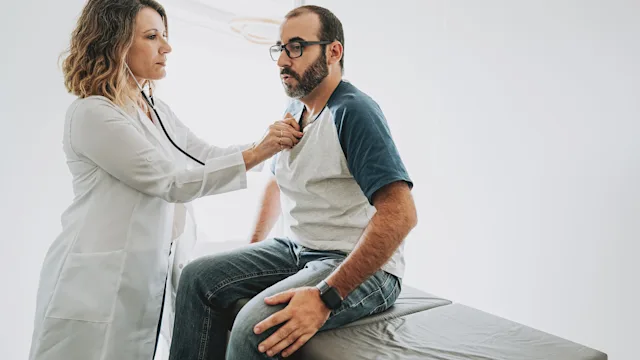
Measuring blood pressure may seem like a routine part of your doctor’s visit, but understanding its role in your heart health is critical. If left untreated, high blood pressure can have serious consequences on the rest of the body, including stroke, heart failure, vision loss, erectile dysfunction in men, decreased sex drive in women, and kidney disease.
Unfortunately, high blood pressure doesn’t typically present symptoms at first. In this video, healthcare professionals explain how high blood pressure is diagnosed and treated.
Dr. Bloom is a Cardiologist, an Associate Professor of Medicine at Stony Brook University Medical Center, a fellow of the American College of Cardiology and the Heart Failure Society of America.
Dr. Knoepflmacher is a Clinical Instructor of Medicine at The Mount Sinai Hospital in New York City, where he also maintains a private practice.
Joan Pagano is an exercise physiologist in New York City.
Antonella Apicella is a registered dietitian at the Lenox Hill Hospital Outpatient Nutrition Program.
Rachel Bond, MD, FACC, is a Cardiologist at Dignity Health and served as Associate Director of the Women's Heart Health Program at Northwell Health, Lenox Hill Hospital and an Assistant Professor of Cardiology at Hofstra Northwell School of Medicine.
Frances Largeman-Roth is a nutritionist and cookbook author in New York City.
References
American Heart Association. (2017). Changes you can make to manage high blood pressure.
American Heart Association. (2022). Health threats from high blood pressure.
American Heart Association. (n.d.). Understanding blood pressure readings.
Centers for Disease Control and Prevention. (2017). Get The Facts: Sodium and the Dietary Guidelines.
U.S. Department of Agriculture. (2020). Dietary Guidelines for Americans 2020 - 2025.

Why trust our experts?