Key takeaways:
The healthiest fats for weight loss are monounsaturated fats (in foods like olive oil and avocados) and omega-3 fats (from fatty fish). Saturated fats from processed meat and butter are less healthy.
Omega-6 fats from vegetable oils are important for your health, but most people get too much, and that may make it harder to lose weight.
Most adults should get about 20% to 35% of calories from fat.
Years ago, you may have heard the saying that “fat makes you fat.” Now we know that for optimal health, your body needs a healthy variety of fats.
Fats help your body to absorb vitamins, make hormones, and keep your brain working well — among many other important functions. And they have some benefits for weight loss, too. They make you feel full more quickly and for longer. For most adults, about 20% to 35% of your calories should come from fat. But when it comes to fats, some are better for you than others.
List of healthy fats for weight loss
Fats are named based on their chemical structure. Unsaturated fats are usually liquid at room temperature. Saturated fats are solid. Trans fats usually start out as unsaturated fat, but they’re chemically changed to make them more solid.
The healthiest fats are unsaturated fats. This category includes monounsaturated fats — like olive oil — and polyunsaturated fats, which are omega-3 and omega-6. So let’s start by discussing those two categories.
Monounsaturated fat
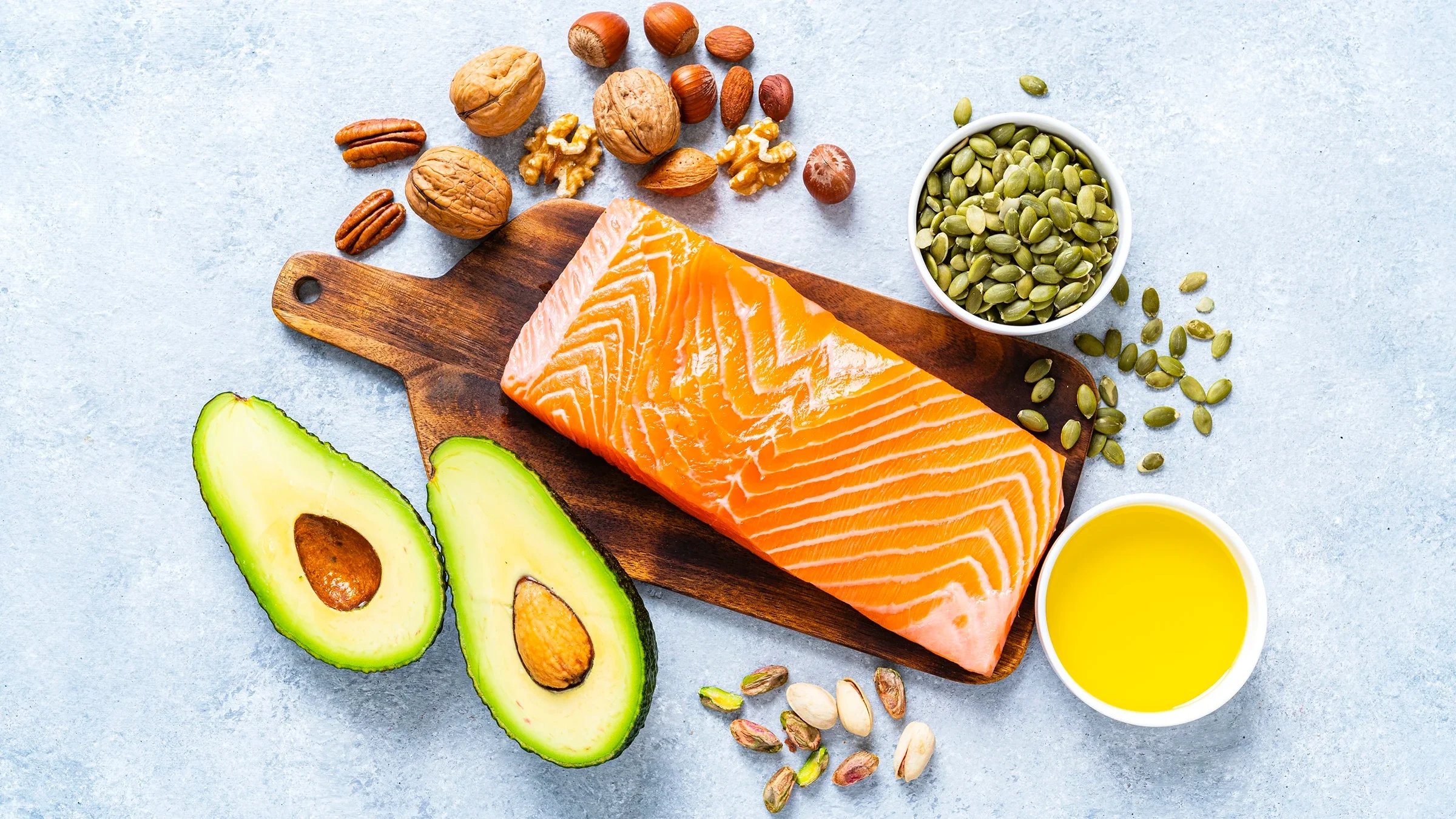
You might also hear monounsaturated fats called omega-9 fats. Monounsaturated fat comes from:
Olive oil
Canola oil
Avocados
Nuts
Peanut butter
Pumpkin seeds and sesame seeds
These foods are part of the Mediterranean diet. In this diet, about 35% to 40% of calories come from fat. People who choose a Mediterranean diet tend to have lower rates of heart disease, cancer, stroke, and even dementia compared to a typical Western diet.
Monounsaturated fats are a great choice if weight loss is your goal. And research shows that people diagnosed with obesity who choose a diet rich in monounsaturated fat and lower in carbohydrates are more likely to lose weight than those who follow a high-carb, low-fat option.
Omega-3 fat
Omega-3 fats are an important type of polyunsaturated fat, the second category of unsaturated fat. Omega-3 fats come from:
Fatty fish like salmon, sardines, trout, and mackerel
Flaxseed and chia seeds
Walnuts
Canola oil
Soybeans and soy oil
Your body uses the omega-3 fats from fish most effectively. That’s because they’re already in the form your cells need. Plant-based omega-3s are harder for your body to use, but they are still healthy choices. And they add other valuable nutrients to your diet as well.
Some studies have found that omega-3 fats may be helpful for weight loss and might even shrink belly fat a small amount. But the evidence for that isn’t strong, and other studies have shown no definite benefit. Several studies even suggest that omega-3 fat from supplements might increase appetite.
Even if omega-3s don’t directly lead to weight loss, they still offer big health benefits. They support your heart and brain, help reduce inflammation, and play a key role in keeping your eyes healthy.
How much fat do you need in your diet?
The World Health Organization (WHO) and other expert groups agree that about 20% to 35% of your daily calories should come from fat. For example, on a 2,000-calorie-per-day diet, that works out to roughly 44 g to 78 g of fat per day. That’s about 3 tbsp to 5½ tbsp of fat.
If you don’t get enough fat, you may risk losing muscle mass. But if you get more fat than you need, it may leave less room for healthy foods like fruits, vegetables, and whole grains. These foods supply important nutrients that you can’t get from fat.
But keep in mind that fat is very high in calories. This means that eating too much of it can easily push you over your daily calorie needs. When this happens, even with healthier options, your body stores the extra calories as fat.
And the type of fat matters. If you get too much of the “wrong” type of fat, like saturated or trans fat, you’ll have a higher risk for heart disease and stroke.
If you’re trying to lose weight, what types of fat should you avoid?
You don’t need to completely avoid specific types of fat if you’re trying to lose weight. That would be hard to do without a severely restrictive diet. But try to limit the following types of fat.
Saturated fat
Saturated fat comes mainly from animal products but also from tropical oils. Common sources include:
Red meat, such as beef, lamb, and pork
Chicken skin
Whole-fat dairy products, including butter, cheese, milk, and ice cream
Coconut oil
Palm oil
Too much saturated fat can raise your low-density lipoprotein (LDL) or “bad” cholesterol. That’s why experts recommend keeping saturated fat to under 10% of your daily calories.
But not all saturated fats are equal. Processed meats like bacon and sausage tend to cause more health problems than unprocessed meats. Some dairy foods, like cheese and yogurt, may have a neutral or even beneficial effect on cardiovascular health. But butter doesn’t offer the same advantage.
When it comes to weight loss, there’s some evidence that saturated fat may work against you, making it harder to lose weight. And saturated fat may be tougher on your liver than unsaturated fat.
Omega-6 fat
Omega-6 fats are another type of unsaturated fat. You may recall from above that unsaturated fats are healthy and good for weight loss. And this includes omega-6 fats — but only in the right amounts.
Omega-6 fats come from:
Vegetable oils like soybean, sunflower, safflower, and corn oil
Nuts
Seeds, including sunflower and pumpkin seeds
Like omega-3 fats, your body needs omega-6 fats for growth, hormone balance and healthy cells. And they may be particularly helpful when they replace saturated fats. Studies show that swapping foods high in saturated fat for foods rich in omega-6 fats can lower LDL cholesterol. That can improve your heart health.
The reason omega-6 fats get a bad reputation is because many people eat more than they need.
Omega-6 fats are found in many processed foods and restaurant foods. And many people are getting plenty of omega-6 fats but missing out on omega-3s. That’s important because there’s some evidence that people whose diets include a lot of omega-6 but little omega-3 are at a higher risk for obesity. There are several possible reasons for this. Those include inflammation, appetite, fat storage, and sensitivity to insulin. But scientists are still studying the issue.
For most people, it makes sense to limit (but not eliminate) omega-6 fats and boost your intake of omega-3 and monounsaturated fats.
Trans fat
Trans fats are a type of fat created when liquid oils are turned into solid fats. This process is called hydrogenation. Even small amounts of trans fats can be harmful. Trans fats raise LDL or “bad” cholesterol, lower high-density lipoprotein (HDL) or “good” cholesterol, and increase inflammation in the body.
Experts recommend avoiding trans fats as much as possible. Trans fat was once common in margarines, baked goods, and fried foods. In 2021, these fats were largely removed from the U.S. food supply because of their strong link to heart disease.
When you’re trying to lose weight, trans fats offer no benefits and several drawbacks. Foods that contain trans fats are usually highly processed, full of calories, and easy to overeat. Trans fats may also raise your risk for diabetes, making weight loss harder.
Frequently asked questions
Fat helps you feel full and satisfied, which can actually prevent overeating. Healthy fats also support your brain, hormones, and vitamin absorption. The key is choosing healthy unsaturated fats and keeping portions moderate.
Not necessarily. Some dairy sources, like yogurt and cheese, may have a more neutral or even beneficial effect on your cardiovascular health. But eating too much saturated fat, especially from processed meats like bacon, can raise LDL cholesterol and make weight loss harder. Aim to keep saturated fat under 10% of your daily calories.
No. Omega-6 fats are essential for health. Problems can happen when you eat a lot of omega-6 but very little omega-3. This may make weight management more challenging, and may have other negative effects on your health. Try cutting back on excess omega-6 (especially from processed foods) and adding more omega-3-rich foods, like fish, walnuts, flaxseed, and chia seeds.
Fat helps you feel full and satisfied, which can actually prevent overeating. Healthy fats also support your brain, hormones, and vitamin absorption. The key is choosing healthy unsaturated fats and keeping portions moderate.
Not necessarily. Some dairy sources, like yogurt and cheese, may have a more neutral or even beneficial effect on your cardiovascular health. But eating too much saturated fat, especially from processed meats like bacon, can raise LDL cholesterol and make weight loss harder. Aim to keep saturated fat under 10% of your daily calories.
No. Omega-6 fats are essential for health. Problems can happen when you eat a lot of omega-6 but very little omega-3. This may make weight management more challenging, and may have other negative effects on your health. Try cutting back on excess omega-6 (especially from processed foods) and adding more omega-3-rich foods, like fish, walnuts, flaxseed, and chia seeds.
The bottom line
Healthy fats are an important part of a balanced diet. They can even support weight loss when you choose wisely. Aim for a mix of unsaturated fats from foods like olive oil, nuts, avocados, and fish. Limit excess omega-6 fats and unhealthy saturated fats by avoiding processed foods as much as possible. A diet that emphasizes whole foods and healthier fats can help you feel satisfied, support your heart and brain, and make it easier to reach and maintain a healthy and balanced weight.

Why trust our experts?



References
American Heart Association. (2024). What is the Mediterranean diet?
American Heart Association. (2025). Trans fats.
Astrup, A., et al. (2020). Saturated fats and health: A reassessment and proposal for food-based recommendations: JACC state-of-the-art review. Journal of the American College of Cardiology.
Bender, N., et al. (2014). Fish or n3-PUFA intake and body composition: A systematic review and meta-analysis. Obesity Reviews.
Dighriri, I. M., et al. (2022). Effects of omega-3 polyunsaturated fatty acids on brain functions: A systematic review. Cureus.
Drouin-Chartier, J., et al. (2018). Substitution of dietary ω-6 polyunsaturated fatty acids for saturated fatty acids decreases LDL apolipoprotein B-100 production rate in men with dyslipidemia associated with insulin resistance: A randomized controlled trial. The American Journal of Clinical Nutrition.
Hu, M., et al. (2022). Effect of cheese intake on cardiovascular diseases and cardiovascular biomarkers. Nutrients.
MedlinePlus. (2024). Facts about saturated fats.
MedlinePlus. (2024). Omega-3 fats - Good for your heart.
Mozaffarian, D., et al. (2011). Changes in diet and lifestyle and long-term weight gain in women and men. The New England Journal of Medicine.
National Institute on Aging. (2023). MIND and Mediterranean diets linked to fewer signs of Alzheimer’s brain pathology.
Natto, Z. S., et al. (2019). Omega-3 fatty acids effects on inflammatory biomarkers and lipid profiles among diabetic and cardiovascular disease patients: A systematic review and meta-analysis. Scientific Reports.
Office of Disease Prevention and Health Promotion. (n.d.). Nutritional goals for each age/sex group used in assessing adequacy of USDA Food Patterns at various calorie levels. U.S. Department of Health and Human Services.
Rosqvist, S., et al. (2019). Overeating saturated fat promotes fatty liver and ceramides compared with polyunsaturated fat: A randomized trial. The Journal of Clinical Endocrinology & Metabolism.
Salman, H. V., et al. (2022). The effect of omega-3 fatty acid supplementation on weight loss and cognitive function in overweight or obese individuals on weight-loss diet. Nutrición Hopitalaria.
Santos, H. O., et al. (2020). Beyond fish oil supplementation: The effects of alternative plant sources of omega-3 polyunsaturated fatty acids upon lipid indexes and cardiometabolic biomarkers—An overview. Nutrients.
Sasanfar, B., et al. (2024). Effects of n-3 polyunsaturated fatty acid supplementation on appetite: A systematic review and meta-analysis of controlled clinical trials. Systematic Reviews.
Shai, I., et al. (2008). Weight loss with a low-carbohydrate, mediterranean, or low-fat diet. The New England Journal of Medicine.
Simopoulos, A. P. (2016). An increase in the omega-6/omega-3 fatty acid ratio increases the risk for obesity. Nutrients.
Sivri, D., et al. (2025). Effect of fatty acids on glucose metabolism and Type 2 diabetes. Nutrition Reviews.
Tosti, V., et al. (2017). Health benefits of the mediterranean diet: Metabolic and molecular mechanisms. The Journals of Gerontology. Series A, Biological Sciences and Medical Sciences.
Wang, S., et al. (2024). Association of dietary fat intake with skeletal muscle mass and muscle strength in adults aged 20–59: NHANES 2011–2014. Frontiers in Nutrition.
World Health Organization. (2023). WHO updates guidelines on fats and carbohydrates.
Zhang, Y., et al. (2025). Butter and plant-based oils intake and mortality. JAMA Internal Medicine.