Key takeaways:
Several different types of oral medications are used to treat Type 2 diabetes. Metformin, sulfonylureas, and dipeptidyl peptidase-4 inhibitors are a few examples.
Each oral diabetes medication works differently to lower your blood glucose (sugar) levels. Some have other benefits for your heart, kidneys, and/or body weight.
There are pros and cons to each oral diabetes medication. And the right one for you can depend on your treatment goals, health history, and risk factors.
Save on related medications
There’s no one-size-fits-all treatment plan for Type 2 diabetes. In fact, some people take multiple medications, while others don’t need to take any at all. But for many, oral diabetes medications can be a good next step if lifestyle changes alone aren’t enough.
There are many different types of oral diabetes medications available. And they all work differently to help get your blood glucose (sugar) levels under control. Some even have additional benefits for your heart, kidneys, and/or body weight. So how do you choose?
Your treatment goals, health history, and risk factors can make certain medications a better fit than others. You’ll likely start with at least one medication, and others may be added or switched over time.
Below we review what you should know about eight types of oral diabetes medications.
1. Metformin
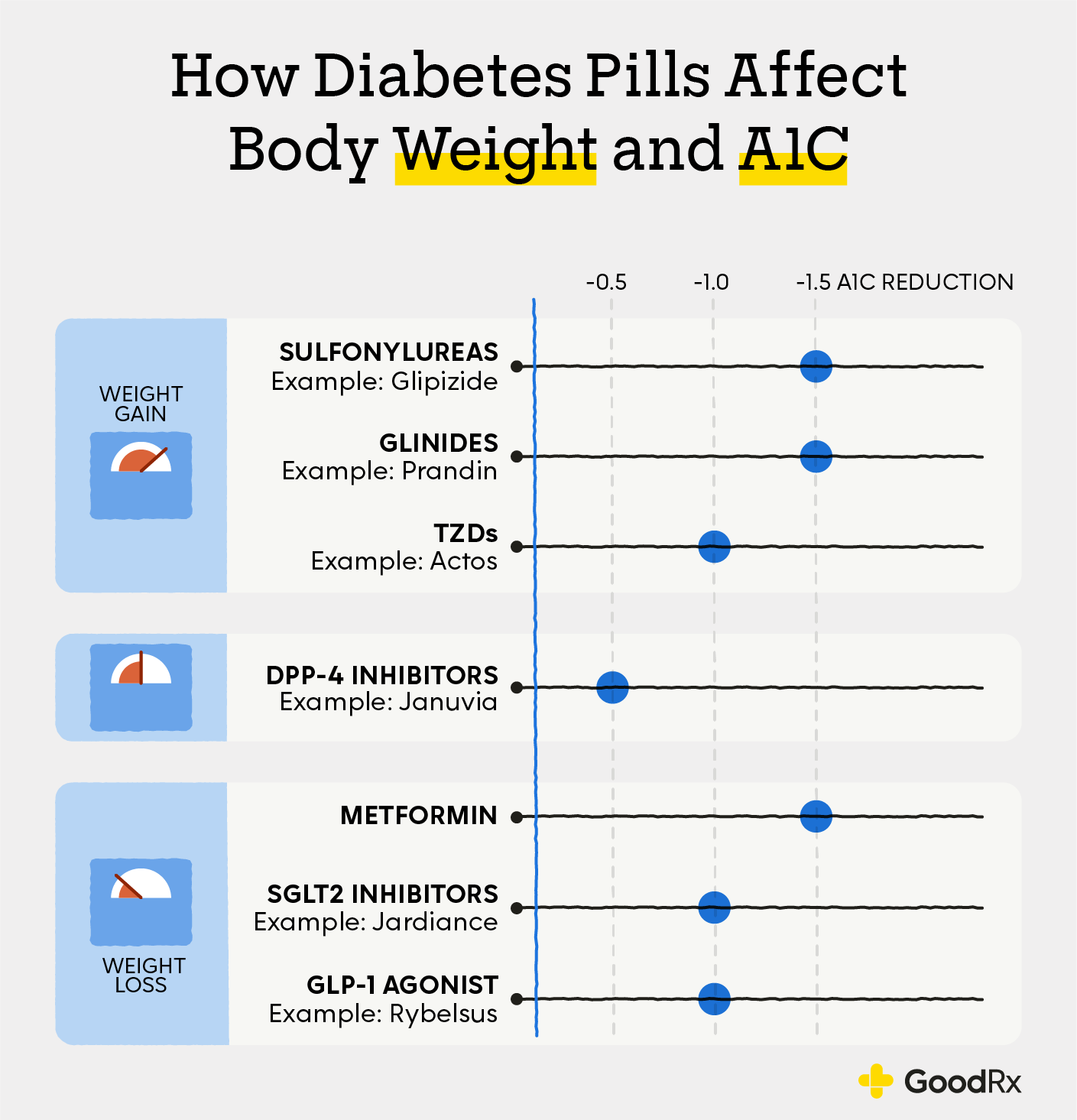
Metformin is one of the most commonly prescribed oral medications for Type 2 diabetes. It works by lowering the amount of sugar your body makes and absorbs. And it helps your body respond better to your own insulin. On average, metformin can lower hemoglobin A1C (HbA1C or A1C), or your average blood sugar over 2 to 3 months, by up to 1.5%.
Metformin is good for just about everybody with Type 2 diabetes — including kids. And while certain diabetes medications can cause weight gain, metformin does not. In fact, some people taking it lose weight. If weight gain is a concern for you, metformin can be a good choice.
Side effects like diarrhea, nausea, vomiting, and gas are common when you’re first starting metformin and after your dose is increased. For many people, these side effects get better within a few weeks. People with kidney problems have a higher risk of side effects and need to be monitored more closely.
Metformin comes as immediate-release (IR) tablets and an oral solution. A few extended-release (ER) forms are also available. And if you’re taking metformin with another oral diabetes medication, there’s a chance they’re available together in a combination pill.
2. Sulfonylureas
Like metformin, sulfonylureas are an older class of oral diabetes medications. Examples include:
Sulfonylureas help your pancreas release more insulin, which lowers the amount of sugar in your blood. They’ve been shown to lower A1C by about 1.5%. But because of how they work, sulfonylureas have a higher risk of hypoglycemia (dangerously low blood sugar). They can also cause weight gain.
If you’re taking metformin and need more help managing your blood sugar levels, sulfonylureas can be a good choice if weight gain isn’t a concern.
However, some people have a higher risk of hypoglycemia, including adults ages 65 and older, and people with kidney problems. In this case, your healthcare team may choose a shorter-acting sulfonylurea (like glipizide), or prescribe a different medication.
3. Meglitinides
Meglitinides (or glinides) include the oral medications repaglinide and nateglinide. They work in a similar way as sulfonylureas to help your pancreas release insulin. They start working quickly, but don’t last as long in your body as sulfonylureas. So, you’ll need to take them more often.
Compared to sulfonylureas, meglitinides can lower A1C a similar amount. But they may be less likely to cause severe hypoglycemia since they work for a shorter period of time. However, you may still experience weight gain with these medications.
Meglitinides aren’t typically considered first-choice medications. But they can be a good alternative if you can’t tolerate sulfonylureas.
4. Dipeptidyl peptidase-4 inhibitors
Dipeptidyl peptidase-4 (DPP-4) inhibitors (also called gliptins) are a class of oral diabetes medications that includes:
Sitagliptin (Januvia)
Linagliptin (Tradjenta)
Alogliptin (Nesina)
DPP-4 inhibitors work by blocking the enzyme that breaks down the hormones GLP-1 and GIP. This allows these hormones to stay active longer, helping the body release more insulin, reduce sugar production in the liver, and promote a feeling of fullness after eating.
Nausea and vomiting are possible with these medications. And some people taking them have reported joint pain. While rare, certain medications in this class have also been linked to pancreatitis (inflammation of the pancreas), an increased risk of heart failure, and kidney problems.
DPP-4 inhibitors can lower A1C by about 0.5%, and they don’t cause weight gain. They also have a low risk of hypoglycemia.
If you’re not able to tolerate metformin, your healthcare team may have you take a DPP-4 inhibitor instead. Or they may add one on if metformin or a sulfonylurea haven’t worked well enough for you.
5. SGLT2 inhibitors
Sodium-glucose cotransporter 2 (SGLT2) inhibitors are a newer class of oral diabetes medications. In addition to treating Type 2 diabetes, some also have proven benefits for people with heart failure, heart disease, and kidney disease. Examples of SGLT2 inhibitors include:
Canagliflozin (Invokana)
Dapagliflozin (Farxiga)
Empagliflozin (Jardiance)
Ertugliflozin (Steglatro)
SGLT2 inhibitors work by causing your kidneys to get rid of sugar and sodium (salt) through your urine. On average, SGLT2 inhibitors lower A1C by about 1%. They also help some people lose weight and lower their blood pressure. And the risk of hypoglycemia is low as well.
SGLT2 inhibitor side effects include genital yeast infections, urinary tract infections, and increased urination. While rare, more serious side effects can include ketoacidosis (acid buildup in the blood), kidney infections, and groin skin infections. Invokana has also been linked to an increased risk of fractures, as well as leg and foot amputations.
SGLT2 inhibitors aren’t usually preferred unless you also have heart failure, heart disease, or kidney disease. In these cases, the benefits of these medications often far outweigh these rare risks. The right SGLT2 inhibitor for you can depend on your health history, insurance status, and other factors.
6. Thiazolidinediones
The thiazolidinediones class (also called glitazones or “TZDs”) includes pioglitazone (Actos). TZDs are typically used in combination with medications like metformin, sulfonylureas, and even insulin.
TZDs work by slowing down how much sugar your liver makes. They also help your body respond to its own insulin better, which can make them a good option if you’re struggling with insulin resistance. On average, TZDs can lower A1C by about 1%.
TZDs have a lower risk of hypoglycemia, but they can cause weight gain. Fluid retention is also possible, resulting in swelling in the legs. This can also increase the risk of new or worsening heart failure. And excess fluid can be a concern if you have kidney disease, too.
In addition to heart failure risks, TZDs have been linked to an increased risk of fractures. Pioglitazone may also have an increased bladder cancer risk. Your healthcare team will weigh the benefits and risks of whether adding a TZD is right for you.
7. Rybelsus
Rybelsus (semaglutide) is the oral version of Ozempic, a popular injectable medication for Type 2 diabetes.
Rybelsus is a glucagon-like peptide-1 (GLP-1) receptor agonist. GLP-1 receptor agonists typically lower A1C by about 1%. They work by mimicking a gut hormone called GLP-1, which causes your pancreas to release insulin after you’ve eaten, lowers sugar production in the liver, and makes you feel full. People taking GLP-1 agonists also tend to lose weight.
Similar to Ozempic, Rybelsus can cause temporary nausea and vomiting, diarrhea, and stomach pain. You’re more likely to experience these side effects after starting treatment and as your dose is increased. Pancreatitis and gallbladder disease are rare but serious side effects.
If you’re unable to meet your blood sugar goals taking the highest doses of one or two other oral medications, or if you have heart disease or are at high risk for it, Rybelsus may be an option. It also has a lower risk of hypoglycemia.
Depending on your dose, you may have the option to switch from Ozempic to Rybelsus (and vice versa).
Good to know: Rybelsus (oral semaglutide) comes in two formulations. The original formulation (R1) continues to be sold as Rybelsus. The newer formulation (R2) is now sold under the brand name Ozempic, like the injections.
8. Alpha-glucosidase inhibitors
The alpha-glucosidase inhibitor class includes two medications: miglitol and acarbose. They work by slowing down your stomach’s absorption of simple sugars. This helps lower blood sugar levels that can spike after you eat. On average, they lower A1C between 0.5% and 1%.
Abdominal pain, diarrhea, and bloating are common when first starting treatment. Changes in liver tests are also possible. But these medications are less likely to cause hypoglycemia, and they don’t typically cause weight loss or gain.
Alpha-glucosidase inhibitors don’t work as well as metformin or sulfonylureas. But they can be added to these medications, if needed. However, other options may be preferred.
Combination therapy for diabetes
Many people with Type 2 diabetes eventually need more than one medication to keep their blood sugar within target levels. This is known as combination therapy. Because diabetes affects the body in multiple ways, using medications that work differently can improve blood sugar management more effectively than a single medication alone.
In some cases, medications are prescribed together so frequently that they are available together in combination pills. These products can simplify treatment by reducing the number of pills you take each day. Examples include:
Janumet (sitagliptin / metformin)
Synjardy (empagliflozin / metformin)
Oral diabetes medications comparison
There are several factors your healthcare team may consider when deciding which oral diabetes medication is right for you. Two of these are how they affect A1C and your body weight. See how several options compare below.
Frequently asked questions
There isn’t one “best” oral medication for Type 2 diabetes for everyone. The right choice depends on several factors, including your blood sugar levels, treatment goals, and health history.
Metformin is often the first medication prescribed because it’s effective, affordable, and has a long track record of safety. If metformin alone isn’t enough, or if you have other health conditions or risk factors, other oral (or injectable) medications may be added or used instead.
Diarrhea isn’t a common glimepiride side effect, but it can happen for some people. More commonly reported side effects include hypoglycemia, headache, and nausea. If diarrhea occurs, it’s usually mild and temporary.
However, if it’s persistent or severe, talk with your healthcare professional. They can help determine whether glimepiride or another factor may be causing your symptoms.
There isn’t one “best” oral medication for Type 2 diabetes for everyone. The right choice depends on several factors, including your blood sugar levels, treatment goals, and health history.
Metformin is often the first medication prescribed because it’s effective, affordable, and has a long track record of safety. If metformin alone isn’t enough, or if you have other health conditions or risk factors, other oral (or injectable) medications may be added or used instead.
Diarrhea isn’t a common glimepiride side effect, but it can happen for some people. More commonly reported side effects include hypoglycemia, headache, and nausea. If diarrhea occurs, it’s usually mild and temporary.
However, if it’s persistent or severe, talk with your healthcare professional. They can help determine whether glimepiride or another factor may be causing your symptoms.
The bottom line
Everyone has different treatment goals, risk factors, and health conditions that can determine which Type 2 diabetes treatments are right for them. Oral medication options include metformin, sulfonylureas, and dipeptidyl peptidase-4 (DPP-4) inhibitors. Sodium-glucose cotransporter 2 (SGLT2) inhibitors, Rybelsus (semaglutide), and thiazolidinediones (TZDs) are a few other examples.
But some people aren’t able to tolerate oral diabetes medications, or they don’t work well enough. In this case, insulin may be recommended instead of, or in addition to, oral medications.

Why trust our experts?



References
American Diabetes Association Professional Practice Committee for Diabetes. (2025). 14. Children and adolescents: Standards of care in diabetes—2026. Diabetes Care.
American Diabetes Association Professional Practice Committee for Diabetes. (2025). 9. Pharmacologic approaches to glycemic treatment: Standards of care in diabetes—2026. Diabetes Care.
Arnold, S. V., et al. (2019). Understanding contemporary use of thiazolidinediones: An analysis from the Diabetes Collaborative Registry. Circulation: Heart Failure.
Collins, L., et al. (2023). Glucagon-like peptide-1 receptor agonists. StatPearls.
Feingold, K. R. (2025). Oral and injectable (non-insulin) pharmacological agents for the treatment of type 2 diabetes. EndoText.
Guardado-Mendoza, R., et al. (2013). The role of nateglinide and repaglinide, derivatives of meglitinide, in the treatment of type 2 diabetes mellitus. Archives of Medical Science.
Hirst, J. A., et al. (2013). Estimating the effect of sulfonylurea on HbA1c in diabetes: A systematic review and meta-analysis. Diabetologia.
Loke, Y. K. et al. (2009). Long-term use of thiazolidinediones and fractures in type 2 diabetes: A meta-analysis. Canadian Medical Association Journal.
Novo Nordisk. (2026). RYBELSUS - oral semaglutide tablet [package insert]. DailyMed.
Padda, I. S., et al. (2022). Sodium-glucose transport protein 2 (SGLT2) inhibitors. StatPearls.
Sanchez-Rangel, E., et al. (2017). Metformin: Clinical use in type 2 diabetes. Diabetologia.
Trerattanavong, K., et al. (2023). Glimepiride. StatPearls.