


What Is Serotonin Syndrome? What You Need to Know If You Take SSRIs
Serotonin syndrome is a reaction to commonly prescribed medications and supplements. Learn what serotonin syndrome is, what causes it, and how to treat it.
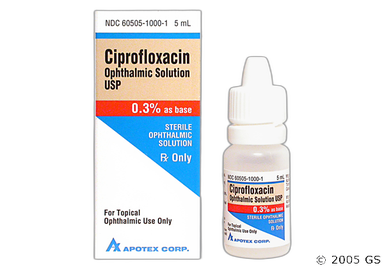
Ciprofloxacin (Ciloxan) is an eye drop and eye ointment that can treat bacterial conjunctivitis (pink eye). The eye drops can also help treat corneal ulcers. This medication belongs to the drug class called fluoroquinolone antibiotics. Although the ciprofloxacin (Ciloxan) eye drops can be used for people of all ages, the eye ointment is approved for people who are 2 years old and older. The typical dosing varies greatly depending on the eye condition you have, what day of treatment you're on, and which formulation you're using. Side effects are often temporary; they can include eye discomfort, an aftertaste in the mouth, and itchy eye.

Ciprofloxacin (Ciloxan) is a fluoroquinolone (or "quinolone") antibiotic. It works by blocking the bacteria's ability to grow and repair their genetic material (DNA). By stopping this process, ciprofloxacin (Ciloxan) kills the bacteria.
| Common Brands | Ciloxan |
|---|---|
| Drug Class | Fluoroquinolone antibiotic |
| Controlled Substance Classification | Not a controlled medication |
| Generic Status | Lower-cost generic available |
| Availability | Prescription only |

The following side effects may get better over time as your body gets used to the medication. Let your healthcare provider know immediately if you continue to experience these symptoms or if they worsen over time.
Along with its needed effects, a medicine may cause some unwanted effects. Although not all of these side effects may occur, if they do occur they may need medical attention.
Check with your doctor immediately if any of the following side effects occur:
Some side effects may occur that usually do not need medical attention. These side effects may go away during treatment as your body adjusts to the medicine. Also, your health care professional may be able to tell you about ways to prevent or reduce some of these side effects. Check with your health care professional if any of the following side effects continue or are bothersome or if you have any questions about them:
More common
Burning or other discomfort of the eye
crusting or crystals in corner of the eye
Less common
Bad taste following use in the eye
feeling of something in the eye
itching of the eye
redness of the lining of the eyelids
Rare
Difficulty seeing at night
dryness of the eye
increased sensitivity of the eyes to light
swelling of the eyelid
tearing of the eye
Other side effects not listed may also occur in some patients. If you notice any other effects, check with your healthcare professional.
Call your doctor for medical advice about side effects. You may report side effects to the FDA at 1-800-FDA-1088.



How to use the ciprofloxacin (Ciloxan) eye drops:
How to apply the ciprofloxacin (Ciloxan) eye ointment:

Ciprofloxacin (Ciloxan) can cause some serious health issues. This risk may be even higher for certain groups. If this worries you, talk to your doctor or pharmacist about other options.
Place ciprofloxacin (Ciloxan) onto the surface of the affected eye(s) only. Don't put the medication in your mouth, nose, or other parts of your body.
People who've take other forms of ciprofloxacin, such as the tablets, have experienced serious allergic reactions. These reactions can include trouble breathing; rash; and swelling of the face, mouth, or throat. Let your prescriber know if you've ever had an allergic reaction to an antibiotic before you start using ciprofloxacin (Ciloxan). They can make sure that the medication is safe for you to use. Get emergency medical help if you have an allergic reaction at any time while you're using ciprofloxacin (Ciloxan).
Using ciprofloxacin (Ciloxan) for a long period of time can raise your risk of developing other eye infections, such as fungal eye infections. Let your prescriber know if you have eye pain or redness, blurry vision, light sensitivity, or watery discharge from your eye or if your symptoms don't improve after a couple days of treatment. These can be signs and symptoms of a new eye infection.
In studies, some people who used ciprofloxacin (Ciloxan) eye drops to treat corneal ulcers noticed a white substance over the area where the ulcer is. These white crystals typically appeared within 24 hours or up to a week after starting treatment with the eye drops. Often times, the white crystals don't affect the healing of the ulcer and they usually go away on their own. But let your prescriber know if the white substance causes any discomfort or worsens your vision.

 Eye dropper
| Dosage | Quantity | Price as low as | Price per unit |
|---|---|---|---|
| 10ml of 0.3% | 1 eye dropper | $21.22 | $21.22 |
| 5ml of 0.3% | 1 eye dropper | $16.64 | $16.64 |
| 2.5ml of 0.3% | 1 eye dropper | $10.57 | $10.57 |
Bacterial conjunctivitis (pink eye)
Corneal ulcer

Although certain medicines should not be used together at all, in other cases two different medicines may be used together even if an interaction might occur. In these cases, your doctor may want to change the dose, or other precautions may be necessary. When you are taking this medicine, it is especially important that your healthcare professional know if you are taking any of the medicines listed below. The following interactions have been selected on the basis of their potential significance and are not necessarily all-inclusive.
Using this medicine with any of the following medicines is not recommended. Your doctor may decide not to treat you with this medication or change some of the other medicines you take.
Using this medicine with any of the following medicines is usually not recommended, but may be required in some cases. If both medicines are prescribed together, your doctor may change the dose or how often you use one or both of the medicines.
Using this medicine with any of the following medicines may cause an increased risk of certain side effects, but using both drugs may be the best treatment for you. If both medicines are prescribed together, your doctor may change the dose or how often you use one or both of the medicines.


Contraindications are specific health conditions or situations in which a person should not take a medication due to safety concerns. If you have any of the following conditions or if any of the following apply to you, let your healthcare provider know because Ciprofloxacin (Ciloxan) will not be safe for you to take.













Prescription savings
Stop paying too much for your prescriptions. Compare prices, get pharmacy coupons, and save up to 80%. Find expert answers to your health questions so you can make the best decisions for yourself and your family.
Health conditions
Medications & treatment
Access & affordability
 Our monthly healthcare membership can help you save thousands on your prescription costs.
Resources

No, Ciloxan isn't a sulfa drug. This means that the medication is generally okay for people with a sulfa allergy to use. To be safe, check with your prescriber before you use this medication if you've had an allergic reaction, such as swollen eyelids or red, itchy eyes, to any antibiotic in the past.
It's best to talk to your prescriber first before you drink alcohol while you're taking Ciloxan. It's possible for alcohol to weaken your immune system, which can either slow down the healing process or raise your risk of developing another infection.
After you place the Ciloxan eye drops into the affected eye, press your finger to the corner of your eye closest to your nose for a minute or so. This helps Ciloxan stay in your eye and prevents the medication from draining into the nose and throat from your tear ducts, causing the aftertaste in your mouth. You can also consider brushing or scraping your tongue, drinking plenty of fluids, or chewing sugar-free gum to get rid of the taste in your mouth.
It's possible that a healthcare professional (HCP) might prescribe Ciloxan eye drops for an ear infection. This is because eye drops are typically gentler and less irritating than ear drops (the eyes are more sensitive than the ears). Although you can use some eye drops in the ears, you can't use ear drops in the eyes. This is important to remember because ciprofloxacin is also available as an ear drop. Check with your care team first if you aren't sure whether Ciloxan eye drops is for your eyes or ears. Carefully follow your HCP's instructions if they prescribe Ciloxan eye drops for an ear infection.
No, Ciloxan isn't a controlled substance. Controlled substances are medications that can sometimes cause your body to physically and mentally depend on them to feel normal. They're closely regulated by the DEA (Drug Enforcement Administration) and have more restrictions on how they can be filled. Ciloxan is an antibiotic and a non-controlled medication. Even though it doesn't have a risk for dependence, it's important to use this medication exactly as directed by your prescriber to treat your infection.
Ciloxan can treat pink eye that's caused by a bacterial infection only. Symptoms of bacterial pink eye include a swollen and pink-colored eye; crusting on the eyelids in the morning; thick eye discharge that's green, yellow, or white; and discharge that builds up in the corner of the eye. About half of the time, bacterial pink eye goes away on its own within a few weeks. In the meantime, you can use a cold compress or artificial tears to help relieve symptoms. Ask a healthcare professional for an antibiotic treatment, such as Ciloxan, if you'd like to clear the infection sooner.
How often you use Ciloxan depends on what you're using it for, which formulation you have, and which day of treatment you're on. For example, for pink eye, you use the Ciloxan eye drops every 2 hours (while awake) for the first 2 days and then every 4 hours (while awake) for the next 5 days. But you use the Ciloxan eye ointment 3 times a day for the first 2 days and then 2 times a day for the next 5 days. Be sure to follow your prescriber's instructions and keep using the medication until the last day of the treatment, even if your eye starts to get better. This helps make sure your eye is completely treated.
Ciloxan is generally well tolerated when it's used as directed by your prescriber. The most common side effect is a temporary burning sensation or discomfort in the eye after you place the medication into the eye. Other side effects can include crusty eyelid, itchy eye, or an aftertaste. In particular, some people who've used Ciloxan eye drops for corneal ulcer have noticed a white crystal-like substance in the eye. Typically, all these side effects are harmless and will go away once you complete your treatment. But please talk to your care team if your vision worsens or if your side effects aren't going away.
