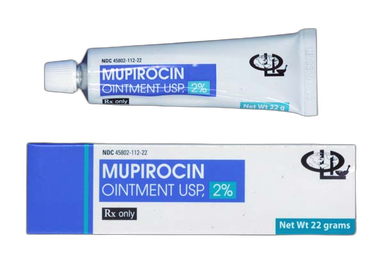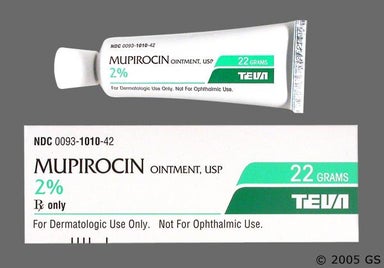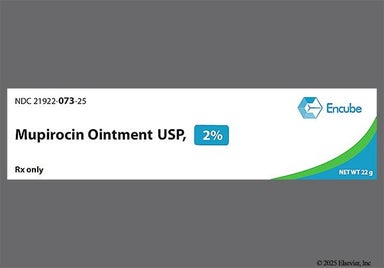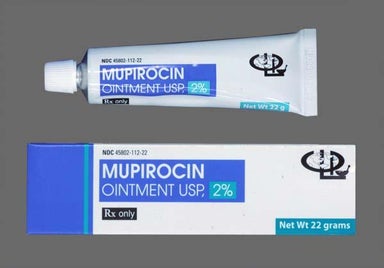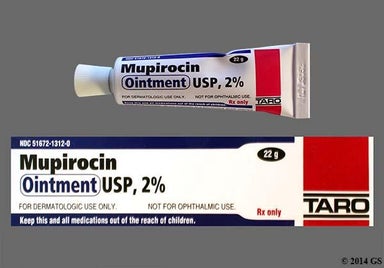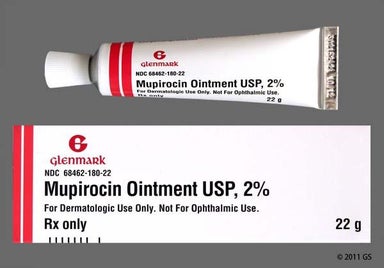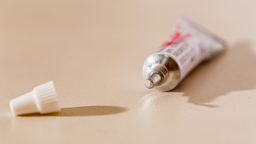

Mupirocin Coupon - Mupirocin 22g of 2% tube of ointment

mupirocin

Generic Bactroban
Used for Skin Infection

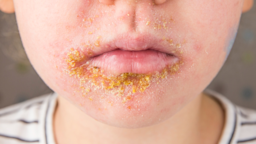
Mupirocin is a topical antibiotic that's used to treat small areas of bacterial skin infections such as impetigo or a "Staph" infection on the skin. It comes as a cream and an ointment that are applied onto the skin a few times a day for 10 days. This medication can be used on adults or children (over the age of 2 months for the ointment, and over the age of 3 months for the cream). Although mupirocin has very few side effects, some people can experience headache, nausea, or burning at the application site.

Reviewed by:Last reviewed on March 11, 2024
basics-icon

What is Mupirocin?

Featuring Alyssa Billingsley, PharmDReviewed by Cydnee Ng, PharmD | March 21, 2024

What is Mupirocin used for?

  • Impetigo - ointment
  • Bacterial skin infection that happens after skin gets damaged (e.g., from a cut or other wound) - cream

How Mupirocin works

Mupirocin is an antibiotic. The medication blocks bacteria from making certain proteins they need to survive. This kills bacteria to help treat skin infections.

When does Mupirocin start working?Time passed since treatment started:
HOURS
DAYS
Full effect
WEEKS
MONTHS

Drug facts

Common BrandsBactroban, Centany(brand names no longer available)
Drug Class Antibiotic
Controlled Substance ClassificationNot a controlled medication
Generic StatusLower-cost generic available
AvailabilityPrescription only
side-effects-icon

Side effects of Mupirocin

The following side effects may get better over time as your body gets used to the medication. Let your healthcare provider know immediately if you continue to experience these symptoms or if they worsen over time.

Common Side Effects

  • Headache (2%)
  • Burning, stinging, or pain at the application site (up to 2%; more common with ointment)
  • Rash (1%)
  • Nausea (1%)

Less Common Side Effects

  • Itching
  • Skin irritation
  • Dizziness

Mupirocin serious side effects

Contact your healthcare provider immediately if you experience any of the following.

  • Severe allergic reaction: rash, hives, swelling, trouble breathing
  • Severe infectious diarrhea: rapid heart rate, fever, nausea, frequent episodes of diarrhea (even up to 10 to 15 per day)
When do Mupirocin possible side effects begin and end?
Time passed since treatment started:
M
H
D
W
M
Burning, stinging, or pain at the application site
Rash
Severe allergic reaction
Severe diarrhea
Seek immediate medical care if you experience this side effect.

Source: DailyMed

The following Mupirocin side effects have also been reported

Along with its needed effects, a medicine may cause some unwanted effects. Although not all of these side effects may occur, if they do occur they may need medical attention.

Check with your doctor immediately if any of the following side effects occur:

Less common

Burning, stinging, or pain on the application site

Rare

Blistering, crusting, irritation, itching, or reddening of the skin

canker sores

cracked, dry, scaly skin

pain, swelling, tenderness, warmth on the skin

sores, ulcers, or white spots on the lips or tongue or inside the mouth

Incidence not known

Abdominal or stomach tenderness

cough

difficulty with swallowing

dizziness

fast heartbeat

fever

hives or welts, itching, or skin rash

large, hive-like swelling on the face, eyelids, lips, tongue, throat, hands, legs, feet, or sex organs

puffiness or swelling of the eyelids or around the eyes, face, lips, or tongue

redness of the skin

severe abdominal or stomach cramps and pain

tightness in the chest

unusual tiredness or weakness

watery and severe diarrhea, which may also be bloody

Some side effects may occur that usually do not need medical attention. These side effects may go away during treatment as your body adjusts to the medicine. Also, your health care professional may be able to tell you about ways to prevent or reduce some of these side effects. Check with your health care professional if any of the following side effects continue or are bothersome or if you have any questions about them:

Less common

Headache

nausea

Other side effects not listed may also occur in some patients. If you notice any other effects, check with your healthcare professional.

Call your doctor for medical advice about side effects. You may report side effects to the FDA at 1-800-FDA-1088.

prices-container

Get your GoodRx coupon

Avg retail price
$19.07(Save 52.07%)
GoodRx discount
$9.14
See prices
pros-and-cons-icon

Pros and cons of Mupirocin

Pros

  • Can use for children as young as 2 months old (ointment) or 3 months old (cream)
  • Can easily apply directly where the skin infection is
  • Generally well-tolerated; few people experience side effects
  • Available as a lower-cost generic

Cons

  • Only available by prescription
  • Need to remember to use three times a day
  • Ointment might not be a good option for people with kidney problems because of risk of harm
pharmacist-tips-icon

Pharmacist tips for Mupirocin

pharmacist
  • Make sure to use mupirocin for as long as your healthcare professional (HCP) instructed you to. Don't stop using the medication earlier than prescribed even if your skin starts looking better. Your infection might not be entirely gone. It might come back and be harder to treat.
  • Wash your hands before and after you use mupirocin. Use a clean cotton swab or gauze pad to apply the medication onto the affected area of your skin. This helps prevent the infection from spreading or getting worse.
  • Use mupirocin only on small areas of the skin. Avoid getting the medication in your eyes, nose, mouth, or vagina (mucosal surfaces). Otherwise, it might cause irritation. Rinse your eyes well with water if you accidentally get mupirocin in your eyes.
  • After you apply mupirocin, you can use a sterile (clean) gauze pad to cover and protect the area, unless your HCP instructed you otherwise.
  • You might feel some slight irritation where you applied mupirocin on your skin. Let your HCP know if any skin irritation becomes bothersome or if it doesn't go away.
  • Avoid using other lotions, creams, ointments, or other topical products at the same time as mupirocin on the same area of skin. We're not sure what effects there are when mupirocin and other topical products are on the affected area at the same time. It might be a good idea to wait until you've finished your treatment course with mupirocin to use any other topical products on the treated area of skin.
  • Don't use mupirocin ointment on skin that's at or near any tubing that's inserted into a vein. It's possible that the medication can make fungal infections that are hard to treat pop up there.
  • Let your HCP know if your skin infection doesn't improve within 3 to 5 days of using mupirocin or if your skin infection gets worse. Your HCP can check whether you need other treatment.
Common questions about Mupirocin

Common questions about Mupirocin

No, mupirocin is not the same as Neosporin. Neosporin is an over-the-counter topical antibiotic containing three different active ingredients: neomycin, polymyxin B, and bacitracin. It's used to prevent skin infections as minor cuts, scrapes, and burns are healing. Mupirocin is a prescription-only topical antibiotic containing a single active ingredient (mupirocin). Mupirocin can treat impetigo and bacterial skin infections that occur after skin gets damaged.Learn more

Mupirocin comes as a 2% cream and ointment. Mupirocin cream is FDA approved to treat bacterial staph and strep skin infections in adults and kids age 3 months and older. Mupirocin ointment is also approved to treat impetigo (a contagious skin infection) in adults and kids age 2 months and older. Impetigo is typically caused by staph or strep bacteria. Learn more

Mupirocin is not typically used to treat acne, but it may be considered for this use in certain cases. Medications such as benzoyl peroxide, adapalene (Differin), and doxycycline (Vibramycin, Doryx) are more effective and usually recommended as go-to acne medications. But finding the right acne medication can be difficult, and it often takes some trial and error. So if you or your child has already tried first-choice acne medications with limited success, know that there are other viable options. In some cases, topical antibiotics, such as mupirocin, are worth considering.Learn more

One of the inactive ingredients in mupirocin ointment is polyethylene glycol (PEG). PEG can absorb into the body if it’s applied to open wounds or damaged skin. While very rare with a topical medication, too much PEG absorption could damage the kidneys. This can be dangerous if you already have kidney problems. Don't put mupirocin ointment in your eyes, nose, mouth, or vagina, either.Learn more

Mupirocin’s side effects mostly affect the skin where it’s applied. Mild mupirocin side effects include burning, stinging, itching, rash, dry skin, skin tenderness, skin redness, eye irritation (if it gets into the eyes), headache, nausea, and contact dermatitis (allergic skin reaction). While rare, mupirocin can cause severe allergic reactions. These include anaphylaxis and angioedema (swelling under the skin).Learn more
educational-icon

How to save using GoodRx

Compare Prices
1. Compare PricesSpecify your dosage and quantity to find out exactly how much you can save.
Select your free coupon
2. Select your free couponYou can use the displayed coupon, or compare prices at other pharmacies near you.
Show coupon to your pharmacist
3. Show coupon to your pharmacistPresent your printed or electronic coupon when you pick up your prescription.
Get free couponLearn more
warnings-icon

Risks and warnings for Mupirocin

Mupirocin can cause some serious health issues. This risk may be even higher for certain groups. If this worries you, talk to your doctor or pharmacist about other options.

Severe allergic reaction

In some rare cases, mupirocin can cause an allergic reaction, which can be severe or life-threatening. Stop using the medication and get medical help right away if you have rash, hives, swelling, trouble breathing, or other symptoms of anaphylaxis.

Diarrhea from Clostridioides difficile infection

Though rare, mupirocin carries a risk for diarrhea that's caused by a bacterial infection called Clostridioides difficile (C. diff). Like with all antibiotics, mupirocin can change how much normal bacteria is in your gut, allow C. diff to overgrow there, and cause an infection once the medication gets absorbed into the body. But keep in mind that mupirocin is used on the skin, so very little medication typically gets absorbed.

The risk that mupirocin gets absorbed into the body and causes C. diff infection is higher if the medication is applied onto damaged skin. This infection can be very contagious, cause diarrhea, and lead to life-threatening dehydration. Get medical help right away if you have symptoms like rapid heart rate, fever, foul-smelling diarrhea, or frequent bowel movements.

Development of hard-to-treat infections

  • Risk factors: Long-term use of mupirocin

Using mupirocin for long periods of time can give rise to the growth of treatment-resistant bacteria or fungi. This means that the medication won't work well to kill the bacteria or fungi, and new infections can be very difficult to treat. To prevent this from happening, be sure to use mupirocin as directed and not for a longer period of time than your HCP prescribed.

Caution use in people with kidney problems (ointment only)

Mupirocin ointment contains an inactive ingredient that can be toxic when a large amount is absorbed into the body through damaged skin. The kidneys normally help get rid of this inactive ingredient from the body.

The risk for possible harmful effects from the inactive ingredient is higher if you have moderate-to-severe kidney problems. When your kidneys don't work properly, your body can't get rid of the inactive ingredient well. This raises the risk for the inactive ingredient to build up in the body and cause harm. Tell your HCP before you use mupirocin ointment if you have kidney problems to make sure it's safe for you.

dosage-icon

Mupirocin dosage

The average cost for 1 tube of 22g of 2% of Mupirocin is $9.25 with a free GoodRx coupon. This is 45.68% off the average retail price of $17.03.
tube of creamTube of cream
DosageQuantityPrice as low asPrice per unit
15g of 2%1 tube$25.36$25.36
30g of 2%1 tube$38.18$38.18
tube of ointmentTube of ointment
DosageQuantityPrice as low asPrice per unit
22g of 2%1 tube$9.25$9.25
15g of 2%1 tube$9.14$9.14

Typical dosage for Mupirocin

Apply a small amount of mupirocin to the affected area of skin 3 times each day for up to 10 days. Use a cotton swab or gauze pad to apply the cream or ointment onto the affected area.

reviews-icon

Mupirocin reviews

GoodRx has partnered with to provide reviews on the different aspects of Mupirocin.

Effectiveness

Learn more about the effectiveness of Mupirocin based on real life experiences.

Overall Rating

Based on 6 people taking this medication

3.3

Effectiveness by condition:

impetigo3 reviews

3.8

methicillin-resistant Staphylococcus aureus3 reviews

2.9

Side effects
Learn more about the side effects others have reported while taking Mupirocin.

Severity of side effects

Based on 31 people taking this medication

None

97%

Mild

0%

Moderate

4%

Severe

0%

0%

50%

100%

Top side effects

Based on 31 people taking this medication

Irritability

4%

Usage
Review why people stop taking this medication and how long they take it.

Reasons people stopped taking Mupirocin

Based on 41 people who have taken this medication

Course of treatment ended

64%

Doctor's advice

13%

Other

10%

Did not seem to work

5%

Change in health plan coverage

3%

Expense

3%

Personal research

3%

Side effects too severe

3%

How long people take Mupirocin

Based on 33 people who have taken this medication

6 to 11 months

7%

2 to <5 years

7%

5 to <10 years

43%

10+ years

46%

0%

50%

100%

Powered by:
interactions-icon

Interactions between Mupirocin and other drugs

Mupirocin may interact with certain medications or supplements. Always let your doctor and pharmacist know about any other medications or supplements (including prescribed and over-the-counter medications, vitamins, and dietary or herbal supplements) that you are currently taking. The list below does not include all possible drug interactions with Mupirocin. Please note that only the generic name of each medication is listed below.

Although certain medicines should not be used together at all, in other cases two different medicines may be used together even if an interaction might occur. In these cases, your doctor may want to change the dose, or other precautions may be necessary. Tell your healthcare professional if you are taking any other prescription or nonprescription (over-the-counter [OTC]) medicine.

cost-icon

How much does Mupirocin cost?

To access savings, use a GoodRx coupon and pay just a fraction of the retail price.
alternatives-icon

What are alternatives to Mupirocin?

There are a number of medications that your doctor can prescribe in place of Mupirocin. Compare a few possible alternatives below.
Mupirocin
Used for:
  • Impetigo - ointment
  • Bacterial skin infection that happens after skin gets damaged (e.g., from a cut or other wound) - cream
$9.14Lowest GoodRx priceView prices
Used for:
  • Impetigo in people ages 9 months and older
$352.91Lowest GoodRx priceView prices
Used for:
  • Impetigo
latest-news-icon

News about Mupirocin

images-icon

Mupirocin images

white - Mupirocin 2% Topical Ointment
This medicine is White Tube Of Ointment.white - Mupirocin 2% Topical Ointment
white - Mupirocin 2% Topical Ointment
This medicine is White Tube Of Ointment.white - Mupirocin 2% Topical Ointment
white - Mupirocin 2% Topical Ointment
This medicine is White Tube Of Ointment.white - Mupirocin 2% Topical Ointment
white - Mupirocin 2% Topical Ointment
This medicine is White Tube Of Ointment.white - Mupirocin 2% Topical Ointment
white - Mupirocin 2% Topical Ointment
This medicine is White Tube Of Ointment.white - Mupirocin 2% Topical Ointment

Get savings updates for Mupirocin

Receive price alerts, news, and other messages from GoodRx about Mupirocin and other healthcare topics and relevant savings offers.

By providing your email, you consent to receive marketing communications from GoodRx, which may include content and/or data related to men's health, women's health, reproductive care, or sexual health. You agree to the GoodRx Terms of Use and acknowledge the Privacy Policy. You can unsubscribe at any time.

References

Best studies we found

Alembic Pharmaceuticals, Inc. (2023). Mupirocin cream [package insert]. DailyMed.

Ference, J.D., et al. (2009). Choosing topical corticosteroids. American Family Physician.

Glenmark Pharmaceuticals, Inc., USA. (2023) Mupirocin ointment [package insert]. DailyMed.

GoodRx Health has strict sourcing policies and relies on primary sources such as medical organizations, governmental agencies, academic institutions, and peer-reviewed scientific journals. Learn more about how we ensure our content is accurate, thorough, and unbiased by reading our editorial guidelines.

Was this page helpful?