


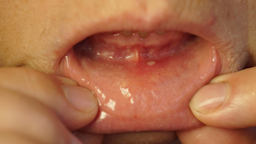
10 Medication Side Effects That Can Affect Your Mouth
Some medications cause mouth-related side effects, like dry mouth and burning mouth syndrome. Here are 10 common issues and medications that may cause them.
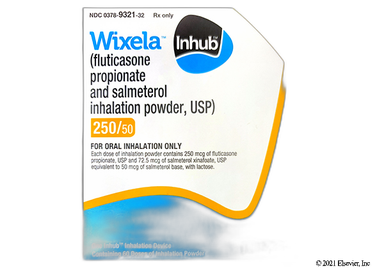
Wixela Inhub is a combination inhaler used to control asthma in adults and children. It's also used to manage chronic obstructive pulmonary disease (COPD) in adults. It contains fluticasone, an inhaled corticosteroid, and salmeterol, a long-acting beta agonist (LABA). The medication is inhaled twice a day. Common side effects include upper respiratory tract infections, sore throat, and headaches. Wixela Inhub is a generic version of Advair Diskus.

Wixela Inhub is a combination of two medications that work together to reduce swelling and keep your airways open:
| Common Brands | Wixela Inhub |
|---|---|
| Drug Class | ICS / LABA combo |
| Controlled Substance Classification | Not a controlled medication |
| Generic Status | Lower-cost generic available |
| Availability | Prescription only |

The following side effects may get better over time as your body gets used to the medication. Let your healthcare provider know immediately if you continue to experience these symptoms or if they worsen over time.
Asthma (adults and children 12 years and older):
COPD:
Asthma (adults and children 12 years and older):
COPD:
Contact your healthcare provider immediately if you experience any of the following.
Side effects that you should report to your care team as soon as possible:
Side effects that usually do not require medical attention (report to your care team if they continue or are bothersome):



How to use Wixela Inhub:

Wixela Inhub can cause some serious health issues. This risk may be even higher for certain groups. If this worries you, talk to your doctor or pharmacist about other options.
Don't use Wixela Inhub during an asthma attack or COPD flare-up because it won’t give quick relief. Instead, use a rescue inhaler like albuterol if you're having trouble breathing.
If you notice you’re using your rescue inhaler more often than usual, tell your pulmonologist since this might mean your condition is getting worse. Never take more doses of Wixela Inhub than prescribed since this won’t help your breathing and can raise your risk for serious side effects like heart problems, tremors, and dizziness.
Don't use more Wixela Inhub than prescribed. Taking too much can cause serious heart problems and can be life-threatening. You also shouldn't use another medication that contains a long-acting beta agonist (LABA) while using Wixela Inhub. Tell your care team about all inhalers and breathing medications you use so they can check for possible interactions.
Wixela Inhub contains fluticasone, a steroid that can sometimes cause a mouth and throat infection called oral thrush. To help prevent thrush, rinse your mouth with water and spit it out after each dose.
If you do get thrush, your pulmonologist might prescribe an antifungal medication and ask you to pause Wixela Inhub. Let them know if you notice symptoms of thrush, such as white patches in your mouth, cotton-like feeling in your mouth, pain while eating or swallowing, or loss of taste.
Wixela Inhub can raise the risk of pneumonia in people with COPD. Pneumonia can sometimes have symptoms similar to a COPD flare-up, so contact your care team if you develop new or worsening cough, fever, chills, or trouble breathing.
Fluticasone, the corticosteroid in Wixela Inhub, can weaken your immune system and make it harder for your body to fight infections. Certain infections, such as chickenpox and measles, can become more serious. Avoid close contact with people who have these infections, and contact your care team right away if you're exposed. Also let your care team know if you develop signs of an infection, such as fever, chills, or body aches.
Tell your care team about any current or past infections before starting Wixela Inhub. This includes tuberculosis (TB), fungal, bacterial, viral, or parasitic infections and herpes infections of the eye. They might recommend a different treatment until the infection is under control.
Fluticasone, the corticosteroid in Wixela Inhub, can rarely affect your body's ability to make its own steroid hormones. At recommended doses, it usually doesn't affect your adrenal glands, which make important hormones that help your body respond to stress. But using high doses or more than prescribed can lead to adrenal insufficiency, a condition where your body doesn't make enough of these hormones.
Tell your care team if you develop unusual tiredness, weakness, dizziness, nausea, or vomiting, especially during illness, surgery, or other physical stress.
Wixela Inhub can sometimes cause paradoxical bronchospasm, which means your airways tighten instead of relax. This is rare but can be life threatening. If you notice more wheezing, shortness of breath, or coughing after using Wixela Inhub, stop using it and use a rescue inhaler (like albuterol) right away. Contact your prescriber since you might need to switch to a different treatment.
Serious allergic reactions to Wixela Inhub are possible. These reactions can include hives, swelling of the face or throat, rash, or trouble breathing. Stop using this inhaler right away if you have any of these reactions and get medical help. Because Wixela Inhub contains lactose, people with a severe milk protein allergy shouldn't use this medication.
Salmeterol, one of the medications in Wixela Inhub, can rarely affect your heart and nervous system. It can cause a fast or irregular heartbeat, changes in blood pressure, chest pain, shaking, nervousness, dizziness, or headache. The risk is higher if you use more than the recommended dose.
Tell your care team if you develop a fast or pounding heartbeat, changes in blood pressure, or other bothersome symptoms. Get medical help right away for severe chest pain, fainting, seizures, or a very fast or irregular heartbeat.
Long-term use of fluticasone, the corticosteroid in Wixela Inhub, might lower your bone mineral density, which can weaken your bones. It's not clear how much this affects your risk of broken bones. Your care team might check your bone health before and during treatment if you're at higher risk for bone loss, especially if you have COPD.
Fluticasone, the corticosteroid in Wixela Inhub, might slow growth in children. Your child's care team will likely check their height regularly during treatment. They'll also try to use the lowest dose that keeps your child's asthma under control.
Long-term use of fluticasone, the corticosteroid in Wixela Inhub, can raise your risk of eye problems, including glaucoma and cataracts. These conditions can affect your vision and might not cause symptoms right away.
Tell your care team if you notice blurry vision, eye pain, or other changes in your eyesight. If you use Wixela Inhub for a long time, your care team might recommend regular eye exams.
Wixela Inhub can sometimes raise your blood sugar and lower your potassium levels. Low potassium is usually mild and temporary, but it can cause tiredness, weakness, muscle cramps, a racing heartbeat, or a "pins and needles" feeling in your hands or feet. Tell your care team if you develop these symptoms. They might monitor your potassium or blood sugar if you're at higher risk.

 Diskus inhaler
| Dosage | Quantity | Price as low as | Price per unit |
|---|---|---|---|
| 100mcg/50mcg | 1 diskus inhaler | $55.98 | $55.98 |
| 250mcg/50mcg | 1 diskus inhaler | $64.25 | $64.25 |
| 500mcg/50mcg | 1 diskus inhaler | $10.00 | $10.00 |
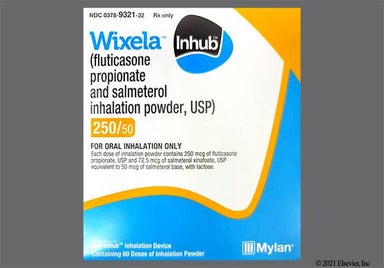
Wixela Inhub comes in 3 strengths of fluticasone/salmeterol, measured in mcg: 100/50, 250/50, and 500/50.
Asthma:
COPD:


Contraindications are specific health conditions or situations in which a person should not take a medication due to safety concerns. If you have any of the following conditions or if any of the following apply to you, let your healthcare provider know because Wixela Inhub will not be safe for you to take.












Prescription savings
Stop paying too much for your prescriptions. Compare prices, get pharmacy coupons, and save up to 80%. Find expert answers to your health questions so you can make the best decisions for yourself and your family.
Health conditions
Medications & treatment
Access & affordability
Medication discounts


Yes, Wixela Inhub contains a steroid, but it also contains another medication. Fluticasone is an inhaled corticosteroid that helps lower swelling and inflammation in your airways. Salmeterol is a long-acting beta agonist that relaxes the muscles around your airways to help you breathe more easily. Together, these medications help control asthma or COPD symptoms over time.
Wixela Inhub is a generic version of Advair Diskus and contains the same medications (fluticasone/salmeterol). Studies show that they work just as well as each other, but the inhaler devices are slightly different. For example, Wixela Inhub is held vertically when you use it, while Advair Diskus is held horizontally, like a hamburger. If you have questions about how the inhalers compare, talk to your prescriber.
You should typically take 2 puffs of Wixela Inhub per day, split into 1 puff twice a day. The strength you need depends on your age, what you're using the medication for, and how severe your condition is. For example, children ages 4 to 11 years with asthma typically use Wixela Inhub 100/50, while adults with COPD typically use Wixela Inhub 250/50. Talk to your prescriber or pharmacist if you're not sure which strength or how many puffs to use.
You can buy Wixela Inhub at your local pharmacy with a prescription from a healthcare professional. It isn't available over the counter because it's a prescription medication.
Your breathing might start to improve within 30 minutes after a dose of Wixela Inhub. But it can take 1 week or longer to get the full benefit. If your symptoms haven't improved after 2 weeks, talk to your prescriber. They might recommend a higher strength or another breathing medication.
You typically don't need to slowly lower your dose of Wixela Inhub before stopping it. Unlike oral steroids, the inhaled steroid in Wixela Inhub usually doesn't require a taper. But don't stop using the inhaler without talking to your prescriber first, since your asthma or COPD symptoms could get worse.
Wixela Inhub can help reduce coughing caused by asthma, but cough can also happen as a side effect. In clinical studies, up to 6% of people using the medication reported a cough. Talk to your prescriber if you have a cough that doesn't go away. They can help figure out the cause and check whether other medications might be contributing.
Both Wixela Inhub and Symbicort are combination inhalers that contain an inhaled corticosteroid and a long-acting beta agonist (LABA), and both can be used for asthma or COPD. Wixela Inhub contains fluticasone/salmeterol, while Symbicort contains budesonide/formoterol. Wixela Inhub is approved for asthma starting at age 4, compared with age 6 for Symbicort. Their dosing also differs: Wixela Inhub is typically 1 puff twice a day, while Symbicort is 2 puffs twice a day. Talk to your prescriber if you have questions about how these two inhalers compare.
