






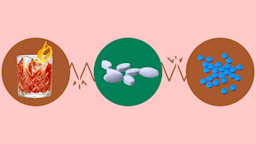
7 Triazolam Interactions to Watch Out For
Learn about common interactions to be aware of when taking triazolam, including interactions with medications, food, and alcohol.

Triazolam (Halcion) is used to treat insomnia in adults. It belongs to the drug class called benzodiazepines. The typical dosage is one tablet by mouth before bedtime. This medication helps you sleep, but it should only be used for a short period of time, typically for 7 to 10 days at a time. In addition to sedation (sleepiness), this medication can cause side effects like headaches and dizziness. Like other benzodiazepines, triazolam (Halcion) also has other serious risks and interactions with other medications.

Triazolam (Halcion) is a benzodiazepine. It affects certain chemicals in the brain to relax your nervous system. This helps you sleep.
| Common Brands | Halcion |
|---|---|
| Drug Class | Benzodiazepine |
| Controlled Substance Classification | Schedule IV |
| Generic Status | Lower-cost generic available |
| Availability | Prescription only |

Triazolam (Halcion) can cause some serious health issues. This risk may be even higher for certain groups. If this worries you, talk to your doctor or pharmacist about other options.
 Mixing triazolam (Halcion) with certain pain medications called opioids can be life-threatening. Taking these two types of medications together can make you extremely sleepy and can possibly stop your breathing.
 It's very important not to combine triazolam (Halcion) with opioids unless it's absolutely necessary and unless you're closely supervised by a healthcare professional (HCP). Get emergency help if you feel like you're having trouble breathing or you can't wake up easily after you take triazolam (Halcion).
Triazolam (Halcion) is a controlled substance because it has a risk for misuse and addiction. Misusing this medication can raise the risk for serious and possibly life-threatening side effects, such as dangerously slow breathing, not being able to stay awake, and death.
To lower your risk for misuse and addiction, take triazolam (Halcion) exactly as prescribed. Don't change the dose or how often you take it without talking to your prescriber first. They'll prescribe the lowest amount of medication that's necessary to help you sleep for the shortest period of time possible.
Taking triazolam (Halcion) for a long period of time can lead to physical dependence. This happens when your body starts relying on the medication to function normally . And you could have withdrawal symptoms if you suddenly stop taking triazolam (Halcion). These withdrawal symptoms can include difficulty sleeping, nausea, muscle pain, and more nervousness. To lower your risk for dependence and withdrawal, your healthcare team will only prescribe the lowest possible dose to treat your insomnia for the shortest amount of time.
Medications like triazolam (Halcion) have caused people to have unusual sleep behavior. This includes "sleep driving," cooking and eating food, making phone calls, and other behaviors that happen while you're asleep. In most cases, you don't remember that these behaviors happened. Let your prescriber know if your loved ones notice these behaviors while you're sleeping.
Some people who take triazolam (Halcion) might feel more anxious during the day, confused, outgoing, irritable, or aggressive. It's also possible to have amnesia (memory loss) for a few hours after you take the medication. And people with depression might experience worsened symptoms, including thoughts of self-harm, while they're taking triazolam (Halcion). Let your prescriber know if you notice unusual changes in your mood or personality. Get medical attention right away if you have any thoughts of harming yourself.
Triazolam (Halcion) can lower your ability to focus, think, and react. Be careful and avoid activities that require you to be alert, such as driving a car or operating machinery, until you know how this medication affects you.
In people with breathing problems, triazolam (Halcion) can slow down breathing or stop breathing for a brief period of time. Let your prescriber know right away if you or your partner notices a change in how well you're able to breathe while you're taking this medication. Triazolam (Halcion) might not be safe for you.
Triazolam (Halcion) can cause harm to your baby if you're pregnant. Taking this medication during late pregnancy can raise the risk that your baby has serious side effects after they're born. These side effects can include dangerously slowed breathing, limpness, and withdrawal symptoms like irritability, restlessness, and poor feeding. Speak with your healthcare team about other options to help you get good sleep if you're pregnant or planning to become pregnant.
Triazolam (Halcion) can interact with some other medications. For example, certain medications can cause the levels of triazolam (Halcion) in the body to get dangerously high. This can raise the risk for serious side effects. Some medications that can interact with triazolam (Halcion) in this way include antibiotics like clarithromycin, antifungals like ketoconazole, and certain HIV medications called protease inhibitors.
Speak with your prescriber and pharmacist about all the medications, including over-the-counter medications and supplements, you're taking or plan to take. They might need to make dose adjustments to some of your medications or they might recommend other safer options.

The following side effects may get better over time as your body gets used to the medication. Let your healthcare provider know immediately if you continue to experience these symptoms or if they worsen over time.
Contact your healthcare provider immediately if you experience any of the following.
Along with its needed effects, a medicine may cause some unwanted effects. Although not all of these side effects may occur, if they do occur they may need medical attention.
Check with your doctor immediately if any of the following side effects occur:
Less common
Shakiness and unsteady walk
unsteadiness, trembling, or other problems with muscle control or coordination
Rare
Being forgetful
burning, crawling, itching, numbness, prickling, "pins and needles", or tingling feelings
continuing ringing or buzzing or other unexplained noise in the ears
discouragement
false or unusual sense of well-being
fast, pounding, or irregular heartbeat or pulse
feeling sad or empty
hearing loss
irritability
lack of appetite
loss of interest or pleasure
nightmares
tiredness
trouble concentrating
trouble sleeping
Incidence not known
Actions that are out of control
aggressiveness
changes in patterns and rhythms of speech
chills
clay-colored stools
confusion about identity, place, and time
dark urine
decrease in frequency of urination
decrease in urine volume
difficulty in passing urine (dribbling)
dizziness
drowsiness
environment seems unreal
fainting
falling
false beliefs that cannot be changed by facts
feeling of unreality
headache
hyperventilation
inability to move the eyes
increased blinking or spasms of the eyelid
increased muscle spasm
irregular heartbeat
loss of bladder control
loss of memory
nervousness
problems with memory
rash
relaxed and calm feeling
restlessness
seeing, hearing, or feeling things that are not there
sense of detachment from self or body
sleep walking
sleepiness
slurred speech
sticking out of tongue
stomach pain
talking, feeling, and acting with excitement
trouble breathing, speaking, or swallowing
uncontrolled twisting movements of the neck, trunk, arms, or legs
unpleasant breath odor
unusual excitement, nervousness, restlessness, or irritability
unusual facial expressions
unusual tiredness or weakness
vomiting of blood
yellow eyes or skin
Get emergency help immediately if any of the following symptoms of overdose occur:
Symptoms of overdose
Change in consciousness
irregular, fast or slow, or shallow breathing
loss of consciousness
mood or mental changes
pale or blue lips, fingernails, or skin
slurred speech
Some side effects may occur that usually do not need medical attention. These side effects may go away during treatment as your body adjusts to the medicine. Also, your health care professional may be able to tell you about ways to prevent or reduce some of these side effects. Check with your health care professional if any of the following side effects continue or are bothersome or if you have any questions about them:
More common
Lightheadedness
Rare
Blistering, crusting, irritation, itching, or reddening of the skin
change in taste, or bad, unusual, or unpleasant (after) taste
change in vision
cracked, dry, or scaly skin
cramps
difficulty having a bowel movement
swelling
weakness
Incidence not known
Decreased interest in sexual intercourse
inability to have or keep an erection
increase in sexual ability, desire, drive, or performance
increase interest in sexual intercourse
itching skin
loss in sexual ability, desire, drive, or performance
menstrual changes
redness, swelling, or soreness of the tongue
swelling or inflammation of the mouth
Other side effects not listed may also occur in some patients. If you notice any other effects, check with your healthcare professional.
Call your doctor for medical advice about side effects. You may report side effects to the FDA at 1-800-FDA-1088.





Although certain medicines should not be used together at all, in other cases two different medicines may be used together even if an interaction might occur. In these cases, your doctor may want to change the dose, or other precautions may be necessary. When you are taking this medicine, it is especially important that your healthcare professional know if you are taking any of the medicines listed below. The following interactions have been selected on the basis of their potential significance and are not necessarily all-inclusive.
Using this medicine with any of the following medicines is not recommended. Your doctor may decide not to treat you with this medication or change some of the other medicines you take.
Using this medicine with any of the following medicines is usually not recommended, but may be required in some cases. If both medicines are prescribed together, your doctor may change the dose or how often you use one or both of the medicines.
Using this medicine with any of the following medicines may cause an increased risk of certain side effects, but using both drugs may be the best treatment for you. If both medicines are prescribed together, your doctor may change the dose or how often you use one or both of the medicines.


Contraindications are specific health conditions or situations in which a person should not take a medication due to safety concerns. If you have any of the following conditions or if any of the following apply to you, let your healthcare provider know because Triazolam (Halcion) will not be safe for you to take.












Prescription savings
Stop paying too much for your prescriptions. Compare prices, get pharmacy coupons, and save up to 80%. Find expert answers to your health questions so you can make the best decisions for yourself and your family.
Health conditions
Medications & treatment
Access & affordability
Medication discounts

Triazolam isn't banned in the United States. But it was banned in the United Kingdom in the early 1990s because there was uncertainty around the medication's safety. Triazolam is still available in the U.S. because the FDA determined that it's safe when prescribed and used according to the labeling. The FDA also required the labeling to include warnings about possible unusual changes in behavior and the effects on the ability to think clearly and make sound decisions. To be as safe as possible, you should take the lowest dose of Triazolam that works to treat your insomnia and only for a short period of time.
A small study showed that [[EDITOR|DRUG_DISPLAY_NAME|]] starts to work within 30 minutes. It's one of the shortest-acting benzodiazepines available, so its effect starts to wear off several hours after a dose.
Yes, Triazolam is still prescribed today for treating insomnia short term. But it's not a first-choice option because of its risk of causing anxiety the next day after a dose.
Yes, Triazolam is considered a Schedule IV controlled substance. It's classified as a controlled substance because it carries a risk for misuse, addiction, and dependence. For this reason, your prescriber or sleep specialist will recommend that you take the lowest dose necessary to treat your insomnia and for the shortest amount of time. Speak with your healthcare team about alternative treatments if you need help managing insomnia for a longer period of time.
It's best to avoid drinking alcohol while you're taking Triazolam. The combination of alcohol and Triazolam can make you very sleepy or dizzy and raise your risk for falls or other accidental injuries. In addition, mixing alcohol with this medication puts you at risk of driving, preparing and eating food, or performing other behaviors while you're not fully awake; you might not remember that you did these things the next day. Alcohol can also make it harder for you to get a good night's sleep, so it's best to avoid drinking if you already have trouble sleeping.
Work with your prescriber to come up with a plan to stop taking Triazolam. This typically involves following a schedule to lower the dose slowly over time before you can stop the medication. Although Triazolam is a short-acting benzodiazepine (meaning the effects typically go away quickly), stopping any kind of benzodiazepine too suddenly can cause bothersome withdrawal symptoms like involuntary movements, anxiety, irritability, depression, nausea, stomach upset, and muscle pain.
No. Triazolam can cross the placenta and affect your baby during pregnancy. Taking this medication during late pregnancy can raise the risk for your baby to have serious side effects after they're born. Your newborn can be very sleepy or irritable, have trouble breathing, or have dangerous withdrawal symptoms like poor feeding. Speak with your healthcare team if you're currently pregnant or thinking about getting pregnant before you take Triazolam.
Triazolam is FDA-approved as short-term treatment for insomnia only. But it's a common medication that dentists and orthodontists use to help people relax before dental procedures and surgeries. This is considered an "off-label use" of Triazolam. Be sure to only take Triazolam as directed by your prescriber. Don't take Triazolam before a dental procedure unless your dentist or orthodontist instructed you to.
