





What Is the Best Psoriasis Treatment for You?
Whether your psoriasis is moderate or severe, there are many treatment options. Browse over-the-counter medications, biologics, and other psoriasis treatments.

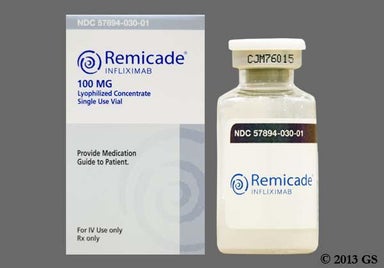
Remicade (infliximab) is an injectable medication used to treat many autoimmune conditions, including ulcerative colitis and Crohn's disease. It's given through an intravenous (IV) infusion by a healthcare provider.

Remicade (infliximab) is a biological disease-modifying antirheumatic drug (DMARD) that blocks a protein called tumor necrosis factor (TNF). By blocking TNF, Remicade (infliximab) lowers inflammation in your body to treat symptoms caused by many autoimmune conditions.
| Common Brands | Remicade, Avsola, Inflectra, Renflexis |
|---|---|
| Drug Class | Biologic DMARD |
| Controlled Substance Classification | Not a controlled medication |
| Generic Status | No lower-cost generic available |
| Availability | Prescription only |

The following side effects may get better over time as your body gets used to the medication. Let your healthcare provider know immediately if you continue to experience these symptoms or if they worsen over time.
Contact your healthcare provider immediately if you experience any of the following.
Along with its needed effects, a medicine may cause some unwanted effects. Although not all of these side effects may occur, if they do occur they may need medical attention.
Check with your doctor or nurse immediately if any of the following side effects occur:
More common
Black, tarry stools
bladder pain
bloody or cloudy urine
blurred vision
body aches or pain
chills
cough producing mucus
difficult, burning, or painful urination
difficulty breathing
dizziness
dryness or soreness of the throat
ear congestion
frequent urge to urinate
headache
hoarseness
loss of voice
lower back or side pain
nervousness
pain or swelling in the arms or legs
pain or tenderness around the eyes and cheekbones
painful or difficult urination
pale skin
pounding in the ears
runny or stuffy nose
slow or fast heartbeat
sores, ulcers, or white spots on the lips or in the mouth
stomach pain
tender, swollen glands in the neck
tightness in the chest
trouble breathing
trouble swallowing
unusual bleeding or bruising
unusual tiredness or weakness
voice changes
Rare
Bleeding gums
blood in the stool
blue lips and fingernails
changes in skin color or tenderness of the foot or leg
chest discomfort
confusion
coughing that sometimes produces a pink frothy sputum
dark urine
decreased urination
dizziness, faintness, or lightheadedness when getting up suddenly from a lying or sitting position
fast or noisy breathing
feeling of discomfort
general feeling of illness
general tiredness and weakness
high fever
increased sweating
irregular or pounding heartbeat
light-colored stools
muscle aches
pinpoint red spots on the skin
puffiness or swelling of the eyelids or around the eyes, face, lips, or tongue
rapid, shallow breathing
swelling of the joints
sunken eyes
thirst
upper right abdominal or stomach pain
vomiting
unusual weight loss
wrinkled skin
yellow skin and eyes
Incidence not known
Back pain, sudden and severe
blistering, peeling, loosening of the skin
bloody nose
burning, tingling, numbness or pain in the hands, arms, feet, or legs
change in mental status
clay-colored stools
dark or bloody urine
difficulty with speaking
dilated neck veins
double vision
heavier menstrual periods
inability to move the arms, legs, or facial muscles
inability to speak
loss of appetite
muscle weakness, sudden and progressing
red, irritated eyes
red skin lesions, often with a purple center
seizures
sensation of pins and needles
slow or irregular breathing
slow speech
stabbing pain
temporary vision loss
vomiting of blood
Some side effects may occur that usually do not need medical attention. These side effects may go away during treatment as your body adjusts to the medicine. Also, your health care professional may be able to tell you about ways to prevent or reduce some of these side effects. Check with your health care professional if any of the following side effects continue or are bothersome or if you have any questions about them:
More common
Belching
difficulty in moving
feeling of warmth
indigestion
muscle stiffness
redness of the face, neck, arms, and occasionally, upper chest
Less common
Constipation, severe
Other side effects not listed may also occur in some patients. If you notice any other effects, check with your healthcare professional.
Call your doctor for medical advice about side effects. You may report side effects to the FDA at 1-800-FDA-1088.




Remicade (infliximab) can cause some serious health issues. This risk may be even higher for certain groups. If this worries you, talk to your doctor or pharmacist about other options.
 Remicade (infliximab) can affect your body's ability to fight off infections, which can raise your risk of serious or life-threatening bacterial, viral, or fungal infections. The risk is higher for people who have an active infection, people who have infections that keep coming back, adults aged 65 years and older, people with certain chronic conditions that make it easier to develop infections, and people taking medications that weaken your immune system (e.g., steroids or methotrexate).
 Remicade (infliximab) can also cause new or old tuberculosis (TB) infections to come back. Similarly, the medication can reactivate the hepatitis B virus (HBV) if you're a carrier of the virus.
For these reasons, you'll need to get tested for both TB and HBV before starting Remicade (infliximab) and get treatment if you test positive.
Remicade (infliximab) can also cause new or old tuberculosis (TB) infections to come back. Similarly, the medication can reactivate the hepatitis B virus (HBV) if you're a carrier of the virus.
For these reasons, you'll need to get tested for both TB and HBV before starting Remicade (infliximab) and get treatment if you test positive.
If you develop symptoms of an infection (e.g., fever, cough, difficulty breathing, diarrhea, weakness, sweating, chills) while taking Remicade (infliximab), go to the hospital right away so you can be tested for an infection. You might have to stop taking Remicade (infliximab) so your body can fight the infection. Tell your provider about your medical conditions and medications so they can make sure Remicade (infliximab) is safe for you.
Remicade (infliximab) might raise your risk of getting certain types of cancers, including leukemia, lymphoma, skin, or cervical cancer. The risk is higher in people 18 years old and younger, if you take other medications that weaken your immune system (e.g, 6-mercaptopurine (Purinethol) or azathioprine (Imuran)), if you have a history of cancer, or if you have severe rheumatoid arthritis. You'll likely need certain labs and occasional physical exams while you take Remicade (infliximab) to monitor your risk of cancer. If you experience symptoms such as swollen lymph nodes in your neck, armpits, or groin, fatigue, weight loss, loss of appetite, recurrent nosebleeds, lumps on your skin, vaginal discharge, pelvic or back pain, or bleeding that is heavier or longer than usual, contact your provider.
Remicade (infliximab) can cause serious liver problems that can lead to liver failure or death. You might need to get regular blood tests done to make sure your liver is working properly. Seek medical attention right away if you notice swelling of your stomach, yellowing of your skin or the whites of your eyes, stool changes (black, tarry, or bloody stools), coughing or vomiting up blood, confusion, slurred speech, mood swings, or changes in personality. You might need to stop using the medication to prevent further liver damage.
Remicade (infliximab) can cause new or worsening heart failure, heart attacks, fast and irregular heartbeat, and high or low blood pressure. Let your provider know if you experience any signs of heart problems (e.g., shortness of breath, swelling in the legs, ankles, or feet, fast and irregular heartbeat, difficulty exercising, tiredness or weakness, chest pain) Remicade (infliximab).
Although rare, Remicade (infliximab) can lead to low blood cell counts. This can raise your risk of serious infections, bleeding, and anemia. If your blood counts drop too low, you'll likely need to stop taking Remicade (infliximab). If you develop any signs of infection (e.g., fever, tiredness, chills, cough, trouble breathing) or signs of bleeding (pale skin, fast heart rate, lightheadedness, blood in your urine or stool), contact your provider right away.
Although rare, Remicade (infliximab) can cause new or worsening nervous system problems, including damage to the nerves and seizures. Tell your provider if you have any neurological problems before starting Remicade (infliximab) or if you get dizziness, muscle weakness or spasms, changes in vision, or loss of balance while taking Remicade (infliximab).
Don't take Remicade (infliximab) together with other biological medications, including Kineret (anakinra), Orencia (abatacept), Enbrel (etanercept) or Actemra (tocilizumab), because doing so can raise your risk of serious infections. Talk to your provider before starting any medications for your autoimmune condition.

Remicade (infliximab) is only given through an IV infusion by a healthcare provider. The typical dose is 300 mg IV infused over 1 hour every month.

Although certain medicines should not be used together at all, in other cases two different medicines may be used together even if an interaction might occur. In these cases, your doctor may want to change the dose, or other precautions may be necessary. When you are receiving this medicine, it is especially important that your healthcare professional know if you are taking any of the medicines listed below. The following interactions have been selected on the basis of their potential significance and are not necessarily all-inclusive.
Using this medicine with any of the following medicines is usually not recommended, but may be required in some cases. If both medicines are prescribed together, your doctor may change the dose or how often you use one or both of the medicines.

Contraindications are specific health conditions or situations in which a person should not take a medication due to safety concerns. If you have any of the following conditions or if any of the following apply to you, let your healthcare provider know because Remicade (infliximab) will not be safe for you to take.










Prescription savings
Stop paying too much for your prescriptions. Compare prices, get pharmacy coupons, and save up to 80%. Find expert answers to your health questions so you can make the best decisions for yourself and your family.
Health conditions
Medications & treatment
Access & affordability
Medication discounts

This will depend on what condition you're being treated for. In general, when first starting Remicade, it's typically given every 2 to 4 weeks for 3 doses. Then, the maintenance dose is typically given every 2 months, but for AS, it's given every 6 weeks.
There isn't a specific amount of time that you'll need to take Remicade. Your provider will likely have you continue taking the medication as long as it's helping your condition and you're not having side effects.
Avsola, Inflectra, and Renflexis are known as biosimilars to Remicade. A biosimilar is a biologic medication with similar function, structure, and effectiveness as the original biologic that was first approved by the FDA. Avsola, Inflectra, Renflexis, and Remicade all treat the same autoimmune conditions as Remicade. Read on for more information about the specific differences between Remicade and Inflectra.
You can still receive certain vaccines, including the flu shot, while taking Remicade. However, you shouldn't receive live vaccines because it's not known if they are safe while you're taking Remicade. Examples of live vaccines include the FluMist Quadrivalent (live attenuated influenza vaccine), which is given through a nasal spray, the measles, mumps, rubella (MMR) vaccine, and the Bacille Calmette-Guerin (BCG) vaccine. You should be brought up to date with all vaccines before starting Remicade. Be sure to let your provider know you're taking Remicade before you receive any vaccines. Also, make sure your providers know if you received this medication while you were pregnant because your baby might have a higher risk of infections. Your provider will decide when your baby can receive vaccines safely after birth.
The effects of Remicade on pregnant women and their unborn babies aren't clear, so it's not known if this medication is safe to use during pregnancy. If you're pregnant or thinking of getting pregnant, talk to your provider to see if Remicade is right for you.
