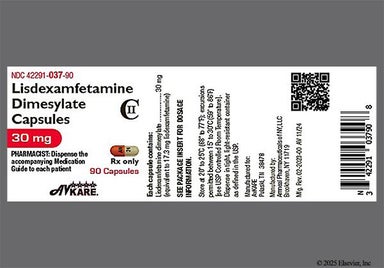
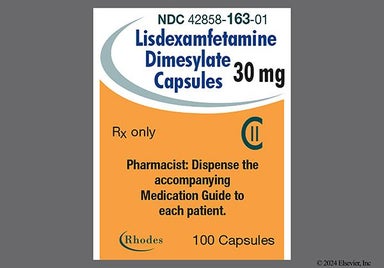
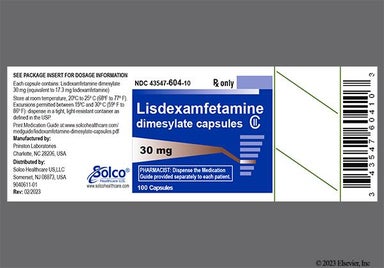
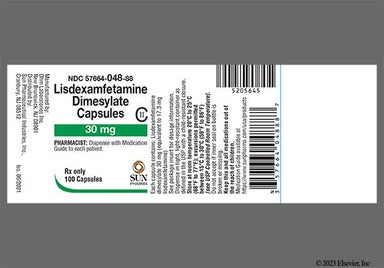
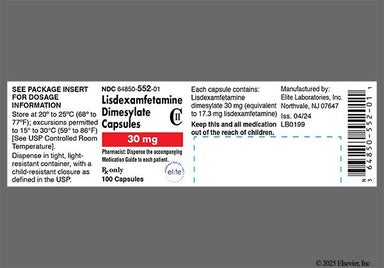
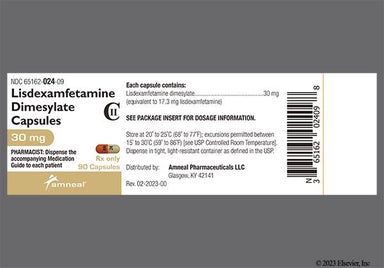
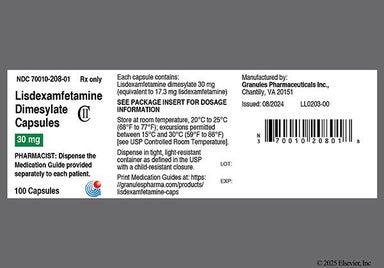
Vyvanse, the brand name for lisdexamfetamine, is a stimulant medication. It's used to treat attention deficit-hyperactivity disorder (ADHD) in people 6 years and older. It can also treat binge eating disorder (BED) in adults. Vyvanse (lisdexamfetamine) comes as capsules and chewable tablets. It's taken once per day in the morning. The dosage starts low and gets adjusted based on how you respond to the medication. Common side effects include trouble sleeping and loss of appetite. Vyvanse (lisdexamfetamine) is a controlled substance because it has a high risk of misuse and dependency.
Vyvanse (lisdexamfetamine) is a controlled substance, which means that it's more likely to be misused or cause dependence. There are federal and state laws that limit the amount of medication that can be prescribed or dispensed within a certain period of time.
Vyvanse (lisdexamfetamine) is a stimulant medication. It's not exactly known how the medication works to treat ADHD and binge eating disorder. But researchers think it works by raising the levels of chemicals in your brain called norepinephrine, dopamine, and serotonin. These chemicals are thought to help control how well you focus and how you eat.
Vyvanse (lisdexamfetamine) can cause some serious health issues. This risk may be even higher for certain groups. If this worries you, talk to your doctor or pharmacist about other options.
Risk of misuse and addiction
Risk factors: History of substance or alcohol use disorder | Taking more Vyvanse (lisdexamfetamine) than prescribed
Vyvanse (lisdexamfetamine) has a high potential to be misused, which can be dangerous. Misusing this medication can cause serious side effects, like fast heart rate, high blood pressure, aggressive behavior, and even thoughts of hurting yourself or others. It can also lead to addiction or a deadly overdose.
To stay safe, take Vyvanse (lisdexamfetamine) exactly as prescribed to you. Don't change the dose or how often you take it without asking your prescriber first. Talk to your prescriber if you're worried about this risk.
Risks to people with serious heart problems
There have been reports of sudden death in people with heart problems taking stimulants like Vyvanse (lisdexamfetamine). Before starting this medication, tell your prescriber if you have any heart problems. This can include coronary artery disease (CAD). Other issues to note are problems with the structure of your heart or your heart rhythm (arrhythmia). Your prescriber can make sure it's safe for you to take Vyvanse (lisdexamfetamine).
Higher blood pressure and faster heart rate
Stimulants including Vyvanse (lisdexamfetamine) can make your blood pressure and heart rate go up. On average, blood pressure can rise by 2 mmHg to 4 mmHg. And, heart rate can go up by 3 to 6 beats per minute.
Let your prescriber know if you have high blood pressure or a history of a fast heart rate. They can check that Vyvanse (lisdexamfetamine) is safe for you. Tell your care team if your blood pressure is higher than usual or if you feel your heart racing.
Strange thoughts or behavior
Risk factors: History of psychotic episodes or other manic psychiatric conditions | Personal or family history of depression | Family history of suicide or bipolar disorder
Stimulants like Vyvanse (lisdexamfetamine) can sometimes change how you think or act. This can include being aggressive, acting recklessly, or having too much energy. Some people might have hallucinations (seeing or hearing things that aren't there) or delusions (believing things that aren't true).
Sometimes, this can happen to people who've never had these problems before. But it's more likely to be worse if you already have a mental health problem like psychosis or bipolar disorder. Your prescriber will check your risk before you start Vyvanse (lisdexamfetamine).
If you start to act unusual or have strange thoughts while taking Vyvanse (lisdexamfetamine), let your prescriber know. You might have to stop the medication.
Slow growth in children
Stimulants like Vyvanse (lisdexamfetamine) have been linked to weight loss and slow growth (both in height and weight) in children. Your child's primary care provider will check their height and weight often. If your child isn't growing as expected, the primary care provider might suggest taking a break from the medication.
Talk to your child's prescriber or primary care provider if you notice your child has lost a lot of weight. Also, talk to them if you're worried about how much your child is growing.
Problems with blood flow in the arms and legs, including Raynaud's phenomenon
Stimulants like Vyvanse (lisdexamfetamine) have been linked to problems with blood flow in the arms and legs. This can include Raynaud's phenomenon, which is a problem with blood flow to your fingers and toes.
Raynaud's phenomenon can lead to color changes in your fingers and toes. They can turn pale, blue, or red depending on how much blood gets to them. Your fingers and toes might also feel cold, numb, or painful. If this happens, it's usually mild and happens occasionally. But rarely, it can lead to other problems like sores or tissue damage.
Let your care team know if you have any of these symptoms while taking Vyvanse (lisdexamfetamine). Usually, they get better after your prescriber lowers your dose or after you stop the medication.
Serotonin syndrome
Risk factors: Taking monoamine oxidase inhibitors (MAOI) within 14 days of Vyvanse (lisdexamfetamine) | Taking other medications that raise serotonin levels in your brain
Taking Vyvanse (lisdexamfetamine) with some other medications can raise the risk of serotonin syndrome. This is a rare, but serious problem that happens when there's too much serotonin in the brain.
Medications that can make serotonin syndrome more likely are those that raise serotonin levels in the brain. These include antidepressants, MAOIs, and migraine medications called triptans. Tell your prescriber and pharmacist about all the medications you take or plan to take. They can help keep you safe and make changes if needed.
Get medical help right away if you notice signs of serotonin syndrome. These include a fast heart rate, sweating a lot, muscle stiffness, high fever, changes in behavior, and confusion.
Side effects of Vyvanse (lisdexamfetamine)
The following side effects may get better over time as your body gets used to the medication. Let your healthcare provider know immediately if you continue to experience these symptoms or if they worsen over time.
Heart attack—pain or tightness in the chest, shoulders, arms, or jaw, nausea, shortness of breath, cold or clammy skin, feeling faint or lightheaded
Heart rhythm changes—fast or irregular heartbeat, dizziness, feeling faint or lightheaded, chest pain, trouble breathing
Increase in blood pressure
Irritability, confusion, fast or irregular heartbeat, muscle stiffness, twitching muscles, sweating, high fever, seizure, chills, vomiting, diarrhea, which may be signs of serotonin syndrome
Mood and behavior changes—anxiety, nervousness, confusion, hallucinations, irritability, hostility, thoughts of suicide or self-harm, worsening mood, feelings of depression
Prolonged or painful erection
Raynaud syndrome—cool, numb, or painful fingers or toes that may change color from pale, to blue, to red
Seizures
Stroke—sudden numbness or weakness of the face, arm, or leg, trouble speaking, confusion, trouble walking, loss of balance or coordination, dizziness, severe headache, change in vision
Side effects that usually do not require medical attention (report these to your care team if they continue or are bothersome):
For binge eating disorder, can lower the number of binge-eating days per week by about one and a half days
Has a few options for people who have trouble swallowing pills whole (open the capsule or switch to chewable tablets)
Cons
Has a risk of misuse and dependency
A controlled medication, so there are special requirements for getting the prescription filled
Might need to take gradually lower doses before stopping to avoid withdrawal symptoms
Not the best choice for people with heart conditions
Pharmacist tips for Vyvanse (lisdexamfetamine)
Take Vyvanse (lisdexamfetamine) as soon as you wake up every day. This medication might make you have trouble sleeping if you take it later in the day.
You can take Vyvanse (lisdexamfetamine) with or without food. Make sure to limit acidic foods that you eat or drink. This includes fruit juice, citrus fruits, and foods high in vitamin C. These foods and drinks might lower the amount of medication that gets absorbed into your body. This might affect how well it works for you.
For the Vyvanse (lisdexamfetamine) capsules: Swallow the capsules whole. Don't crush or chew them. But if needed, you can open the capsule, empty everything inside into a cup, and mix with yogurt, water, or orange juice. Once mixed well, consume all of it right away.
For the Vyvanse (lisdexamfetamine) chewable tablets: Be sure to chew the tablets well before swallowing. Don't swallow the chewable tablets whole; they might not get absorbed well enough in your body to work.
It's usually a good idea to drink coffee or other caffeinated beverages in moderation when you're taking Vyvanse (lisdexamfetamine). Like the medication, caffeine can also be a stimulant. Taking the medication with caffeinated things can raise your risk of side effects. These can include high blood pressure, trouble sleeping, and low appetite. If you feel tired, talk to your care team about other ways to stay awake and alert.
Avoid driving the first few days after you start Vyvanse (lisdexamfetamine) and after your dose changes. Wait until you know how this medication makes you feel. It might make it dangerous for you to drive.
You might feel less hungry while taking Vyvanse (lisdexamfetamine). Be sure you're eating balanced meals when you do. Speak with your prescriber if you're worried about your nutrition.
Talk to your prescriber if you have tics or Tourette syndrome. Vyvanse (lisdexamfetamine) can worsen these problems. Your prescriber can help you decide if the medication is a good choice.
Take Vyvanse (lisdexamfetamine) exactly like your prescriber told you to. Don't suddenly lower your dose or stop taking it without talking to them first. If you do, you might have uncomfortable withdrawal symptoms. These include uneasiness, trouble thinking clearly, and trouble sleeping. If you want to stop this medication, your prescriber will slowly lower your dose before you can completely stop.
Taking too much Vyvanse (lisdexamfetamine) by accident can be very dangerous. An overdose can look like restlessness, fast breathing, irregular heartbeat, irritability, and paranoia. Be sure you and your loved ones know what an overdose can look like. Call 911 right away if this happens.
The average cost for 30 capsules of 30mg of Vyvanse (lisdexamfetamine) is $67.78 with a free GoodRx coupon. This is 82.61% off the average retail price of $389.70.
Adults and children 6 years and older: The typical starting dose is 30 mg by mouth once per day in the morning. Your prescriber might adjust your dose depending on your needs. The recommended dose is 30 mg to 70 mg once per day.
Binge eating disorder
Adults only: The typical starting dose is 30 mg by mouth once per day. Your prescriber might adjust your dose depending on how the medication is working for you. The recommended dose is 50 mg to 70 mg once per day.
Contraindications are specific health conditions or situations in which a person should not take a medication due to safety concerns. If you have any of the following conditions or if any of the following apply to you, let your healthcare provider know because Vyvanse (lisdexamfetamine) will not be safe for you to take.
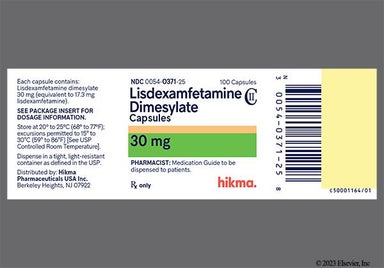
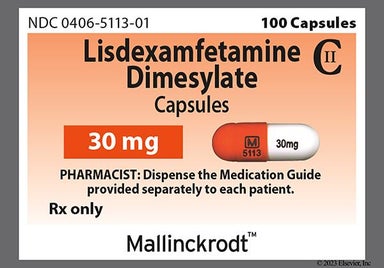
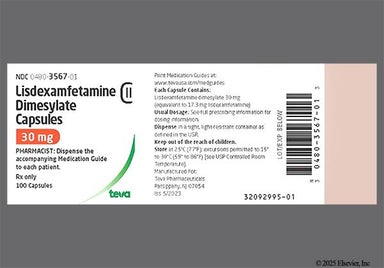
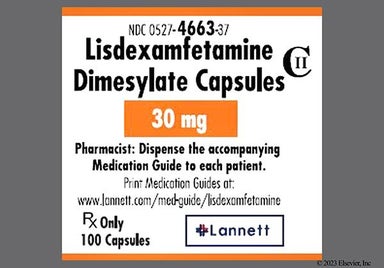
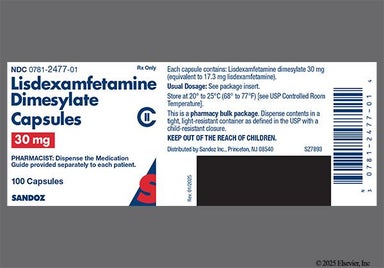
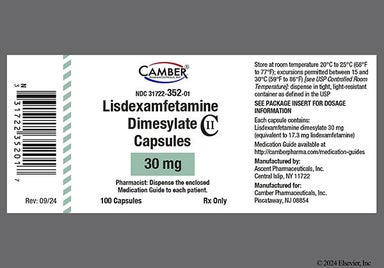
This medicine is Orange, White Capsule Imprinted With "54 682".Orange, White Capsule 54 682 - Lisdexamfetamine Dimesylate 30mg CapsuleThis medicine is Orange, White Capsule Imprinted With "M 5113 30Mg".Orange, White Capsule M 5113 30mg - Lisdexamfetamine Dimesylate 30mg CapsuleThis medicine is Pink, Yellow Capsule Imprinted With "Teva 3567 Teva 3567".Pink, Yellow Capsule TEVA 3567 TEVA 3567 - Lisdexamfetamine Dimesylate 30mg CapsuleThis medicine is Orange, White Capsule Imprinted With "Lannett 4663".Orange, White Capsule Lannett 4663 - Lisdexamfetamine Dimesylate 30mg CapsuleThis medicine is Orange, White Capsule Imprinted With "Sz833 Sz833".Orange, White Capsule SZ833 SZ833 - Lisdexamfetamine Dimesylate 30mg CapsuleThis medicine is Orange, White Capsule Imprinted With "Ac 30".Orange, White Capsule AC 30 - Lisdexamfetamine Dimesylate 30mg CapsuleThis medicine is Orange, White Capsule Imprinted With "An 24".Orange, White Capsule AN 24 - Lisdexamfetamine Dimesylate 30mg CapsuleThis medicine is Orange, White Capsule Imprinted With "Rp 30Mg".Orange, White Capsule RP 30mg - Lisdexamfetamine Dimesylate 30mg CapsuleThis medicine is Orange, White Capsule Imprinted With "S6 30".Orange, White Capsule S6 30 - Lisdexamfetamine Dimesylate 30mg CapsuleThis medicine is Orange, White Capsule Imprinted With "Rm48 30 Mg".Orange, White Capsule RM48 30 mg - Lisdexamfetamine Dimesylate 30mg CapsuleThis medicine is Orange, White Capsule Imprinted With "E0552 30 Mg".Orange, White Capsule E0552 30 mg - Lisdexamfetamine Dimesylate 30mg CapsuleThis medicine is Orange, White Capsule Imprinted With "An 24".Orange, White Capsule AN 24 - Lisdexamfetamine Dimesylate 30mg CapsuleThis medicine is Orange, White Capsule Imprinted With "G 30Mg 208".Orange, White Capsule G 30mg 208 - Lisdexamfetamine Dimesylate 30mg Capsule
References
Best studies we found
American Academy of Child and Adolescent Psychiatry. (2017). ADHD & the brain.
Moore, C. F., et al. (2018). Neuropharmacology of compulsive eating. Philosophical Transactions of the Royal Society of London. Series B, Biological Sciences.
GoodRx Health has strict sourcing policies and relies on primary sources such as medical organizations, governmental agencies, academic institutions, and peer-reviewed scientific journals. Learn more about how we ensure our content is accurate, thorough, and unbiased by reading our editorial guidelines.
Prescription savings
Stop paying too much for your prescriptions. Compare prices, get pharmacy coupons, and save up to 80%.
Plans start at $9.99/mo. (when paid yearly). Terms apply.
Common questions about Vyvanse
For ADHD, Vyvanse starts to work within 2 hours after you take it. It's best to take it right after you wake up in the morning. This can help you focus by the time you start work or school. Keep in mind that it could take a week or more of taking the medication every day to see overall improvements. As for binge-eating disorder, most studies showed that Vyvanse helped people have fewer days of binge eating each week after several weeks of treatment. If you have questions about how long it's taking for the medication to help you, talk to your prescriber.
For ADHD, Vyvanse can help you stay focused for up to 14 hours after you take it.
Yes, Vyvanse is a schedule 2 controlled substance. It has a high risk of being misused and causing dependence. These risks can lead to addiction. Some people might misuse the medication to feel "high" or lose weight. Others misuse it by taking it to focus better even though it's not prescribed for them. And when you take Vyvanse for a long time, you can become dependent on it. This also means you could have withdrawal symptoms if you lower the dose or stop taking it too fast. Withdrawal symptoms can include depression, tiredness, and trouble sleeping. To help lower the risks of misuse, dependence, and addiction, take Vyvanse exactly as prescribed to you. Talk to your prescriber if you're worried about these risks.
If your Vyvanse dose is too low for you, you might notice a few things. If you have ADHD, you might still have trouble focusing or sitting still. If you have binge-eating disorder, you might not feel like you have enough control over your eating. It's also possible to have some side effects from the medication, but they could be mild if the dose is too low. If you think your dose is too low, talk to your prescriber. They can help adjust your dose in a safe way. Don't take a higher dose on your own. Taking too much can make you more likely to have serious side effects, including possible overdose.
Vyvanse might make you feel less hungry, which can sometimes lead to weight loss. Remember, this medication isn't approved or recommended to be used for weight loss. Using Vyvanse on purpose to lose weight is misuse. This can be dangerous and lead to problems like stroke or irregular heart rhythm. If you need help with your weight, talk to a healthcare professional about safe options.
Avoid alcohol while taking Vyvanse. Alcohol can make your ADHD symptoms worse and make you have trouble focusing and jittery. It can also be dangerous and cause serious side effects, including alcohol poisoning and heart problems. Talk to your prescriber about how much alcohol you usually drink. They can point you to resources for quitting alcohol if it's hard for you to stop.
If you're pregnant or thinking about getting pregnant, talk to your prescriber. They can help you understand the risks and benefits of taking Vyvanse. There's some evidence that stimulants might be harmful during pregnancy. From limited data, people who kept taking stimulants during pregnancy might be at risk of delivering early (preterm labor). Their baby might also weigh too little at birth. And, newborns might have withdrawal symptoms, like not eating well and distress. Your prescriber can help you decide what's safest for you. If you take Vyvanse while pregnant, your prescriber can sign you up in a pregnancy registry. This program helps researchers learn more about the risks of stimulants during pregnancy.
Vyvanse and Adderall are stimulants that can help treat ADHD in adults and children. Vyvanse is taken once a day in the morning. Adderall comes in two versions: an immediate-release and a once-daily extended-release (Adderall XR). Vyvanse and Adderall are both considered first-choice options for ADHD. They generally work as well as one another and have similar side effects. But everyone responds to medications in different ways. It's possible that one might work better for you than the other. Talk to your prescriber to compare Vyvanse and Adderall.
Vyvanse is manufactured by Takeda Pharmaceuticals and is a brand-name medication. Generic versions were approved by the FDA in 2023 that may be made by multiple companies.Learn more
Vyvanse (lisdexamfetamine) is a stimulant medication. It's not exactly known how the medication works to treat ADHD and binge eating disorder. But researchers think it works by raising the levels of chemicals in your brain called norepinephrine, dopamine, and serotonin. These chemicals are thought to help control how well you focus and how you eat.Learn more
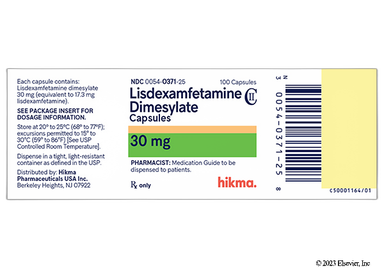





 Vyvanse (lisdexamfetamine) has a high potential to be
 To stay safe, take Vyvanse (lisdexamfetamine) exactly as prescribed to you. Don't change the dose or how often you take it without asking your prescriber first. Talk to your prescriber if you're worried about this risk.