



Eliquis, Xarelto, and More: What You Should Know About 8 Common Blood Thinner Medications
Anticoagulants help treat and prevent blood clots. Learn about the most common blood thinner medications and how to decide which is right for you.
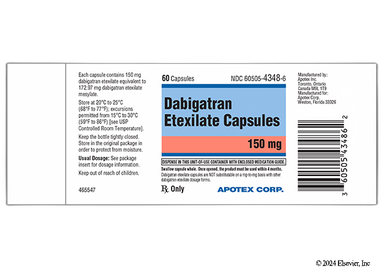
Dabigatran (Pradaxa) is an anticoagulant (blood thinner) used to help prevent and treat blood clots in adults and children. It's approved for certain conditions, including atrial fibrillation (AFib), where it lowers the risk of stroke. The medication comes as oral capsules and oral pellets that you take by mouth once or twice a day, depending on your condition. Common side effects include stomach upset and bleeding. If serious bleeding occurs, another medication called Praxbind (idarucizumab) can quickly reverse its blood-thinning effects.

Adults:
Children (3 months and older):
Dabigatran (Pradaxa) is an anticoagulant known as a direct thrombin inhibitor. It works by blocking thrombin, a protein your body needs to form blood clots.
By blocking thrombin, dabigatran (Pradaxa) helps prevent new blood clots from forming and keeps existing blood clots from getting larger.
| Common Brands | Pradaxa |
|---|---|
| Drug Class | Anticoagulant |
| Controlled Substance Classification | Not a controlled medication |
| Generic Status | Lower-cost generic available |
| Availability | Prescription only |

The following side effects may get better over time as your body gets used to the medication. Let your healthcare provider know immediately if you continue to experience these symptoms or if they worsen over time.
Contact your healthcare provider immediately if you experience any of the following.
Along with its needed effects, a medicine may cause some unwanted effects. Although not all of these side effects may occur, if they do occur they may need medical attention.
Check with your doctor immediately if any of the following side effects occur:
More common
Acid or sour stomach
belching
black, tarry stools
bloody stools
indigestion
pain or burning in the throat
stomach discomfort, upset, burning, or pain
vomiting
vomiting of blood or material that looks like coffee grounds
Rare
Chest pain or discomfort
difficulty with swallowing
dizziness
fainting or loss of consciousness
fast heartbeat
fast or irregular breathing
pain or discomfort in the arms, jaw, back or neck
puffiness or swelling of the eyelids or around the eyes, face, lips, or tongue
redness of the skin
skin rash, hives, welts, or itching skin
sweating
tightness in the chest
trouble breathing
unusual tiredness or weakness
Some side effects may occur that usually do not need medical attention. These side effects may go away during treatment as your body adjusts to the medicine. Also, your health care professional may be able to tell you about ways to prevent or reduce some of these side effects. Check with your health care professional if any of the following side effects continue or are bothersome or if you have any questions about them:
Incidence not known
Hair loss or thinning of the hair
Other side effects not listed may also occur in some patients. If you notice any other effects, check with your healthcare professional.
Call your doctor for medical advice about side effects. You may report side effects to the FDA at 1-800-FDA-1088.



Oral capsules:
Oral pellets:

Dabigatran (Pradaxa) can cause some serious health issues. This risk may be even higher for certain groups. If this worries you, talk to your doctor or pharmacist about other options.
 Don't stop taking dabigatran (Pradaxa) unless a healthcare professional tells you to. Stopping this medication too soon can raise your risk of serious blood clots in your body, including a stroke.
Get medical help right away if you have any of these symptoms:
Early treatment can help prevent serious complications.
If you’re taking dabigatran (Pradaxa) and need spinal or epidural anesthesia (numbing around your spine) or a spinal tap, you might have a higher risk of bleeding around your spinal cord. Though rare, this type can cause permanent nerve damage or paralysis.
Tell every healthcare professional that you're taking dabigatran (Pradaxa) before any spinal procedure. Get medical help right away if you have severe back pain, numbness or tingling in your legs, leg weakness, or trouble controlling your bladder or bowels after the procedure. These can be signs of bleeding around the spinal cord and need emergency treatment.
Taking dabigatran (Pradaxa) can raise your risk for bleeding. Your risk is higher if you also take other medications that can cause bleeding, such as NSAIDs, aspirin, or other blood thinners.
Get medical help right away if you have unusual bleeding or bruising, cough up or vomit blood, notice blood in your urine or stool, or feel dizzy or faint. If you have life-threatening bleeding or need emergency surgery, adults can receive a reversal medication called Praxbind (idarucizumab) to quickly reverse the effects of dabigatran (Pradaxa).
Don't take dabigatran (Pradaxa) if you have a mechanical artificial heart valve. This medication can raise your risk of stroke, heart attack, blood clots, and serious bleeding. If you have an artificial heart valve and need a blood thinner, talk with your prescriber about safer treatment options.
Dabigatran (Pradaxa) can interact with certain medications that affect how your body processes it. Some medications, such as rifampin, can make dabigatran (Pradaxa) work less well. Others, such as dronedarone or ketoconazole, can increase the amount of dabigatran (Pradaxa) in your body and raise your risk of bleeding, especially if you have kidney problems.
Tell your care team and pharmacist about all the medications, vitamins, and supplements you take before starting dabigatran (Pradaxa) or any new medication. Your prescriber might need to adjust your dose or recommend a different treatment to help keep you safe.
Dabigatran (Pradaxa) isn't recommended if you have triple-positive antiphospholipid syndrome (APS), a condition that raises your risk of blood clots. Tell your prescriber if you have APS before starting this medication. They can help choose the safest blood thinner for you.

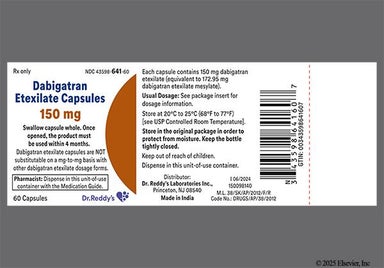
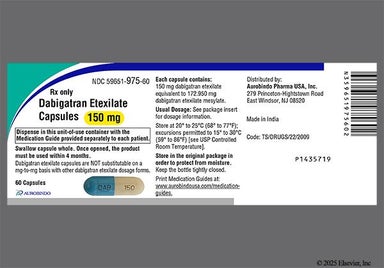
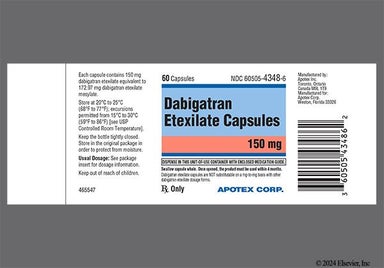
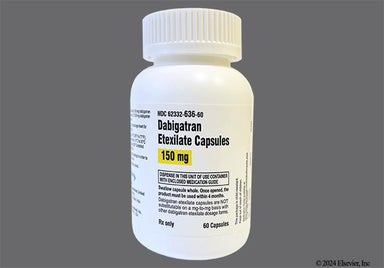
 Capsule
| Dosage | Quantity | Price as low as | Price per unit |
|---|---|---|---|
| 75mg | 60 capsules | $45.03 | $0.75 |
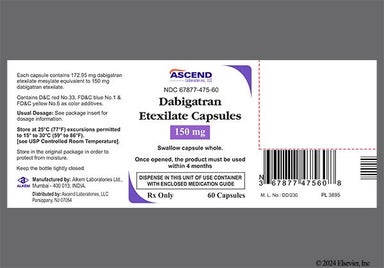
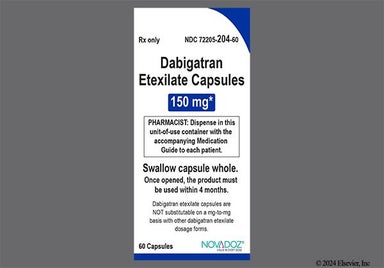
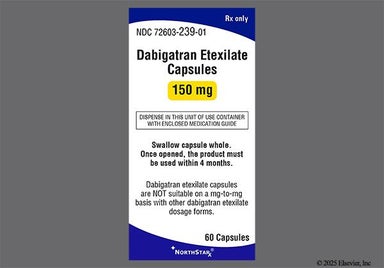
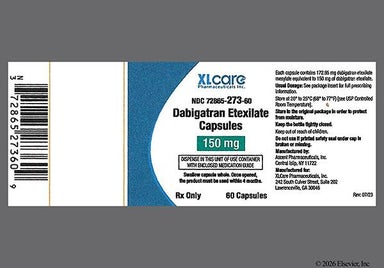
| 150mg | 60 capsules | $46.09 | $0.77 |
| 110mg | 60 capsules | $47.11 | $0.79 |
Adults (oral capsules)
Children
Your dose might differ if you have kidney problems or if you take a medication that interacts with dabigatran (Pradaxa).

Although certain medicines should not be used together at all, in other cases two different medicines may be used together even if an interaction might occur. In these cases, your doctor may want to change the dose, or other precautions may be necessary. When you are taking this medicine, it is especially important that your healthcare professional know if you are taking any of the medicines listed below. The following interactions have been selected on the basis of their potential significance and are not necessarily all-inclusive.
Using this medicine with any of the following medicines is not recommended. Your doctor may decide not to treat you with this medication or change some of the other medicines you take.
Using this medicine with any of the following medicines is usually not recommended, but may be required in some cases. If both medicines are prescribed together, your doctor may change the dose or how often you use one or both of the medicines.
Using this medicine with any of the following medicines may cause an increased risk of certain side effects, but using both drugs may be the best treatment for you. If both medicines are prescribed together, your doctor may change the dose or how often you use one or both of the medicines.


Contraindications are specific health conditions or situations in which a person should not take a medication due to safety concerns. If you have any of the following conditions or if any of the following apply to you, let your healthcare provider know because Dabigatran (Pradaxa) will not be safe for you to take.












Prescription savings
Stop paying too much for your prescriptions. Compare prices, get pharmacy coupons, and save up to 80%.Resources
About GoodRx
 Find expert answers to your health questions so you can make the best decisions for yourself and your family.
Health conditions
Medications & treatment
Access & affordability
Well-being
Medication discounts

Yes, the reversal agent for Pradaxa is called Praxbind (idarucizumab). It's used in emergencies, such as serious bleeding or when urgent surgery is needed. Praxbind works by attaching to Pradaxa and quickly reversing its blood-thinning effects. It's given into a vein (IV) by a healthcare professional in a hospital.
If you're having surgery or another medical procedure, your care team might have you stop taking Pradaxa 1 to 5 days beforehand to help lower your risk of bleeding. The exact timing depends on the type of procedure and your risk of bleeding. Don't stop taking it unless a healthcare professional specifically tells you to do so.
Yes, it's generally safe to drink coffee while taking Pradaxa. There are no known interactions between caffeine and this medication. Just keep in mind that drinking too much coffee can upset your stomach, and Pradaxa can also cause stomach upset in some people. If coffee seems to make your symptoms worse, talk with your prescriber.
It's best to limit alcohol while taking Pradaxa. Alcohol itself can thin the blood, which can raise your risk for bleeding, especially when combined with a blood thinner. If you choose to drink alcohol, talk with your prescriber first. Depending on your health and bleeding risk, they might say it's okay to have an occasional drink.
If you miss a dose of Pradaxa, take it as soon as you remember on the same day. But if your next dose is due in less than 6 hours, skip the missed dose and take your next dose at the usual time. Don’t take two doses at once to make up for a missed dose.
Pradaxa and Eliquis are both blood thinners used to prevent and treat blood clots, but they work in different ways. Pradaxa blocks a clotting protein called thrombin, while Eliquis blocks factor Xa, another clotting protein. Studies suggest that Eliquis might have a lower risk of bleeding and could be less likely to cause stomach upset than Pradaxa. Talk to your prescriber if you have questions about how the two medications compare.
If you have kidney problems, you may still be able to take Pradaxa, but your dose will need to be lowered. Kidney problems can raise your risk of bleeding while taking this medication. Tell your prescriber if you have kidney problems before starting this medication.
