cetirizine / pseudoephedrine
Zyrtec-D is a combination medication containing cetirizine (an antihistamine) and pseudoephedrine (a decongestant). It's taken by people ages 12 years and older to relieve allergy symptoms, like runny nose and nasal congestion. This medication comes as an extended-release tablet that's taken by mouth every 12 hours. Zyrtec-D is available as a brand-name and generic medication. Side effects can include trouble sleeping and dry mouth.


What is Zyrtec-D (cetirizine / pseudoephedrine)?
What is Zyrtec-D (cetirizine / pseudoephedrine) used for?
Short-term relief of allergy symptoms in adults and children ages 12 years and older:
- Itchy nose or throat
- Sneezing
- Itchy or watery eyes
- Runny or stuffy nose
- Sinus congestion or pressure
How Zyrtec-D (cetirizine / pseudoephedrine) works
Zyrtec-D (cetirizine / pseudoephedrine) is a combination of two medications that work together to relieve allergy symptoms.
- Cetirizine is a second-generation antihistamine that blocks histamine, which causes allergy symptoms like itchiness, itchy eyes, or runny nose. By blocking histamine, Zyrtec-D (cetirizine / pseudoephedrine) helps relieve allergy symptoms.
- Pseudoephedrine is a decongestant. It tightens the blood vessels in your nose to help with swelling and pressure. This allows you to breathe better.
Drug facts

Side effects of Zyrtec-D (cetirizine / pseudoephedrine)
The following side effects may get better over time as your body gets used to the medication. Let your healthcare provider know immediately if you continue to experience these symptoms or if they worsen over time.
Common Side Effects
- Trouble sleeping (4%)
- Dry mouth(4%)
Less Common Side Effects
- Feeling tired
- Sleepiness
- Sore throat
- Dizziness
- Sinus inflammation
Zyrtec-D (cetirizine / pseudoephedrine) serious side effects
Contact your healthcare provider immediately if you experience any of the following.
- Accidentally taking too much medication: seizures, hallucinations, confusion, blurry vision, changes in mood or behavior, movement problems,
- High blood pressure or fast heart rate: chest pain, blurry vision, headache, fatigue
More on Zyrtec-D (cetirizine / pseudoephedrine) side effects

The following Zyrtec-D (cetirizine / pseudoephedrine) side effects have also been reported
Along with its needed effects, a medicine may cause some unwanted effects. Although not all of these side effects may occur, if they do occur they may need medical attention.
Get emergency help immediately if any of the following symptoms of overdose occur:
Symptoms of Overdose
Changes in mood, irrational behavior, depersonalization hallucinations
convulsions (seizures)
extreme sleepiness or unusual drowsiness
fast, slow, pounding, or irregular heartbeat or pulse
feeling anxious
giddiness
headache
irritability
muscle weakness or tenderness
restlessness
shallow, irregular, fast, or slow breathing
sleeplessness or trouble in sleeping
abdominal and/or chest pain
thirst
Check with your doctor as soon as possible if any of the following side effects occur:
Rare
Breathing, troubled
back, leg, or stomach pain
blurred vision
bloody, cloudy, or dark urine, sudden decrease in amount of urine
black, tarry stools, diarrhea, light-colored stools
confusion
dizziness, feeling faint, or lightheaded
fever or chills
increased blood pressure
rapid weight gain
skin rash or hives
swelling of face, mouth, throat, fingers, glands, feet, and/or lower legs
stillbirth
twitching, twisting, or uncontrolled repetitive movements of the face
sudden sweating
vomiting blood, bleeding gums, nosebleeds, unusual bleeding or bruising
pale or yellow eyes or skin
unusual tiredness or weakness
Some side effects may occur that usually do not need medical attention. These side effects may go away during treatment as your body adjusts to the medicine. Also, your health care professional may be able to tell you about ways to prevent or reduce some of these side effects. Check with your health care professional if any of the following side effects continue or are bothersome or if you have any questions about them:
More Common
Sleepiness or unusual drowsiness, extreme tiredness
Other side effects not listed may also occur in some patients. If you notice any other effects, check with your healthcare professional.
Call your doctor for medical advice about side effects. You may report side effects to the FDA at 1-800-FDA-1088.

Get your GoodRx coupon

Pros and cons of Zyrtec-D (cetirizine / pseudoephedrine)
Pros
- Starts working within an hour
- Easier to take a combination pill instead of two separate pills to treat congestion and other allergy symptoms
- Available over the counter (behind the counter)
Cons
- Might need to take twice daily
- Tablets can't be crushed or chewed and there isn't a liquid version available
- Not the safest choice if you have certain conditions, like heart problems and trouble urinating

Pharmacist tips for Zyrtec-D (cetirizine / pseudoephedrine)

- Don't cut, crush, or chew the tablets. This will affect the way Zyrtec-D (cetirizine / pseudoephedrine) works since it's made to release the medication into your body slowly over time. Make sure that you swallow the tablets whole.
- If Zyrtec-D (cetirizine / pseudoephedrine) is making you sleepy or dizzy during the day, it can affect your ability to focus, think, or react. Don't drive until you know how this medication affects you. Also, avoid alcohol while taking this medication because it can make sleepiness and dizziness worse.
- Both cetirizine and pseudoephedrine interact with other medications. Always make sure to check with your care team first before starting any new medications while you're taking Zyrtec-D (cetirizine / pseudoephedrine). They can check for harmful interactions.
- Just like Zyrtec-D (cetirizine / pseudoephedrine), many other OTC allergy, cold, and flu medications can contain an antihistamine or decongestant. Taking too many decongestant or antihistamine medications at the same time can raise your risk of overdose and severe and life-threatening side effects, such as very high blood pressure, fast heart rate, seizures, and hallucinations (seeing things that aren't real).
- Stop taking Zyrtec-D (cetirizine / pseudoephedrine) and contact your primary care provider if you get side effects like nervousness, dizziness, or trouble sleeping. Also stop taking the medication and let your primary care provider know if your symptoms don't get better within 7 days of starting Zyrtec-D (cetirizine / pseudoephedrine) or if you develop a fever. These might be signs of another medical condition that's going on.
- Store Zyrtec-D (cetirizine / pseudoephedrine) up and away from children and pets. That way, they're less likely to reach it and accidentally take the medication. If you think your child accidentally took the medication, call a Poison Control Center right away at 1-800-222-1222.
- If you're pregnant or breastfeeding, don't take Zyrtec-D (cetirizine / pseudoephedrine) until you've talked to a healthcare professional first. There's limited information on how safe it is to take pseudoephedrine during pregnancy. And there's a risk that taking pseudoephedrine while nursing can dry up breast milk supply.

Common questions about Zyrtec-D (cetirizine / pseudoephedrine)
The "D" in Zyrtec-D stands for "decongestant" because it contains pseudoephedrine, a nasal decongestant.
Zyrtec-D is a combination of two medications: an antihistamine (cetirizine) that treats symptoms like runny nose or watery eyes, and a nasal decongestant (pseudoephedrine). Zyrtec only contains cetirizine, an antihistamine. If you're experiencing nasal or sinus congestion and pressure in addition to other typical allergy symptoms, your pharmacist might recommend Zyrtec-D (cetirizine / pseudoephedrine) over Zyrtec (cetirizine).
Ask your healthcare team how long you can take Zyrtec-D (cetirizine / pseudoephedrine). The manufacturer doesn't set a time limit on how long you can take this medication. But they recommend that you contact your primary care provider if your allergy symptoms haven't improved after taking Zyrtec-D (cetirizine / pseudoephedrine) for a week, or if you develop a fever; these might be signs that you need more medical attention. Also, because the pseudoephedrine in Allegra-D can affect your blood pressure and heart rate, your healthcare team might recommend a different option if you need to take an allergy medication long-term.
You can find Zyrtec-D (cetirizine / pseudoephedrine) at most local pharmacies at the pharmacy counter (or behind the counter). You'll be asked to present photo identification and sign when you buy it. There are strict regulations around this medication because it contains pseudoephedrine, which can potentially be misused. Some states consider Zyrtec-D (cetirizine / pseudoephedrine) a controlled substance. Ask your pharmacist if you have questions about how to purchase Zyrtec-D (cetirizine / pseudoephedrine) in the pharmacy.
Though not common, some people might feel sleepy after taking Zyrtec-D (cetirizine / pseudoephedrine) because of the cetirizine. But studies show that this medication is more likely to cause trouble sleeping because of the pseudoephedrine. Pay attention to how Zyrtec-D (cetirizine / pseudoephedrine) affects your sleep when you first start taking this medication. Contact your primary care provider to discuss better options for you if it's making you too sleepy or interrupting your sleep and affecting your daily activities.
You might be able to take Mucinex and Zyrtec-D (cetirizine / pseudoephedrine) together, depending on the Mucinex product. Mucinex isn't a single medication, but a brand name that makes multiple products to treat cold and flu symptoms. You should avoid taking Zyrtec-D (cetirizine / pseudoephedrine) with a Mucinex product that also contains an antihistamine or a decongestant. Taking too many similar medications together can raise your risk for serious side effects, such as high blood pressure, headache, and trouble urinating. Ask your pharmacist if you're not sure whether you can take a specific Mucinex product with Zyrtec-D (cetirizine / pseudoephedrine).
Allegra-D, Claritin-D, and Zyrtec-D are all combination medications that contain pseudoephedrine and an antihistamine. But the specific antihistamine in each medication differs: Allegra-D contains fexofenadine, Claritin-D contains loratadine, and Zyrtec-D contains cetirizine. All three antihistamines work similarly well in treating allergy symptoms, but they slightly differ in how quickly they start to work and their potential side effects. Talk to your pharmacist or primary care provider if you have specific questions on the differences of each product.

How to save using GoodRx



Risks and warnings for Zyrtec-D (cetirizine / pseudoephedrine)
Zyrtec-D (cetirizine / pseudoephedrine) can cause some serious health issues. This risk may be even higher for certain groups. If this worries you, talk to your doctor or pharmacist about other options.
Fast heart rate and high blood pressure
- Risk factors: Heart problems | High blood pressure
Pseudoephedrine in Allegra-D can raise your heart rate and blood pressure, even at recommended doses. If you have a history of heart problems or high blood pressure, ask your cardiologist if Zyrtec-D (cetirizine / pseudoephedrine) is safe for you before using this medication. If you get severe headaches, nosebleeds, difficulty breathing, irregular heartbeat, or chest pain while taking Zyrtec-D (cetirizine / pseudoephedrine), stop taking it and get medical attention right away. These can be signs of dangerously high blood pressure.
Worsening of certain medical conditions
- Risk factors: Heart problem | High blood pressure | Thyroid problem | High blood sugar (diabetes) | Glaucoma | Urinary condition | Liver problems | Kidney problems
Talk with your primary care provider or pharmacist first before you use Zyrtec-D (cetirizine / pseudoephedrine) if you have other medical conditions. They can make sure this medication is safe and appropriate for you to take.
People who are 65 years of age or older might feel side effects from Zyrtec-D (cetirizine / pseudoephedrine) more intensely. In addition, this medication might worsen certain medical conditions, like high blood pressure, thyroid problems, diabetes, glaucoma, and urinary problems.
Accidentally taking too much medication
Zyrtec-D contains an antihistamine (cetirizine) and a decongestant (pseudoephedrine). Antihistamines and decongestants are commonly found in many other over-the-counter and prescription products.
Taking too many antihistamines or too many decongestants can be dangerous and lead to serious side effects, including high blood pressure, seizures, and hallucinations (seeing or hearing things that aren't real).
Ask your primary care provider or pharmacist if you're not sure whether you're taking a medication that has the same or similar ingredients as Zyrtec-D (cetirizine / pseudoephedrine). Tell your care team about the medications you take or plan to take to make sure they're safe for you. Get medical help or contact a Poison Control Center at 1-800-222-1222 right away if you think you or a loved one accidentally took too much medication.

Zyrtec-D (cetirizine / pseudoephedrine) dosage
 Tablet
| Dosage | Quantity | Price as low as | Price per unit |
|---|---|---|---|
| 12 hour | 24 tablets | $17.17 | $0.72 |
Typical dosage for Zyrtec-D (cetirizine / pseudoephedrine)
For Zyrtec-D: Each tablet contains 5 mg of cetirizine and 120 mg of pseudoephedrine.
- Adults and children ages 12 to under 65 years: The typical dose is 1 tablet by mouth every 12 hours. Don't take more than 2 tablets in a 24-hour period.
- Age under 12 years: Ask your child's pediatrician.
- Age 65 years and older: Ask your primary care provider.
Your dose might differ if you have kidney or liver problems.
More on Zyrtec-D (cetirizine / pseudoephedrine) dosage


Interactions between Zyrtec-D (cetirizine / pseudoephedrine) and other drugs
Although certain medicines should not be used together at all, in other cases two different medicines may be used together even if an interaction might occur. In these cases, your doctor may want to change the dose, or other precautions may be necessary. When you are taking this medicine, it is especially important that your healthcare professional know if you are taking any of the medicines listed below. The following interactions have been selected on the basis of their potential significance and are not necessarily all-inclusive.
Using this medicine with any of the following medicines is not recommended. Your doctor may decide not to treat you with this medication or change some of the other medicines you take.
- Dihydroergotamine
- Furazolidone
- Iproniazid
- Isocarboxazid
- Linezolid
- Methylene Blue
- Moclobemide
- Nialamide
- Phenelzine
- Procarbazine
- Rasagiline
- Safinamide
- Selegiline
- Tranylcypromine
Using this medicine with any of the following medicines is usually not recommended, but may be required in some cases. If both medicines are prescribed together, your doctor may change the dose or how often you use one or both of the medicines.
- Acepromazine
- Alfentanil
- Alprazolam
- Amobarbital
- Anileridine
- Aripiprazole
- Asenapine
- Baclofen
- Benperidol
- Benzhydrocodone
- Bromazepam
- Buprenorphine
- Buspirone
- Butabarbital
- Butorphanol
- Calcium Oxybate
- Cannabidiol
- Carbinoxamine
- Carisoprodol
- Carphenazine
- Chloral Hydrate
- Chlordiazepoxide
- Chlorpromazine
- Chlorzoxazone
- Clobazam
- Clonazepam
- Clorazepate
- Clozapine
- Codeine
- Cyclobenzaprine
- Dexmedetomidine
- Diacetylmorphine
- Diazepam
- Dichloralphenazone
- Difenoxin
- Dihydrocodeine
- Diphenhydramine
- Diphenoxylate
- Doxylamine
- Droperidol
- Enflurane
- Esketamine
- Estazolam
- Eszopiclone
- Ethchlorvynol
- Ethopropazine
- Ethylmorphine
- Fentanyl
- Flibanserin
- Fluphenazine
- Flurazepam
- Fluspirilene
- Fospropofol
- Guanethidine
- Halazepam
- Haloperidol
- Halothane
- Hexobarbital
- Hydrocodone
- Hydromorphone
- Hydroxyzine
- Iobenguane I 123
- Iobenguane I 131
- Isoflurane
- Ketamine
- Ketazolam
- Ketobemidone
- Levorphanol
- Lorazepam
- Loxapine
- Magnesium Oxybate
- Meclizine
- Melperone
- Meperidine
- Mephobarbital
- Meprobamate
- Meptazinol
- Mesoridazine
- Metaxalone
- Methadone
- Methdilazine
- Methocarbamol
- Methohexital
- Methotrimeprazine
- Methyldopa
- Methylene Blue
- Midazolam
- Midodrine
- Molindone
- Moricizine
- Morphine
- Morphine Sulfate Liposome
- Nalbuphine
- Nicomorphine
- Nitrazepam
- Nitrous Oxide
- Olanzapine
- Opium
- Opium Alkaloids
- Orphenadrine
- Oxazepam
- Oxycodone
- Oxymorphone
- Papaveretum
- Paregoric
- Pentazocine
- Pentobarbital
- Perampanel
- Perazine
- Periciazine
- Perphenazine
- Phenobarbital
- Pimozide
- Piperacetazine
- Pipotiazine
- Piritramide
- Pitolisant
- Potassium Oxybate
- Prazepam
- Primidone
- Prochlorperazine
- Promazine
- Promethazine
- Propofol
- Quazepam
- Quetiapine
- Ramelteon
- Remifentanil
- Remoxipride
- Secobarbital
- Sertindole
- Sodium Oxybate
- Sufentanil
- Sulpiride
- Suvorexant
- Tapentadol
- Temazepam
- Thiethylperazine
- Thiopental
- Thiopropazate
- Thioridazine
- Tilidine
- Tizanidine
- Tolonium Chloride
- Topiramate
- Tramadol
- Triazolam
- Trifluoperazine
- Trifluperidol
- Triflupromazine
- Trimeprazine
- Zaleplon
- Zolpidem
- Zopiclone
- Zotepine

How much does Zyrtec-D (cetirizine / pseudoephedrine) cost?

Zyrtec-D (cetirizine / pseudoephedrine) contraindications
Contraindications are specific health conditions or situations in which a person should not take a medication due to safety concerns. If you have any of the following conditions or if any of the following apply to you, let your healthcare provider know because Zyrtec-D (cetirizine / pseudoephedrine) will not be safe for you to take.
- Currently take or have taken a monoamine oxidase inhibitor (MAOI) in the last 14 days
- Allergy to hydroxyzine (Vistaril)

What are alternatives to Zyrtec-D (cetirizine / pseudoephedrine)?
Short-term relief of allergy symptoms in adults and children ages 12 years and older:
Short-term relief of allergy symptoms in adults and children ages 12 years and older:

News about Zyrtec-D (cetirizine / pseudoephedrine)






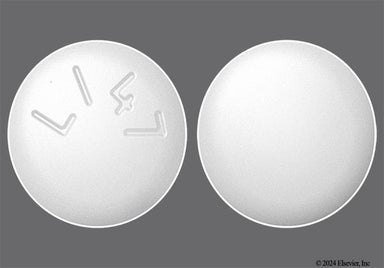
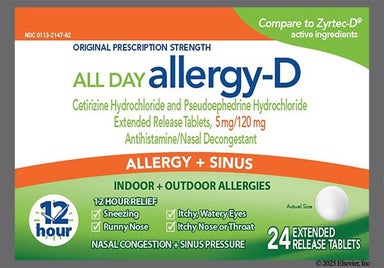
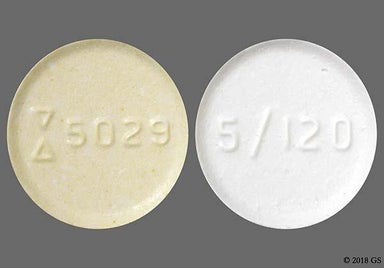
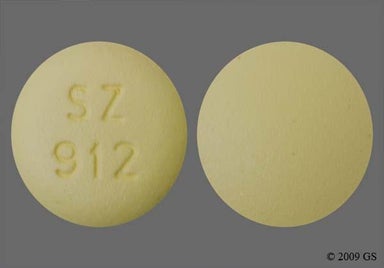
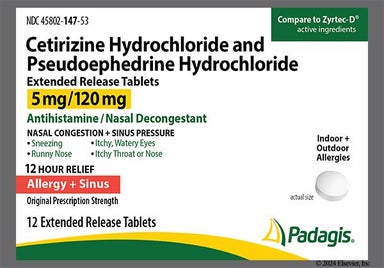
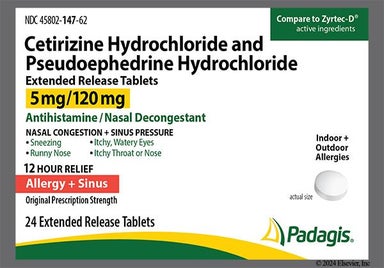
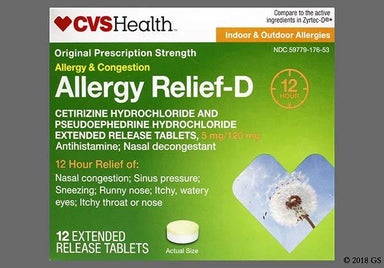
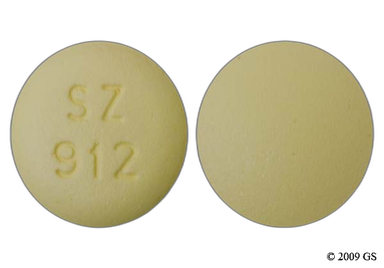
Zyrtec-D (cetirizine / pseudoephedrine) images