Used for Diarrhea, Hepatic Encephalopathy, Irritable Bowel Syndrome
Used for Diarrhea, Hepatic Encephalopathy, Irritable Bowel Syndrome
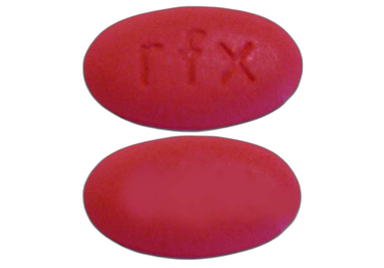
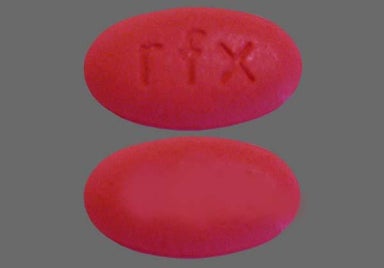
Xifaxan (rifaximin) is a rifamycin antibiotic. It's used to treat people 12 years and older with travelers' diarrhea caused by Escherichia coli (E. coli). It can also treat irritable bowel syndrome with diarrhea (IBS-D) in adults. In addition, this medication can help prevent hepatic encephalopathy (HE) in adults. Xifaxan (rifaximin) is a tablet that's taken by mouth a few times per day. Side effects generally include swelling, dizziness, and fatigue.
Xifaxan (rifaximin) is a rifamycin antibiotic. It works by stopping bacteria in your gut from making the proteins they need to live. This lessens the amount of bacteria in your body.
Depending on why you're taking Xifaxan (rifaximin), the medication helps your body in different ways.
For travelers' diarrhea: You can get sick from eating or drinking something contaminated with E. coli. Xifaxan (rifaximin) helps kill this bacteria and gets rid of the infection.
For IBS-D: Certain bacteria in the gut can cause a lot of gas, bloating, and diarrhea. By lowering the amount of bacteria in the gut, Xifaxan (rifaximin) might help calm your stomach.
For hepatic encephalopathy (HE): It's thought that people with liver cirrhosis have bacteria in the gut that make ammonia. Too much ammonia can harm the brain and cause brain problems. By killing these gut bacteria, Xifaxan (rifaximin) can help lower the amount of toxic ammonia. This might help lower the risk of HE episodes.
Are you looking for information on rifampin instead?
The following side effects may get better over time as your body gets used to the medication. Let your healthcare provider know immediately if you continue to experience these symptoms or if they worsen over time.
Common Side Effects
Travelers' diarrhea:
Headache (10%)
IBS-D:
Nausea (2-3%)
HE:
Swelling in the hands, ankles, or feet (15%)
Nausea (14%)
Dizziness (13%)
Tiredness (12%)
Fluid buildup in the stomach and swelling of the stomach (11%)
The following Xifaxan (rifaximin) side effects have also been reported
Along with its needed effects, a medicine may cause some unwanted effects. Although not all of these side effects may occur, if they do occur they may need medical attention.
Check with your doctor immediately if any of the following side effects occur:
Some side effects may occur that usually do not need medical attention. These side effects may go away during treatment as your body adjusts to the medicine. Also, your health care professional may be able to tell you about ways to prevent or reduce some of these side effects. Check with your health care professional if any of the following side effects continue or are bothersome or if you have any questions about them:
Can help prevent repeat episodes of hepatic encephalopathy (brain damage in adults with advanced liver problems)
Cons
Need to take 2 or 3 times per day, depending on your condition
Doesn't treat travelers' diarrhea caused by other germs besides E. coli
Only available as tablets
Pharmacist tips for Xifaxan (rifaximin)
Take Xifaxan (rifaximin) exactly as your prescriber tells you. Make sure to finish your treatment course, even if you start feeling better. Stopping early can make your symptoms come back and be harder to treat.
You can take Xifaxan (rifaximin) with or without food.
For travelers' diarrhea: If you still have diarrhea for more than 1 to 2 days or if it gets worse, stop taking Xifaxan (rifaximin) and get medical help. Also call urgent care if you get a fever or have bloody diarrhea. These could be signs that you need a different medication to treat your diarrhea or more medical attention.
Tell your prescriber and pharmacist about all the medications you take. Xifaxan (rifaximin) can interact with some medications, like cyclosporine (Sandimmune, Gengraf, Neoral). They can raise the level of Xifaxan (rifaximin) in your body. This might raise your risk of side effects. Your care team can check for these interactions and monitor for more side effects.
If you take the blood thinner warfarin (Coumadin), tell the healthcare professional managing that treatment that you're taking Xifaxan (rifaximin). Taking these together might cause changes to how well your blood can clot. Your care team might need to check your blood more often. If needed, they can adjust your warfarin (Coumadin) to keep you safe.
If you're pregnant or thinking of becoming pregnant: Speak with a healthcare professional. We don't exactly know for sure how safe Xifaxan (rifaximin) is during pregnancy. But some animal studies show that there's a potential risk of harm to an unborn baby. Your prescriber can help go over the risks and benefits of treatment and find a safe option for you.
If you plan to breastfeed: Talk to your care team. Xifaxan (rifaximin) isn't likely to pass into breast milk. But to be safe, talk to your prescriber or a lactation expert about safe feeding options.
Risks and warnings for Xifaxan (rifaximin)
Xifaxan (rifaximin) can cause some serious health issues. This risk may be even higher for certain groups. If this worries you, talk to your doctor or pharmacist about other options.
Doesn't work well for travelers' diarrhea caused by other germs besides E. coli
Xifaxan (rifaximin) only works to treat travelers' diarrhea caused by a specific type of bacteria called E. coli. This is the most common cause, but other germs can also cause this type of diarrhea. Xifaxan (rifaximin) doesn't work against other germs, so it might not help in those cases.
If your diarrhea continues for more than 1 to 2 days or gets worse, stop taking Xifaxan (rifaximin) and get medical help. Also get urgent care right away if you have a fever or blood in your stool. These could be signs that you need a different medication or more medical attention.
Diarrhea from Clostridioides difficile infection
Antibiotics including Xifaxan (rifaximin) can sometimes cause a Clostridioides difficile (C. diff) infection. This happens when antibiotics change the normal bacteria in your gut. This lets harmful bacteria called C. diff grow too much in the gut and cause diarrhea. This can be mild to serious to life-threatening. It can also happen over 2 months after stopping Xifaxan (rifaximin).
Diarrhea from a C. diff infection is a medical emergency. It can cause a fever, fast heartbeat, foul-smelling diarrhea, and frequent bowel movements (even up to 15 times a day). Get medical help right away if this happens while taking Xifaxan (rifaximin) or after you've stopped. C. diff-related diarrhea should get treated as soon as possible.
Caution use in people with severe liver problems
In studies, people with severe liver problems had higher levels of Xifaxan (rifaximin) in their body. It's not clear if this can raise the risk of side effects.
To be safe, tell your prescriber if you have liver problems, especially if they're severe. Your care team will monitor you more closely during treatment.
Tell your prescriber and pharmacist about all the medications you take. They can check for these interactions and watch you more closely if needed.
Xifaxan (rifaximin) dosage
The average cost for 42 tablets of 550mg of Xifaxan (rifaximin) is $2,717.43 with a free GoodRx coupon. This is 19.88% off the average retail price of $3,391.90.
Travelers' diarrhea: The typical dose is 200 mg by mouth three times a day for 3 days.
Hepatic encephalopathy (HE): The typical dose is 550 mg by mouth twice a day.
Irritable bowel syndrome with diarrhea (IBS-D): The typical dose is 550 mg by mouth three times a day for 2 weeks. If your symptoms come back, your prescriber might have you take the same treatment again. Your can repeat this treatment up to 2 times.
Interactions between Xifaxan (rifaximin) and other drugs
Xifaxan (rifaximin) may interact with certain medications or supplements. Always let your doctor and pharmacist know about any other medications or supplements (including prescribed and over-the-counter medications, vitamins, and dietary or herbal supplements) that you are currently taking. The list below does not include all possible drug interactions with Xifaxan (rifaximin). Please note that only the generic name of each medication is listed below.
Although certain medicines should not be used together at all, in other cases two different medicines may be used together even if an interaction might occur. In these cases, your doctor may want to change the dose, or other precautions may be necessary. When you are taking this medicine, it is especially important that your healthcare professional know if you are taking any of the medicines listed below. The following interactions have been selected on the basis of their potential significance and are not necessarily all-inclusive.
Using this medicine with any of the following medicines is usually not recommended, but may be required in some cases. If both medicines are prescribed together, your doctor may change the dose or how often you use one or both of the medicines.
Contraindications are specific health conditions or situations in which a person should not take a medication due to safety concerns. If you have any of the following conditions or if any of the following apply to you, let your healthcare provider know because Xifaxan (rifaximin) will not be safe for you to take.
Drugs and Lactation Database (LactMed). (2024). Rifaximin. National Institute of Child Health and Human Development.
GoodRx Health has strict sourcing policies and relies on primary sources such as medical organizations, governmental agencies, academic institutions, and peer-reviewed scientific journals. Learn more about how we ensure our content is accurate, thorough, and unbiased by reading our editorial guidelines.
Prescription savings
Stop paying too much for your prescriptions. Compare prices, get pharmacy coupons, and save up to 80%.
Yes, Xifaxan is a rifamycin antibiotic. It works by preventing certain bacteria from making proteins they need to survive. This stops the bacteria from growing and spreading.
How long it takes for Xifaxan to work depends on why you're taking it. For travelers' diarrhea, symptoms can get better within a day or two (32 hours) of starting the medication. For IBS-D, people might begin to see symptom improvement within a few weeks. And for hepatic encephalopathy (HE), people might start to have fewer episodes within 1 or 2 months of treatment. Talk to your prescriber about when you should expect Xifaxan to work.
Maybe. In studies, some people taking Xifaxan for hepatic encephalopathy have had constipation. If this happens, try some lifestyle tips to help. Be sure to drink plenty of fluids to stay hydrated. You can also add more foods that are high in fiber to your diet. If your constipation gets worse or doesn't get better, talk to a healthcare professional. They might suggest trying an over-the-counter medication to relieve constipation.
It's hard to say how long side effects from Xifaxan will last. It can be different for each person. But in general, if you take it for a short time, like for travelers' diarrhea or IBS-D, side effects are usually temporary. They typically go away after you stop the medication. If you take it long term, like for hepatic encephalopathy, it's not clear how long side effects can last. And side effects might come and go. Talk to a healthcare professional if side effects bother you or don't go away.
It's usually best to limit or avoid alcohol while taking Xifaxan. Alcohol can make some possible side effects like headache, tiredness, and nausea worse. And if you have hepatic encephalopathy (HE), it can make your condition worse. HE is a brain problem caused by severe liver damage. Alcohol can also put stress on the liver. Drinking alcohol while being treated for HE can raise the risk of more liver problems. Talk to your prescriber about your drinking habits and if Xifaxan is a safe option for you.
Maybe. Some medical groups like the American College of Gastroenterology recommend Xifaxan as an option for SIBO. Small intestine bacterial overgrowth (SIBO) happens when too much bacteria grows in the small intestine and causes stomach upset. This is an off-label use of Xifaxan. This is because it's not officially FDA approved for SIBO. But there's some clinical evidence showing that it could be helpful. Talk to a healthcare professional about your treatment options if you have SIBO.
Ask your prescriber if you should take a probiotic with Xifaxan. It usually depends on your situation. For example, if you've had diarrhea from antibiotics before, a probiotic might be helpful. It can replace the normal, "good" bacteria in your gut that Xifaxan might've gotten rid of. If you decide to take a probiotic, make sure to take it a few hours apart from Xifaxan. This prevents the medication from affecting the "good" bacteria in the probiotic.
No. There's currently no generic for Xifaxan. This medication is only available as a brand-name medication at this time.