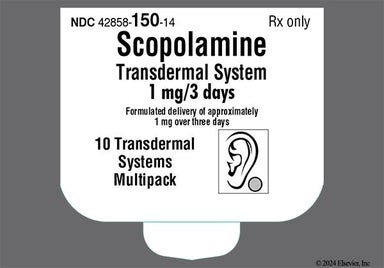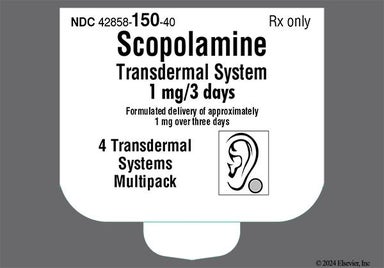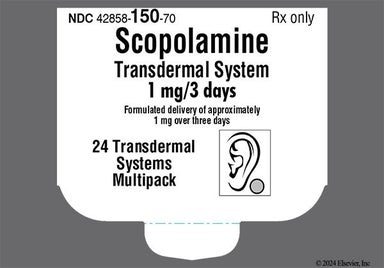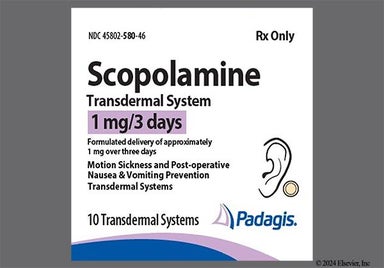


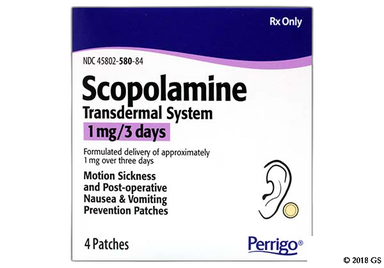
Scopolamine Coupon - Scopolamine 1mg/3 days patch

scopolamine

Generic Transderm Scop
Used for Motion Sickness, Nausea

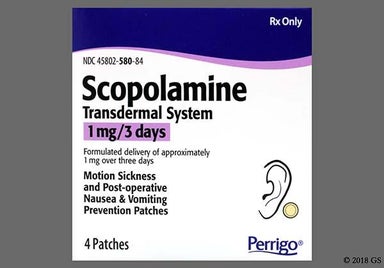
Scopolamine (Transderm Scop) is a prescription anticholinergic medication. It's used to prevent nausea and vomiting from motion sickness, as well as from anesthesia or pain medications used in surgery. Scopolamine (Transderm Scop) comes as a patch that you place behind your ear. You need to apply it at least 4 hours before any activities that might cause motion sickness, or the night before your surgery. Common side effects scopolamine (Transderm Scop) include dry mouth, sleepiness, and dizziness.

Reviewed by:Last reviewed on March 7, 2024
basics-icon

What is Scopolamine (Transderm Scop)?

What is Scopolamine (Transderm Scop) used for?

How Scopolamine (Transderm Scop) works

Scopolamine (Transderm Scop) is an anticholinergic. It works by blocking a chemical called acetylcholine from attaching to receptors (signaling proteins) in the part of your brain that cause nausea and vomiting.

When does Scopolamine (Transderm Scop) start working?Time passed since treatment started:
HOURS
Initial effect
DAYS
Full effect
WEEKS
MONTHS

Drug facts

Common BrandsTransderm Scop
Drug ClassAnticholinergic
Controlled Substance ClassificationNot a controlled medication
Generic StatusLower-cost generic available
AvailabilityPrescription only
side-effects-icon

Side effects of Scopolamine (Transderm Scop)

The following side effects may get better over time as your body gets used to the medication. Let your healthcare provider know immediately if you continue to experience these symptoms or if they worsen over time.

Common Side Effects

  • Dry mouth (29%)
  • Dizziness (12%)
  • Sleepiness (8%)
  • Agitation (6%)
  • Changes in vision (5%)

Less Common Side Effects

  • Confusion
  • Pupils widening
  • Sore throat

Scopolamine (Transderm Scop) serious side effects

Contact your healthcare provider immediately if you experience any of the following.

  • Mental health problems: psychosis, agitation, hallucinations (seeing or hearing things that aren't there), and paranoia
  • Seizures
When do Scopolamine (Transderm Scop) possible side effects begin and end?
Time passed since treatment started:
H
D
W
M
Dry mouth
Changes in vision
Sleepiness
Dizziness

Source: DailyMed

The following Scopolamine (Transderm Scop) side effects have also been reported

Along with its needed effects, a medicine may cause some unwanted effects. Although not all of these side effects may occur, if they do occur they may need medical attention.

Check with your doctor immediately if any of the following side effects occur:

More common

Agitation

Less common

Bigger, dilated, or enlarged pupils (black part of the eye)

blurred vision or other changes in vision

confusion

increased sensitivity of the eyes to light

Incidence not known

Burning feeling while urinating

delusions of persecution, mistrust, suspiciousness, or combativeness

difficulty in speaking

disturbance in attention

dry, itchy eyes

eyelid irritation

headache

loss of memory

poor coordination

problems with memory

restlessness

seeing, hearing, or feeling things that are not there

Get emergency help immediately if any of the following symptoms of overdose occur:

Symptoms of overdose

Anxiety

blurred or loss of vision

change in consciousness

decrease in frequency of urination

decrease in urine volume

deep or fast breathing with dizziness

difficulty in passing urine (dribbling)

disturbed color perception

double vision

dry mouth

dry, flushed skin

fast, pounding, or irregular heartbeat or pulse

halos around lights

headache

irritability

loss of consciousness

nervousness

night blindness

numbness of the feet, hands, and around the mouth

overbright appearance of lights

painful urination

pounding in the ears

seizures

shaking

sleepiness

trouble with sleeping

tunnel vision

unusual drowsiness, dullness, tiredness, weakness, or feeling of sluggishness

Some side effects may occur that usually do not need medical attention. These side effects may go away during treatment as your body adjusts to the medicine. Also, your health care professional may be able to tell you about ways to prevent or reduce some of these side effects. Check with your health care professional if any of the following side effects continue or are bothersome or if you have any questions about them:

More common

Dizziness

dry mouth

sleepiness or unusual drowsiness

Less common

Body aches or pain

congestion

cough

dryness or soreness of the throat

fever

hoarseness

runny nose

tender, swollen glands in the neck

trouble in swallowing

voice changes

More common

Burning feeling at the application site

feeling of constant movement of self or surroundings

itching, skin rash

lightheadedness

sensation of spinning

Other side effects not listed may also occur in some patients. If you notice any other effects, check with your healthcare professional.

Call your doctor for medical advice about side effects. You may report side effects to the FDA at 1-800-FDA-1088.

prices-container

Get your GoodRx coupon

Avg retail price
$189.18(Save 76.15%)
GoodRx discount
$45.12
See prices
pros-and-cons-icon

Pros and cons of Scopolamine (Transderm Scop)

Pros

  • Works well for preventing nausea and vomiting
  • Effects lasts for up to 3 days
  • Applied to skin, so a good choice for people who've trouble taking pills
  • Available as a lower-cost generic

Cons

  • Not for use in children younger than 18 years old
  • Takes about 4 hours to start working, so need to remember to take it ahead of time
  • Doesn't treat nausea and vomiting that's already happening
  • Can cause drowsiness, blurry vision, and confusion
pharmacist-tips-icon

Pharmacist tips for Scopolamine (Transderm Scop)

pharmacist
  • Avoid drinking alcohol while using scopolamine (Transderm Scop) because alcohol can make sleepiness and confusion from scopolamine (Transderm Scop) worse.
  • Don't drive, operate machinery, or do anything that requires concentration until you know how this medication affects you. Dizziness and sleepiness are some of the more common side effects of scopolamine (Transderm Scop) and can make these activities dangerous.
  • Some people might experience withdrawal symptoms from scopolamine (Transderm Scop) after removing the patch, especially after they've been using this medication for multiple days. Symptoms of withdrawal can include dizziness, headaches, or confusion. They generally appear about 24 hours after you've removed scopolamine (Transderm Scop). Get medical attention if your symptoms are severe.
  • If you need to get a magnetic resonance imaging (MRI), remove scopolamine (Transderm Scop) before the scan. Leaving the patch on during the procedure can lead to skin burns because the patch contains metal material.

More tips on applying and wearing scopolamine (Transderm Scop) patch:

  • Make sure to apply scopolamine (Transderm Scop) to the hairless area behind your ear. If you have long hair, tie it up or move it out of the way so that the patch doesn't stick to your hair. Press the patch down for a few seconds to make sure the patch stays in place.
  • Only wear one scopolamine (Transderm Scop) patch at any time. When switching to a new patch, make sure to remove the used one first before putting on a new patch behind the other ear.
  • Don't cut the scopolamine (Transderm Scop) patch. When opening the package, make sure to cut along the dotted line near the edge so you don't damage the patch.
  • Always wash your hands thoroughly with soap and water after you handle a scopolamine (Transderm Scop) patch, including new and used patches. You can get blurry vision if the medication gets on your hands and you rub your eyes.
  • If the scopolamine (Transderm Scop) patch comes loose or if you remove the patch and need to apply a new one, apply it behind the other ear. Swimming and bathing can make the patch more likely to fall off, so be careful to not knock it loose.
  • After you remove the scopolamine (Transderm Scop) patch, wash the area behind your ear where the patch used to be. If you're using a new patch right after removing the old one, apply the new one behind your other ear.
  • Don't bend, fold, or roll the scopolamine (Transderm Scop) patch since this can affect how the medication works. Only fold the patch if it has been used and you're going to throw it away.
  • When you remove the scopolamine (Transderm Scop) patch, fold it in half so that the sticky sides come together. Make sure to throw it out in a trash bin where it can't be reached by children or pets, since there will still be some medication in the used patch. This can be dangerous for them to handle or swallow.
faq-icon

Common questions about Scopolamine (Transderm Scop)

Talk with your primary care provider (PCP) if you're concerned about scopolamine (Transderm Scop) withdrawal. You're more likely to experience withdrawal symptoms, such as headache and nausea, if you've been using this medication for 3 days or longer. Symptoms usually start around 24 hours after the patch is removed and can last several days to weeks. To minimize scopolamine (Transderm Scop) withdrawal symptoms, your PCP might recommend that you use this medication for the shortest amount of time needed to treat your symptoms. Evidence suggests that meclizine (Antivert) can ease scopolamine (Transderm Scop) withdrawal so your PCP might prescribe it off-label.

First, pick a hairless area of your skin behind your ear to apply the patch and clean it with a dry tissue. Cut along the dashed line of the scopolamine (Transderm Scop) package to open it. Then, remove the clear plastic backing from the tan-colored round patch. Be careful not to touch the sticky side of the patch with your hands because this is the side with the medication on it. Apply the sticky side of the patch firmly to the dry area of skin behind your ear. Then, wash your hands well with soap and water right away just in case you have medication residue on your hands.

Apply the scopolamine (Transderm Scop) patch to the skin in a hairless area behind an ear. Don't apply the patch on skin that has cuts, is painful, or tender. Also, don't apply the patch anywhere else on your body. Wipe the area of your skin with a clean, dry tissue before applying scopolamine (Transderm Scop). If the patch falls off, fold the ends of the sticky side together, throw it in the trash, and apply a brand new patch.

People who used scopolamine (Transderm Scop) experienced 60-80% less frequent or less severe motion sickness compared with people who didn't take any medications. Scopolamine (Transderm Scop) has also been shown to work well for lowering nausea and vomiting after surgery and work just as well as commonly used anti-nausea medications, like ondansetron (Zofran). Your healthcare professional will decide if scopolamine (Transderm Scop) is right for you.

It usually takes at least 4 hours for scopolamine (Transderm Scop) to kick in. But this might take longer, around 24 hours, for some people. Studies suggest that scopolamine (Transderm Scop) might work best if you apply it 8-12 hours before any activities that can cause motion sickness.

Typically, a scopolamine (Transderm Scop) patch can be worn for up to 3 days to prevent nausea. If you think you might continue to have motion sickness for longer than 3 days, remove the patch and place a new one behind the other ear.

Yes, scopolamine (Transderm Scop) can make you drowsy and dizzy. And it's less likely to cause these side effects compared to motion sickness pills (e.g., dimenhydrinate (Dramamine) or meclizine (Antivert)). If you're starting scopolamine (Transderm Scop) for the first time, don't drive or do anything that requires concentration until you know how this medication affects you. Contact your primary care provider if scopolamine (Transderm Scop) is making you too sleepy throughout the day, they can talk with you about other options to prevent nausea.

Talk with your obstetrician if you're experiencing nausea and vomiting during pregnancy to learn about your options. Limited research suggests that scopolamine (Transderm Scop) isn't likely to cause harm to babies if taken during pregnancy. Because more information is needed, scopolamine (Transderm Scop) isn't recommended during pregnancy unless your obstetrician thinks the benefit of this medication is greater than the risks of harm. But they won't consider scopolamine (Transderm Scop) for anyone with severe preeclampsia because of the risk for seizures.

educational-icon

How to save using GoodRx

Compare Prices
1. Compare PricesSpecify your dosage and quantity to find out exactly how much you can save.
Select your free coupon
2. Select your free couponYou can use the displayed coupon, or compare prices at other pharmacies near you.
Show coupon to your pharmacist
3. Show coupon to your pharmacistPresent your printed or electronic coupon when you pick up your prescription.
Get free couponLearn more
warnings-icon

Risks and warnings for Scopolamine (Transderm Scop)

Scopolamine (Transderm Scop) can cause some serious health issues. This risk may be even higher for certain groups. If this worries you, talk to your doctor or pharmacist about other options.

Angle-closure glaucoma

  • Risk factors: History of glaucoma

Scopolamine (Transderm Scop) can raise the pressure in your eye and lead to angle-closure glaucoma. This is a condition where fluid builds up in the eye and the drainage is blocked. If you already have glaucoma, you might need to get your eye pressure checked more regularly or adjust your glaucoma medication doses while on scopolamine (Transderm Scop). Remove scopolamine (Transderm Scop) and get medical help right away if you notice symptoms of angle-closure glaucoma, including eye pain, redness, or problems with your vision.

Brain and mental health problems

  • Risk factors: Other mental health conditions | History of seizures | Older adults | Drinking alcohol | Taking other medications that cause sleepiness

Scopolamine (Transderm Scop) can worsen or trigger mental health problems, including psychosis, agitation, hallucinations (seeing or hearing things that aren't there), and paranoia. It can also cause seizures or seizure-like activity, sleepiness, and confusion. Let your primary care provider and pharmacist know about all the medications you're taking since other medications can make these side effects worse (e.g., benzodiazepines, anxiety medications, muscle relaxants, sleep medications, alcohol). Don't drive, participate in underwater sports, or do anything that requires concentration until you know how scopolamine (Transderm Scop) affects you.

Risk of seizures in pregnant people with preeclampsia

  • Risk factors: Severe preeclampsia

Injectable forms of scopolamine (which aren't available in the United States) have caused seizures in pregnant females with severe preeclampsia. While this hasn't been seen with the scopolamine (Transderm Scop) patch, the risk can't be completely ruled out. It's best to avoid using scopolamine (Transderm Scop) patches if you're pregnant and have severe preeclampsia.

Blockage in the stomach, intestines, or bladder

  • Risk factors: Blockages in the stomach, intestines, or bladder | Taking other anticholinergics or medications that affect stomach, intestine, or bladder movement

Anticholinergic medications like scopolamine (Transderm Scop) slow down the movement of food through your stomach and intestines and can also cause difficulty emptying your bladder. Let your prescriber know if you have stomach or urination problems before starting scopolamine (Transderm Scop) because this medication might not be a good choice for you. If you get stomach pain, nausea, vomiting, or difficulty urinating, take the scopolamine (Transderm Scop) patch off right away and contact your primary care provider.

Withdrawal

  • Risk factors: Taking scopolamine (Transderm Scop) for many days

It's possible to get withdrawal symptoms if you suddenly stop wearing scopolamine (Transderm Scop), especially if you've been using it for 3 days or longer. Withdrawal symptoms usually start about a day after you remove the patch and can last for several days. Get medical help right away if you experience severe symptoms of scopolamine (Transderm Scop) withdrawal, such as balance problems, dizziness, stomach upset, headache, confusion, and muscle weakness.

Blurry vision

If scopolamine (Transderm Scop) gets in the eyes, it can affect your pupil size and cause blurry vision. Always wash your hands thoroughly with soap and water after you touch a scopolamine (Transderm Scop) patch, even if it's a used patch.

Skin burn from magnetic resonance imaging (MRI)

Scopolamine (Transderm Scop) patches contain aluminum. If you're receiving an MRI, let a member of the healthcare team know you're wearing scopolamine (Transderm Scop) and they'll give you specific instructions on when to take the patch off before the MRI. After the MRI, you can put on a new patch.

dosage-icon

Scopolamine (Transderm Scop) dosage

The average cost for 10 patches of 1mg/3 days of Scopolamine (Transderm Scop) is $45.12 with a free GoodRx coupon. This is 76.15% off the average retail price of $189.18.
patchPatch
DosageQuantityPrice as low asPrice per unit
1mg/3 days10 patches$45.12$4.51

Typical dosage for Scopolamine (Transderm Scop)

Prevention of nausea and vomiting due to motion sickness:

  • The typical dose is to apply 1 patch behind the ear at least 4 hours before you expect to have motion sickness (such as before a car or boat ride). You can leave the patch in place for up to 3 days. If you expect to continue to have motion sickness for longer than 3 days, remove the patch and place a new one behind the other ear. Prevention of nausea and vomiting after surgery:
  • The typical dose is to apply 1 patch behind the ear the night before surgery. Remove the patch 24 hours after surgery.
interactions-icon

Interactions between Scopolamine (Transderm Scop) and other drugs

Scopolamine (Transderm Scop) may interact with certain medications or supplements. Always let your doctor and pharmacist know about any other medications or supplements (including prescribed and over-the-counter medications, vitamins, and dietary or herbal supplements) that you are currently taking. The list below does not include all possible drug interactions with Scopolamine (Transderm Scop). Please note that only the generic name of each medication is listed below.

Although certain medicines should not be used together at all, in other cases two different medicines may be used together even if an interaction might occur. In these cases, your doctor may want to change the dose, or other precautions may be necessary. When you are taking this medicine, it is especially important that your healthcare professional know if you are taking any of the medicines listed below. The following interactions have been selected on the basis of their potential significance and are not necessarily all-inclusive.

Using this medicine with any of the following medicines is not recommended. Your doctor may decide not to treat you with this medication or change some of the other medicines you take.

  • Potassium

Using this medicine with any of the following medicines is usually not recommended, but may be required in some cases. If both medicines are prescribed together, your doctor may change the dose or how often you use one or both of the medicines.

cost-icon

How much does Scopolamine (Transderm Scop) cost?

To access savings, use a GoodRx coupon and pay just a fraction of the retail price.
Scopolamine (Transderm Scop) (generic)
GoodRx lowest price

$45.12

(save 76.15%)
contraindications-icon

Scopolamine (Transderm Scop) contraindications

Contraindications are specific health conditions or situations in which a person should not take a medication due to safety concerns. If you have any of the following conditions or if any of the following apply to you, let your healthcare provider know because Scopolamine (Transderm Scop) will not be safe for you to take.

alternatives-icon

What are alternatives to Scopolamine (Transderm Scop)?

There are a number of medications that your doctor can prescribe in place of Scopolamine (Transderm Scop). Compare a few possible alternatives below.
Scopolamine (Transderm Scop)
Used for:
$45.12Lowest GoodRx priceView prices
Used for:
  • Prevention and treatment of nausea, vomiting, or dizziness from motion sickness
$4.51Lowest GoodRx priceView prices
Used for:
$8.95Lowest GoodRx priceView prices
latest-news-icon

News about Scopolamine (Transderm Scop)

GoodRx compares motion sickness pills and patches to help you choose the best option for your needs.
Motion Sickness Pills vs. Motion Sickness Patches: 4 Differences to Consider
GoodRx compares motion sickness pills and patches to help you choose the best option for your needs.
Chemotherapy can cause nausea and vomiting. Thankfully, medications are available to help treat chemotherapy-induced nausea and vomiting (CINV). Learn more about these medications with GoodRx.
Nausea Medications for Chemotherapy: How to Find the Right Antiemetic for You
Chemotherapy can cause nausea and vomiting. Thankfully, medications are available to help treat chemotherapy-induced nausea and vomiting (CINV). Learn more about these medications with GoodRx.
See which scopolamine interactions to be aware of, including medications and alcohol.
7 Scopolamine Interactions: Allergy Pills, Sleep Aids, Alcohol, and More
See which scopolamine interactions to be aware of, including medications and alcohol.
Seasickness is a common problem people experience on the water. Thankfully, there are medications you can take to relieve symptoms or prevent them.
The 5 Best Medications for Seasickness: Dimenhydrinate, Scopolamine, and More
Seasickness is a common problem people experience on the water. Thankfully, there are medications you can take to relieve symptoms or prevent them.
Learn how to use a scopolamine patch for motion sickness, including placement tips, dosage, and potential side effects.
How to Use Scopolamine Patches for Motion Sickness: 7 Tips for Optimal Relief
Learn how to use a scopolamine patch for motion sickness, including placement tips, dosage, and potential side effects.
Antiemetic medications treat nausea and vomiting. There are several classes of antiemetics, all of which work differently.
What Are Antiemetic Drugs? A GoodRx Guide to Zofran, Promethazine, and More
Antiemetic medications treat nausea and vomiting. There are several classes of antiemetics, all of which work differently.
Anticholinergic medications are a broad class of medications that treat many health conditions — but they can also pose significant side effects. Learn more here.
8 Anticholinergic Medication Side Effects You Should Know About
Anticholinergic medications are a broad class of medications that treat many health conditions — but they can also pose significant side effects. Learn more here.
Should you cut your nicotine patch in half? You shouldn't. Transdermal patches deliver medication slowly over time and cutting them interferes with the process.
Is It Safe to Cut Transdermal Patches?
Should you cut your nicotine patch in half? You shouldn't. Transdermal patches deliver medication slowly over time and cutting them interferes with the process.
Motion sickness is a syndrome that occurs in response to real or perceived motion. Learn the common triggers of motion sickness.
7 Ways to Get Rid of Motion Sickness
Motion sickness is a syndrome that occurs in response to real or perceived motion. Learn the common triggers of motion sickness.
Don't get sick on vacation! These medically backed health tips for travelers can teach you which medications to pack, where to go if you’re sick, and more.
Staying Healthy While Traveling: 7 Things to Do Before You Hit the Road
Don't get sick on vacation! These medically backed health tips for travelers can teach you which medications to pack, where to go if you’re sick, and more.
images-icon

Scopolamine (Transderm Scop) images

Tan Round Scopolamine 1 Mg/3 Days - Scopolamine 1mg/3 days Transdermal System
This medicine is Tan, Round Patch Imprinted With "Scopolamine 1 Mg/3 Days".Tan Round Scopolamine 1 Mg/3 Days - Scopolamine 1mg/3 days Transdermal System
Tan Round Scopolamine 1 Mg/3 Days - Scopolamine 1mg/3 days Transdermal System
This medicine is Tan, Round Patch Imprinted With "Scopolamine 1 Mg/3 Days".Tan Round Scopolamine 1 Mg/3 Days - Scopolamine 1mg/3 days Transdermal System
Tan Round Scopolamine 1 Mg/3 Days - Scopolamine 1mg/3 days Transdermal System
This medicine is Tan, Round Patch Imprinted With "Scopolamine 1 Mg/3 Days".Tan Round Scopolamine 1 Mg/3 Days - Scopolamine 1mg/3 days Transdermal System
tan round - Scopolamine 1mg/3 days Transdermal System
This medicine is Tan, Round Patch.tan round - Scopolamine 1mg/3 days Transdermal System
tan round - Scopolamine 1mg/3 days Transdermal System
This medicine is Tan, Round Patch.tan round - Scopolamine 1mg/3 days Transdermal System

Get savings updates for Scopolamine (Transderm Scop)

Receive price alerts, news, and other messages from GoodRx about Scopolamine (Transderm Scop) and other healthcare topics and relevant savings offers.

By providing your email, you consent to receive marketing communications from GoodRx, which may include content and/or data related to men's health, women's health, reproductive care, or sexual health. You agree to the GoodRx Terms of Use and acknowledge the Privacy Policy. You can unsubscribe at any time.

References

Best studies we found

GoodRx Health has strict sourcing policies and relies on primary sources such as medical organizations, governmental agencies, academic institutions, and peer-reviewed scientific journals. Learn more about how we ensure our content is accurate, thorough, and unbiased by reading our editorial guidelines.

Was this page helpful?