


5 Outdated Migraine Medications You May Want to Upgrade
Some migraine medications have largely been replaced by safer or more effective options. Learn about the newer treatments available today with this guide.
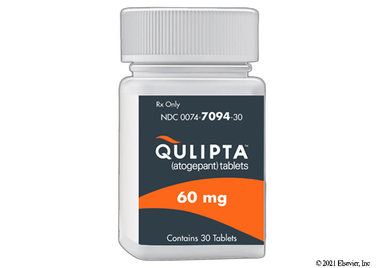
Qulipta (atogepant) is a medication that's used to prevent migraines in adults. The specific dosing will depend on how many migraines you have per month, but the medication is typically taken once daily. Qulipta (atogepant) is currently brand only; it isn't available as a lower-cost generic yet. Side effects include nausea, constipation, and sleepiness.

Qulipta (atogepant) is a calcitonin gene-related peptide (CGRP) receptor blocker. This means it blocks a protein called CGRP in the brain and nervous system. CGRP is thought to be involved with migraines and causing inflammation and pain. By blocking the protein's activity, Qulipta (atogepant) can help prevent migraine attacks.
| Common Brands | Qulipta |
|---|---|
| Drug Class | Calcitonin gene-related peptide (CGRP) receptor blocker |
| Controlled Substance Classification | Not a controlled medication |
| Generic Status | No lower-cost generic available |
| Availability | Prescription only |

The following side effects may get better over time as your body gets used to the medication. Let your healthcare provider know immediately if you continue to experience these symptoms or if they worsen over time.
Contact your healthcare provider immediately if you experience any of the following.
Side effects that you should report to your care team as soon as possible:
Side effects that usually do not require medical attention (report these to your care team if they continue or are bothersome):




Qulipta (atogepant) can cause some serious health issues. This risk may be even higher for certain groups. If this worries you, talk to your doctor or pharmacist about other options.
Allergic reactions to Qulipta (atogepant) are possible. These reactions can include facial swelling, shock, and anaphylaxis (closing of the throat), and they can sometimes be life-threatening. Reactions can happen days after you take Qulipta (atogepant). If you notice dizziness, a choking sensation, difficulty breathing, nausea, swelling around your eyes, or swelling of the lips or tongue after using Qulipta (atogepant), get medical attention right away.

 Tablet
| Dosage | Quantity | Price as low as | Price per unit |
|---|---|---|---|
| 10mg | 30 tablets | $1,157.25 | $38.58 |
| 30mg | 30 tablets | $1,158.39 | $38.61 |
| 60mg | 30 tablets | $1,160.50 | $38.68 |
Your dose might differ depending on whether you're taking another medication that interacts with Qulipta (atogepant) and whether you have kidney problems.









Prescription savings
Stop paying too much for your prescriptions. Compare prices, get pharmacy coupons, and save up to 80%. Find expert answers to your health questions so you can make the best decisions for yourself and your family.
Health conditions
Medications & treatment
Access & affordability
 Our monthly healthcare membership can help you save thousands on your prescription costs.
Resources

In clinical studies lasting about 3 months, people taking Qulipta had 1 to 2 fewer migraine days and headache days per month than those who took placebo. They also had 1 to 2 fewer days per month of needing to take medication to treat migraine attacks. Qulipta can work for everyone differently, so have regular conversations with your provider so they can help you find the dose that works best for you.
No, Qulipta isn't a narcotic. Narcotics typically refer to opioid medications. Qulipta isn't an opioid pain medication. Instead, it belongs to a class of medications called calcitonin gene-related peptide (CGRP) receptor blockers.
You should take Qulipta by mouth once per day at the same time every day with or without food. Qulipta is only used for preventing migraines over time, not treating them, so don't take extra Qulipta doses to treat a migraine when you have one. Ask your provider if you need a medication that treats migraine attacks.
You can take Qulipta at any time of the day. If Qulipta is making you sleepy or dizzy and is affecting your daily activities, taking it at night before you sleep might help.
In clinical studies, some people taking Qulipta saw benefit as early as 1 day after starting the medication. In general, people started to see improvements over the first few weeks of treatment. So if you don't see any improvement soon after you start Qulipta, it's important to continue taking the medication every day to help prevent migraines in the long run.
Qulipta can lower your appetite, which can sometimes lead to weight loss. In studies, about 3% to 5% of people taking Qulipta lost at least 7% of their baseline body weight (their weight before they started taking the medication). But it's important to note that Qulipta isn't approved as a weight loss medication and shouldn't be used as such. Make sure to follow a healthy and balanced diet while you're taking Qulipta. Contact your provider if you're concerned about any changes in weight that you have while taking the medication.
No. Qulipta, Ubrelvy (ubrogepant), and Nurtec (rimegepant) are all calcitonin gene-related peptide (CGRP) receptor blockers, so only one of them should be taken at a time. Your provider will decide whether Qulipta or another CGRP receptor blocker is right for you. If you're prescribed one of these medications and they aren't working well enough to prevent migraines, let your provider know. They can prescribe you another migraine medication from a different class, such as a triptan, to take with Qulipta to help treat migraines when they happen.
All three medications work similarly and are brand-name-only medications. The first main difference among them is what they're used for. Qulipta is used to prevent migraines, Ubrelvy (ubrogepant) is used to treat migraines when they happen, and Nurtec (rimegepant) is used for both prevention and treatment of migraines. Nurtec is taken every other day for migraine prevention, whereas Qulipta is taken once every day. Another difference is that Nurtec (rimegepant) is available as an orally disintegrating tablet (ODT) that's placed on your tongue and dissolved, while Qulipta and Ubrelvy are both available as tablets that are swallowed whole. Discuss with your provider about which medication best fits your needs.
