


Types of Asthma Inhalers and How to Choose the Best One for You
If you have asthma, you probably use an inhaler — and you may need more than one. Learn the different types of asthma inhalers and which one you need.
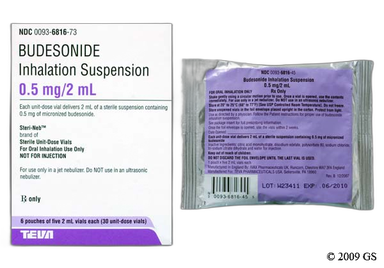
Pulmicort Flexhaler (budesonide) is an inhaled corticosteroid. It's used in adults and children for the maintenance treatment of asthma. It's a type of dry powder inhaler that's inhaled through the mouth twice per day. Side effects include the common cold and sore throat.

Pulmicort Flexhaler (budesonide) is an inhaled corticosteroid. It lessens inflammation and swelling in the lungs, which helps you breathe better.
| Common Brands | Pulmicort Flexhaler |
|---|---|
| Drug Class | Inhaled corticosteroid (ICS) |
| Controlled Substance Classification | Not a controlled medication |
| Generic Status | Lower-cost generic available |
| Availability | Prescription only |

The following side effects may get better over time as your body gets used to the medication. Let your healthcare provider know immediately if you continue to experience these symptoms or if they worsen over time.
Contact your healthcare provider immediately if you experience any of the following.
Along with its needed effects, a medicine may cause some unwanted effects. Although not all of these side effects may occur, if they do occur they may need medical attention.
Check with your doctor immediately if any of the following side effects occur:
More common
Body aches or pain
chills
congestion
dryness or soreness of the throat
general feeling of discomfort or illness
headache
hoarseness
joint pain
loss of appetite
muscle aches and pains
pain or tenderness around the eyes and cheekbones
shivering
shortness of breath or troubled breathing
stuffy or runny nose
sweating
tender, swollen glands in the neck
tightness of the chest or wheezing
trouble with sleeping
trouble with swallowing
unusual tiredness or weakness
voice changes
vomiting
Less common
Bruising
darkening of the skin
dizziness
excessive muscle tone
fainting
fractures
large, flat, blue, or purplish patches in the skin
lower back or side pain
muscle stiffness
muscle tension or tightness
painful or difficult urination
redness or swelling in the ear
skin rash
sore mouth or tongue
white patches in the mouth or on the tongue
Some side effects may occur that usually do not need medical attention. These side effects may go away during treatment as your body adjusts to the medicine. Also, your health care professional may be able to tell you about ways to prevent or reduce some of these side effects. Check with your health care professional if any of the following side effects continue or are bothersome or if you have any questions about them:
More common
Back pain
Less common
Acid or sour stomach
belching
change in taste or bad, unusual, or unpleasant (after) taste
difficulty with breathing
difficulty with moving
ear congestion
headache, severe and throbbing
indigestion
muscle cramping
neck pain
stomach discomfort, upset, or pain
swollen joints
unable to sleep
unexplained runny nose or sneezing
weakness
Other side effects not listed may also occur in some patients. If you notice any other effects, check with your healthcare professional.
Call your doctor for medical advice about side effects. You may report side effects to the FDA at 1-800-FDA-1088.



Tips for how to use Pulmicort Flexhaler (budesonide):

Pulmicort Flexhaler (budesonide) can cause some serious health issues. This risk may be even higher for certain groups. If this worries you, talk to your doctor or pharmacist about other options.
Don't use Pulmicort Flexhaler (budesonide) if you're experiencing an asthma attack because this medication won't provide immediate relief. Use a rescue inhaler, such as albuterol (Ventolin HFA), if you're having trouble breathing.
If you're using your rescue inhaler more often than usual, let your pulmonologist know because this could be a sign that your condition is getting worse. Don't use more doses of Pulmicort Flexhaler (budesonide) than recommended because this won't improve your breathing. Rather, this can raise your risk for serious side effects, such as heart problems, tremors, and dizziness.
Pulmicort Flexhaler (budesonide), like all inhaled steroids, can cause a fungal infection in your mouth and throat called thrush. To lower your risk for thrush, rinse your mouth with water and spit after each inhalation of Pulmicort Flexhaler (budesonide). If you develop thrush, your pulmonologist might prescribe you a medication to treat this infection and ask you to temporarily stop using Pulmicort Flexhaler (budesonide). Let your pulmonologist know if you notice symptoms of thrush, such as white patches in your mouth, cotton-like feeling in your mouth, pain while eating or swallowing, or loss of taste.
Inhaled medications, including Pulmicort Flexhaler (budesonide), can sometimes cause a muscle spasm in your lungs. This can lead to difficulty breathing, wheezing, cough, and chest discomfort. If you have a hard time breathing after inhaling Pulmicort Flexhaler (budesonide), use your rescue inhaler and get medical attention right away.
Like all corticosteroid-containing medications, Pulmicort Flexhaler (budesonide) can weaken your immune system and raise your risk for infections, including upper respiratory infections and pneumonia. Your risk for infections is higher if you're also taking other medications that also weaken your immune system. If you're currently being treated for a serious infection, such as tuberculosis, let your pulmonologist know. They might need to consider a different medication for your condition until you get better. Let your pulmonologist or primary care provider know right away if you have symptoms of infections, such as fever, chills, or body aches.
Use Pulmicort Flexhaler (budesonide) only as directed. Don't use more than the maximum number of inhalations each day. Doing so can cause more steroids to be absorbed into the body and raise your risk for symptoms of too much stress hormones, such as higher blood sugar or blood pressure.
On the other hand, if you're transitioning to Pulmicort Flexhaler (budesonide) from oral steroids, you might experience symptoms of low steroid hormone, such as stomach pain, loss of appetite, and nausea. When you transition to Pulmicort Flexhaler (budesonide), your pulmonologist will work with you to lower your dose of oral steroids slowly over time to prevent these side effects.
Children who use inhaled steroids, like Pulmicort Flexhaler (budesonide), might experience a delay in growth. To lower the risk of growth problems, your child's pulmonologist will only prescribe the lowest dose needed to help their condition. Your child's care team will check your child's growth regularly while your child is using this medication. If you're concerned about how Pulmicort Flexhaler (budesonide) might affect your child's growth, discuss with your child's pulmonologist to see if this medication is right for them.
People who use inhaled steroids, like Pulmicort Flexhaler (budesonide), have reported lower bone mineral density (BMD) over time. It's unclear whether this leads to higher risk of bone fractures. But you're more likely to experience a fracture if you're an older adult, have family members who have osteoporosis, or are taking other medications that raise the risk of fractures.
Although rare, people using inhaled steroids over a long period of time have reported having higher pressure in the eyes, glaucoma, and cataracts. Talk to your optometrist before using Pulmicort Flexhaler (budesonide) if you have glaucoma or cataracts because they might ask you to come in more often for eye exams. Also speak with them if you notice any changes to your vision while using the medication.
Allergic reactions to Pulmicort Flexhaler (budesonide) are possible. These reactions can include life-threatening facial swelling, shock, and anaphylaxis (closing of the throat). Get medical attention right away if you notice hives, rash, red skin, swelling of the lips or tongue, or difficulty breathing after you use Pulmicort Flexhaler (budesonide).

Pulmicort Flexhaler (budesonide) comes in two different strengths. Each inhalation can contain 90 mcg or 180 mcg of budesonide.

Although certain medicines should not be used together at all, in other cases two different medicines may be used together even if an interaction might occur. In these cases, your doctor may want to change the dose, or other precautions may be necessary. When you are taking this medicine, it is especially important that your healthcare professional know if you are taking any of the medicines listed below. The following interactions have been selected on the basis of their potential significance and are not necessarily all-inclusive.
Using this medicine with any of the following medicines is not recommended. Your doctor may decide not to treat you with this medication or change some of the other medicines you take.
Using this medicine with any of the following medicines is usually not recommended, but may be required in some cases. If both medicines are prescribed together, your doctor may change the dose or how often you use one or both of the medicines.
Using this medicine with any of the following medicines may cause an increased risk of certain side effects, but using both drugs may be the best treatment for you. If both medicines are prescribed together, your doctor may change the dose or how often you use one or both of the medicines.


Contraindications are specific health conditions or situations in which a person should not take a medication due to safety concerns. If you have any of the following conditions or if any of the following apply to you, let your healthcare provider know because Pulmicort Flexhaler (budesonide) will not be safe for you to take.












Prescription savings
Stop paying too much for your prescriptions. Compare prices, get pharmacy coupons, and save up to 80%. Find expert answers to your health questions so you can make the best decisions for yourself and your family.
Health conditions
Medications & treatment
Access & affordability
 Our monthly healthcare membership can help you save thousands on your prescription costs.
Resources

Yes, the active ingredient in Pulmicort Flexhaler is budesonide, which is an inhaled corticosteroid (or steroid). Steroids help you breathe better by lowering the inflammation in your airways.
You'll know Pulmicort is working when you start to have less asthma symptoms, such as wheezing, cough, and shortness of breath. Also, when your asthma is well-controlled, you're less likely to need your rescue inhaler. You can measure how well your breathing is improving by using a peak flow meter. Pulmicort is a long-acting medication that works over time to lower inflammation in your lungs. You might notice some symptoms getting better after a day. But it can take at least 1 to 2 weeks to notice the maximum effect of Pulmicort. Contact your pulmonologist if you're concerned with how well Pulmicort might be working for you.
The most common side effect of Pulmicort seen in clinical studies is symptoms of the common cold, such as runny nose, sore throat, or cough. A cold usually lasts about a week, but you can try medications or self-care methods to help yourself feel better in the meantime. Contact your prescriber if these symptoms don't improve over time.
People who used Pulmicort in clinical studies didn't experience weight gain as a side effect. While oral corticosteroids are known to cause weight gain, inhaled steroids are less likely to get absorbed into the rest of your body and cause this side effect. Talk with your primary care provider if you notice weight gain after starting Pulmicort. They can examine you to see if the increase in body weight might be caused by the medication or by other factors.
It might take about 10 to 15 hours for most of budesonide to leave your body after an inhalation of Pulmicort. This time frame is estimated based on the half-life of the medication in Pulmicort. But keep in mind that you need to take Pulmicort twice daily for it to work well to control asthma.
No, Pulmicort is still available. An older product called Pulmicort Turbuhaler, has been discontinued.
