phentermine
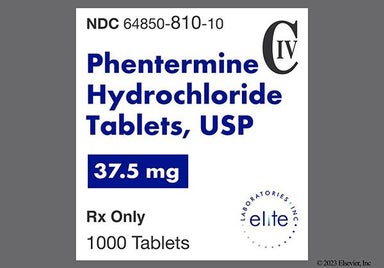
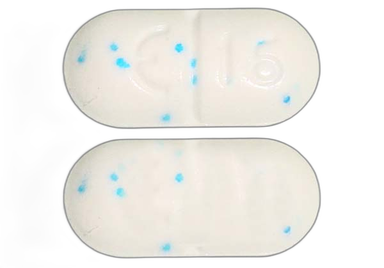
Phentermine (Adipex-P) is an appetite suppressant. It's a prescription weight loss pill for people ages 17 years and older. This medication works best when it's part of a treatment plan that involves healthy diet and regular exercise. Phentermine (Adipex-P) is taken by mouth once daily, typically in the morning. Some of the more common side effects of this medication include dry mouth, trouble sleeping, and headache.


What is Phentermine (Adipex-P)?
What is Phentermine (Adipex-P) used for?
Short-term treatment for weight management in adults with a body mass index (BMI) of:
- 30 kg/m2 or greater; or
- 27 kg/m2 or greater, and with at least one other weight-related condition (e.g., high blood pressure, high blood sugar, high cholesterol)
How Phentermine (Adipex-P) works
Phentermine (Adipex-P) is a sympathomimetic (stimulant). The exact way it works to help with weight loss isn't well understood. But it's thought to work by lowering your appetite and causing you to feel less hungry.
Drug facts



Risks and warnings for Phentermine (Adipex-P)
Phentermine (Adipex-P) can cause some serious health issues. This risk may be even higher for certain groups. If this worries you, talk to your doctor or pharmacist about other options.
Not safe to combined with other weight loss medications
There isn't enough information to know whether it's safe to take phentermine (Adipex-P) along with other medications for weight loss, including ones found over-the-counter. Don't take phentermine (Adipex-P) with any other weight loss medication without first speaking with your primary care provider. Talk with your care team if you've more questions about your treatment plan.
Phentermine not working well
Phentermine (Adipex-P) might not continue to work well after a while, even for people who've experienced good results when they first started treatment. This is called tolerance. Raising the dose of phentermine (Adipex-P) won't help and isn't safe because of the risk for serious side effects. Let you primary care provider know if you've noticed weight gain or your appetite returning after you've been taking phentermine (Adipex-P). They'll need to recommend other treatment options for you.
Risk of misuse and dependence
- Risk factors: Taking more phentermine (Adipex-P) than prescribed
Similar to other stimulants, phentermine (Adipex-P) has a risk of misuse and for causing dependence. To lower the risk of serious side effects from taking too much medication and the risk of dependence, your primary care provider will typically only prescribe a limited amount and quantity at a time. Take phentermine (Adipex-P) exactly as prescribed by your primary care provider. This medication is only meant for short-term treatment only. Talk with your care team to learn more about long-term weight management options.
Trouble concentrating or problem with coordination
- Risk factors: Drinking alcohol Don't drive or do anything that needs a lot of focus and attention after starting phentermine (Adipex-P) until you know how this medication affects you. Some people experience trouble concentrating, dizziness, tremor and other side effects that can make it dangerous for you to drive. Let your care team know right away if you have these side effects, and especially if they don't get better with time. They might need to ask you to consider other treatment options instead.
Heart and lung problems
In the past, there were rare, life-threatening cases of pulmonary hypertension (high blood pressure in the lungs) and heart valve problems in people taking "fen-phen" (fenfluramine / phentermine), a previously used combination weight management medication. Although it's unlikely for these problems to happen while taking phentermine (Adipex-P) by itself, these risks might still be possible. Tell your primary care provider right away if you have any symptoms of lung problems or heart valve problems, such as chest pain, shortness of breath, swollen feet, or dizziness.
Risk of high blood pressure
Let your primary care provider (PCP) know if you have high blood pressure, even if your condition is well-controlled by medications. Taking phentermine (Adipex-P) might raise your risk for high blood pressure so your care team might ask you to check you blood pressure more often during treatment. Let your PCP know if you notice your blood pressure rising after starting treatment because they might need to adjust your medications.
Risk of low blood sugar in people with diabetes
- Risk factors: Taking insulin or sulfonylureas
People with diabetes who are taking medications that lower blood sugar, such as insulin or sulfonylureas like glipizide, are at higher risk for severely low blood sugar during treatment with phentermine (Adipex-P). This can happen due to changes in eating habits and appetite with phentermine (Adipex-P). Your diabetes care team might need to adjust the dose of your blood sugar medications after you start phentermine (Adipex-P).
Always keep emergency glucose tablets or hard candy with you in case your blood sugar drops too low. If you experience symptoms of low blood sugar, such as feeling faint, shaking, and sweating, check and treat your low blood sugar levels right away. If your symptoms don't improve, call 911.

Side effects of Phentermine (Adipex-P)
The following side effects may get better over time as your body gets used to the medication. Let your healthcare provider know immediately if you continue to experience these symptoms or if they worsen over time.
Common Side Effects
- Dry mouth
- Headache
- Tremor
- Constipation
- Diarrhea
- High blood pressure
- Fast heart rate
- Difficulty sleeping
Less Common Side Effects
- Dizziness
- Restlessness
- Behavioral changes
- Erectile dysfunction
- Changes in sex drive
Phentermine (Adipex-P) serious side effects
Contact your healthcare provider immediately if you experience any of the following.
- Heart or lung disease: dizziness, chest pain, leg or ankle swelling, feeling of heart racing or pounding (palpitations), inability to exercise, fatigue, short of breath
- Severely high blood pressure: severe headache, difficulty breathing, chest pain, blurry vision, confusion
- Low blood sugar (for people who are taking certain diabetes medications): feeling faint, shaking, sweating, nervousness, anxious, confused, irritable, feeling very hungry
More on Phentermine (Adipex-P) side effects

The following Phentermine (Adipex-P) side effects have also been reported
Along with its needed effects, a medicine may cause some unwanted effects. Although not all of these side effects may occur, if they do occur they may need medical attention.
Check with your doctor immediately if any of the following side effects occur:
Rare
Seeing, hearing, or feeling things that are not there
severe mental changes
Incidence not known
decreased ability to exercise
dizziness
fainting
fast, irregular, pounding, or racing heartbeat or pulse
headache
numbness or tingling in the arms or legs
swelling of the feet or lower legs
trembling or shaking of the legs, arms, hands, or feet
trouble breathing
trouble with thinking, speaking, or walking
weakness
Some side effects may occur that usually do not need medical attention. These side effects may go away during treatment as your body adjusts to the medicine. Also, your health care professional may be able to tell you about ways to prevent or reduce some of these side effects. Check with your health care professional if any of the following side effects continue or are bothersome or if you have any questions about them:
Incidence not known
Decreased interest in sexual intercourse
difficulty having a bowel movement (stool)
false or unusual sense of well-being
hives or welts, itching, or skin rash
inability to have or keep an erection
increased in sexual ability, desire, drive, or performance
increased interest in sexual intercourse
loss in sexual ability, desire, drive, or performance
redness of the skin
unpleasant taste
Other side effects not listed may also occur in some patients. If you notice any other effects, check with your healthcare professional.
Call your doctor for medical advice about side effects. You may report side effects to the FDA at 1-800-FDA-1088.

Get your GoodRx coupon

Pros and cons of Phentermine (Adipex-P)
Pros
- Can help you lose 5% to 10% of body weight
- Usually taken by mouth once per day
- Available as a lower-cost generic
- Comes as tablets, capsules, and orally disintegrating tablets
Cons
- Most insurance companies don't cover the cost of phentermine (Adipex-P).
- Has a risk of misuse and dependence since it's a stimulant medication that's similar to amphetamines
- Might not be a good choice for people with high blood pressure
- Should be avoided in children 16 years of age and younger, pregnant and breastfeeding women, and people with serious heart problems

Pharmacist tips for Phentermine (Adipex-P)

- Make sure you know which form (e.g., brand or generic, capsules or tablets) of phentermine you have. Each form can have different strengths of phentermine, dosing, and instructions on how to take them. Ask your pharmacist if you aren't sure which form you have or how to take the medication correctly.
- Avoid taking phentermine (Adipex-P) close to bedtime because it can cause you to have trouble falling asleep.
- Take phentermine (Adipex-P) exactly as prescribed. Don't change your dose or suddenly stop taking the medication without talking to your prescriber first.
- Common side effects of phentermine (Adipex-P) are dry mouth and trouble sleeping. It can also raise your blood pressure and heart rate. Speak with your healthcare team if you experience any bothersome side effects while taking phentermine (Adipex-P).
- If you have diabetes and are taking medications that lower your blood sugar, such as insulin or glipizide, let your primary care provider (PCP) know. Because taking phentermine (Adipex-P) will likely cause you to eat less, your provider PCP might need to adjust the dose of blood sugar medications.
- You're recommended to avoid alcohol while taking phentermine (Adipex-P). Alcohol can worsen phentermine (Adipex-P) side effects like faster heart rate, higher blood pressure, and trouble sleeping.
- Avoid driving the first few days after you start phentermine (Adipex-P) and after dose changes until you know how this medication affects you.
- It's important that you eat a healthy diet and maintain a regular exercise routine while taking phentermine (Adipex-P). Doing so will help you get the most benefit out of the medication. Talk with your primary care provider if you have questions about how to plan your meals and what kind of exercise is appropriate for you.
- Don't take phentermine (Adipex-P) if you're pregnant. Weight loss during pregnancy can cause serious harm to unborn babies. If you're pregnant or thinking of getting pregnant, don't use phentermine (Adipex-P). Speak with your primary care provider about how to maintain a healthy weight during pregnancy.
- It's recommended to avoid breastfeeding while taking phentermine (Adipex-P) because there's a potential risk of harm to nursing babies. Phentermine (Adipex-P) is structurally similar to amphetamines, which are known to pass into breast milk and can have potentially serious risks (e.g., changes in blood pressure and heart rate, growth problems) to breastfed babies.
- Phentermine (Adipex-P) interacts with several medications, including monoamine oxidase inhibitors (MAOIs). Tell your primary care provider about all the medications you're taking before you start phentermine (Adipex-P) as well as medications you plan to take during treatment. They can make sure your medications are safe for you.
For the phentermine (Adipex-P) orally disintegrating tablets (ODTs)
- Leave the tablets in the blister pack until you're ready to use them. When you're ready, use dry hands to remove them. This helps prevent the tablets from dissolving from any moisture on your hands. Also don't push the tablets through the foil because the tablets can break.
- Place the tablet on your tongue, and let the tablet dissolve without crushing or chewing it.
More on Phentermine (Adipex-P) tips


Common questions about Phentermine (Adipex-P)
Yes, phentermine (Adipex-P) is a controlled substance because it has a risk of being misused or causing dependence.
You might start to feel less hungry soon after you start taking phentermine (Adipex-P). But how much weight you'll lose and how quickly you'll lose it depends on different factors, such as how much extra weight you have before starting treatment and your exercise routine and diet choices during treatment. But typically, it might take about 2 weeks before you see noticeable results. Talk to your primary care provider if you've more questions about what to expect with phentermine (Adipex-P).
Phentermine (Adipex-P) is meant for short-term treatment only. It's FDA-approved to be taken for up to 3 months. Talk with your primary care provider if you're interested in learning more about longer-term weight loss options.
Phentermine (Adipex-P) is typically taken only once daily. But if you're taking the tablet form, your primary care provider might ask you to divide your dose into 2 smaller ones and to take them twice daily. Only certain forms of phentermine, such as Lomaira (phentermine), is FDA-approved to be taken multiple times a day. Talk with your primary care provider if you're not sure how you should take phentermine (Adipex-P).
Phentermine (Adipex-P) can be safe if you take it as directed and follow up with your primary care provider (PCP) regularly. But because phentermine (Adipex-P) is a controlled substance, it does have a risk for misuse and dependence. It can also cause certain side effects, such as dry mouth and sleeping problems. These side effects typically get better over time. Your PCP can also recommend ways to manage them. Keep in mind that phentermine (Adipex-P) isn't safe for people with certain health conditions, such as those with heart problems or blood pressure that's not well-controlled. Talk with your care team if you're not sure whether phentermine (Adipex-P) is safe for you.
You shouldn't take phentermine (Adipex-P) and Wegovy (semaglutide) together. While these medications work differently to help with weight loss, there's not enough research to understand whether they're safe to take together. Talk to your primary care provider about the differences between phentermine (Adipex-P) and Wegovy (semaglutide) to see which weight loss medication is right for you.
You're recommended to avoid alcohol while taking phentermine (Adipex-P). Drinking alcohol can worsen certain side effects of the medication, such as dizziness and trouble sleeping. In addition, drinking alcohol can also affect how much weight you lose from phentermine (Adipex-P). If you've been drinking alcohol regularly and it's difficult for you to stop, talk with your primary care provider. They can point you to resources to help you stop or tell you about other options for weight loss.
Yes, some people experience constipation from taking phentermine (Adipex-P), while others reported diarrhea. Talk with your primary care provider if you're experiencing any stomach-related issues. They can recommend ways to help based on your symptoms.

How to save using GoodRx



Phentermine (Adipex-P) dosage


Typical dosage for Phentermine (Adipex-P)
- Phentermine (Adipex-P) 37.5 mg tablets: The typical dose is 18.75 mg to 37.5 mg by mouth once per day, either before breakfast or 1 to 2 hours after breakfast. Another option is 18.75 mg by mouth twice per day.
- Phentermine 37.5 mg capsules: The typical dose is 37.5 mg by mouth once per day, either before breakfast or 1 to 2 hours after breakfast.
- Phentermine 15 mg and 30 mg capsules: The typical dose is 15 mg to 30 mg by mouth once per day 2 hours after breakfast.
- Phentermine 15 mg, 30 mg, and 37.5 mg orally disintegrating tablets (ODTs): The typical dose is 1 tablet dissolved on top of the tongue and swallowed once per day in the morning, with or without food.
Your provider will adjust your dose based on how well the medication is working for you, if you're having side effects, and if you have kidney problems.
More on Phentermine (Adipex-P) dosage


Phentermine (Adipex-P) reviews
GoodRx has partnered with to provide reviews on the different aspects of Phentermine (Adipex-P).
Effectiveness
Learn more about the effectiveness of Phentermine (Adipex-P) based on real life experiences.
Overall Rating
Based on 13 people taking this medication
3
Effectiveness by condition:
fibromyalgia5 reviews
2.0
obesity4 reviews
3.1
attention deficit/hyperactivity disorder2 reviews
1.3
metabolic syndrome1 reviews
3.8
myalgic encephalomyelitis/chronic fatigue syndrome1 reviews
5.0
Severity of side effects
Based on 78 people taking this medication
0%
50%
100%
Top side effects
Insomnia
9%
Dry mouth
7%
Jittery feeling
6%
Anxious mood
4%
Constipation
4%
Reasons people stopped taking Phentermine (Adipex-P)
Based on 77 people who have taken this medication
Doctor's advice
21%
Other
21%
Did not seem to work
20%
Side effects too severe
15%
Course of treatment ended
13%
Expense
11%
Change in health plan coverage
2%

Interactions between Phentermine (Adipex-P) and other drugs
More on Phentermine (Adipex-P) interactions


Although certain medicines should not be used together at all, in other cases two different medicines may be used together even if an interaction might occur. In these cases, your doctor may want to change the dose, or other precautions may be necessary. When you are taking this medicine, it is especially important that your healthcare professional know if you are taking any of the medicines listed below. The following interactions have been selected on the basis of their potential significance and are not necessarily all-inclusive.
Using this medicine with any of the following medicines is not recommended. Your doctor may decide not to treat you with this medication or change some of the other medicines you take.
- Furazolidone
- Iproniazid
- Isocarboxazid
- Linezolid
- Methylene Blue
- Moclobemide
- Nialamide
- Phenelzine
- Procarbazine
- Rasagiline
- Safinamide
- Selegiline
- Sibutramine
- Tranylcypromine
Using this medicine with any of the following medicines is usually not recommended, but may be required in some cases. If both medicines are prescribed together, your doctor may change the dose or how often you use one or both of the medicines.
- Iobenguane I 131

How much does Phentermine (Adipex-P) cost?
$8.56

Phentermine (Adipex-P) contraindications
Contraindications are specific health conditions or situations in which a person should not take a medication due to safety concerns. If you have any of the following conditions or if any of the following apply to you, let your healthcare provider know because Phentermine (Adipex-P) will not be safe for you to take.
- Heart problems (e.g., stroke, irregular heartbeat, uncontrolled high blood pressure)
- Overactive thyroid (hyperthyroidism)
- Glaucoma
- Feeling agitated or distressed
- History of substance use disorder
- Currently pregnant or breastfeeding
- Currently take or have taken a monoamine oxidase inhibitors (MAOI) in the last 14 days
- Severe allergy to amphetamine-containing products

What are alternatives to Phentermine (Adipex-P)?
Short-term treatment for weight management in adults with a body mass index (BMI) of:

News about Phentermine (Adipex-P)








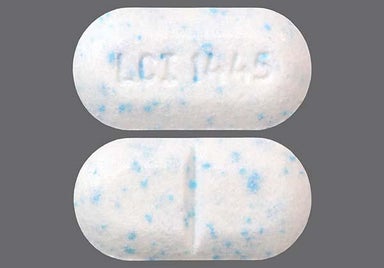
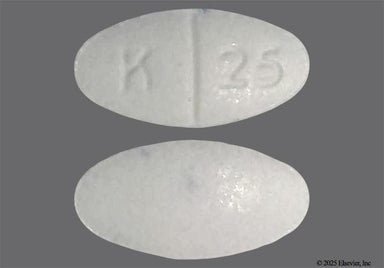
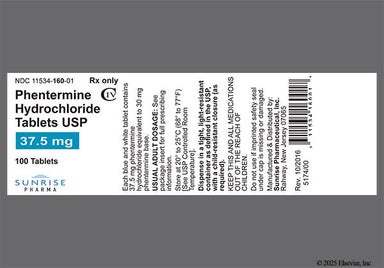
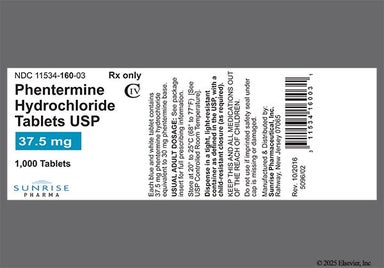
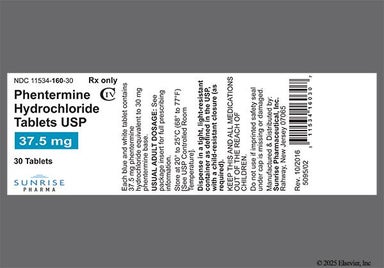
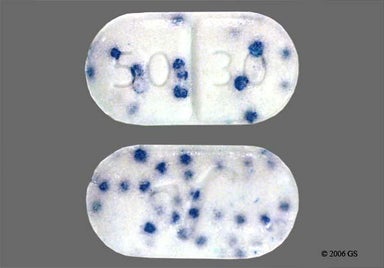
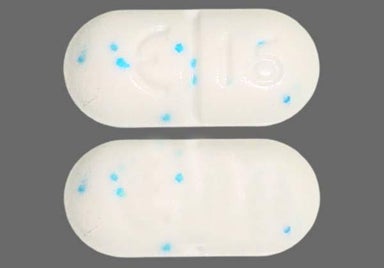
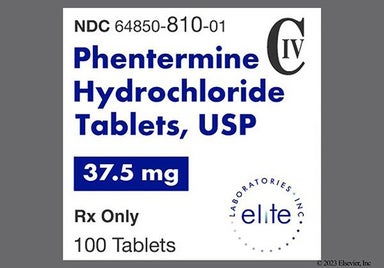
Phentermine (Adipex-P) images