The following side effects may get better over time as your body gets used to the medication. Let your healthcare provider know immediately if you continue to experience these symptoms or if they worsen over time.
Heart failure: trouble breathing, tiredness, swelling in your body, sudden weight gain
Stomach bleeds: blood in your vomit, stool that looks like black coffee grounds, pain in your stomach that doesn't go away
Kidney damage and high potassium: nausea, muscle weakness, tingling sensations in your muscles, changes in how much you urinate, swelling in the legs or feet
Liver problems: swelling of your stomach, yellowing of your skin or the whites of your eyes, dark or brown urine
Severe asthma attack: chest pain, cough, difficulty breathing, wheezing
Serious allergic or skin reaction: fever, rash, body aches, cough, swelling of the face, peeling skin, painful blisters all over your body
Brain inflammation (aseptic meningitis): severe headache, neck stiffness, sensitivity to light, painful eye movements
Bleeding—bloody or black, tar-like stools, vomiting blood or brown material that looks like coffee grounds, red or dark brown urine, small red or purple spots on skin, unusual bruising or bleeding
Heart attack—pain or tightness in the chest, shoulders, arms, or jaw, nausea, shortness of breath, cold or clammy skin, feeling faint or lightheaded
Kidney injury—decrease in the amount of urine, swelling of the ankles, hands, or feet
Liver injury—right upper belly pain, loss of appetite, nausea, light-colored stool, dark yellow or brown urine, yellowing skin or eyes, unusual weakness or fatigue
Redness, blistering, peeling, or loosening of the skin, including inside the mouth
Round red or dark patches on the skin that may itch, burn, and blister
Stroke—sudden numbness or weakness of the face, arm, or leg, trouble speaking, confusion, trouble walking, loss of balance or coordination, dizziness, severe headache, change in vision
Side effects that usually do not require medical attention (report these to your care team if they continue or are bothersome):
Pharmacist tips for Duexis (ibuprofen / famotidine)
Take Duexis (ibuprofen / famotidine) with or without food. If it's hurting your stomach, taking it with food or milk can help.
Swallow the Duexis (ibuprofen / famotidine) tablets whole with a full glass of water. Don't chew, cut, or crush the tablets, because this can affect how well the medication works. If you're unable to swallow the tablet whole, talk to your prescriber. They might recommend that you switch to a different medication.
Avoid drinking alcohol while taking Duexis (ibuprofen / famotidine) because doing so raises your risk for liver damage, kidney problems, and stomach bleeding.
Tell your care team about all of the over-the-counter and prescription medications you're taking. Ibuprofen in Duexis interacts with many medications. Additionally, famotidine in Duexis can affect certain medications that need stomach acid to work, such as atazanavir (Reyataz) and ketoconazole (Nizoral).
Don't take Duexis (ibuprofen / famotidine) with other nonsteroidal anti-inflammatory drugs (NSAIDs). Doing so can raise your risk of serious side effects, including stomach bleeding and heart problems. Keep in mind that NSAIDs are commonly found in other over-the-counter and prescription medications. Talk with your care team if you're not sure whether you're already taking an NSAID.
Let your prescriber know if you're pregnant or thinking of becoming pregnant. The ibuprofen component of Duexis (ibuprofen / famotidine) can cause serious harm during pregnancy so they'll talk with you about safer alternatives.
Risks and warnings for Duexis (ibuprofen / famotidine)
Duexis (ibuprofen / famotidine) can cause some serious health issues. This risk may be even higher for certain groups. If this worries you, talk to your doctor or pharmacist about other options.
Stomach bleeding and ulcers
Risk factors: Older adults | History of stomach bleeding or ulcers | Bleeding problems | Liver problems | Taking other medications that raise your risk of bleeds | Drinking alcohol | Smoking | Taking Duexis (ibuprofen / famotidine) for a long time
Even though Duexis contains famotidine, you can still get stomach bleeding and ulcers (sores) from ibuprofen in Duexis. Stomach bleeding is a dangerous condition that requires treatment right away. Serious stomach problems can happen with or without warning or symptoms while you're taking Duexis (ibuprofen / famotidine). Your risk for stomach bleeds is even higher if you're also taking other medications that can put you at risk, such as blood thinners (anticoagulants).
Tell your care team about all of your medical conditions and medications before you start Duexis (ibuprofen / famotidine) so they can talk with you about your risk for stomach bleeding. Seek medical help right away if you're feeling faint, vomiting blood, have bloody or dark stools, or have severe stomach pain or discomfort that doesn't go away while you're taking Duexis (ibuprofen / famotidine).
Heart attack and stroke
Risk factors: Heart problems | Taking higher doses of Duexis (ibuprofen / famotidine) | Taking Duexis (ibuprofen / famotidine) for a long time | Past or planned heart surgery
Ibuprofen in Duexis can raise your risk of having blood clots, which sometimes lead to a heart attack or stroke. Talk to your healthcare professional (HCP) before you take Duexis (ibuprofen / famotidine) if you have heart problems. Don't take Duexis (ibuprofen / famotidine) if you've recently had or will be having heart surgery. Call 911 or get immediate help if you experience chest pain, shortness of breath, weakness on one side of your body, or trouble speaking or walking.
High blood pressure, heart failure, and swelling
Risk factors: Heart problems | High blood pressure
Ibuprofen in Duexis can cause your body to hold on to extra fluid, which can raise your blood pressure or cause swelling that can worsen heart failure. Tell your primary care provider if you have a history of heart problems or if you're taking blood pressure medications before you start taking Duexis (ibuprofen / famotidine) to make sure it's safe for you. Contact your HCP if you experience unexplained fainting, chest pain with physical activity, or irregular heartbeat while you're taking Duexis (ibuprofen / famotidine).
Kidney damage and high potassium levels
Risk factors: Older adults | Kidney or liver problems | Heart failure | Taking other medications that can cause kidney problems
Ibuprofen in Duexis can damage your kidneys by slowing down blood flow to the kidneys. Your risk is higher if you're of older age, have certain medical problems like diabetes, or take other medications that can cause kidney problems. Your HCP might order lab tests to check your kidney health before and during long-term treatment with Duexis (ibuprofen / famotidine). Contact your HCP if you develop any signs or symptoms of kidney failure, including changes in your need to urinate, tiredness, dry and itchy skin, low appetite, and muscle cramps. Your HCP might suggest that you stop taking Duexis (ibuprofen / famotidine) and switch to a safer medication.
In addition, kidney damage from ibuprofen can also lead to high potassium levels. Sometimes, this medication can cause high potassium levels even in people with normal kidneys. If you experience signs of high potassium levels, such as nausea, muscle weakness, or tingling sensations in your muscles, tell your healthcare team right away.
Liver problems
Risk factors: History of liver problems
Though rare, ibuprofen in Duexis can cause serious liver problems that can lead to liver failure. Get medical attention right away if you notice swelling of your stomach; stomach pain; yellowing of your skin or the whites of your eyes; stool changes (black, tarry, or bloody stools); dark or brown urine; nausea, vomiting; or confusion. These can be signs of liver damage. Your HCP can examine you for liver problems, and you might need to stop using the medication to prevent further liver damage.
Severe allergic reactions
Risk factors: Aspirin allergy | NSAID allergy
Severe allergic reactions to Duexis (ibuprofen / famotidine) are possible. These can include life-threatening reactions like facial swelling, shock, and anaphylaxis. Tell your primary care provider if you have an allergy to aspirin or other NSAIDs before you start taking Duexis (ibuprofen / famotidine). Seek medical attention right away if you notice hives, rash, swelling of the lips or tongue, or trouble breathing after you use Duexis (ibuprofen / famotidine).
Although rare, ibuprofen in Duexis can also cause serious skin reactions. Stop using Duexis (ibuprofen / famotidine) and get medical help right away if you notice changes in your skin such as rash, blisters, skin reddening, or skin peeling.
Harm to unborn babies
Risk factors: Currently in second or third trimester of pregnancy
Ibuprofen in Duexis can cause harm to your unborn baby, especially if it's taken in the second half of pregnancy (after week 20). It can cause serious complications, such as heart or kidney problems in your unborn baby or problems during delivery. Speak to your HCP about the risks and benefits of taking Duexis (ibuprofen / famotidine) if you're pregnant before taking this medication. Ask whether there are safer alternatives.
Accidentally taking too much medication
Duexis contains an NSAID (ibuprofen), which is found in many other over-the-counter and prescription products. Taking more than one NSAID, including products used on the skin, can lead to an accidental overdose and cause serious side effects, including kidney failure, stomach bleed, heart attack, stroke, or even death.
Tell your care team about all of the medications you take before starting Duexis (ibuprofen / famotidine) to make sure it's safe for you. Don't start any new medications while taking Duexis (ibuprofen / famotidine) without talking to your HCP or pharmacist. To prevent an accidental overdose, read package labels carefully. If you're not sure if a product has an NSAID, ask a member of your care team. If you or your loved one experiences an accidental overdose, get medical help right away or contact a Poison Control Center at 1-800-222-1222.
Changes in vision
Duexis (ibuprofen / famotidine) can cause changes in vision, including blurred or loss of vision or changes in color vision. Don't drive or operate heavy machinery until you realize how this medication affects you. If you have eye or vision problems, ask your eye specialist if Duexis (ibuprofen / famotidine) is right for you. If Duexis (ibuprofen / famotidine) worsens your vision, contact your prescriber right away because you'll need to stop taking it.
Duexis (ibuprofen / famotidine) dosage
The average cost for 90 tablets of 800mg/26.6mg of Duexis (ibuprofen / famotidine) is $58.11 with a free GoodRx coupon. This is 88.94% off the average retail price of $525.57.
Contraindications are specific health conditions or situations in which a person should not take a medication due to safety concerns. If you have any of the following conditions or if any of the following apply to you, let your healthcare provider know because Duexis (ibuprofen / famotidine) will not be safe for you to take.
What are alternatives to Duexis (ibuprofen / famotidine)?
There are a number of medications that your doctor can prescribe in place of Duexis (ibuprofen / famotidine). Compare a few possible alternatives below.
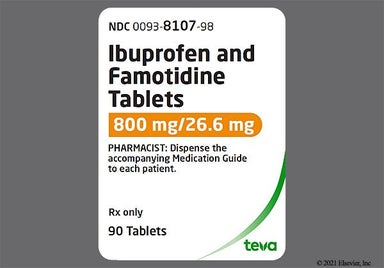
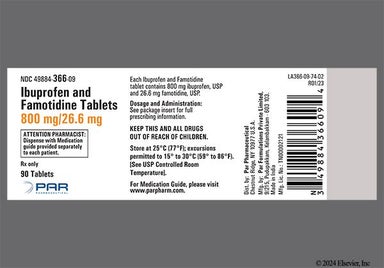
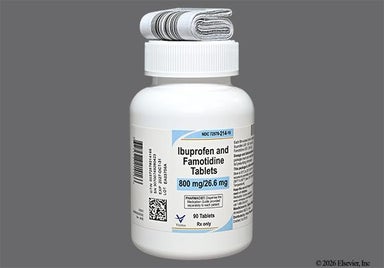
This medicine is Blue, Oval Tablet Imprinted With "Teva 8107".Blue Oval TEVA 8107 - Ibuprofen/Famotidine 800mg-26.6mg TabletThis medicine is Blue, Oval Tablet Imprinted With "P366".Blue Oval P366 - Ibuprofen/Famotidine 800mg-26.6mg TabletThis medicine is Blue, Oval Tablet Imprinted With "Hzt".Blue Oval HZT - Ibuprofen/Famotidine 800mg-26.6mg TabletThis medicine is White, Oblong Tablet Imprinted With "777".White Oblong 777 - Ibuprofen/Famotidine 800mg-26.6mg Tablet
GoodRx Health has strict sourcing policies and relies on primary sources such as medical organizations, governmental agencies, academic institutions, and peer-reviewed scientific journals. Learn more about how we ensure our content is accurate, thorough, and unbiased by reading our editorial guidelines.
Prescription savings
Stop paying too much for your prescriptions. Compare prices, get pharmacy coupons, and save up to 80%.
Plans start at $9.99/mo. (when paid yearly). Terms apply.
Common questions about Duexis
You might feel some pain relief from the ibuprofen in Duexis about 30 minutes after a dose, but it can take up to 2 weeks before you see less swelling or inflammation in the joints. Famotidine starts to work to protect your gut within 1 to 3 hours after a dose. Talk to your prescriber if you're concerned about how long it's taking for Duexis to work for you.
The duration of treatment with Duexis might differ from person to person. Typically, your care team will prescribe this medication for the shortest period of time needed to treat your symptoms. This is because taking Duexis long-term can put you at higher risk for serious side effects, including stomach ulcers or heart problems. While the famotidine in Duexis can help protect against stomach ulcers, it doesn't take away the risk completely. Ask your healthcare team how long you should take Duexis before you start treatment.
It takes about a day for most of Duexis to leave your body after a dose. This time frame is estimated based on the half-life of ibuprofen and famotidine. It can take longer for it to leave your body if you have kidney problems. Talk with your prescriber if you have more questions about how long this medication stays in your body.
Duexis isn't the same as ibuprofen (Advil, Motrin). Duexis contains ibuprofen to help ease pain and swelling. But it also contains famotidine that helps lower the risk of stomach ulcers. If you're taking Duexis, avoid taking additional ibuprofen or other types of NSAIDs at the same time. Doing so can raise your risk for side effects like bleeding, heart problems, and stomach ulcers. Ask your HCP if you more questions about the medications in Duexis.
No, Duexis isn't a controlled substance because it doesn't have a risk of addiction or dependence.
Weight gain isn't an expected side effect of Duexis. But ibuprofen in Duexis might cause the body to hold on to more water, which can lead to swelling in the arms and legs, and might affect your body weight. Speak with your prescriber right away if you notice swelling or changes to your body weight after starting Duexis. They might ask you to stop this medication and consider other options.
People who took Duexis in clinical studies didn't experience sleepiness as a side effect. But people who took prescription-strength ibuprofen have reported dizziness. Usually, this side effect should go away with time. Contact your healthcare team right away if you notice unexplained sleepiness or dizziness that doesn't get better.
No, Duexis is only available by prescription from a healthcare professional (HCP). While ibuprofen (Advil, Motrin) and famotidine (Pepcid) are found OTC as individual medications, the dosages of the OTC versions aren't the same as those in Duexis. Don't substitute Duexis with OTC ibuprofen or famotidine without first speaking to your HCP. OTC ibuprofen can only help with mild, temporary pain. But if you have osteoarthritis or rheumatoid arthritis, it's important to work with a healthcare team to manage your condition long-term.




 Even though Duexis contains