







Why Maintaining Muscle Matters During Weight Loss — and How to Do It
Losing weight can reduce muscle mass, which can lead to major health issues. Thankfully, you can balance muscle mass and weight loss through diet and exercise.
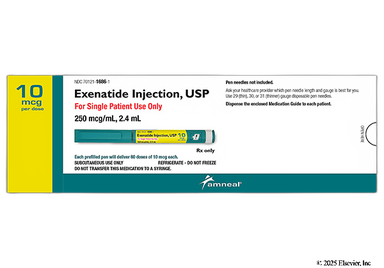
Exenatide is a glucagon-like peptide-1 (GLP-1) agonist used along with diet and exercise to help improve blood sugar levels in adults with Type 2 diabetes. It's injected under the skin twice a day before meals, with doses given at least 6 hours apart. Common side effects include nausea, vomiting, and diarrhea. Although the brand names Byetta and Bydureon BCise have been discontinued, a generic version of Byetta is still available.

Exenatide is a glucagon-like peptide-1 (GLP-1) agonist. It acts like GLP-1, a natural hormone your body makes after you eat.
It helps your body release more insulin when your blood sugar is high, lowers the amount of sugar your liver releases, and slows how quickly food leaves your stomach. Together, these effects work to lower your blood sugar levels.
| Common Brands | Byetta |
|---|---|
| Drug Class | GLP-1 agonist |
| Controlled Substance Classification | Not a controlled medication |
| Generic Status | Lower-cost generic available |
| Availability | Prescription only |

The following side effects may get better over time as your body gets used to the medication. Let your healthcare provider know immediately if you continue to experience these symptoms or if they worsen over time.
Note: Side effects can vary depending on whether exenatide is taken alone or with other diabetes medications.
Contact your healthcare provider immediately if you experience any of the following.




Exenatide can cause some serious health issues. This risk may be even higher for certain groups. If this worries you, talk to your doctor or pharmacist about other options.
Exenatide might raise your risk for pancreatitis, which is inflammation of the pancreas. Although this side effect is rare, get medical help right away if you have severe stomach pain that doesn't go away, especially if it spreads to your back, with or without vomiting.
Exenatide can cause low blood sugar (hypoglycemia), especially if you use it with insulin or a sulfonylurea diabetes medication. Your prescriber might lower the dose of your other diabetes medication to help reduce this risk. Tell your prescriber right away if you have symptoms of low blood sugar, such as shakiness, sweating, dizziness, fast heartbeat, hunger, confusion, or blurred vision.
Exenatide can rarely cause kidney problems, especially if severe nausea, vomiting, or diarrhea leads to dehydration. Drink plenty of fluids while taking this medication, and contact your care team if you can't keep fluids down or have severe diarrhea or vomiting.
Exenatide can cause stomach-related side effects such as nausea, vomiting, and diarrhea. In some cases, these side effects can be serious. Exenatide isn't recommended if you have gastroparesis, a condition that slows how quickly your stomach empties. Contact your care team if your stomach symptoms are severe or don't go away.
Exenatide can rarely cause serious allergic reactions, including anaphylaxis and swelling of the face, lips, tongue, or throat. Stop using the medication and get medical help right away if you have trouble breathing, swelling, hives, or severe dizziness.
Exenatide can rarely cause drug-induced thrombocytopenia, a condition where your platelet count becomes too low. Because platelets help your blood clot, this can lead to serious bleeding. Contact your care team right away if you notice unusual bleeding, bleeding when you brush your teeth, easy bruising, or tiny red or purple spots on your skin. If this happens, you'll likely need to stop taking the medication.
Some people taking exenatide might experience gallbladder problems. This can include gallstones or inflammation of the gallbladder, which can require surgery. Contact your prescriber right away if you have severe pain in the upper right side of your stomach, fever, nausea, vomiting, or yellowing of your skin or eyes.
Exenatide slows how quickly food leaves your stomach. In rare cases, food can remain in the stomach during surgery, even after fasting, which can increase the risk of food entering the lungs during anesthesia or deep sedation. Tell your surgeon or anesthesiologist that you're taking exenatide before any planned procedure. They will let you know if you need to stop the medication beforehand.


Contraindications are specific health conditions or situations in which a person should not take a medication due to safety concerns. If you have any of the following conditions or if any of the following apply to you, let your healthcare provider know because Exenatide will not be safe for you to take.










Prescription savings
Stop paying too much for your prescriptions. Compare prices, get pharmacy coupons, and save up to 80%. Find expert answers to your health questions so you can make the best decisions for yourself and your family.
Health conditions
Medications & treatment
Access & affordability
Medication discounts

Yes, exenatide is a GLP-1 agonist that helps lower blood sugar alongside diet and exercise in adults with Type 2 diabetes. It mimics GLP-1, a natural hormone released after eating, by prompting your body to release more insulin when blood sugar rises, reducing the sugar released by your liver, and slowing digestion.
Exenatide was discovered after researchers found a natural substance called exendin-4 in the saliva of the Gila monster, a venomous lizard found in the southwestern U.S. and Mexico. Exendin-4 acts like the natural GLP-1 hormone in the body but lasts much longer, making it useful as a diabetes treatment. Scientists used this discovery to develop exenatide, which became the first FDA-approved GLP-1 receptor agonist for Type 2 diabetes in 2005.
Yes, exenatide is still on the market, but it's only available as a generic medication. Because pharmacy stock can vary, it's always a good idea to check with your local pharmacy directly.
Yes, both Byetta and Bydureon BCise have been discontinued. But, a generic version of the twice-daily exenatide injection is still available to treat Type 2 diabetes. If you were taking one of these brand-name medications, your prescriber can help you switch to the generic version or another medication that's right for you.
Exenatide isn't FDA approved for weight loss, but some people might lose a little weight while taking it. In studies, people taking exenatide lost 6 to 7 pounds over 6 months. This is generally less weight loss than with newer GLP-1 medications. If you have questions about how this medication might affect your weight, talk with your prescriber.
Yes, Diarrhea is a common side effect of exenatide. It's usually mild and gets better as your body gets used to the medication. Drink plenty of fluids to help prevent dehydration. Contact your care team if your diarrhea is severe, doesn't go away, or if you feel dizzy or unusually weak.
One exenatide pen contains enough medication for 30 days of treatment. Even if there's a small amount of medication left in the pen after 30 days, don't use it. Write down the date you first use the pen, then throw it away in a sharps container 30 days later.
No. Exenatide and Ozempic (semaglutide) aren't the same medication, but they belong to the same class of drugs called GLP-1 agonists. Both help lower blood sugar in people with Type 2 diabetes, but exenatide is injected twice a day, while Ozempic is available as a once-weekly injection or a once-daily tablet. Talk to your prescriber if you have questions about how they compare.
