



Perimenopause Symptoms: How Do I Know When Perimenopause Starts?
Perimenopause is the transition period before menopause. Learn the signs and symptoms of perimenopause and how to manage these natural changes.
Estradiol (Estrace) vaginal cream is used to lessen certain symptoms related to menopause, such as vaginal itching and dryness. It's a hormone replacement therapy that's made of estradiol, a form of estrogen. Estradiol (Estrace) vaginal cream is applied vaginally with an applicator. Typically, your gynecologist or healthcare professional (HCP) will prescribe it daily for a few weeks, and then lower the dose to a few times a week after that. Some side effects of estradiol (Estrace) vaginal cream include vaginal burning and irritation.

Estradiol (Estrace) vaginal cream contains man-made estradiol, a form of estrogen that's naturally made in the body. During menopause, the body makes less estrogen, leading to symptoms such as vaginal dryness, itching, and burning. Estradiol (Estrace) vaginal cream is applied vaginally to help relieve vaginal symptoms of menopause.
| Common Brands | Estrace |
|---|---|
| Drug Class | Estrogen replacement |
| Controlled Substance Classification | Not a controlled medication |
| Generic Status | Lower-cost generic available |
| Availability | Prescription only |

The following side effects may get better over time as your body gets used to the medication. Let your healthcare provider know immediately if you continue to experience these symptoms or if they worsen over time.
Contact your healthcare provider immediately if you experience any of the following.
Side effects that you should report to your care team as soon as possible:
Side effects that usually do not require medical attention (report to your care team if they continue or are bothersome):




Estradiol (Estrace) vaginal cream can cause some serious health issues. This risk may be even higher for certain groups. If this worries you, talk to your doctor or pharmacist about other options.
 There's a higher risk of endometrial cancer, or cancer in the uterine lining, in females who use estrogen products alone, like estradiol (Estrace) vaginal cream. The chances are higher in females who use estradiol (Estrace) vaginal cream for a long time at high doses. If you have a uterus, taking another hormone called a progestin along with estradiol (Estrace) vaginal cream can help lower your risk because progestin balances out estrogen's effects by slowing the growth of your uterine lining. If you have abnormal vaginal bleeding that doesn't go away or keeps coming back, let your healthcare professional (HCP) know because this can be a warning sign of uterine (endometrial) cancer.
There's a higher risk of developing breast cancer in females using estradiol (Estrace) vaginal cream both alone and with progestin, especially when taking the medications long term. Lower your risk by working with your HCP to use the lowest dose possible over the shortest period of time. To help with early detection and to make sure there aren't any abnormal changes in your breasts, do monthly breast self-checks at home and yearly breast exams with your HCP. Call your HCP if you notice any abnormal changes or feel lumps, pain, or swelling in your breasts.
There's a higher risk for stroke, blood clots in the lungs (pulmonary embolism), and blood clots in the legs (deep vein thrombosis) in postmenopausal women aged 50 to 79 years who use estradiol (Estrace) vaginal cream alone or with progestin. Get emergency help right away if you have any signs of a blood clot in the legs (cramps, swelling, pain, or muscle tightness) and lungs (trouble breathing, chest pain, or cough). If you have any symptoms of a stroke, such as weakness or numbness of the arms, legs, or face on one side of the body, slurred speech, blurred vision, headache, dizziness, loss of balance, trouble walking, or confusion, get emergency help right away.
Estradiol (Estrace) vaginal cream shouldn't be used alone or in combination with progestin to lower the chances of heart disease. Chances of having a heart attack are higher in postmenopausal women between the ages of 50 to 79 years who use estradiol (Estrace) vaginal cream alone or with progestin. If you have any signs of a heart attack, such as chest pain, chest tightness, trouble breathing, nausea, vomiting, dizziness, sweating, or a fast heartbeat, get emergency help right away.
Estradiol (Estrace) vaginal cream shouldn't be used to lower the risk of dementia. The chances of developing dementia are higher in women over the age of 65 who use estradiol (Estrace) vaginal cream alone or with progestin. If you or your loved one notices that you're becoming forgetful, confused, anxious, or are having a hard time making decisions or solving problems, let your HCP know.
There's a higher risk of gallbladder problems in postmenopausal women using estradiol (Estrace) vaginal cream, with some requiring surgery. Also, since estradiol (Estrace) vaginal cream is mostly broken down in the liver, people with liver problems might have higher levels of medication in their body, which can lead to a greater risk of side effects.
Talk to your HCP if you have any gallbladder or liver conditions or if you notice symptoms such as stomach pain or swelling, back pain, shoulder pain, dark urine, yellowing of your skin and eyes (jaundice), loss of appetite, nausea, or vomiting.
Using estradiol (Estrace) vaginal cream can lead to very high calcium in women with breast cancer and in those whose cancer has spread to their bones. If your calcium is high, you might feel thirsty, have stomach pain, nausea, vomiting, constipation, bone pain, muscle weakness, or confusion. Tell your HCP if you have any of these symptoms because you might have to stop using estradiol (Estrace) vaginal cream.
Use estradiol (Estrace) vaginal cream carefully if you have low parathyroid hormone levels (hypoparathyroidism). Hypoparathyroidism is a condition that affects the glands in the back of your neck and leads to low calcium in your blood. Let your HCP know if you have signs of low calcium such as burning or tingling of your fingers, toes, or lips, muscle pain and cramps, or confusion.
A blood clot that blocks part of your eye, known as retinal vascular thrombosis, can develop in women using estrogen products, like estradiol (Estrace) vaginal cream. If you suddenly can't see out of one or both eyes or if you have bulging eyes, double vision, or migraines, stop using estradiol (Estrace) vaginal cream and call your HCP.
Estradiol (Estrace) vaginal cream can raise triglyceride levels in your blood, which can lead to serious conditions like inflammation of the pancreas (pancreatitis). If you have a history of high triglycerides, which is a type of body fat that mostly comes from foods, try dietary changes, like limiting salt and sugar, avoiding alcohol, and eating more fruits, vegetables, whole grains, lean meats, beans, and nuts. For more guidance on how to reduce your triglyceride levels, ask your HCP.
Estradiol (Estrace) vaginal cream can affect thyroid hormone levels in your blood. If you take medications for low thyroid hormone levels, you might require higher doses of thyroid replacement therapy. Your HCP might have you get regular blood tests to check your thyroid hormone levels.
Using estrogen products, like estradiol (Estrace) vaginal cream, might cause some fluid retention, or edema, and chances are higher in people with heart conditions (e.g., congestive heart failure) or kidney damage. If you notice unusual swelling in any part of your body or if you suddenly gain weight over a short period of time, let your HCP know.
If you have certain conditions, such as asthma or diabetes, talk to your HCP before using estradiol (Estrace) vaginal cream because estrogen products can worsen these conditions. The medication does so by either raising your blood sugar levels or causing asthma attacks.

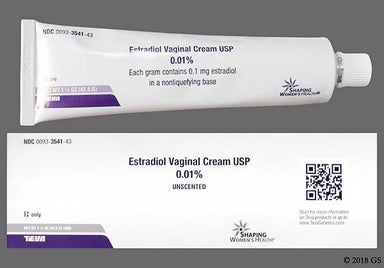
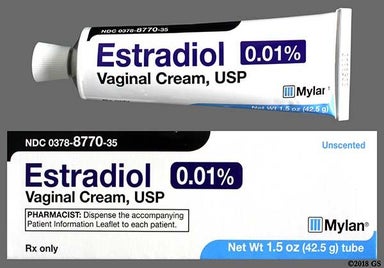
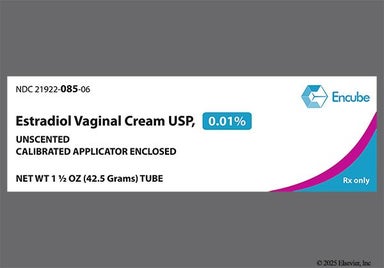
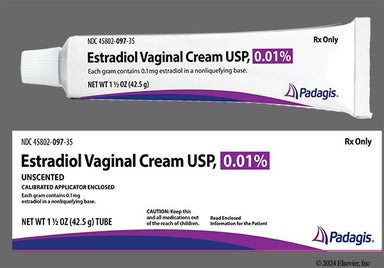
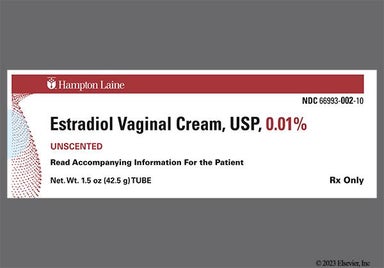
 Tube of cream
| Dosage | Quantity | Price as low as | Price per unit |
|---|---|---|---|
| 42.5g of 0.01% | 1 tube | $30.52 | $30.52 |
The typical starting dose is 2 to 4 grams inserted vaginally daily for one or two weeks. Then, your HCP will lower the daily dose by half, and ask you to apply it for another one or two weeks.
After you've experienced some improvement in symptoms, the typical maintenance dose is 1 gram applied vaginally one to three times per week.


Contraindications are specific health conditions or situations in which a person should not take a medication due to safety concerns. If you have any of the following conditions or if any of the following apply to you, let your healthcare provider know because Estradiol (Estrace) vaginal cream will not be safe for you to take.











Prescription savings
Stop paying too much for your prescriptions. Compare prices, get pharmacy coupons, and save up to 80%.Resources
About GoodRx
 Find expert answers to your health questions so you can make the best decisions for yourself and your family.
Health conditions
Medications & treatment
Access & affordability
Well-being
Medication discounts

Estrace is a form of estrogen. It's used as an estrogen replacement for people whose bodies don't make as much estrogen during menopause.
After you start Estrace, it might take a few weeks before you notice improvements in your symptoms, such as vaginal dryness. Your gyneocologist will ask you to use Estrace daily when you first begin treatment. Once your symptoms start to get better, they'll lower your dose to only 1 to 3 times per week.
Talk with your gynecologist if you're concerned about the safety of Estrace. Because Estrace is applied vaginally, only a small amount of the medication is absorbed into the body. Estrace has a lower risk of serious side effects (e.g., stroke, blood clots) compared to whole-body estrogen medications, like estradiol (Estrace) tablet that's taken by mouth. To minimize your risk for these problems, your gynecologist will prescribe the lowest dose of Estrace for the shortest amount of time necessary to treat your symptoms.
Some studies suggest that estrogen replacement therapy, like Estrace, can raise your risk for certain types of cancers, such as uterine (endometrial) and breast cancer. This is because some uterine and breast cancer cells are sensitive to estrogen and grow when there's estrogen around. But more recent research shows that the risk of cancer is low if you use Estrace or other estrogen HRT medications within 10 years of the start of menopause and if you don't have any family history of cancer. Before you start Estrace, talk with your gynecologist about the risks and benefits of using this medication.
Changes in body weight, including weight gain, have been reported by people who took estrogen-based medications. But weight gain is more likely a result of body changes during menopause rather than a side effect of the medications. Studies suggest that hormone replacement therapies (HRTs), like Estrace, isn't likely to cause weight gain. But they can result in bloating from the body holding on to more fluids, which typically goes away after awhile. Talk with your gynecologist if you're concerned about weight changes during menopause.
Yes, Estrace can raise the risk of vaginal yeast infections. You can take some steps to lower your chances of getting a yeast infection, including wearing cotton underwear and avoiding tight underwear. You should also avoid douching and scented feminine products, and change out of damp workout clothes and swimsuits promptly.
You can use Estrace during your period; it won't affect how well the medication works for you. Do, however, report any irregular vaginal bleeding or spotting to your prescriber because this could be a sign of endometrial or ovarian cancer.
Estrace is the brand name of both the estradiol vaginal cream and estradiol oral tablet. But the vaginal cream and oral tablet have different doses, directions, and uses. Estradiol vaginal cream is used to treat certain menopausal symptoms, such as vaginal itching, dryness, and burning. In addition to treating vaginal symptoms, estradiol oral tablets also treat hot flashes, night sweats, and prevent bone loss (osteoporosis). Discuss both options with your healthcare professional to decide which form of estradiol is best suited for you.
