Key takeaways:
Almost any type of head pain can be called a “headache.” Migraine, tension, and cluster headaches are three common types.
Migraines aren’t the same as other headaches. Migraines have different causes, and need different treatments.
Your symptoms can help you tell the difference between a migraine and other types of headaches.
Almost everybody gets headaches from time to time. But are migraines and headaches the same? You might be surprised to learn that there are important differences between migraines and other kinds of headaches.
Migraines are a type of headache. But not all headaches are migraines. In fact, migraines are only the second most common type of headache, after tension headaches. Migraines can cause a wide range of symptoms that usually don’t happen with other headaches. What’s more, migraines often cause symptoms before and after a headache starts.
Being able to spot the differences between headaches and migraines can help you find the best treatments. It can also help lower your risk of the pain coming back.
What are migraines?
A migraine is a type of headache that causes intense throbbing or pulsing pain on one or both sides of your head. But calling a migraine “just a headache” is a bit of an understatement. A migraine is a complex neurological disorder that affects many areas of your brain.
Headache is an important symptom of a migraine, but it’s only one part of the whole picture. Migraines can also cause:
Nausea
Vomiting
Sensitivity to light, sound, and smells
Vision changes
People can have symptoms like depressed mood, fatigue, and difficulty concentrating after a migraine. Because migraines can be severe and long-lasting, they can interfere with responsibilities at work, school, and within your family.
How common are they?
A global research study estimated that migraines affect nearly 20% of women and 10% of men. They’re even more common between the ages of 35 and 39.
Because migraines are so common, they’re one of the leading causes of disability around the world. Many people have to miss school or work to deal with the symptoms.
What are the main types of headaches besides migraines?
There are lots of reasons why you might have head pain. Let’s look at the other main types of headaches.
Tension headaches
Tension headaches are the most common type of headache. As the name suggests, tension headaches start when muscles in your neck or scalp become tense and contracted. Stress, fatigue, or jaw or dental pain can all trigger tension headaches. Most people describe tension headaches as a feeling of pressure or a “tight band” around their head. The pressure may start across the front of your head and progress until your whole head is affected.
Cluster headaches
Cluster headaches are a rare type of headache. People with cluster headache experience episodes of severe pain on one side of their head, usually around their eye. The pain can last for up to 3 hours and often comes back. The name “cluster” headache comes from the pattern of headaches appearing in groups over a period of weeks.
Secondary headaches
Migraine, tension, and cluster headaches are all considered primary headaches. This is because they aren’t caused by another condition. Primary headaches can be very painful and disabling, but they aren’t life-threatening.
Secondary headaches are caused by another medical condition and are much less common. Possible causes of secondary headaches include:
Bleeding inside your skull (intracranial bleeding)
Tumor or mass
Infection of your central nervous system, like meningitis
How are headaches and migraines similar?
A migraine headache is a type of primary headache. Other types of primary headaches include tension headaches and cluster headaches. Migraines and other primary headaches are similar because they all:
Cause pain in your head
Aren’t caused by any other condition
Can be treated with nonprescription or prescription medications
What is the difference between a headache and a migraine?
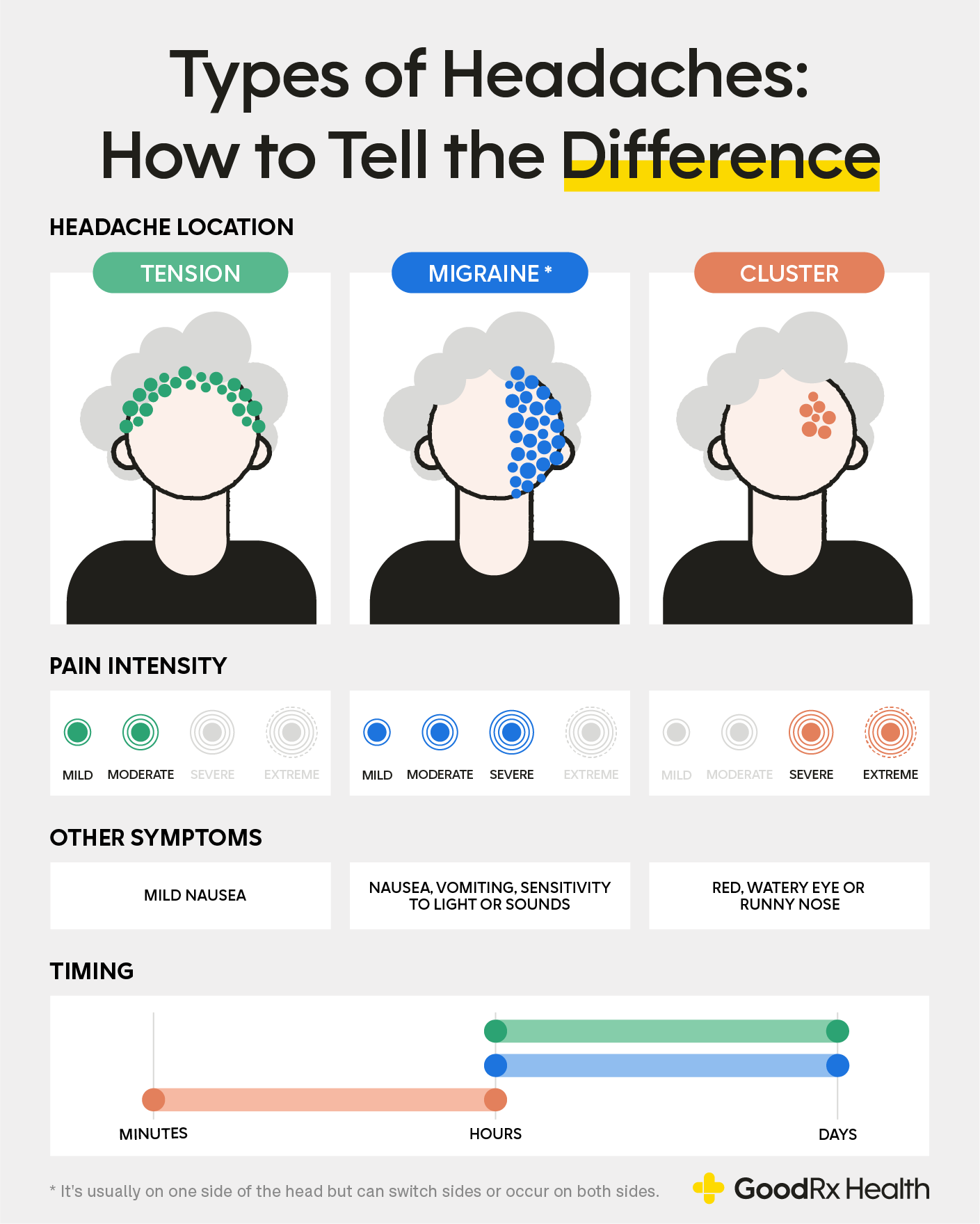
You can tell the difference between migraines, other headaches — like cluster or tension headaches — based on the pattern, timing, and location of your headache.
Migraines are different from other primary headaches because they’re a neurological disorder. They cause more than just a headache. Nausea and sensitivity to light or sound are common. And about 30% of people with migraines also experience additional symptoms before, during, or after their headache. This is called an aura.
Here are the main differences between migraine, cluster, and tension headaches.
Migraine headache | Tension headache | Cluster headache | |
Location | Usually on one side of the head, but it can switch sides or occur on both sides | Both sides of the head | One side of the head, usually around the eye |
Duration | Hours to days | Hours to days | 15 minutes to 3 hours, happens in clusters |
Headache pain | Mild to intense | Mild to moderate | Very intense |
Triggers | Strong smells, changes in sleep, stress, alcohol | Stress, lack of sleep | Alcohol, hot weather, bright light |
Other symptoms | Nausea, vomiting, sensitivity to light or sounds, and more (before, during, or after the headache) | Mild nausea during the headache | Red, watery eye or runny nose during the headache |
Tension headaches vs. migraines
Compared to a migraine, tension headaches are often linked to tense muscles in your head and neck. They are more common and less intense than migraines.
Cluster headaches vs. migraines
Cluster headaches are much less common than migraine headaches. But this pain is extremely intense and usually occurs around one eye.
Migraine vs. headache triggers
Migraines and other types of headaches share some common triggers. Stress, lack of sleep, and alcohol can make all headache types worse. But migraines may have other, more specific triggers, like:
Foods like cheese and chocolate
Monosodium glutamate (MSG) in food
Bright lights and loud noises
Smoking
Migraine vs. headache symptoms
Migraine symptoms can vary from person to person. But there are some features that can help distinguish a migraine from another kind of headache.
Migraines symptoms that are different from other headache types include:
Prodrome: This is a period of time before pain starts. During this period, you can notice changes in mood, appetite, and energy level.
Aura: Some people experience flashing lights, vision changes, or tingling in their hands or feet. This typically occurs shortly before head pain starts.
Unilateral headache: Migraine head pain is generally on one side of your head.
Nausea and vomiting: These can happen during the prodrome and when you’re having pain.
Sensitivity to light and sound: During a migraine, you may feel more sensitive to lights, sounds, or even smells.
Postdrome: Once a migraine is over, people often feel tired, dizzy, and have a tough time concentrating.
How can you tell if it’s a migraine or a headache?
If you’re still not sure whether your headaches are migraines or something else, these questions can help you spot the difference between migraines, cluster headaches, and tension headaches.
Location
Ask yourself where your headache is located:
Migraines and cluster headaches are usually on one side of your head.
Tension headaches affect both sides.
Frequency
Ask yourself how often your headaches happen:
Cluster headaches occur in bunches (or clusters), with long periods of time between clusters.
Migraines and tension headaches happen more randomly.
Duration
Ask yourself how long your headaches last:
Cluster headaches last no more than a few hours.
Migraines and tension headaches can last for days without treatment.
Other symptoms
Ask yourself if you have any other symptoms along with the headaches:
Many people with migraines experience symptoms before and after the actual headache.
With cluster headaches, eye or ear symptoms happen at the same time as the headache.
Triggers
Ask yourself if anything triggers your headaches:
People with migraines often point to specific situations, foods, or behaviors that trigger their headaches.
Headache warning and hangover
Ask yourself if you feel bad before or after your headache:
With migraines, people often notice a pattern of symptoms before their headache starts and after it ends.
Cluster and tension headaches usually don’t cause symptoms before or after the headache.
Things that help or worsen the headaches
Ask yourself if there’s anything that makes your headaches better or worse:
Many people with migraines are especially sensitive to lights and sounds before and during their headache.
During a migraine headache, many people find relief by lying down in a quiet, dark place.
Migraine vs. headache treatments
If you think you’ve narrowed down your headache, talk with a healthcare professional about treatment options. Each type of primary headache has different treatments that can help stop headaches and keep them from coming back as often.
If you still don’t know which type of headache you have, don’t be discouraged. Sometimes diagnosing a headache isn’t straightforward. Your symptoms might not fit neatly into one category. Or you might have multiple kinds of headaches. For example, you may have a tension headache one day and a migraine the next. But the information you’ve gathered will help you and your healthcare team decide on the next steps for diagnosis and treatment.
When to talk to a healthcare professional
If you’re struggling with headaches, it’s a good idea to talk to a healthcare professional. They can help you determine what type of headache is present. That may help you identify triggers and figure out the best way to treat your headache.
You should seek emergency care if your headache comes with any of these symptoms:
Fever and neck stiffness
The worst headache of your life
Loss of consciousness
Sudden onset
Headache triggered by change in position
Headache after a head injury
Frequently asked questions
Other conditions may be mistaken for migraine because the symptoms often overlap. These conditions include stroke, giant cell arteritis, or infections. They may also include tumors and medication-overuse headaches. It can be difficult to know if you’re having a migraine, especially if you have aura symptoms without a headache, or a silent migraine. If your headache symptoms frequently change, other headache types can also be mistaken for migraines.
Migraine treatment commonly starts with medications. Both over-the-counter (OTC) and prescription medications can treat a migraine as it’s happening. There are also medications available for migraine prevention. Other migraine treatment options include medical devices, acupuncture, trigger avoidance, and behavioral interventions.
Botox injections can help reduce the number of migraines in people with chronic migraine. If you have headaches more than 15 days per month, you could consider this treatment.
Botox is the brand name for a compound called onabotulinumtoxin A, which is produced by the bacteria Clostridium botulinum. It blocks nerve activity, which temporarily blocks pain signals or paralyzes muscles. Your headache specialist can help you decide if Botox injections are a good option for your headaches.
Other conditions may be mistaken for migraine because the symptoms often overlap. These conditions include stroke, giant cell arteritis, or infections. They may also include tumors and medication-overuse headaches. It can be difficult to know if you’re having a migraine, especially if you have aura symptoms without a headache, or a silent migraine. If your headache symptoms frequently change, other headache types can also be mistaken for migraines.
Migraine treatment commonly starts with medications. Both over-the-counter (OTC) and prescription medications can treat a migraine as it’s happening. There are also medications available for migraine prevention. Other migraine treatment options include medical devices, acupuncture, trigger avoidance, and behavioral interventions.
Botox injections can help reduce the number of migraines in people with chronic migraine. If you have headaches more than 15 days per month, you could consider this treatment.
Botox is the brand name for a compound called onabotulinumtoxin A, which is produced by the bacteria Clostridium botulinum. It blocks nerve activity, which temporarily blocks pain signals or paralyzes muscles. Your headache specialist can help you decide if Botox injections are a good option for your headaches.
The bottom line
Migraines are a type of headache, but not all headaches are migraines. The three most common types of primary headaches are migraines, tension headaches, and cluster headaches. It’s not always easy to tell the difference between a migraine and another type of headache.
Keeping track of your headaches symptoms and patterns can help you tell whether you have a migraine or a different type of headache. Knowing the type of headache you have is the first step toward finding a treatment plan that can relieve your headaches.

Why trust our experts?




References
Ahmed, F. (2012). Headache disorders: Differentiating and managing the common subtypes. British Journal of Pain.
American Migraine Foundation. (n.d.). Migraine signs & symptoms.
Armand, C. E., et al. (2019). Migraine mimics. Practical Neurology.
Burstein, R., et al. (2015). Migraine: Multiple processes, complex pathophysiology. The Journal of Neuroscience: The Official Journal of the Society for Neuroscience.
GBD 2016 Disease and Injury Incidence and Prevalence Collaborators. (2017). Global, regional, and national incidence, prevalence, and years lived with disability for 328 diseases and injuries for 195 countries, 1990–2016: A systematic analysis for the Global Burden of Disease Study 2016. The Lancet.
GBD 2016 Headache Collaborators. (2018). Global, regional, and national burden of migraine and tension-type headache, 1990–2016: A systematic analysis for the Global Burden of Disease Study 2016. The Lancet Neurology.
Herd, G. P., et al. (2018). Botulinum toxins for the prevention of migraine in adults. Cochrane Database of Systematic Reviews.
Kandel, S. A., et al. (2023). Cluster headache. StatPearls.
MedlinePlus. (2023). Tension headache.
National Institute of Neurological Disorders and Stroke. (n.d.). Migraine.
Silberstein, S. D., et al. (2025). Tension-type headaches. Merck Manual.
U.S. Food and Drug Administration. (2012). Questions and answers on monosodium glutamate (MSG).