



10 Xolair Side Effects and How to Manage Them
Xolair is an injectable medication prescribed for asthma and other allergic conditions. Common Xolair side effects include headache, fatigue, and joint pain.
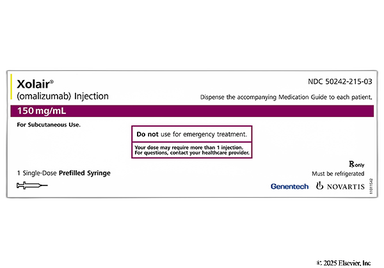
Xolair (omalizumab) is a prescription injection used to treat allergic asthma, chronic hives, and nasal polyps. It's also approved to help lower the risk of food allergy reactions if you or your child are accidentally exposed to a trigger. Xolair (omalizumab) is a monoclonal antibody that works by calming your immune system to reduce inflammation and allergy symptoms. You'll get it as a shot under the skin the every 2 or 4 weeks. Common side effects include headache, stomach pain, and dizziness.

Xolair (omalizumab) is a monoclonal antibody. It blocks immunoglobulin E (IgE), an antibody that causes allergic reactions. By stopping IgE from working, Xolair (omalizumab) helps calm your immune system so you have fewer allergy symptoms and flare-ups.
| Common Brands | Xolair |
|---|---|
| Drug Class | Immunoglobulin E (IgE) monoclonal antibody |
| Controlled Substance Classification | Not a controlled medication |
| Generic Status | No lower-cost generic available |
| Availability | Prescription only |

The following side effects may get better over time as your body gets used to the medication. Let your healthcare provider know immediately if you continue to experience these symptoms or if they worsen over time.
Allergic asthma:
Chronic rhinosinusitis with nasal polyps:
Chronic hives:
Prevention of food allergy reactions:
Allergic asthma:
Chronic rhinosinusitis with nasal polyps:
Chronic idiopathic urticaria (hives):
Contact your healthcare provider immediately if you experience any of the following.
Along with its needed effects, a medicine may cause some unwanted effects. Although not all of these side effects may occur, if they do occur they may need medical attention.
Check with your doctor or nurse immediately if any of the following side effects occur:
Less common
Blistering, crusting, irritation, itching, or reddening of the skin
body produces substance that can bind to drug making it less effective or cause side effects
difficulty in moving
muscle pain or stiffness
pain in the joints
stomach pain
Rare
difficulty with swallowing
dizziness
fast heartbeat
malignant tumor
puffiness or swelling of the eyelids or around the eyes, face, lips, or tongue
tightness in the chest
unusual tiredness or weakness
Some side effects may occur that usually do not need medical attention. These side effects may go away during treatment as your body adjusts to the medicine. Also, your health care professional may be able to tell you about ways to prevent or reduce some of these side effects. Check with your health care professional if any of the following side effects continue or are bothersome or if you have any questions about them:
More common
Bleeding, blistering, burning, coldness, discoloration of skin, feeling of pressure, hives, infection, inflammation, itching, lumps, numbness, pain, rash, redness, scarring, soreness, stinging, swelling, tenderness, tingling, ulceration, or warmth at the injection site
body aches or pain
congestion
dryness or soreness of the throat
headache
hoarseness
leg pain
lumps
pain or tenderness around the eyes and cheekbones
stuffy or runny nose
voice changes
Incidence not known
Other side effects not listed may also occur in some patients. If you notice any other effects, check with your healthcare professional.
Call your doctor for medical advice about side effects. You may report side effects to the FDA at 1-800-FDA-1088.



How to inject Xolair (omalizumab) at home:

Xolair (omalizumab) can cause some serious health issues. This risk may be even higher for certain groups. If this worries you, talk to your doctor or pharmacist about other options.
It's possible to have a life-threatening allergic reaction to Xolair (omalizumab) called anaphylaxis. Symptoms can include trouble breathing, dizziness, itchy skin, and swelling of your throat or tongue. This reaction is most likely to happen within the first few doses, but it has also been reported up to a year after starting treatment.
To be safe, your allergist will give you your first few doses of Xolair (omalizumab) in a clinic or hospital that is equipped to treat a serious allergic reaction. You may be asked to stay for a few hours after each dose so you can be monitored. If you don’t have any problems, your care team might train you to give future doses at home. If you ever have anaphylaxis at home, call 911 right away.
Though rare, some people who took Xolair (omalizumab)] in clinical studies developed different types of cancer, but it’s not clear if the medication was the cause. If you or someone in your family has a history of cancer, let your allergist know before starting treatment. Together, you can weigh the possible risks and benefits of using this medication.
Xolair (omalizumab) doesn’t work right away to stop asthma attacks. Don’t use it to treat sudden breathing problems or severe asthma attacks. If you have an asthma attack, use your rescue inhaler like albuterol. If your asthma gets worse after starting this medication, contact your allergist for guidance.
Don’t stop oral or inhaled steroids suddenly when switching to Xolair (omalizumab)]. This can worsen symptoms and raise your risk for steroid withdrawal. Your allergist will taper your dose slowly if needed.
Very rarely, people taking Xolair (omalizumab) have had symptoms related to blood vessel problems. Symptoms can include rash, shortness of breath, tingling or numbness in arms or legs, chest pain. If you notice any of these symptoms, contact your allergist right away.
Some people who get Xolair (omalizumab)] may have fever, muscle aches, rash, or swollen lymph nodes within 1 to 5 days after a shot. Tell your care team right away if you notice these side effects. Since these symptoms can look like a condition called serum sickness, your allergist will stop Xolair (omalizumab) if they happen.
If you're at a high risk for parasitic infections, like roundworm or hookworm, tell your allergist before starting Xolair (omalizumab). This medication might raise your risk of getting a parasitic infection. Talk to your allergist about the possible risks and benefits before you begin treatment.
You shouldn't use Xolair (omalizumab) to treat an allergic reaction in an emergency. This medication is meant for long-term use to help lower your risk of allergic reactions, including anaphylaxis. It's still important to avoid foods you're allergic to while taking this medication. If you ever develop symptoms of a serious allergic reaction, use your prescribed emergency treatments, such as epinephrine, and get medical attention right away.

Your allergist will decide your dose of Xolair (omalizumab) and might adjust it over time. The dose depends on things like your body weight, your serum IgE level, and how well the medication is working for you.
Xolair (omalizumab) is injected under the skin, usually in the front and middle of your thigh or in your stomach area (at least 2 inches away from your belly button).If a caregiver gives the shot, it can also go in the back of your upper arm.

Although certain medicines should not be used together at all, in other cases two different medicines may be used together even if an interaction might occur. In these cases, your doctor may want to change the dose, or other precautions may be necessary. When you are receiving this medicine, it is especially important that your healthcare professional know if you are taking any of the medicines listed below. The following interactions have been selected on the basis of their potential significance and are not necessarily all-inclusive.
Using this medicine with any of the following medicines is usually not recommended, but may be required in some cases. If both medicines are prescribed together, your doctor may change the dose or how often you use one or both of the medicines.











Prescription savings
Stop paying too much for your prescriptions. Compare prices, get pharmacy coupons, and save up to 80%. Find expert answers to your health questions so you can make the best decisions for yourself and your family.
Health conditions
Medications & treatment
Access & affordability
 Our monthly healthcare membership can help you save thousands on your prescription costs.
Resources

Xolair can be helpful, but it also has risks. Most people only get mild side effects like headache, stomach pain, or dizziness. But in rare cases it can cause severe allergic reactions, including anaphylaxis, which can be life-threatening. Because of this, you might need to stay at your allergist’s office for a short time after your shot so they can watch for any reaction. Your allergist will decide if the benefits of this medication outweigh the risks.
You'll inject Xolair every 2 or 4 weeks if you're using it for allergic asthma, nasal polyps, and to help prevent food allergy reactions. For chronic hives, you'll inject it every 4 weeks. Your prescriber will tell you the exact dose and how often you should take it.
Though very rare, some people in clinical studies who took Xolair] developed different types of cancer. But newer studies haven't shown a clear link between this medication and cancer. If you or someone in your family has a history of cancer, be sure to tell your allergist before starting treatment so you can talk together about the possible risks and benefits.
Being sick usually won't stop you from getting your dose of Xolair. But it's always best to check with your prescriber since it can depend on the type of illness. Xolair can raise your risk of infections, including common colds and upper respiratory infections. If you have a serious infection or feel very sick, your prescriber might recommend waiting to take your next dose.
It's best to keep Xolair in the refrigerator, but you can leave it out at room temperature if needed. Once the medication reaches room temperature, you can put it back in the fridge, but the total time it can stay out of the fridge is for up to 2 days. To help you keep track, write the date on the box when you first take it out.
No, Xolair isn't a steroid. Instead, it's a biologic medication, meaning it's made from living sources in a lab. Xolair is a monoclonal antibody, or a lab-made protein, that works by reducing inflammation. It does this by stopping immunoglobulin E (IgE), an antibody that triggers allergic reactions, which helps treat certain allergic conditions and their symptoms.
It takes about 3 to 4 months for most of Xolair to fully leave your body after just one dose. This time frame is estimated based on its half-life. Even though it can last that long, you still need to take it every 2 or 4 weeks as prescribed. This keeps enough medication in your system so it works properly to manage your condition.
How long it takes for Xolair to work depends on the condition you're being treated with. It might start helping in as little as 4 weeks, but for some people it can take up to 4 months to feel the full effects. Everyone responds differently, so if you’re worried about how well the medication is working for you, check in with your allergist.
