Key takeaways:
Xolair (omalizumab) is an injectable biologic medication. It has several possible uses, and it works by blocking an antibody called immunoglobulin E (IgE). This protein is responsible for many allergy symptoms.
Xolair is FDA approved for adults and children. It’s often used to treat moderate-to-severe allergic asthma, chronic hives, and to help reduce the risk of severe allergic reactions to certain foods.
Xolair is safe and effective for kids with severe allergies, but it does carry some risks. Your child’s healthcare professional will likely give them their first few injections at their office before you can administer them at home.
Save on related medications
Navigating severe allergies can be difficult for both children and their caregivers. Fortunately, treatment options are now available that can help manage these allergy symptoms more effectively.
One option is Xolair (omalizumab), a prescription injection. Xolair can be used by itself or as an add-on to your child’s regular allergy treatment. It can also help lower the risk of severe reactions after an accidental exposure to a food allergen.
Below, we’ll review what you should know about Xolair for kids with severe allergies.
What allergies does Xolair help with?
Xolair is a biologic medication that binds to an antibody (protein) called immunoglobulin E (IgE). IgE is a key player in triggering allergic reactions, so blocking it lowers allergy symptoms and the risk of problems from them.
Xolair is FDA approved to:
Lower the risk of severe IgE-related allergic reactions for adults and children ages 1 and older after accidentally eating a food that triggers a reaction
Treat moderate-to-severe allergic asthma for adults and children ages 6 and older who still have symptoms after using inhaled corticosteroids
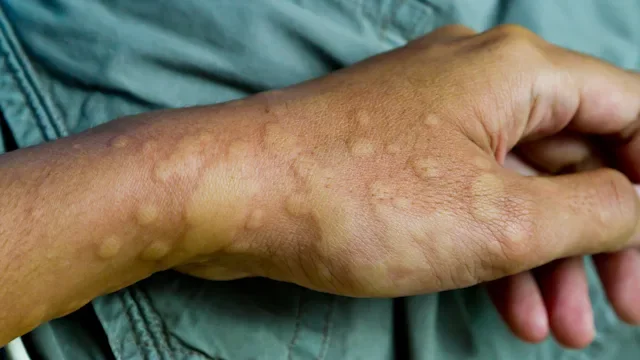
Treat chronic spontaneous urticaria (hives) for adults and children ages 12 and older who still have symptoms after taking antihistamines
Treat chronic rhinosinusitis (sinus inflammation) with nasal polyps for adults who still have symptoms after using nasal corticosteroids
How does Xolair work for food allergies?
Xolair works to lessen the severity of food allergies by binding to IgE. When you eat a food that you’re allergic to, your IgE levels go up. This in turn can cause symptoms such as hives or trouble breathing. Xolair attaches to IgE and prevents it from setting off an allergic reaction.
Studies show that Xolair can help lower the risk of serious reactions to several common allergens, including:
Peanuts
Cashews
Hazelnuts
Walnuts
Milk
Eggs
Wheat
Although Xolair was only studied in these foods, it may help with a wide variety of food allergens because of how it works. Your allergy specialist can tell you more about what to expect.
Keep in mind: Xolair doesn’t cure food allergies, and it shouldn’t be used as treatment for an active allergic reaction. It helps lower the risk of a serious reaction, but be sure to continue avoiding trigger foods. If you or a loved one consume something that you're allergic to, follow your typical emergency protocol. Administer epinephrine (Epi-Pen, Auvi-Q, neffy) if needed and call 911 right away.
Benefits of giving Xolair to kids with severe food allergies
Using Xolair for food allergies is like wearing a sturdy raincoat on a stormy day. It can’t stop the rain from falling, but it can help keep you or your child from getting completely soaked if you’re caught in it.
If your child is exposed to something that they’re allergic to, Xolair can help lessen the symptoms of severe allergies, such as:
Intense itching
Hives
Trouble breathing
Dizziness
Nasal congestion
Asthma attack
Is Xolair safe for kids?
Yes, Xolair is safe for kids with severe allergies when given at the right age for their specific condition. A review of studies showed that Xolair is effective and tolerated well in children with severe allergies. Research also shows it is safe for lowering the risk of serious food allergy reactions in children.
Furthermore, additional studies are being done to see if Xolair can help with other IgE-related allergic conditions in the future, such as eczema, middle ear infections, and drug allergies.
Common Xolair side effects and how to manage them
Like all medications, Xolair can cause side effects. The chances of having side effects may depend on your child’s age and why they’re using Xolair.
The most common Xolair side effects are:
Injection site reactions, such as redness or swelling
Joint pain
Body, arm, or leg pain
Dizziness
Itching
Fatigue
Nausea
Stomach pain
Headache
Cough
Earache
Rare but serious risks with Xolair include:
Severe allergic reactions (anaphylaxis)
Increased risk of parasitic infection
Blood vessel inflammation, which can cause symptoms such as chest pain and shortness of breath
Increased risk of certain types of cancer
If you or a loved one experience any worrisome or unusual side effects after starting Xolair, reach out to a healthcare professional as soon as possible. They may recommend management tips and/or over-the-counter (OTC) products for symptomatic relief. For some side effects, such as chest pain or trouble breathing, they may recommend further testing.
Tips for giving Xolair to your child
Xolair is a subcutaneous (under-the-skin) injection that’s given every 2 to 4 weeks. Due to the possibility of a severe allergic reaction, your child will likely receive their first three Xolair doses from a healthcare professional in a clinic. As long as there are no problems after these starter doses, their prescriber can show you how to administer injections at home.
As a parent or caregiver, giving injections to a child can be stressful. Here are some tips to make the process easier and more comfortable for your child.
Give them information. Let your child know what to expect in a calm and simple way. Explaining why they need the injection and how the injection works can sometimes help to ease their injection anxiety.
Provide a distraction. Bring a toy, book, or video to keep your child’s attention off the injection and any pain that may occur.
Lower the risk of pain. Be sure to use a different injection spot each time to avoid soreness. The recommended injections sites are in the stomach, upper arm, or upper thigh. You can also apply an ice pack to numb the area before giving the injection.
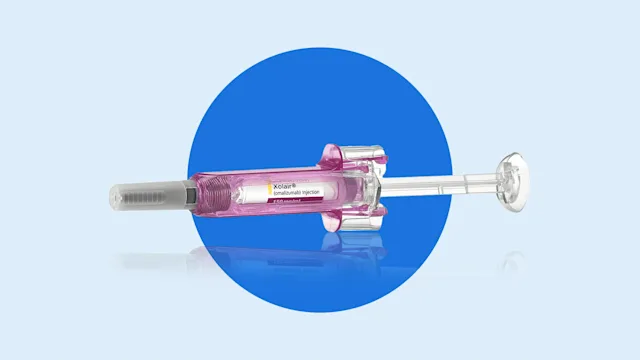
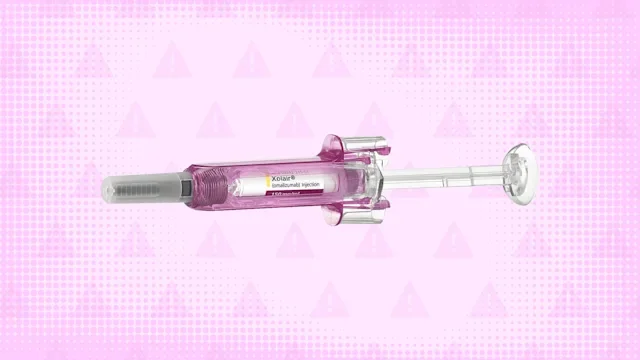
Consider your preferred device. Xolair is available as an autoinjector and prefilled syringe. The autoinjector is approved for children ages 12 years and older, while the prefilled syringe is approved for children as young as 1.
Allow for some autonomy. If they feel comfortable, children ages 12 years and older are allowed to use either device by themselves with adult supervision. But, between the two, the autoinjector may be more kid-friendly due to its ease of use.
Also make sure to watch your child for reactions when you’re giving injections at home. Severe allergic reactions can occur any time, even after the initial starter doses. If your child experiences any signs or symptoms of a severe allergic reaction, call 911 or go to the nearest ER immediately. Your healthcare professional may also recommend having epinephrine on hand just in case.
Frequently asked questions
Xolair is sometimes considered a high-risk medication. This is because Xolair carries a boxed warning (the FDA’s strongest warning) of potential anaphylaxis, which can be life-threatening.
No, Xolair doesn’t treat active allergic reactions. Xolair is a preventative medication. It helps lower the chances of having a reaction in the first place, and lowers the severity of your symptoms if one does occur.
Kids can receive Xolair, but the specific age cutoff varies based on the condition that your child has. Xolair can be used for:
Food allergy risk reduction in adults and children ages 1 and older
Moderate-to-severe allergic asthma in adults and children ages 6 and older
Chronic spontaneous hives in adults and children ages 12 and older
Chronic sinus inflammation with nasal polyps in adults ages 18 and older
Xolair is sometimes considered a high-risk medication. This is because Xolair carries a boxed warning (the FDA’s strongest warning) of potential anaphylaxis, which can be life-threatening.
No, Xolair doesn’t treat active allergic reactions. Xolair is a preventative medication. It helps lower the chances of having a reaction in the first place, and lowers the severity of your symptoms if one does occur.
Kids can receive Xolair, but the specific age cutoff varies based on the condition that your child has. Xolair can be used for:
Food allergy risk reduction in adults and children ages 1 and older
Moderate-to-severe allergic asthma in adults and children ages 6 and older
Chronic spontaneous hives in adults and children ages 12 and older
Chronic sinus inflammation with nasal polyps in adults ages 18 and older
The bottom line
Xolair (omalizumab) is an injectable medication used to treat severe allergies in adults and children as young as 1 year old, depending on the specific condition you’re using it for. Xolair is usually considered when first-choice medications don’t manage their symptoms well enough. In addition, Xolair can be used to lower the risk of severe allergic reactions in adults and children ages 1 and older with food allergies after an accidental exposure.
Xolair is safe and effective for kids with severe allergies, but does come with potentially serious risks, including anaphylaxis. Your healthcare team can help determine if Xolair is a good fit for you or your child.

Why trust our experts?




References
Abbas, M., et al. (2025). Type I hypersensitivity reaction. StatPearls.
Genentech. (2024). Xolair- omalizumab injection, solution; Xolair PFS- omalizumab injection, solution; Xolair- omalizumab injection, solution [package insert].
Incorvaia, C., et al. (2018). Two decades with omalizumab: What we still have to learn. Biologics.
Kumar, C., et al. (2023). Omalizumab. StatPearls.
Liu, L., et al. (2022). Efficacy and safety of omalizumab for the treatment of severe or poorly controlled allergic diseases in children: A systematic review and meta-analysis. Frontiers in Pediatrics.
National Institutes of Health. (2025). Omalizumab treats multi-food allergy better than oral immunotherapy.
Zuberbier, T., et al. (2023). Omalizumab in IgE-mediated food allergy: A systematic review and meta-analysis. The Journal of Allergy and Clinical Immunology.