Vimpat
Lacosamide (Vimpat) is an antiepileptic. People 1 month and older can take it on its own or with other antiepileptics for partial-onset seizures (also called focal aware seizures). It's also an add-on medication for people 4 years and older who have primary generalized tonic-clonic (PGTC) seizures (or grand mal seizures). Lacosamide (Vimpat) comes as tablets and an oral solution that's taken by mouth twice a day. It's also available as an injection that's used in the hospital. Side effects include dizziness, headache, and nausea. Lacosamide (Vimpat) comes as both brand-name and generic versions, but it's a controlled substance.


What is Lacosamide (Vimpat)?
What is Lacosamide (Vimpat) used for?
- Partial-onset seizures (or focal aware seizures) - for people at least 1 month of age
- Primary generalized tonic-clonic (PGTC) seizures - for people at least 4 years old
How Lacosamide (Vimpat) works
Lacosamide (Vimpat) is an antiepileptic, which is another name for an anti-seizure medication. It's not exactly clear how the medication works to treat seizures. But researchers think it blocks nerve signaling in the brain. This helps calm your brain activity to control seizures.
Drug facts

Risks and warnings for Lacosamide (Vimpat)
Lacosamide (Vimpat) can cause some serious health issues. This risk may be even higher for certain groups. If this worries you, talk to your doctor or pharmacist about other options.
Risk of suicidal thoughts and behavior
Antiepileptics like lacosamide (Vimpat) can raise the risk of having thoughts about suicide or hurting yourself. This risk can appear as early as 1 week after starting the medication.
Watch for signs of depression and any unusual changes in mood or behavior. This is especially important in the first few months of taking lacosamide (Vimpat) or after a dose change.
Call your care team if you or someone close to you notices anything worrisome. If you start thinking about hurting yourself, call 911 or get medical help right away.
Dizziness and problems with controlling movements
- Risk factors: Taking higher doses of lacosamide (Vimpat)
Lacosamide (Vimpat) can make you feel dizzy. It can also make you have problems with movement or coordination. These side effects usually happen when you first start the medication or when you switch to a higher dose. Talk to your prescriber if these side effect don't go away or if it's too bothersome.
Abnormal heartbeat
- Risk factors: History of abnormal heartbeat | Heart attack | Heart failure | Structural heart disease | Taking other medications that affect heartbeat or heart rhythm
Lacosamide (Vimpat) can change how your heart beats. It might make your heart beat in an abnormal way. Rarely, this can be life-threatening.
It's important to tell your prescriber and pharmacist about all your health conditions and medications that you take. This helps them check if you're at risk for heartbeat changes. The risk is higher if you already have heart problems. And some other medications can raise this risk if you take them with lacosamide (Vimpat).
If you're at risk, your prescriber will have you get a test done called an electrocardiogram (EKG). This test checks the electrical signals of your heart. You'll need an EKG before you start lacosamide (Vimpat) and regularly while you're taking it.
Get medical help right away if you feel any chest discomfort or palpitations while taking lacosamide (Vimpat). Also get help if you feel like you're going to pass out. These could be signs of heart rhythm problems.
Withdrawal seizures
- Risk factors: Stopping lacosamide (Vimpat) suddenly
Don't stop taking lacosamide (Vimpat) without talking to your prescriber first. Stopping antiepileptic medications too fast can raise the risk of seizures. These seizures can happen more often or last longer, which can be dangerous.
If you want to stop taking lacosamide (Vimpat), talk to your prescriber. They'll help you do this safely. Usually, they'll slowly lower the dose over at least a week to help prevent seizures from getting worse.
Allergic reactions
In some rare cases, people have had a serious and sometimes life-threatening allergic reaction to lacosamide (Vimpat). It's called Drug Reaction with Eosinophilia and System Symptoms, or DRESS syndrome.
DRESS syndrome can cause fever, rash, swollen lymph nodes, and facial swelling. In serious cases, it can lead to abnormal blood cell counts and damage to parts of your body, like your liver, kidneys, or heart.
Look out for a rash, fever, swollen lymph nodes, flu-like symptoms, swollen face, or trouble breathing. If this happens, stop taking lacosamide (Vimpat) and get medical help right away.
Caution use in people with phenylketonuria (PKU) - oral solution only
The oral solution of lacosamide (Vimpat) has an artificial sweetener called aspartame. This artificial sweetener can be harmful for people who have a genetic condition called phenylketonuria (PKU).
If you or your child has PKU, talk to your prescriber. They can help you find other options that will be safer to take.

Side effects of Lacosamide (Vimpat)
The following side effects may get better over time as your body gets used to the medication. Let your healthcare provider know immediately if you continue to experience these symptoms or if they worsen over time.
Common Side Effects
- Dizziness (31%)
- Headache (13%)
- Nausea (11%)
- Double vision (11%)
- Vomiting (9%)
- Tiredness (9%)
- Blurred vision (8%)
- Problems with movement or coordination (8%)
- Sleepiness (7%)
- Tremor (7%)
Less Common Side Effects
- Feeling like the room is spinning
- Weakness
- Trouble walking
- Problems with balance
- Problems with memory
- Diarrhea
- Depression
- Itching
- Bruise
- Shaky eye movements (nystagmus)
Lacosamide (Vimpat) serious side effects
Contact your healthcare provider immediately if you experience any of the following.
- Thoughts of hurting yourself or suicide
- Irregular heartbeat: chest discomfort, palpitations, feeling like you're going to pass out
- Severe allergic reaction: rash; fever; swollen lymph nodes; flu-like symptoms; swelling of the mouth, face, or throat
More on Lacosamide (Vimpat) side effects

The following Lacosamide (Vimpat) side effects have also been reported
Side effects that you should report to your care team as soon as possible:
- Allergic reactions—skin rash, itching, hives, swelling of the face, lips, tongue, or throat
- Heart rhythm changes—fast or irregular heartbeat, dizziness, feeling faint or lightheaded, chest pain, trouble breathing
- Rash, fever, and swollen lymph nodes
- Thoughts of suicide or self-harm, worsening mood, or feelings of depression
Side effects that usually do not require medical attention (report to your care team if they continue or are bothersome):
- Dizziness
- Double vision
- Drowsiness
- Headache
- Loss of balance or coordination
- Nausea

Get your GoodRx coupon

Pros and cons of Lacosamide (Vimpat)
Pros
- Can take with other seizure medications
- Available as a tablet and oral solution
- Okay for children 1 month of age and older with partial-onset seizures and children 4 years and older with PGTC seizures
Cons
- Is a controlled substance, so you can only get a limited amount per month
- Can cause side effects like dizziness, headache, and double vision
- Interacts with many medications, like beta blockers

Pharmacist tips for Lacosamide (Vimpat)

- You can take lacosamide (Vimpat) with or without food. Food doesn't affect how well the medication works.
- Swallow the lacosamide (Vimpat) tablets whole with some water or another drink. Don't cut the tablets because it could change the way the medication works. If you have trouble swallowing tablets whole, ask your prescriber about switching you to the oral solution.
- Lacosamide (Vimpat) can make you feel dizzy, sleepy, or have blurry vision. It commonly happens when you first start taking the medication or when you switch to a higher dose. Be careful when you drive or do anything that needs you to focus well. Make sure you know how lacosamide (Vimpat) affects you first.
- Don't stop taking lacosamide (Vimpat) without talking to your prescriber first. Stopping it too suddenly can make your seizures come back, which can be dangerous. If you want to stop, follow your prescriber's directions. They'll usually lower your dose over at least 1 week before stopping it completely.
- If you're pregnant or thinking of becoming pregnant, talk to your prescriber or obstetrician-gynecologist (OB-GYN). We don't fully know if lacosamide (Vimpat) is safe during pregnancy. But it's important to control your seizures when pregnant. Your prescriber can help you find the safest seizure medication. If you take a seizure medication during pregnancy, you can join a pregnancy registry to help researchers learn more about the risks.
- Tell your prescriber if you plan to breastfeed while taking lacosamide (Vimpat). They can discuss the risks and benefits with you. The medication can pass into breast milk, and it's possible that breastfed babies can have side effects like sleepiness.
Tips for the lacosamide (Vimpat) oral solution:
- Keep the lacosamide (Vimpat) oral solution at room temperature (up to 77ºF).
- The lacosamide (Vimpat) oral solution is good for 6 months after you open the bottle. Throw out any medication in the bottle that's left after this time. Ask your pharmacist how to safely throw out expired or unused medication.
- Ask the pharmacy for a measuring device like an oral syringe to measure out your dose. Don't use household teaspoons or tablespoons because they might not give you the correct dose.

Common questions about Lacosamide (Vimpat)
Yes, lacosamide (Vimpat) is a schedule 5 controlled substance (C-V). This means that it can potentially be misused. Taking the medication for a long time could also potentially lead to dependence. This is when your body relies on the medication to function normally. And when you stop taking it too suddenly, it could cause withdrawal symptoms. There aren't any reports of withdrawal with lacosamide (Vimpat) yet, but the risk can't be ruled out. Since lacosamide (Vimpat) is a controlled substance, there are federal and state laws about how it can get prescribed and filled. Ask your prescriber or pharmacist if you have more questions. Keep lacosamide (Vimpat) in a safe place where others can't get to it.
No. Don't crush or split lacosamide (Vimpat) tablets. You should swallow the tablets whole with liquid. If you're having trouble swallowing the tablet, talk to your prescriber. They can give you a new prescription for the liquid version of this medication, which could be easier for you to take.
No, lacosamide (Vimpat) is not a benzodiazepine. Instead, it's a type of medication called an antiepileptic. Antiepileptics and some benzodiazepines can help with seizures. But they work in different ways to calm down the brain and control seizures.
No, lacosamide (Vimpat) isn't a narcotic. The term "narcotic" usually refers to opioid pain medications. Lacosamide (Vimpat) isn't an opioid. Instead, it's an antiepileptic for seizures.
Weight gain isn't a typical side effect of lacosamide (Vimpat). If you're worried about your weight, speak to your prescriber or primary care provider.
Hair loss isn't a common side effect of lacosamide (Vimpat). But there have been rare cases of hair loss with the medication. If you notice more hair is falling out than usual, talk to your prescriber or primary care provider. They can help figure out what might be causing this hair loss and how to manage it.
Yes, lacosamide (Vimpat) can make you feel sleepy or tired. Avoid drinking alcohol because this can make these side effects worse. It's also best not to drive or do other things that could be dangerous and need all your attention until you know how this medication affects you. Tell your prescriber if you feel too sleepy and you can't go about your usual day.
A single dose of lacosamide (Vimpat) usually stays in your system for about 2 to 3 days. This is based on the half-life of the medication. It measures how long it takes for your body to get rid of the medication. If you have severe kidney problems, your body can't get rid of lacosamide (Vimpat) as quickly. So the medication could stay in your body a bit longer. Ask your prescriber if you have more questions about how long the medication stays in your system.

How to save using GoodRx




Lacosamide (Vimpat) dosage


Typical dosage for Lacosamide (Vimpat)
-
Adults 17 years and older
- Partial-onset seizures (when taken by itself): The typical starting dose is 100 mg by mouth twice daily. Your prescriber will adjust your dose each week if necessary. The maximum dose is 200 mg twice daily.
- Add-on therapy for partial-onset or PGTC seizures: The typical starting dose is 50 mg by mouth twice daily. Your prescriber will adjust your dose every week if necessary. The maximum dose is 200 mg twice daily.
-
Children
- Dosing is based on your child's body weight. Your child's prescriber will adjust the dose each week if necessary.
- Weigh 110 lbs (50 kg) or more: The starting dose is 50 mg by mouth twice daily. The maximum dose is 200 mg twice daily.
- Weigh 66 lbs to less than 110 lbs (30 kg to less than 50 kg): The starting dose is 1 mg/kg of body weight by mouth twice daily. The maximum dose is 4 mg/kg twice daily.
- Weigh 24 lbs to less than 66 lbs (11 kg to less than 30 kg): The starting dose is 1 mg/kg of body weight by mouth twice daily. The maximum dose is 6 mg/kg twice daily.
- For partial-onset seizures only
- Weigh 13 lbs to less than 24 lbs (6 kg to less than 11 kg): The starting dose is 1 mg/kg of body weight by mouth twice daily. The maximum dose is 6 mg/kg twice daily.
- Weigh less than 13 lbs (6 kg): The starting dose is 1 mg/kg of body weight by mouth twice daily. The maximum dose is 7.5 mg/kg twice daily.
- Dosing is based on your child's body weight. Your child's prescriber will adjust the dose each week if necessary.
Your dose might differ if you have liver or severe kidney problems.
Lacosamide (Vimpat) is also available as an injection given through the vein. It's administered by a trained healthcare professional in the hospital.
More on Lacosamide (Vimpat) dosage


How much does Lacosamide (Vimpat) cost?

What are alternatives to Lacosamide (Vimpat)?

News about Lacosamide (Vimpat)







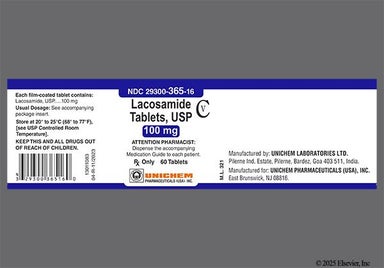
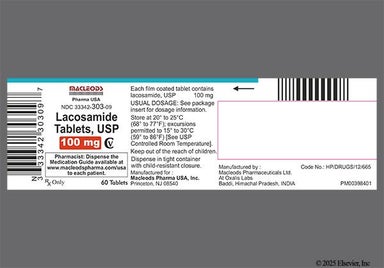
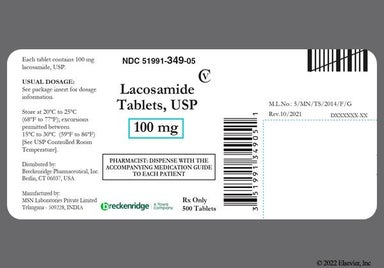
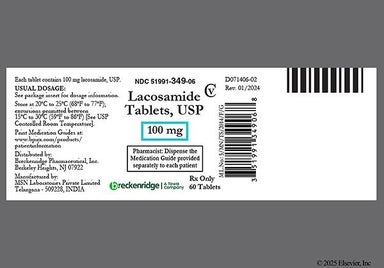
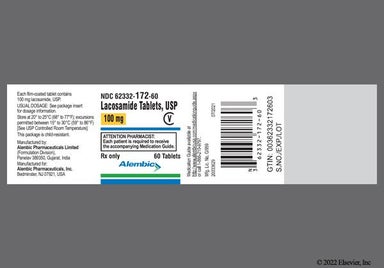
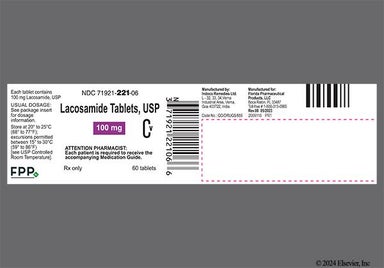
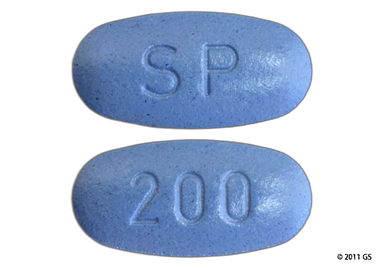
Lacosamide (Vimpat) images