





The 10 Most Common Causes of a Persistent Dry Cough — and How to Get Rid of It
A dry cough can be caused by asthma, infections, or even acid reflux. Read on for the most common causes of a dry cough and how to treat it.
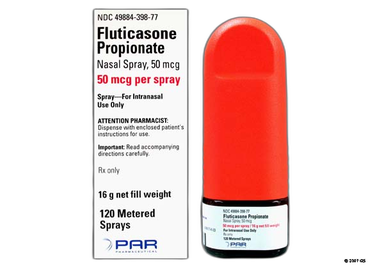
Fluticasone nasal spray is used to treat allergy symptoms, like runny nose and sneezing. Fluticasone nasal spray comes in brand and generic forms, and is available by a prescription or over-the-counter (OTC). Fluticasone nasal spray must be used daily in order for you to experience the maximum benefits. But if you're using OTC versions of this medication, don't use it for more than 6 months at a time (or 2 months at a time, for children) without first speaking to your provider.

Nasal symptoms from allergies, such as:
Fluticasone nasal spray is a corticosteroid (or steroid). When you come into contact with something that causes allergies, such as dust or animals, your immune system releases proteins and chemicals to remove the irritants from your body. This causes allergic reactions and inflammation (swelling) in your nose. Fluticasone nasal spray works by lowering inflammation in your nose, which helps relieve nasal symptoms, such as sneezing and a stuffy, runny, or itchy nose.
| Common Brands | Flonase Allergy Relief, Flonase Sensimist Allergy Relief, ClariSpray, Veramyst |
|---|---|
| Drug Class | Corticosteroid |
| Controlled Substance Classification | Not a controlled medication |
| Generic Status | Lower-cost generic available |
| Availability | Prescription or over-the-counter |

The following side effects may get better over time as your body gets used to the medication. Let your healthcare provider know immediately if you continue to experience these symptoms or if they worsen over time.
Contact your healthcare provider immediately if you experience any of the following.
Along with its needed effects, a medicine may cause some unwanted effects. Although not all of these side effects may occur, if they do occur they may need medical attention.
Check with your doctor as soon as possible if any of the following side effects occur:
Rare
White patches inside nose or throat
Symptoms of overdose
Blindness
blurred vision
bone fractures
excess facial hair growth in females
fullness of face, neck, and trunk
impotence in males
increased thirst or urination
lack of menstrual periods
muscle wasting
weakness
Some side effects may occur that usually do not need medical attention. These side effects may go away during treatment as your body adjusts to the medicine. Also, your health care professional may be able to tell you about ways to prevent or reduce some of these side effects. Check with your health care professional if any of the following side effects continue or are bothersome or if you have any questions about them:
Less common
Other side effects not listed may also occur in some patients. If you notice any other effects, check with your healthcare professional.
Call your doctor for medical advice about side effects. You may report side effects to the FDA at 1-800-FDA-1088.




Fluticasone nasal spray can cause some serious health issues. This risk may be even higher for certain groups. If this worries you, talk to your doctor or pharmacist about other options.
Fluticasone nasal spray can cause nosebleeds or cause sores to form in your nose. Rarely, these sores can make holes in the bony cartilage between your nostrils (the nasal septum). Talk to your provider if you experience discomfort in your nose, regular nosebleeds, or painful sores in your nose while using fluticasone nasal spray.
This medication can also slow down how quickly you heal from a wound, nasal surgery, or nasal injury. If you've had an injury or recent surgery on you nose, you should wait until it's completely healed before using fluticasone nasal spray.
Fluticasone nasal spray can cause slowing of growth in children. Your child's provider should monitor their growth while using this medication. Use the lowest dose of fluticasone nasal spray needed to control your child's symptoms and use this medication for the shortest period of time necessary. Don't use OTC fluticasone nasal spray for more than 2 months out of the year unless otherwise instructed by your child's provider.
Fluticasone nasal spray can raise the pressure in your eyes, which can lead to new or worsening eye problems like glaucoma and cataracts. If you experience vision problems while using fluticasone nasal spray, or if you have a history of eye problems, your provider should closely monitor your vision during treatment. Talk to your provider or an eye specialist if you experience vision changes while using fluticasone nasal spray.
Fluticasone nasal spray can lower the ability of your body to fight off infections. Be careful not to come in contact with anyone who has chicken pox or measles, and let your provider know if this happens. Talk to your provider before using fluticasone nasal spray if you're currently experiencing a respiratory tract, fungal, bacterial, viral, or parasitic infection, or if you have active or inactive tuberculosis.
Using fluticasone nasal spray for several months or longer can raise your chance of getting a fungal infection in the nose and throat. Your provider might want you to stop using fluticasone nasal spray and get treatment if you develop this type of infection. If you have pain, redness, and white patches in the nose and/or throat while using this medication, or if you have a loss of smell or taste, talk to your provider right away.
Using fluticasone nasal spray at a higher dose or for a longer period of time than recommended can put you at risk for problems related to your stress hormone. You might experience symptoms of too much hormones, such as depression, weight gain, and muscle weakness. Let your provider know if you have these side effects because they can help you stop fluticasone nasal spray safely by lowering your dose slowly over time.
If you stop fluticasone nasal spray too suddenly after using it for a long time, you might notice symptoms of too little hormones, such as nausea, vomiting, and weight loss. If you want to stop this medication, ask your provider to help you do so safely.
Though very rare, there have been a few reports of serious allergic reactions from use of fluticasone nasal spray. Stop using this medication and get medical help right away if you experience rash, hives, swelling of the tongue and face, tightness in the throat, and trouble breathing.

 Nasal spray
| Dosage | Quantity | Price as low as | Price per unit |
|---|---|---|---|
| 16g of 50mcg | 1 nasal spray | $14.67 | $14.67 |
Fluticasone nasal spray comes in different formulations. There are also prescription and OTC versions that might differ in directions or age cut-offs. Please read the manufacturer's label or prescription label for directions that are specific for your fluticasone nasal spray.
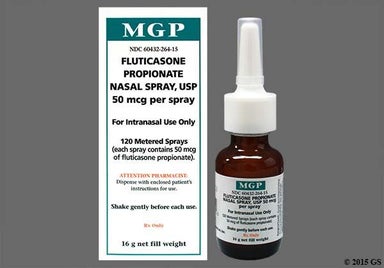
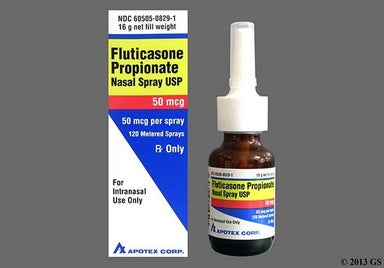
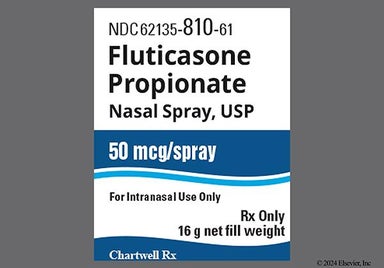
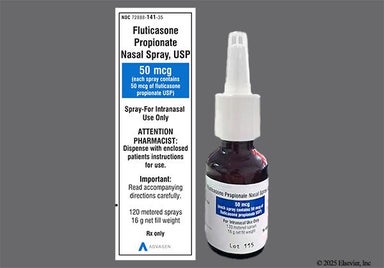
Prescription-only generic fluticasone propionate nasal spray
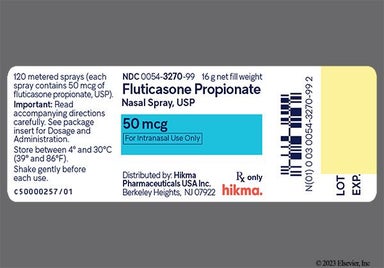
Each spray contains 50 mcg of fluticasone propionate.
Adults: The typical starting dose is 2 sprays in each nostril once daily, or 1 spray in each nostril twice daily. After a few days, your provider might lower your dose to 1 spray in each nostril once daily to continue controlling your symptoms. The maximum day dose is 2 sprays in each nostril.
Children ages 4 to 17 years old: The typical starting dose is 1 spray in each nostril once daily. Your child's provider might raise the dose to 2 sprays in each nostril once daily if more symptom relief is needed. Once your child's symptoms are under control, the dose should be lowered back to 1 spray in each nostril once daily. The maximum day dose is 2 sprays in each nostril.
OTC Flonase Allergy Relief (fluticasone propionate):
Each spray contains 50 mcg of fluticasone propionate.
Adults and children ages 12 years and older: The typical starting dose is 2 sprays in each nostril once daily for one week. Then use 1 or 2 sprays in each nostril once daily, as needed to treat your symptoms for up to 6 months. After 6 months, speak to your healthcare provider about whether or not you should continue using this medication.
Children ages 4 to 11 years old: The typical dose is 1 spray in each nostril once daily. After 2 months, speak to your healthcare provider about whether or not your child should continue using this medication.
OTC Flonase Sensimist Allergy Relief (fluticasone furoate):
Each spray contains 27.5 mcg of fluticasone furoate.
Adults and children ages 12 years and older: The typical starting dose is 2 sprays in each nostril once daily for one week. Then use 1 or 2 sprays in each nostril once daily, as needed to treat your symptoms for up to 6 months. After 6 months, speak to your healthcare provider about whether or not you should continue using this medication.
Children ages 2 to 11 years old: The typical dose is 1 spray in each nostril once daily. After 2 months, speak to your healthcare provider about whether or not your child should continue using this medication.

GoodRx has partnered with to provide reviews on the different aspects of Fluticasone nasal spray.
Learn more about the effectiveness of Fluticasone nasal spray based on real life experiences.
Based on 100 people taking this medication
3
2.7
4.0
3.2
2.3
2.8
Severity of side effects
Based on 260 people taking this medication
0%
50%
100%
Nosebleeds (epistaxis)
6%
Dry nose
4%
Sore throat
2%
Dry nasal passages
2%
Runny nose (rhinorrhea)
2%
Reasons people stopped taking Fluticasone nasal spray
Based on 140 people who have taken this medication
Did not seem to work
23%
Other
19%
Doctor's advice
18%
Course of treatment ended
17%
Side effects too severe
15%
Change in health plan coverage
5%
Expense
5%
Personal research
3%
How long people take Fluticasone nasal spray
Based on 525 people who have taken this medication
0%
50%
100%

Although certain medicines should not be used together at all, in other cases two different medicines may be used together even if an interaction might occur. In these cases, your doctor may want to change the dose, or other precautions may be necessary. When you are taking this medicine, it is especially important that your healthcare professional know if you are taking any of the medicines listed below. The following interactions have been selected on the basis of their potential significance and are not necessarily all-inclusive.
Using this medicine with any of the following medicines is usually not recommended, but may be required in some cases. If both medicines are prescribed together, your doctor may change the dose or how often you use one or both of the medicines.













Prescription savings
Stop paying too much for your prescriptions. Compare prices, get pharmacy coupons, and save up to 80%.Resources
About GoodRx
 Find expert answers to your health questions so you can make the best decisions for yourself and your family.
Health conditions
Medications & treatment
Access & affordability
Well-being
Medication discounts

Flonase is used to treat nasal symptoms from allergies, such as stuffy or runny nose, and itchy or watery eyes. You might experience seasonal allergies (sometimes referred to as hay fever) in spring, summer, or early fall. And these types of allergies are usually due to pollen in the air from trees, grass, and weeds. You can also have nasal symptoms that occur year-round that are caused by dust, animals, cockroaches, or mold (things that aren't seasonal).
If you're using OTC Flonase, you can use it daily, but no more than 6 months (or 2 months for children between ages 2 and 11) at a time. If you need it for longer than this, talk with your provider. Using Flonase longer than this can put you at higher risk for side effects, such as nosebleeds, nasal injury, or eye problems. For children, this can lead to slower growth. Your (or your child's) provider might need to monitor you more closely or recommend safer options for your allergies.
Flonase isn't an antihistamine or a decongestant, it's a corticosteroid. This means that it helps to lessen the inflammation in your nose caused by allergens. It might work similarly to an antihistamine in that it helps relieve nasal symptoms associated with allergies. And Flonase can also have a similar effect to a decongestant if your nasal congestion is caused by allergens.
Both prescription fluticasone propionate nasal spray and OTC Flonase Allergy Relief (fluticasone propionate) contain the same active ingredient at the same dose. In fact, Flonase Allergy Relief (fluticasone propionate) used to be prescription-only before the FDA approved of its Rx-to-OTC switch in 2014. Please note that according to the label of OTC Flonase Allergy Relief, it should only be used for up to 6 months at a time (or 2 months at a time for children) during allergy season. If you need to use it for longer than the recommended time, talk with your provider. There are also some differences in directions and age cut-offs between the prescription and OTC versions of this medication, so please read the label careful before you use it.
Both Flonase Allergy Relief (fluticasone propionate) and Flonase Sensimist (fluticasone furoate) are OTC versions of Flonase. But they contain slightly different versions of the active ingredient. This doesn't make a big difference in how the medications are used because both products have the same directions for use. But Flonase Sensimist is formulated in a way that allows it to spray a gentler mist, so that it's less likely to drip out of your nose compared with Flonase Allergy Relief. In addition, Flonase Sensimist is also scent-free and alcohol-free, and the spray bottle might be easier to use compared with that of Flonase Allergy Relief.
