Key takeaways:
Over-the-counter (OTC) cough and cold medications don’t treat COVID-19. But they can still provide relief from its symptoms. Mucinex (guaifenesin), Tylenol (acetaminophen), and Sudafed (pseudoephedrine) are common examples of OTC products that can make a difference.
You shouldn’t take flu medications like Tamiflu (oseltamivir) to treat COVID. And although there are benefits to getting the flu shot, it can’t protect you from COVID.
Paxlovid (nirmatrelvir / ritonavir) and Veklury (remdesivir) are two examples of FDA-approved COVID treatments. COVID vaccines are available to help prevent COVID in people ages 6 months and older.
Save on related medications
As COVID-19 continues on, it’s set to overlap with another cold and flu season. With that, many questions are circulating alongside the virus — particularly around prevention and treatment.
Since influenza (the flu), the common cold, and COVID are all viral infections, many people wonder if cold and flu medications can also manage COVID. Knowing more about what to take for COVID can put you in the driver's seat of navigating this illness.
What over-the-counter medicine is good for COVID?
Many over-the-counter (OTC) medications can help relieve symptoms of the common cold, flu, and COVID. However, these medications aren’t treatments for the viruses themselves. They don’t work to kill the viruses that cause these infections.
Search and compare options
The best OTC medicine for COVID symptoms could be one you may have at home already. Here are some examples of popular OTC medications that can ease COVID-related symptoms:
Tylenol: Tylenol (acetaminophen) is a pain reliever and fever reducer.
Mucinex: Mucinex (guaifenesin) is an expectorant that helps relieve chest congestion. An expectorant is a medication that helps you cough up mucus easier.
Delsym: Delsym (dextromethorphan) is a cough suppressant that helps calm a dry, hacking cough.
Sudafed: Sudafed (pseudoephedrine) is a decongestant that can relieve a stuffy nose.
Flonase: Flonase (fluticasone propionate) is a corticosteroid (steroid) nasal spray that helps manage runny nose and sneezing.
NyQuil: NyQuil combination products typically contain acetaminophen, dextromethorphan, and doxylamine (an antihistamine). They help relieve multiple symptoms.
DayQuil: DayQuil combination products typically contain acetaminophen, dextromethorphan, and phenylephrine (a decongestant). They can also relieve multiple symptoms.
Good to know: Reach out to a pharmacist if you have questions about OTC medications for COVID. Since many different OTC cough and cold products are available, they can help you pick the best medication for your symptoms. Check out the “Drug Facts” label on the back of your preferred product to see the active ingredients.
What to take for COVID symptoms
You can typically manage mild COVID symptoms at home with OTC medications. The most appropriate options may depend on certain factors, such as your age and medical history.
For example, the American Academy of Pediatrics recommends avoiding cough and cold medications in kids under age 4. And if your child is 4 to 6 years old, it’s best to get the OK from their pediatrician before trying an OTC cough and cold product.
Below, we break down OTC medications and remedies you can try depending on your COVID symptoms.
Congestion
Congestion is a common COVID symptom. There are a variety of OTC medications that can help relieve this issue.
Research suggests that saline nasal rinses are an effective non-medication option for managing congestion. Breathing in steam and trying a humidifier are other options. Medication-free options are good choices for young kids that can’t take cough and cold products.
OTC medication options for congestion include:
Oral decongestants such as Sudafed
Decongestant nasal sprays such as Afrin (oxymetazoline)
Steroid nasal sprays such as Flonase
Good to know: Studies show that oral phenylephrine-containing medications aren’t effective for treating nasal congestion. For this reason, it’s best to stick with the above options for congestion relief.
Cough
Cough is another possible COVID symptom. While a dry cough is more common, some people may experience a wet cough instead.
Home remedies — such as a humidifier or honey — can help manage a bothersome cough. There are also a variety of OTC medication options. If you’re experiencing a wet cough, you may need an expectorant such as Mucinex. Medications that contain the cough suppressant dextromethorphan can alleviate a dry cough. NyQuil and Delsym are a couple options to calm the tickle in your throat.
Runny nose
Runny nose is a common symptom shared by many respiratory viruses, including COVID. Oral OTC antihistamines, such as Benadryl (diphenhydramine), can help put a stop to your runny nose. You can also find a variety of OTC nasal sprays at your local pharmacy or supermarket to relieve a runny nose, namely nasal steroids and nasal antihistamines. Flonase and Astepro (azelastine) are two examples.
Sore throat
COVID sore throat can be quite uncomfortable — and even painful.
Warm and cold liquids help set the stage for soothing your sore throat. Lozenges that contain menthol, such as Halls, may also provide relief. The anesthetic Chloraseptic Sore Throat is another helpful tool.
OTC pain relievers such as Tylenol and Advil (ibuprofen) are go-to OTC medications for soothing a sore throat. However, since ibuprofen is a nonsteroidal anti-inflammatory drug (NSAID), it may work better than acetaminophen at relieving throat pain. That’s because it lowers inflammation. But make sure to ask a healthcare professional if NSAIDs are safe for you to take.
Fever
A fever is your body’s way of fighting off an infection. Fever is also a common COVID symptom.
Drinking plenty of fluids can help prevent dehydration when you have a fever. OTC fever reducers — such as Advil and Tylenol — are handy medications to break a fever. You can even alternate between Advil and Tylenol. This is especially helpful with managing high fevers in kids.
Can I take Tamiflu or Xofluza for COVID?
No, Tamiflu (oseltamivir) and Xofluza (baloxavir marboxil) aren’t FDA authorized or approved to treat COVID. Tamiflu and Xofluza are only approved to treat and prevent the flu. There isn’t much data that shows that these flu medications would offer any benefit for people with COVID.
Tamiflu is approved to treat the flu in adults and kids ages 2 weeks and older. It’s best to take Tamiflu within 48 hours (2 days) of experiencing symptoms. Tamiflu also prevents the flu in adults and kids age 1 and older after a potential exposure.
Xofluza is approved for flu treatment and prevention in adults and kids ages 5 years and older. Like Tamiflu, Xofluza should be taken within 48 hours of the start of flu symptoms.
Does the flu shot protect you against COVID?
No, flu vaccines won’t protect you against COVID. The flu vaccine is effective against influenza A and B viruses. COVID is caused by the SARS-CoV-2 virus, which is different from influenza. COVID vaccines are the best option to prevent COVID.
Even though the flu vaccine doesn’t protect you against COVID, there are still many benefits to getting it. These include preventing you from getting sick with the flu and lowering your risk of being hospitalized.
Getting vaccinated against COVID and flu is a recommended move because it’s possible to have both infections at the same time. This can raise your risk of severe symptoms and complications. This is especially true for older adults, pregnant women, and those with certain chronic health conditions.
Good to know: Pemgarda (pemivibart) is an injectable medication that’s authorized to help prevent COVID. It’s not a vaccine, nor should it be used in place of a vaccine.
What outpatient COVID treatments are available?
OTC medications can help ease mild COVID symptoms, such as fever, cough, and congestion. But they don’t treat the virus itself. If you have COVID and are at higher risk for serious illness, your healthcare professional may recommend taking an antiviral medication.
The FDA has authorized and approved several medications to treat COVID. Below is a summary of COVID treatments you can get outside the hospital in the U.S. (as of October 2025). These are recommendations from the Infectious Diseases Society of America.
Additional prescription medications are available for people who are hospitalized with COVID.
Paxlovid
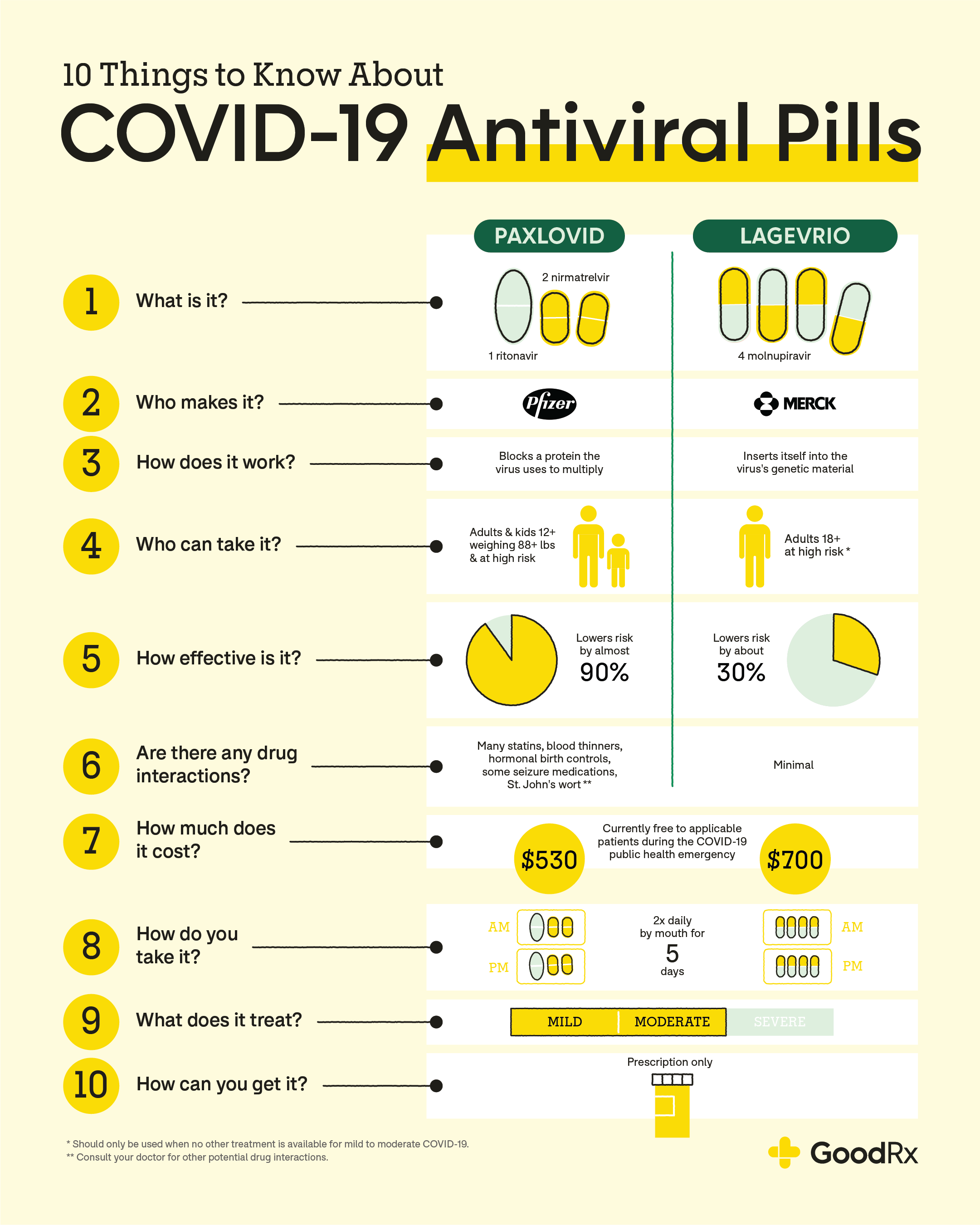
Paxlovid (nirmatrelvir / ritonavir) is an oral antiviral treatment that contains two different medications: nirmatrelvir and ritonavir. It’s most effective when it's taken within 5 days of getting symptoms. Paxlovid is FDA approved to treat mild-to-moderate COVID in adults. It’s also authorized for kids ages 12 and older who weigh at least 88 lbs (40 kg).
Nirmatrelvir prevents SARS-CoV-2 from making copies of itself in your body. Ritonavir is like a sidekick — it helps prevent the breakdown of nirmatrelvir in the body. This helps improve nirmatrelvir’s effectiveness.
Experts recommend Paxlovid as a first-choice treatment option for people who aren’t in the hospital and are at high risk for developing severe COVID. It helps lower the risk of hospitalization and death.
Good to know: Paxlovid interacts with a lot of medications. In certain cases, your healthcare professional may recommend pausing one of your medications while you take Paxlovid. In other situations, you may need to take a different COVID treatment than Paxlovid. Your prescriber and pharmacist can check for any interactions before you start Paxlovid.
Veklury
Veklury (remdesivir) is an intravenous (IV) antiviral medication that can treat many kids and adults with COVID. It was the first medication to be fully approved for COVID.
For people who aren’t in the hospital, Veklury is a next-choice option after Paxlovid. It’s best used when given within 7 days of symptoms appearing. It’s infused by a healthcare professional at a clinic or other outpatient setting. You can’t inject it on your own at home.
For people in the hospital, Veklury is a go-to treatment option that healthcare professionals tend to prescribe. You can receive it with or without supplemental oxygen.
Lagevrio
Lagevrio (molnupiravir) is an oral antiviral pill that should be used within 5 days of developing COVID symptoms. It’s an authorized treatment option in adults with mild-to-moderate COVID. But it’s generally only recommended if Paxlovid or Veklury aren’t available or appropriate options for you.
Frequently asked questions
DayQuil may help relieve mild symptoms of COVID, namely fever, cough, and nasal congestion. Its active ingredients target these symptoms to help you feel more comfortable. However, DayQuil doesn’t treat the virus itself, prevent infection, or speed up recovery.
COVID and the flu are both respiratory illnesses. But they’re caused by different viruses, with COVID being caused by SARS-CoV-2 and the flu by influenza viruses. These infections can feel quite similar, sharing symptoms such as fever, cough, and fatigue. Testing is often the only definitive way to tell them apart. Each one also has its own specific antiviral treatments and vaccines.
COVID generally spreads more easily than the flu, which means it can infect more people more quickly. Both illnesses can be spread from person to person, primarily through respiratory droplets and close contact.
Not usually. COVID symptoms tend to develop somewhat gradually — usually 2 to 14 days after exposure, with many people feeling sick after about 2 to 5 days. The flu, on the other hand, comes on more abruptly, sometimes within a day of infection.
DayQuil may help relieve mild symptoms of COVID, namely fever, cough, and nasal congestion. Its active ingredients target these symptoms to help you feel more comfortable. However, DayQuil doesn’t treat the virus itself, prevent infection, or speed up recovery.
COVID and the flu are both respiratory illnesses. But they’re caused by different viruses, with COVID being caused by SARS-CoV-2 and the flu by influenza viruses. These infections can feel quite similar, sharing symptoms such as fever, cough, and fatigue. Testing is often the only definitive way to tell them apart. Each one also has its own specific antiviral treatments and vaccines.
COVID generally spreads more easily than the flu, which means it can infect more people more quickly. Both illnesses can be spread from person to person, primarily through respiratory droplets and close contact.
Not usually. COVID symptoms tend to develop somewhat gradually — usually 2 to 14 days after exposure, with many people feeling sick after about 2 to 5 days. The flu, on the other hand, comes on more abruptly, sometimes within a day of infection.
The bottom line
The best over-the-counter (OTC) medicine for COVID-19 depends on what symptoms you're experiencing. For instance, Mucinex (guaifenesin) and Delsym (dextromethorphan) can help manage a cough. But if you’re experiencing a fever, you can try taking Tylenol (acetaminophen) or Advil (ibuprofen). Paxlovid (nirmatrelvir / ritonavir) and Veklury (remdesivir) are examples of FDA approved COVID treatment options. Talk with your healthcare professional about whether COVID treatments are right for you.

Why trust our experts?




References
American Academy of Pediatrics. (2022). Coughs and colds: Medicines or home remedies?
Centers for Disease Control and Prevention. (2024). Benefits of the flu vaccine.
Centers for Disease Control and Prevention. (2024). Similarities and differences between flu and COVID-19.
Genentech. (2024). TAMIFLU- oseltamivir phosphate capsule, TAMIFLU- oseltamivir phosphate powder, for suspension [package insert]. DailyMed.
Genentech. (2025). XOFLUZA- baloxavir marboxil tablet, film coated, XOFLUZA- baloxavir marboxil granule, for solution, XOFLUZA- baloxavir marboxil granule, for suspension [package insert].
Gilead Sciences. (2025). VEKLURY- remdesivir injection, VEKLURY- remdesivir injection, powder, lyophilized, for solution [package insert].
Huijghebaert, S., et al. (2023). Saline nasal irrigation and gargling in COVID-19: A multidisciplinary review of effects on viral load, mucosal dynamics, and patient outcomes. Frontiers in Public Health.
Infectious Diseases Society of America. (2024). IDSA guidelines on the treatment and management of patients with COVID-19.