Key takeaways:
Some studies show that having Type A blood may increase your risk of getting COVID-19 infection, while Type O blood may help protect against infection.
There's also evidence that having Type O blood may protect against some long-term risks of COVID, like heart attacks and stroke. People with a non-O blood type may have a higher risk.
No blood type makes you immune to COVID illness.
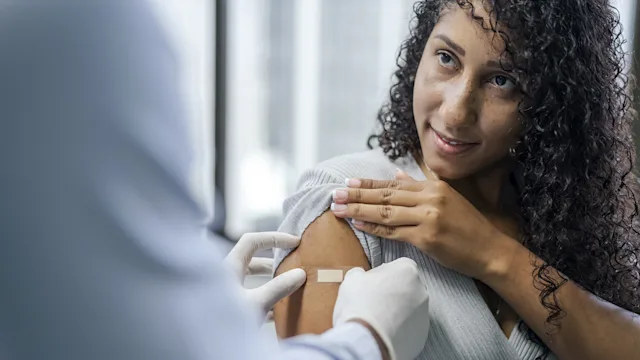
Blood type doesn’t change how effective COVID vaccines are. And getting vaccinated is still the best way to protect yourself from COVID infection.
Since COVID-19 first emerged, people have wondered if blood type plays a role in how the body protects against COVID infection. After all, some people get much sicker from COVID than others. Does it come down to genetics?
There are four main blood types: A, B, AB, and O. Blood types can be further classified by a protein called the “Rh factor.” This is either present (+) or absent (-). This creates eight different blood types:
A+
A-
B+
B-
O+
O-
AB+
AB-
Search and compare options
Your blood type is genetically determined, meaning you inherit it from your parents.
Knowing your blood type is important for several reasons, like if you need a blood transfusion. Blood types are also linked to certain health conditions, like heart attacks and blood clots.
New research suggests that certain blood types may also be linked to a higher risk of getting COVID, having severe symptoms, or developing certain long-term complications from COVID.
Is there a link between blood type and COVID risk?
It seems that there’s a link. Over the past several years, researchers have tried to answer this question using the available data. Early in the pandemic, they noticed that people with Type A blood seemed to be more likely to get sick with COVID. And people with Type O blood seemed less likely. On the other hand, some studies found no connection at all.
Blood type and the risk of getting COVID
Here are some of the highlights over the past few years:
A large U.S. study and one small French study didn’t find a relationship between blood type and COVID risk or disease severity.
A Canadian study of people with Type A or AB blood had a higher risk of needing a ventilator and spending more time in the intensive care unit than people with Type O or B blood.
A small study in China found that people with Type A blood had an increased risk of getting infected with COVID. And people with Type O had a lower risk.
One U.S. study found a slightly higher risk of infection for all blood types except Type O. People with Type A blood had a lower risk of needing intubation, and people with Type AB or B had an increased risk. The risk of death was higher for people with Type AB and lower for people with Type A or B.
A review of 70 studies found that people with non-O blood types (A, B, or AB) were more likely to get COVID than people with Type O blood. Being Rh-positive also seemed to increase the risk slightly, though results varied across studies.
Scientists at Brigham and Women’s Hospital found that the virus that causes COVID-19 can attach more easily to cells that have Type A blood markers than those with Type O markers. This may help explain why some studies have found a slightly higher infection risk in people with Type A blood.
Blood type and the risk of heart attacks and stroke after COVID
Researchers also found that people with non-O blood types (A, B, or AB) had a much higher risk of heart attack and stroke after a hospitalization for COVID than those with Type O blood.
Again, this research was based purely on people who were infected with COVID in 2020, before vaccination was available. It’s not clear how this information applies to people who were infected with newer strains of COVID or to those who were vaccinated.
Does Rh-negative blood give you immunity to COVID?
Don’t count on it. There might be a link between the Rh factor and COVID. But so far, only a few research studies have looked at this topic. They haven’t found anything conclusive:
In one study, researchers found that people with Rh-negative blood type had a decreased risk of COVID infection, needing intubation, or death.
Another study from 2021 that looked at over 225,000 people also found that people who were Rh-negative had a slightly lower risk of getting infected with COVID. This was especially true for people with blood Type O. The people who were Rh-negative, who did get COVID infection, were also less likely to get very sick or die than those who were Rh-positive.
But a 2022 meta-analysis didn’t find an association at all between Rh-factor and COVID infection.
Can being blood Type O protect you from COVID?
It seems that blood type O could be protective. Some studies have concluded that people with blood Type O may be less likely to get COVID. But more research is needed:
In a 2020 study of nearly half a million people, those with blood Type O had a lower risk of getting infected with the virus that causes COVID.
A 2024 analysis of the UK Biobank data (mentioned above) found that people with blood Type O were less likely to have tested positive for COVID during the first wave. They also had a lower risk of cardiovascular complications after COVID.
Keep in mind that having blood Type O doesn’t make you immune to the virus that causes COVID. People with Type O blood can still get COVID. And they can still pass it to other people.
Does your blood type affect COVID vaccine side effects?
No. So far, there’s no clear connection between blood type and side effects from COVID vaccines. This includes studies looking at blood type O and COVID vaccine responses, which were similar to reactions seen in other blood groups. One study of over 3,000 people who got a COVID vaccine found no difference in side effects or other issues based on blood type. Vaccines are safe and effective at lowering the risk of getting sick and dying from COVID infection, regardless of blood type.
What’s the best and worst blood type to have when it comes to COVID risk?
It’s not clear. Experts just don’t yet know enough to say for sure. It’s not clear whether all people, or just some people, with blood Type A blood have a higher risk for COVID. The same goes for blood Type O.
Your risk of getting sick from COVID depends on many different things, not just your blood type. Blood type is one small piece of a much larger puzzle. Your overall health, age, and even your race can affect how sick you may get from COVID. And there may be other factors scientists haven’t discovered yet.
No matter your blood type, you should still get vaccinated and do what you can to protect yourself from getting COVID infection. There’s no blood type that guarantees protection from getting sick from the virus that causes COVID.
Who’s most at risk of COVID infection?
The science is clear that some people have a higher risk of becoming very ill from COVID infection. This includes people who:
Are aged 50 and older: Compared with younger people, older adults are more likely to end up very sick if they get COVID. They’re also more likely to be hospitalized and to have serious complications, including death.
Are immunocompromised: Your immune system needs to be strong to fight off any infection, including COVID. Some medical conditions and treatments weaken your immune system, which increases your risk of getting very sick with COVID.
Have other health conditions: People with certain health conditions, like asthma, cancer, chronic obstructive pulmonary disease (COPD), diabetes, dementia, kidney disease, liver disease, or a history of stroke, may have a higher risk for severe COVID illness.
Have a disability: People with certain disabilities may be more likely to get very sick from COVID, especially if they have other medical problems, live in shared housing, or face unfair treatment in their communities.
Frequently asked questions
The bottom line
Just like with some other medical conditions, your blood type might affect whether you get COVID and how sick it could make you. Growing evidence shows that having non-O blood may increase your risk of getting COVID, while having Type O blood may decrease your risk. Having Type O blood may also protect against some of the longer-term complications of COVID.
Blood type is something you inherit from your parents. So, this link suggests that there may be genetic reasons for why some people are more likely to have worse outcomes from COVID — and why others don’t.

Why trust our experts?




References
Allan, J. D., et al. (2021). COVID-19 mRNA vaccination, ABO blood type and the severity of self-reported reactogenicity in a large healthcare system: A brief report of a cross-sectional study. Cureus.
American Society of Hematology. (2022). Blood type may offer insights into risk of blood clot in people with cancer.
Anderson, J. L., et al. (2021). Association of sociodemographic factors and blood group type with risk of COVID-19 in a US population. JAMA Network Open.
Balaouras, G., et al. (2022). Systematic review and meta-analysis of the effect of ABO blood group on the risk of SARS-CoV-2 infection. PLoS One.
Barnkob, M. B., et al. (2020). Reduced prevalence of SARS-CoV-2 infection in ABO blood group O. Blood Advances.
Boudin, L., et al. (2020). ABO blood groups are not associated with risk of acquiring the SARS-CoV-2 infection in young adults. Haematologica.
Butler, E. A., et al. (2023). ABO and Rh blood groups and risk of infection: Systematic review and meta-analysis. BMC Infectious Diseases.
Centers for Disease Control and Prevention. (n.d.). COVID-19 information and resources for people with disabilities.
Centers for Disease Control and Prevention. (2025). Interim clinical considerations for use of COVID-19 vaccines in the United States.
Centers for Disease Control and Prevention. (2025). People with certain medical conditions and COVID-19 risk factors.
Centers for Disease Control and Prevention. (2025). Underlying conditions and the higher risk for severe COVID-19.
Groot, H. E., et al. (2020). Genetically determined ABO blood group and its associations with health and disease. Arteriosclerosis, Thrombosis, and Vascular Biology.
He, M., et al. (2012). ABO blood group and risk of coronary heart disease in two prospective cohort studies. Arteriosclerosis, Thrombosis, and Vascular Biology.
Hill, L., et al. (2022). COVID-19 cases and deaths by race/ethnicity: Current data and changes over time. KFF.
Hilser, J. R., et al. (2024). COVID-19 is a coronary artery disease risk equivalent and exhibits a genetic interaction with ABO blood type. Arteriosclerosis, Thrombosis, and Vascular Biology.
Hoiland, R. L., et al. (2020). The association of ABO blood group with indices of disease severity and multiorgan dysfunction in COVID-19. Blood Advances.
Jaworek, T., et al. (2022). Contribution of common genetic variants to risk of early-onset ischemic stroke. Neurology.
Ray, J. G., et al. (2020). Association between ABO and Rh blood groups and SARS-CoV-2 infection or severe COVID-19 illness: A population-based cohort study. Annals of Internal Medicine.
Wu, S., et al. (2023). Blood group A enhances SARS-CoV-2 infection. Blood.
Zhao, J., et al. (2020). Relationship between the ABO blood group and the coronavirus disease 2019 (COVID-19) susceptibility. Clinical Infectious Diseases.
Zietz, M., et al. (2020). Associations between blood type and COVID-19 infection, intubation, and death. Nature Communications.