

8 Multaq (Dronedarone) Side Effects and How to Manage Them
Multaq (dronedarone) may cause weakness, nausea, and rash for some people. Review more common Multaq side effects and ways to cope with them at GoodRx.
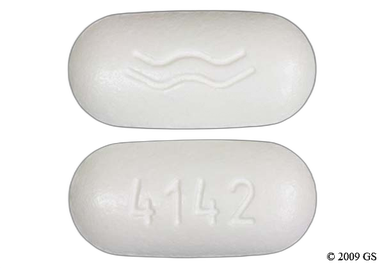
Multaq (dronedarone) is an antiarrhythmic medication. It's used to lower the risk of hospitalization in adults with atrial fibrillation (AFib). Multaq (dronedarone) comes as a tablet that's taken by mouth twice per day, preferably with food. Common side effects of this medication include diarrhea, nausea, and stomach pain. Multaq (dronedarone) is brand-name only and not available as a generic.

Multaq (dronedarone) is an antiarrhythmic medication. The main way it works is by blocking potassium channels in the heart. This helps slow your heart's electrical activity so that your heart can beat at a normal rhythm.
| Common Brands | Multaq |
|---|---|
| Drug Class | Antiarrhythmic |
| Controlled Substance Classification | Not a controlled medication |
| Generic Status | No lower-cost generic available |
| Availability | Prescription only |

The following side effects may get better over time as your body gets used to the medication. Let your healthcare provider know immediately if you continue to experience these symptoms or if they worsen over time.
Contact your healthcare provider immediately if you experience any of the following.
Along with its needed effects, a medicine may cause some unwanted effects. Although not all of these side effects may occur, if they do occur they may need medical attention.
Check with your doctor immediately if any of the following side effects occur:
Less common
Chest pain or discomfort
lightheadedness, dizziness, or fainting
shortness of breath
slow or irregular heartbeat
unusual tiredness
Some side effects may occur that usually do not need medical attention. These side effects may go away during treatment as your body adjusts to the medicine. Also, your health care professional may be able to tell you about ways to prevent or reduce some of these side effects. Check with your health care professional if any of the following side effects continue or are bothersome or if you have any questions about them:
Less common
Acid or sour stomach
belching
blistering, crusting, irritation, itching, or reddening of the skin
cracked, dry, or scaly skin
indigestion
itching skin
rash
redness or discoloration of the skin
skin rash, encrusted, scaly, and oozing
skin rash, hives, itching, or redness
stomach discomfort, upset, or pain
swelling
Rare
Change in taste
increased sensitivity of the skin to sunlight
loss of taste
severe sunburn
Other side effects not listed may also occur in some patients. If you notice any other effects, check with your healthcare professional.
Call your doctor for medical advice about side effects. You may report side effects to the FDA at 1-800-FDA-1088.




Multaq (dronedarone) can cause some serious health issues. This risk may be even higher for certain groups. If this worries you, talk to your doctor or pharmacist about other options.
 Multaq (dronedarone) must be avoided in people with permanent atrial fibrillation, or severe or symptomatic heart failure. Taking Multaq (dronedarone) with these conditions can raise the risk for serious problems, such as worsening heart failure, stroke, and even death. Your cardiologist will order electrocardiograms (ECGs) to measure your heart rhythm to make sure you're in normal sinus rhythm before starting Multaq (dronedarone).
Multaq (dronedarone) can cause new or worsening heart failure. Contact your cardiologist right away if you notice symptoms of heart failure, such as unexplained weight gain, swelling in your legs or feet, or more shortness of breath especially when you lie down.
Although rare, people who took Multaq (dronedarone) have developed liver problems. Because of this risk, your prescriber might order blood tests before you start and during treatment to check your liver health. Also, you're recommended to limit or avoid drinking alcohol because doing so can also cause liver damage. Get medical attention right away if you experience symptoms of liver problems, including tiredness, nausea, and yellowing of your skin or the whites of your eyes. Your healthcare team might ask you to stop taking Multaq (dronedarone) in order to prevent further liver damage.
In some rare cases, Multaq (dronedarone) can cause lung damage such as inflammation (pneumonitis) or scarring (fibrosis). Let your prescriber know right away if you experience symptoms such as shortness of breath or dry cough.
Taking Multaq (dronedarone) with certain diuretics (water pills) can lead to low potassium and magnesium levels in the blood, which can lead to serious heart problems. Your prescriber will monitor your electrolytes before and during treatment with Multaq (dronedarone). You might need to take supplements to keep your electrolyte levels within the normal range.
Multaq (dronedarone) can lengthen the time period from when the heart pumps and then relaxes. This is known as QT prolongation. Your risk is higher if you have certain factors, including abnormal electrolyte levels, heart rhythm problems, or are taking other medications that cause heart rhythm problems, such as certain antidepressants or ciprofloxacin (Cipro), among others. To lower your risk, your prescriber will monitor your heart and perform electrocardiograms (ECGs) to make sure your heart rhythm is normal. If you feel your chest pounding, have trouble breathing, have chest pain, or feel faint or lightheaded while taking Multaq (dronedarone), call 911 right away.
Multaq (dronedarone) can cause kidney damage or failure, especially in people who have heart failure or or who are dehydrated. This, as well any changes in kidney labs, usually goes away after stopping the medication. Your cardiologist will monitor your kidney labs (e.g., creatinine) regularly throughout treatment to make sure this doesn't become a major problem.
Animal studies suggest that Multaq (dronedarone) can cause harm to unborn babies if taken by mothers during pregnancy. If you're able to become pregnant, your healthcare team might ask you to take a pregnancy test to confirm you're not pregnant before you can start Multaq (dronedarone). You're recommended to use effective birth control during treatment with Multaq (dronedarone) and for 5 days after your last dose.

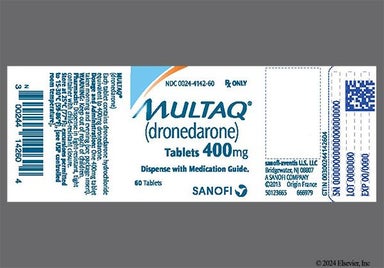
 Tablet
| Dosage | Quantity | Price as low as | Price per unit |
|---|---|---|---|
| 400mg | 60 tablets | $0.00 | $0.00 |

Although certain medicines should not be used together at all, in other cases two different medicines may be used together even if an interaction might occur. In these cases, your doctor may want to change the dose, or other precautions may be necessary. When you are taking this medicine, it is especially important that your healthcare professional know if you are taking any of the medicines listed below. The following interactions have been selected on the basis of their potential significance and are not necessarily all-inclusive.
Using this medicine with any of the following medicines is not recommended. Your doctor may decide not to treat you with this medication or change some of the other medicines you take.
Using this medicine with any of the following medicines is usually not recommended, but may be required in some cases. If both medicines are prescribed together, your doctor may change the dose or how often you use one or both of the medicines.
Using this medicine with any of the following medicines may cause an increased risk of certain side effects, but using both drugs may be the best treatment for you. If both medicines are prescribed together, your doctor may change the dose or how often you use one or both of the medicines.


Contraindications are specific health conditions or situations in which a person should not take a medication due to safety concerns. If you have any of the following conditions or if any of the following apply to you, let your healthcare provider know because Multaq (dronedarone) will not be safe for you to take.





Prescription savings
Stop paying too much for your prescriptions. Compare prices, get pharmacy coupons, and save up to 80%. Find expert answers to your health questions so you can make the best decisions for yourself and your family.
Health conditions
Medications & treatment
Access & affordability
 Our monthly healthcare membership can help you save thousands on your prescription costs.
Resources

Multaq is used to help your heart keep a normal rhythm. It's not easy to tell when Multaq is working. This is because people with AFib often don't experience noticeable symptoms, so they might not notice when their condition is getting better. Lab results show that Multaq reaches a steady level in your body after you take it for 4 to 8 days. In general, studies show that people who took Multaq were less likely to go to the hospital for Afib-related complications than people who took placebo. Your healthcare team will likely order regular electrocardiograms (ECGs) to see how well Multaq is working for you.
It takes about 3 to 4 days for most of Multaq to leave your body after a dose. This time frame is estimated based on the half-life of Multaq. It can differ from person to person depending on other factors, such as your sex, age, and whether you have liver problems. If you're able to become pregnant, your healthcare team will ask you to use birth control while you're taking Multaq and for 5 days after your last dose just to be safe. This is because Multaq might cause serious harm to unborn babies. Talk with your healthcare team if you have any specific concerns related to how long this medication stays in your body.
People who took Multaq during clinical studies didn't report low blood pressure as a common side effect. But research shows that people who took Multaq did experience small drops in blood pressure. But it's unclear whether this was caused by Multaq or other factors. If you have low blood pressure to begin with, or you're taking blood pressure medications, your cardiologist might recommend checking your blood pressure at home for a short amount of time until you know how this medication affects you.
More research is needed to understand how Multaq interacts with Eliquis (apixaban). Based on how these medications work in the body, there's a risk that Multaq might raise the level of Eliquis (apixaban) in the body. This can put you at higher risk for certain side effects of Eliquis (apixaban), like bleeding or bruising. But limited research suggests that the risk of major bleeding is low among people who take this combination. Your cardiology team might recommend that you take Multaq and Eliquis (apixaban) if they think the benefit is greater than the risk of harm. But they might monitor you more closely for signs of bleeding or lower your dose of Eliquis (apixaban).
It's best to avoid alcohol while taking Multaq. Both alcohol and Multaq can damage your liver, which can be severe and life-threatening. In addition, alcohol can raise the risk of atrial fibrillation coming back. If avoiding alcohol isn't possible for you, talk to your prescriber about other medication options for you, or ways to get help to quit alcohol.
No, Multaq tablets can't be crushed because they have a film coating on them. Crushing the tablets can damage this film coating, which can make the medication not work as well. Additionally, Multaq tablets don't have a score line (line in the middle of the tablet to cut). Trying to cut a non-scored tablet can be unsafe. It can also be difficult to evenly cut, which can cause you to take the wrong dose, even if you're using a pill splitter. Talk to your prescriber if you're having trouble swallowing Multaq.
No, Multaq isn't a blood thinner and it doesn't raise the risk of bleeding. Multaq is an antiarrhythmic medication. If you have AFib, your cardiology team might prescribe a blood thinner along with Multaq to help lower the risk of stroke.
No, Multaq isn't a beta blocker; it's an antiarrhythmic medication. Beta blockers and antiarrhythmics are two different classes of medications that the cardiology team might prescribe for people with AFib because they manage AFib in different ways. Antiarrhythmics help your heart keep a normal rhythm, while beta blockers help slow down heart rate during AFib.
