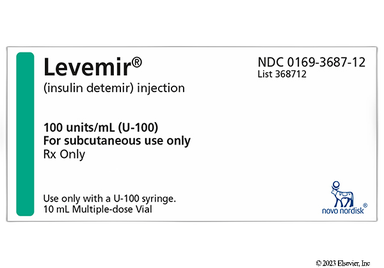
Levemir
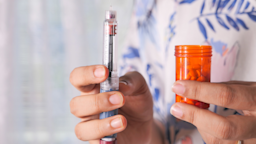
Levemir (insulin detemir) is a long-acting insulin that helps control high blood sugar levels in children and adults. It's injected under the skin, typically once or twice daily. Like all insulins, Levemir (insulin detemir) can raise your risk for low blood sugar, so make sure to keep fast-acting sugars with you in case your blood sugar level drops too low. This medication comes in vials. But it's also available as a Flexpen for people who have trouble drawing up insulin from the vial.


What is Levemir (insulin detemir)?
What is Levemir (insulin detemir) used for?
How Levemir (insulin detemir) works
Levemir (insulin detemir) is an insulin, which is a hormone that helps lower glucose (sugar) levels in the blood. It's a long-acting insulin, which means it can help lower your blood sugar levels for up to a 24-hour period.
Drug facts
More on Levemir (insulin detemir) essentials



Side effects of Levemir (insulin detemir)
The following side effects may get better over time as your body gets used to the medication. Let your healthcare provider know immediately if you continue to experience these symptoms or if they worsen over time.
Common Side Effects
- Shakiness, hunger, and other symptoms of low blood sugar (up to 93%, depending on what other blood sugar medications you're taking)
- Common cold involving the nose, throat, and lungs (up to 27%)
- Headache (up to 23%)
- Pain or irritation of the throat (10%)
- Back pain (8%)
- Fever, chills, and other flu-like symptoms (up to 8%)
- Stomach pain (6%)
Please note: These side effects were reported by people who took Levemir (insulin detemir) for type 1 diabetes. Your risk for side effects might be different if you have type 2 diabetes.
Less Common Side Effects
- Weight gain
- Swelling (from fluids) in the hands or feet
- Redness, pain, itching, and other symptoms of injection site reactions
Levemir (insulin detemir) serious side effects
Contact your healthcare provider immediately if you experience any of the following.
- Dangerously low blood sugar (severe hypoglycemia): feeling shaky, being nervous or anxious, fast heartbeat, sweating or body chills, confusion, feeling sleepy, weakness or low energy and excessive hunger
- Serious allergic reactions: hives, itching, swelling of face or tongue, difficulty breathing
- Dangerously low levels of potassium (hypokalemia): muscle twitches, muscle cramps, abnormal heart rhythms, fatigue
More on Levemir (insulin detemir) side effects

The following Levemir (insulin detemir) side effects have also been reported
Along with its needed effects, a medicine may cause some unwanted effects. Although not all of these side effects may occur, if they do occur they may need medical attention.
Check with your doctor immediately if any of the following side effects occur:
Incidence not known
blurred vision
chills
cold sweats
confusion
cool, pale skin
difficulty swallowing
dizziness
fast heartbeat
headache
hoarseness
increased hunger
irritation
joint pain
nightmares
puffiness or swelling of the eyelids or around the eyes, face, lips, or tongue
redness of the skin
seizures
shakiness
slurred speech
stiffness or swelling
swelling of the eyelids, face, lips, hands, or feet
tightness in the chest
trouble breathing
unusual tiredness or weakness
Some side effects may occur that usually do not need medical attention. These side effects may go away during treatment as your body adjusts to the medicine. Also, your health care professional may be able to tell you about ways to prevent or reduce some of these side effects. Check with your health care professional if any of the following side effects continue or are bothersome or if you have any questions about them:
Incidence not known
Bleeding, blistering, burning, coldness, discoloration of the skin, feeling of pressure, hives, infection, inflammation, itching, lumps, numbness, pain, rash, redness, scarring, soreness, stinging, swelling, tenderness, tingling, ulceration, or warmth at the injection site
decrease in the amount of urine
noisy, rattling breathing
redistribution or accumulation of body fat
swelling of the fingers, hands, feet, or lower legs
trouble breathing at rest
Other side effects not listed may also occur in some patients. If you notice any other effects, check with your healthcare professional.
Call your doctor for medical advice about side effects. You may report side effects to the FDA at 1-800-FDA-1088.

Get your GoodRx coupon

Pros and cons of Levemir (insulin detemir)
Pros
- Lower risk of weight gain compared to some other types of insulin
- Doses can be adjusted to meet your body's needs
- Insulin pens available for people who've trouble using insulin vials
- Provides blood sugar control for up to 24 hours
Cons
- Must be injected
- Might need to inject it twice daily
- Can cause low blood sugar
- No generic option available

Pharmacist tips for Levemir (insulin detemir)

- For proper storage, unopened pens and vials should be kept in the fridge until the expiration date on the box, or at room temperature for up to 42 days. Once opened, pens should be kept at room temperature (not refrigerated) for up to 42 days, and vials can be kept in the fridge or at room temperature for up to 42 days.
- If you've been using the Levemir (insulin detemir) Flextouch pen, let your provider know. The manufacturer has discontinued the Levemir (insulin detemir) Flextouch pen in February 2023, so you might have a hard time finding it at a pharmacy. The manufacturer released another pen in its place called the Levemir (insulin detemir) FlexPen. You might need to ask your provider for another prescription in order to receive the Levemir (insulin detemir) FlexPen.
- Your provider will train you on how to give yourself Levemir (insulin detemir) correctly. Make sure to inject Levemir (insulin detemir) at the same time each day, but rotate injection sites to prevent skin irritation, lumps, pits, or thickened skin.
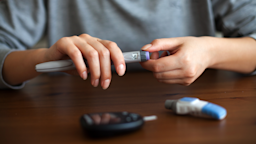
- You can inject Levemir (insulin detemir) under your skin in your upper arm, abdomen (stomach area), or thigh (upper leg). Never inject it into a vein or muscle. Check out this step-by-step video on how to use the pen.
- If you noticed areas of thickened skin from repeated Levemir (insulin detemir) injections, choose a different area for future injections. Injecting into areas with thickened skin will cause the insulin to not work as well and put you at risk for high blood sugar.
- Don't dilute or mix Levemir (insulin detemir) with other types of insulin; it won't work as intended and you may lose blood sugar control, which could be serious.
- Keep a consistent meal and exercise schedule to prevent any fluctuations (rises and falls) in your blood sugar.
- Don't reuse insulin needles. Always use a new needle for each Levemir (insulin detemir) injection. Reusing needles raises your chance of having blocked needles, which can cause you to get the wrong dose of Levemir (insulin detemir). Using a new needle for each injection also lowers your risk of getting an infection.
- When changing to Levemir (insulin detemir) from other long-acting insulins, you might experience higher average fasting blood sugar levels during the first weeks of therapy. Check and record your blood sugar levels daily to make sure that they're within a healthy range. Let your provider know what your blood sugar numbers are so they can make adjustments to your Levemir (insulin detemir) dose, if needed.
- Levemir (insulin detemir) can put you at risk for low blood sugar and cause symptoms such as dizziness, feeling weak, and shakiness. If your blood sugar level drops too low, then it's important that you eat 15 grams of fast-acting sugar to bring your blood sugar level back to a safe range. After eating 15 grams of fast-acting sugar, wait 15 minutes and recheck your blood sugar level. If it's still too low, then call 911 and eat another 15 grams of carbohydrates while you wait for help to arrive. Recheck your blood sugar again in 15 minutes.

Common questions about Levemir (insulin detemir)
Yes. You can use Levemir (insulin detemir) with other oral diabetes medications, like metformin, if your blood sugar level needs better control. If you have Type 2 diabetes, your provider might recommend that you continue metformin if you need to start insulin like Levemir (insulin detemir). Talk to your provider about your diabetes treatment and what medications might be right for you.
Yes. You can use Levemir (insulin detemir) along with rapid-acting insulins. If you have Type 1 diabetes, it's recommended that you use a rapid-acting insulin (e.g., NovoLog, Humalog) around meal times, in addition to long-acting coverage (like with Levemir (insulin detemir)), to help manage your blood sugars.
Levemir (insulin detemir) is a long-acting insulin. If you're injecting it once daily, then you typically inject it in the evening. If your provider recommends that you inject Levemir (insulin detemir) twice daily, then you'll likely divide your dose into two doses (morning and evening). But if you have a hard time injecting Levemir (insulin detemir) at a particular time, let your provider know. They can talk with you about injecting this medication at a time that works for you because the important part is to use at the same time each day.
Levemir (insulin detemir) starts working in about 2 hours after injection and continues working to lower your blood sugar for up to 24 hours.
Available research shows that Levemir (insulin detemir) is unlikely to cause harm to the unborn baby or mother if used by mothers during pregnancy. If you're pregnant or planning on becoming pregnant, speak to your provider about all possible options for treating your blood sugar.
Both Levemir (insulin detemir) and insulin glargine (Lantus) are long-acting insulins. There's no noticeable difference between how well they work to lower blood sugar levels. One main difference between them is that insulin glargine (Lantus) is typically only injected once a day, whereas Levemir (insulin detemir) is used once or twice a day. How often you need to inject Levemir (insulin detemir) is likely related to your dose. If you're using a lower dose of Levemir (insulin detemir), you might need to have twice daily injections to maintain a safe blood sugar level. But if you're using a higher dose of Levemir (insulin detemir), its effect lasts closer to 24 hours.

How to save using GoodRx


Risks and warnings for Levemir (insulin detemir)
Levemir (insulin detemir) can cause some serious health issues. This risk may be even higher for certain groups. If this worries you, talk to your doctor or pharmacist about other options.
Infections
Never share Levemir (insulin detemir) pens, syringes, or needles with anyone else. Sharing Levemir (insulin detemir) with someone puts you at risk of getting serious infections.
Low blood sugar
- Risk factors: Changes in diet and exercise | Drinking alcohol | Taking other blood sugar medications | Over age 65 | Liver or kidney problems
The most common side effect of insulin, including Levemir (insulin detemir), is low blood sugar. Very low blood sugar can be life-threatening. Make sure you know how to recognize symptoms of low blood sugar, include feeling shaky, being nervous or anxious, confusion, or hunger. If you experience any of these symptoms, check your blood sugar level. Keep glucose tablets or other fast-acting sugars on you so that you're prepared to treat your low blood sugar. Follow the "15-15 Rule" to bring your blood sugar back to a safe level. Talk to your doctor or pharmacist if you experience frequent low blood sugar episodes while taking Levemir (insulin detemir) because they might need to adjust your insulin dose.
Severe allergic reactions
In some rare cases, Levemir (insulin detemir) can cause severe allergic reactions that can be life-threatening. Go to the emergency room right away if you suddenly have problems breathing, a fast heartbeat, or if you feel your face, mouth, or throat swell up.
Low blood potassium levels
- Risk factors: Taking medications that can lower potassium levels
Levemir (insulin detemir) can lower levels of potassium in your blood, which can be dangerous. You're more at risk if you're already taking medications that lower your potassium. Your doctor will check your potassium levels regularly and might give you medications to keep your potassium normal. Let your provider know right away if you experience symptoms of low blood potassium levels, such as muscle weakness, tiredness, fast heartbeat, and a tingling sensation in your hands, legs, or feet.
Swelling from fluids and risk of heart failure
- Risk factors: Taking a class of blood sugar medication called thiazolidinediones | Heart failure
If you're also taking a thiazolidinediones (TZD) blood sugar medication, let your provider know before you start Levemir (insulin detemir). Combining TZD with insulin can lead to swelling from fluids. This can worsen or lead to heart failure. Let your provider know if you noticed that you suddenly gained a lot of weight or if you have symptoms of heart failure, such as as trouble breathing, tiredness, headache. Your provider might need to make changes to your blood sugar medications.

Levemir (insulin detemir) dosage
 Carton
| Dosage | Quantity | Price as low as | Price per unit |
|---|---|---|---|
| 5 flexpens of 3ml | 1 carton | $169.12 | $169.12 |
| 5 flextouch pens of 3ml | 1 carton | $164.13 | $164.13 |
 Flexpen
| Dosage | Quantity | Price as low as | Price per unit |
|---|---|---|---|
| 3ml of 100 units/ml | 1 flexpen | $38.79 | $38.79 |
Flextouch pen| Dosage | Quantity | Price as low as | Price per unit |
|---|---|---|---|
| 3ml of 100 units/ml | 5 flextouch pens | $164.13 | $32.83 |
 Vial
Vial| Dosage | Quantity | Price as low as | Price per unit |
|---|---|---|---|
| 10ml of 100 units/ml | 1 vial | $114.77 | $114.77 |
Typical dosage for Levemir (insulin detemir)
- Type 1 diabetes: Your healthcare provider will help you calculate your total daily insulin (TDI) requirement based on your body weight. The typical starting dose ranges from about 30% to 50% of your TDI requirement, injected under the skin. It's injected either once daily in the evening, or split up into two doses and injected twice daily in the morning and evening.
- Type 2 diabetes: The typical starting dose is 10 units (or 0.1 units/kg to 0.2 units/kg of body weight) injected under the skin. It's injected either once daily in the evening, or split up into two doses and injected twice daily in the morning and evening.
If you're switching from another type of insulin, your provider will determine your new Levemir (insulin detemir) dose based on the type of insulin you're switching from.
More on Levemir (insulin detemir) dosage


Interactions between Levemir (insulin detemir) and other drugs
More on Levemir (insulin detemir) interactions
Although certain medicines should not be used together at all, in other cases two different medicines may be used together even if an interaction might occur. In these cases, your doctor may want to change the dose, or other precautions may be necessary. When you are taking this medicine, it is especially important that your healthcare professional know if you are taking any of the medicines listed below. The following interactions have been selected on the basis of their potential significance and are not necessarily all-inclusive.
Using this medicine with any of the following medicines is usually not recommended, but may be required in some cases. If both medicines are prescribed together, your doctor may change the dose or how often you use one or both of the medicines.
- Balofloxacin
- Besifloxacin
- Chloroquine
- Ciprofloxacin
- Enoxacin
- Fleroxacin
- Flumequine
- Gatifloxacin
- Gemifloxacin
- Hydroxychloroquine
- Lanreotide
- Levofloxacin
- Liraglutide
- Lomefloxacin
- Macimorelin
- Metoclopramide
- Metreleptin
- Moxifloxacin
- Nadifloxacin
- Norfloxacin
- Octreotide
- Ofloxacin
- Pasireotide
- Pazufloxacin
- Pefloxacin
- Pioglitazone
- Pramlintide
- Prulifloxacin
- Rosiglitazone
- Rufloxacin
- Sparfloxacin
- Thioctic Acid
- Tosufloxacin
Using this medicine with any of the following medicines may cause an increased risk of certain side effects, but using both drugs may be the best treatment for you. If both medicines are prescribed together, your doctor may change the dose or how often you use one or both of the medicines.
- Acebutolol
- Albiglutide
- Atenolol
- Betaxolol
- Bisoprolol
- Carteolol
- Carvedilol
- Celiprolol
- Dulaglutide
- Esmolol
- Exenatide
- Furazolidone
- Iproniazid
- Isocarboxazid
- Labetalol
- Levobunolol
- Linezolid
- Lixisenatide
- Methylene Blue
- Metipranolol
- Metoprolol
- Moclobemide
- Nadolol
- Nebivolol
- Nialamide
- Oxprenolol
- Penbutolol
- Phenelzine
- Pindolol
- Practolol
- Procarbazine
- Propranolol
- Rasagiline
- Safinamide
- Saxagliptin
- Selegiline
- Sotalol
- Timolol
- Tranylcypromine

How much does Levemir (insulin detemir) cost?
$38.79

Levemir (insulin detemir) contraindications
Contraindications are specific health conditions or situations in which a person should not take a medication due to safety concerns. If you have any of the following conditions or if any of the following apply to you, let your healthcare provider know because Levemir (insulin detemir) will not be safe for you to take.
- Low blood sugars that aren't treated

What are alternatives to Levemir (insulin detemir)?