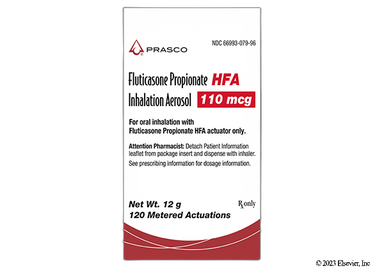
Fluticasone propionate inhaler, the generic name for Flovent, is an inhaled corticosteroid medication used everyday to help control asthma in adults and children ages 4 years and older. It comes as HFA and Diskus inhalers that are typically used twice a day. It's not a rescue inhaler and won't treat an asthma attack that's already started. Common side effects include throat irritation and upper respiratory tract infections.
Maintenance treatment of asthma in adults and children ages 4 years and older
How Fluticasone works
Fluticasone is an inhaled corticosteroid. It works directly in your lungs to lower inflammation and swelling in your airways. This helps keep your airways open, control asthma symptoms, and prevent asthma attacks.
The following side effects may get better over time as your body gets used to the medication. Let your healthcare provider know immediately if you continue to experience these symptoms or if they worsen over time.
Common Side Effects
HFA (adults and children 12 years and older):
Upper respiratory tract infection (up to 18%)
Headache (up to 11%)
Throat irritation (up to 10%)
Sinus infection (up to 7%)
Hoarseness (up to 6%)
Bronchitis (up to 6%)
Cough (up to 6%)
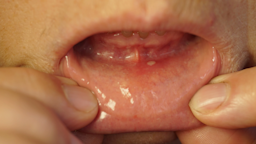
Oral thrush (up to 5%)
Diskus:
Throat irritation (up to 22%)
Upper respiratory tract infection (up to 21%)
Headache (up to 14%)
Sinus infection (up to 10%)
Oral thrush (up to 9%)
Bronchitis (up to 8%)
Nausea and vomiting (up to 8%)
Fever (up to 7%)
Cough (up to 5%)
Muscle pain (up to 5%)
Less Common Side Effects
HFA (adults and children 12 years and older):
Runny or stuffy nose
Diarrhea
Indigestion
Stomach discomfort and pain
Muscle pain
Dizziness
Migraines
Fever
Diskus:
Runny or stuffy nose
Stomach discomfort and pain
Hoarseness
Bruising
Nosebleed
Teeth pain
Weight gain
Changes in appetite
Dizziness
Sleep problems
Acne
Fluticasone serious side effects
Contact your healthcare provider immediately if you experience any of the following.
Sudden narrowing of the airways: worsening trouble breathing, coughing, wheezing
Severe allergic reaction: rash, hives, swelling of the face or tongue, breathing problems
Other infections: fever, body aches, tiredness, vomiting, pain, chills, nausea
When do Fluticasone possible side effects begin and end?
Time passed since treatment started:
MMINUTES
HHOURS
DDAYS
WWEEKS
MMONTHS
Throat irritation
Cough
Voice hoarseness
Risk of thrush
Risk of respiratory infections
If a line continues to the right, you'll likely keep experiencing this side effect once it starts.
Available in several strengths to help adjust treatment
Cons
Requires daily use, typically twice a day
Doesn't treat sudden asthma attacks
Can cause thrush (fungal infection) in the mouth or throat
Long-term use can slow growth in children
Pharmacist tips for Fluticasone
Use fluticasone twice a day, about 12 hours apart, around the same times each day. Use it every day for the best results.
Rinse your mouth with water and spit it out after each dose of fluticasone. This helps prevent a fungal infection in your mouth or throat called thrush.
Fluticasone won't treat sudden breathing problems or an asthma attack. Use your rescue inhaler, such as albuterol, as directed for sudden symptoms.
Contact your care team if your breathing or peak flow meter results get worse while using fluticasone, or if your rescue inhaler isn't working as well. Also let them know if you need your rescue inhaler more often than usual, since your asthma treatment might need to be adjusted.
Pregnancy: Talk to your prescriber about using fluticasone if you're pregnant or planning to become pregnant. There isn't much information about its use during pregnancy, but poorly controlled asthma can cause problems for you and your unborn baby. Current asthma guidelines recommend continuing inhaled corticosteroid treatment during pregnancy.
Breastfeeding: It isn't known whether fluticasone passes into breast milk or affects a breastfed baby. Talk to your prescriber about the risks and benefits of using it while breastfeeding.
Storage: Keep fluticasone at room temperature away from heat and direct light. Store the HFA inhaler with the mouthpiece facing down.
How to use fluticasone propionate HFA inhaler:
Prime the inhaler: Prime your HFA inhaler before using it for the first time, if you haven't used it for more than 7 days, or if you drop it. Shake it for 5 seconds and spray it into the air away from your face. For a new inhaler, repeat this 3 more times.
Taking a dose: Shake the HFA inhaler and breathe out fully. Put the mouthpiece in your mouth, start breathing in slowly and deeply, and press the canister once as you continue breathing in. Hold your breath for about 10 seconds or as long as comfortable, and repeat if you need a second puff.
Cleaning: Clean the HFA inhaler mouthpiece at least once a week after your evening dose. Use cotton swabs and tissues dampened with water, then let it air-dry overnight.
How to use fluticasone propionate Diskus inhaler:
Write use-by date: When you remove the Diskus inhaler from its foil pouch, write down the date you opened it and its use-by date. Throw away the 50 mcg strength after 6 weeks and the 100 mcg and 250 mcg strengths after 2 months.
Taking a dose: Breathe out fully away from the Diskus inhaler, then place the mouthpiece between your lips and breathe in quickly and deeply through your mouth. Remove the inhaler, hold your breath for about 10 seconds or as long as comfortable, then breathe out slowly.
Cleaning: Wipe with a dry cloth as needed. Don't wash the inhaler or get it wet because moisture can cause the powder to clump and clog the device.
Risks and warnings for Fluticasone
Fluticasone can cause some serious health issues. This risk may be even higher for certain groups. If this worries you, talk to your doctor or pharmacist about other options.
Fungal infection in the mouth or throat
Risk factor: Not rinsing and spitting after using fluticasone
Fluticasone can cause a fungal infection called thrush in your mouth or throat. To lower your risk, rinse your mouth with water and spit it out after every dose.
Tell your care team if you develop white patches, redness, or soreness in your mouth or throat. You might need an antifungal medication, and sometimes you might need to pause fluticasone until the infection improves.
Worsening asthma
Risk factors: Using albuterol more often
Fluticasone is a maintenance inhaler that works over time to control asthma. It doesn't open your airways quickly and shouldn't be used as a rescue inhaler during an asthma attack.
Use your rescue inhaler, such as albuterol, as directed for sudden breathing problems. Contact your care team right away if your rescue inhaler isn't helping, since you might need additional treatment.
Higher risk of infections
Risk factors: Active, chronic (long-term), or recurrent infection | Medical conditions that weaken the immune system | Taking other medications that can weaken the immune system
Fluticasone can weaken your immune system and make it harder for your body to fight infections. Certain infections, such as chickenpox and measles, can become more serious. Avoid close contact with people who have these infections, and contact your care team right away if you're exposed.
Tell your care team about any current or past infections before starting fluticasone, including tuberculosis (TB), fungal, bacterial, viral, or parasitic infections, or herpes infections of the eye. Contact them if you develop signs of an infection, such as fever, chills, or body aches.
Changes in stress hormone levels
Risk factors: High doses of fluticasone | Using fluticasone long term | Stressful events (e.g., surgery)
Fluticasone can rarely affect your body's ability to make its own steroid hormones. At recommended doses, this is less likely to happen. But using high doses or more than prescribed can lead to adrenal insufficiency, a condition where your body doesn't make enough steroid hormones.
Tell your care team if you develop unusual tiredness, weakness, dizziness, nausea, or vomiting, especially during illness, surgery, or other physical stress.
Serious allergic reactions
Risk factors: Allergy to milk proteins (lactose) - Diskus only
Both the HFA and Diskus forms of fluticasone can rarely cause a serious or life-threatening allergic reaction, including anaphylaxis. Get emergency medical help right away if you develop hives, a rash, swelling of your face or throat, trouble breathing, or severe dizziness.
The Diskus inhaler contains lactose, which can contain small amounts of milk proteins. Don't use the Diskus form if you have a severe milk protein allergy.
Risk of bone loss
Risk factors: Using fluticasone long term | Older adult | Unable to move for a long period of time | Family history of osteoporosis | Poor diet | Postmenopausal | Smoking | Using medications that can cause bone loss
Long-term use of fluticasone might lower your bone mineral density, which can weaken your bones. It's not clear how much this affects your risk of broken bones. Your care team might check your bone health if you're at higher risk.
Slowed growth in children
Fluticasone might slow growth in children who are still growing. Your child's care team will likely check their height regularly during treatment and use the lowest dose that keeps their asthma under control.
Eye problems
Risk factors: Long-term use of fluticasone
Long-term use of fluticasone can raise your risk of eye problems, including glaucoma, glaucoma and cataracts. Tell your care team if you notice blurry vision, eye pain, or other changes in your eyesight. If you use fluticasone for a long time, your care team might recommend regular eye exams.
Sudden narrowing of the airways
Fluticasone can sometimes cause paradoxical bronchospasm, which means your airways tighten instead of relax. This is rare but can be life threatening. If you notice more wheezing, shortness of breath, or coughing after using fluticasone, stop using it and use a rescue inhaler (like albuterol) right away. Contact your prescriber since you might need to switch to a different treatment.
Fluticasone dosage
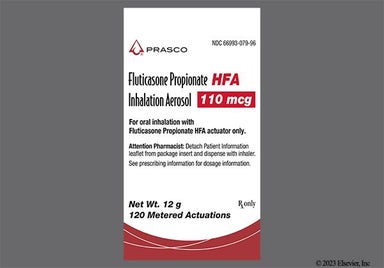
The average cost for 1 hfa inhaler of 110mcg of Fluticasone is $170.28 with a free GoodRx coupon. This is 42.67% off the average retail price of $297.00.
Contraindications are specific health conditions or situations in which a person should not take a medication due to safety concerns. If you have any of the following conditions or if any of the following apply to you, let your healthcare provider know because Fluticasone will not be safe for you to take.
Treatment of sudden asthma attack
Severe milk protein allergy (for Diskus only)
What are alternatives to Fluticasone?
There are a number of medications that your doctor can prescribe in place of Fluticasone. Compare a few possible alternatives below.
Fluticasone
Used for:
Maintenance treatment of asthma in adults and children ages 4 years and older
GoodRx Health has strict sourcing policies and relies on primary sources such as medical organizations, governmental agencies, academic institutions, and peer-reviewed scientific journals. Learn more about how we ensure our content is accurate, thorough, and unbiased by reading our editorial guidelines.
Prescription savings
Stop paying too much for your prescriptions. Compare prices, get pharmacy coupons, and save up to 80%.
Plans start at $9.99/mo. (when paid yearly). Terms apply.
Common questions about Flovent
Yes. The brand-name Flovent HFA and Flovent Diskus were discontinued in the U.S. in January 2024. But generic fluticasone inhalers are still available.
No, fluticasone inhalers are only available by prescription from a healthcare professional. There currently aren't any inhaled corticosteroid inhalers available over the counter.
No. Fluticasone inhaler shouldn't be used as needed or as a rescue inhaler during an asthma attack. It's a daily controller medication that works over time to lower inflammation and swelling in your airways. Rescue inhalers, such as albuterol, work quickly to open your airways during sudden breathing problems. Make sure you have your rescue inhaler available with you at all times.
The fluticasone Diskus inhaler contains lactose, a type of sugar found in milk and dairy products. Lactose is commonly used as an inactive ingredient in dry powder inhalers. If you have a severe dairy or milk protein allergy, or a sensitivity to lactose, let your prescriber know.
Yes, hoarseness or changes in your voice are possible side effects of inhaled corticosteroids like fluticasone. Rinsing your mouth with water and spitting it out after each dose can help lower your risk. Talk to your prescriber if your hoarseness doesn't go away or becomes bothersome.
Yes. Fluticasone inhaler is meant to control asthma and reduce coughing over time, but it can sometimes cause or worsen a cough after you inhale a dose. Rarely, it can suddenly tighten your airways, which can cause coughing, wheezing, or trouble breathing. Talk to your prescriber if your cough gets worse or doesn't go away. Use your rescue inhaler and get medical help right away if you suddenly have trouble breathing after a dose.
Fluticasone HFA can start improving your breathing within about 1 day, but it can take 1 to 2 weeks to get the full benefit. Unlike a rescue inhaler, you might not feel it working right away. One way to tell if it's working is if you're having fewer asthma symptoms and attacks and need your rescue inhaler less often. If your asthma isn't improving after using this inhaler regularly, talk to your prescriber. They might adjust your dose or add another maintenance medication.
Yes. You can use a spacer or valved holding chamber with fluticasone HFA. A spacer attaches to the inhaler and can make it easier to breathe the medication into your lungs, especially if you have trouble timing your breath with the puff. Spacers are used with HFA metered-dose inhalers like fluticasone HFA, but not with dry powder inhalers such as fluticasone Diskus.