Key takeaways:
Fiber can support weight loss in a few ways. It slows digestion, helps you feel full after meals, and supports other aspects of metabolism like blood sugar.
The best high-fiber foods for weight loss also provide protein, healthy fats, and other nutrients that can help make meals more satisfying. Examples include chia seeds, raspberries, edamame, lentils, and beans.
Simple habits, such as adding fiber-rich foods to meals you already enjoy, can help support weight management over time.
If you’re trying to lose weight, you may have heard that eating more fiber can help. But there’s more to the story than just choosing foods with the most fiber. It’s better to choose foods that combine fiber with protein, healthy fats, or other nutrients that support weight loss.
Below, we’ll look at fiber’s role in weight loss and share 12 foods worth adding to your plate.
How important is fiber for weight loss?
Fiber won’t directly burn body fat or speed up your metabolism — no single nutrient can. But research suggests that people who eat more fiber tend to have a lower body weight or a lower likelihood of obesity.
Fiber can support weight loss in several ways, including:
Slowing digestion: Fiber can help you feel full longer after meals.
Slowing sugar absorption: Fiber can slow how quickly sugar enters your bloodstream. This supports steadier blood sugar levels, and can prevent sharp insulin spikes that drive fat storage and cravings.
Regulating appetite: Certain types of fiber may affect hormones involved in hunger and fullness. This can make it easier to recognize when you’ve had enough to eat.
Helping you eat more nutritious calories: Many fiber-rich foods also contain other key nutrients that help make up a balanced diet. And for those who want to reduce their overall calorie intake, fiber is filling while being naturally low in calories.
Still, fiber isn’t a magic bullet. It’s most effective as part of an overall balanced eating pattern that emphasizes minimally processed, nutrient-rich foods.
Best fiber foods for weight loss
Most of the best fiber foods for weight loss can support a comfortable weight in a few different ways. Below are 12 of the best options to include in your routine.
1. Chia seeds
Fiber: 9.8 g per ounce (around 2 tbsp)
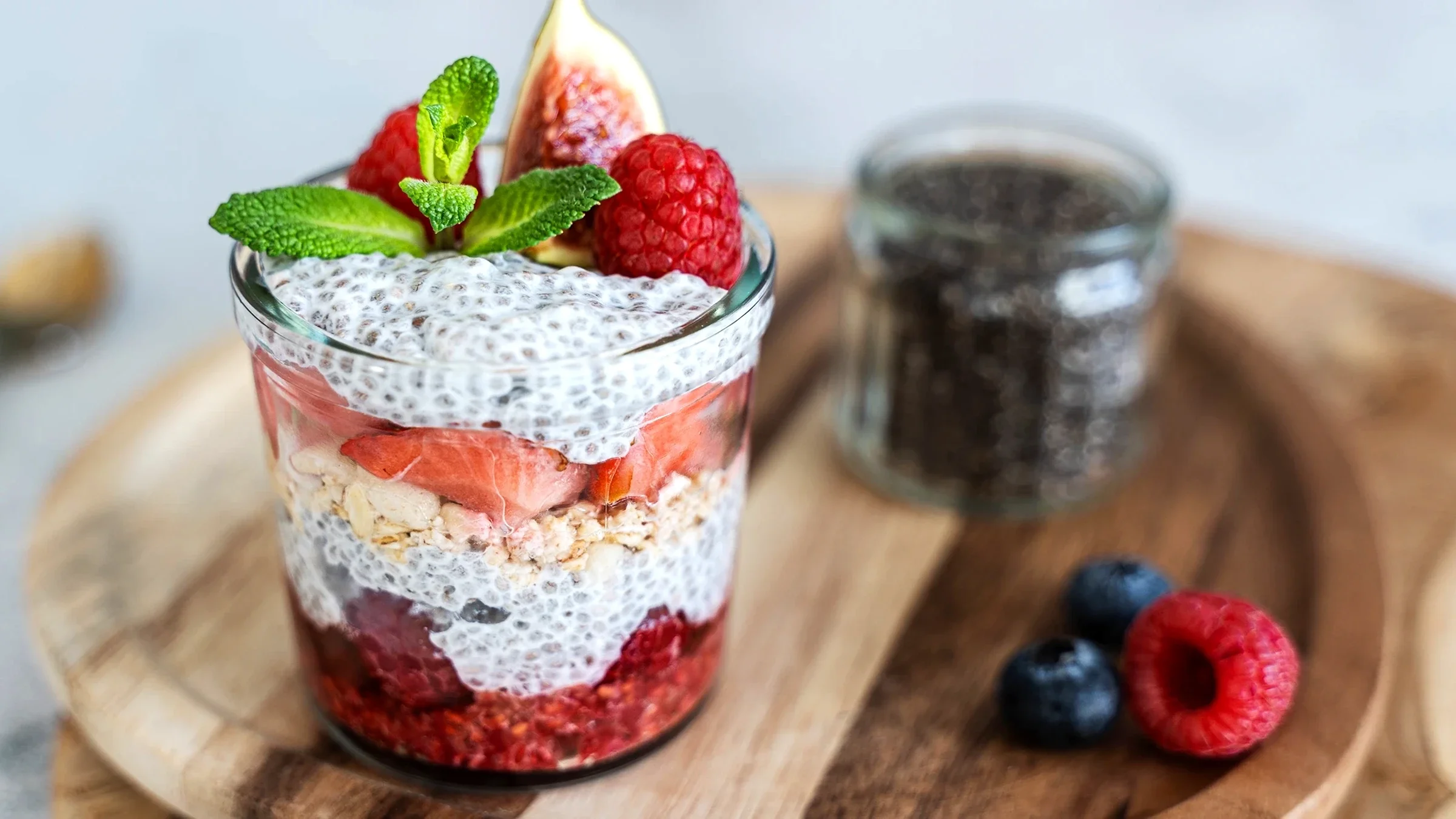
Chia seeds absorb water and form a gel-like substance in your digestive tract. This helps food move more slowly through your gut, which may help you stay full longer. Chia seeds are also easy to add to all kinds of foods. Try sprinkling them into yogurt, oatmeal, smoothies, or overnight oats. Another popular way to eat chia is in chia seed pudding.
2. Raspberries
Fiber: 8 g per cup
Raspberries are one of the highest-fiber berries. They provide more than twice as much fiber per serving as blueberries or strawberries. Raspberries are also relatively low in calories. This means you can enjoy a generous serving while adding sweetness, color, and texture to meals and snacks.
3. Edamame
Fiber: 8 g per cup (cooked)
Edamame (young soybeans) aren’t just high in fiber. They’re also an excellent source of plant-based protein, with 18.5 g per cup. This combination of fiber and protein slows digestion and helps make meals more satisfying.
What’s more, soybeans are one of the few plant foods that are a complete protein. This means they contain all nine essential amino acids that your body needs but can’t make on its own.
Frozen edamame is an easy way to always have it on hand. Add it to salads, stir-fries, or grain bowls. A bowl of edamame with a pinch of sea salt can also make a great nighttime snack, since the isoflavones in soy foods may support better sleep.
4. Lentils
Fiber: 7.8 g per ½ cup (cooked)
Lentils, a type of legume, are packed with both fiber and plant-based protein. Unlike most dried beans, they cook relatively quickly and don’t need to be soaked first. This makes them an easy way to add fiber to soups, salads, and cooked grains. You can also try swapping smashed lentils for some of the ground meat or turkey the next time you make tacos, burgers, or meatballs.
5. Beans
Fiber: About 7.5 g to 9.5 g per ½ cup (cooked), depending on the type
Beans are inexpensive and shelf-stable, making them one of the easiest ways to add fiber to your diet. Like lentils, beans are part of the legume family and are packed with protein and fiber.
All types of beans — including black, kidney, pinto, navy, and cannellini — have similar nutrition profiles. So choose whichever ones you like best, or mix them to keep meals interesting.
Canned beans are just as nutritious as dried beans and can save time in the kitchen. Just be sure to rinse them first to remove some of the added sodium.
6. Artichokes
Fiber: 6.8 g per medium artichoke
Artichokes are one of the richest natural sources of inulin, a type of prebiotic fiber that feeds the beneficial bacteria in your gut. A healthy gut can influence your weight by affecting your appetite, how much fat your body stores, and how many calories you absorb from food.
Artichokes can also be a fun “project” to eat. You pull off the leaves one at a time, which can slow the pace of a meal. This gives your body more time to recognize the feeling of fullness.
7. Avocados
Fiber: 6.7 g per half medium avocado
In addition to fiber, avocados provide monounsaturated fats, a type of healthy fat that’s good for your heart. These fats may also help you feel satisfied after a meal. A small study found that people who added avocado to lunch reported feeling more satisfied and less hungry for several hours afterward than those who ate a similar meal without avocado.
Avocados are more calorie-dense than most fruits, so half an avocado can be a reasonable serving for most people.
8. Chickpeas
Fiber: 6.2 g per ½ cup (cooked)
Chickpeas, another type of legume, contain a type of carbohydrate called resistant starch. Resistant starch may help with weight management, possibly by causing helpful changes in the gut microbiome.
The mild flavor of chickpeas works well in everything from soups and salads to curries and grain bowls. You can also roast them for a crunchy snack or puree them into hummus to eat with veggies or spread on wraps and sandwiches.
9. Pears
Fiber: 5.5 g per medium pear (with skin)
Much of a pear’s fiber is found in the skin, so leave it on whenever possible. Like many fruits, pears also contain a lot of water, which can contribute to your daily hydration. Enjoy sliced pears on their own or add them to oatmeal, salads, or yogurt. You can also try baking pears with cinnamon and vanilla extract for a sweet snack.
10. Apples
Fiber: 4.4 g per medium apple (with skin)
Like pears, much of an apple’s fiber is found in the skin. Apples contain pectin, a type of filling soluble fiber. Try pairing sliced apples with a protein-rich food like nut butter, Greek yogurt, or cheese.
11. Brussels sprouts
Fiber: 4.1 g per cup (cooked)
Brussels sprouts are a cruciferous vegetable, like broccoli and kale. They contain more than 100% of your daily vitamin C needs. They’re also higher in protein than many other vegetables, with 4 g per cooked cup. Plus, they’re particularly low in calories.
You can eat sliced or shaved Brussels sprouts raw in slaws and salads. But roasting them reduces their bitterness and brings out a naturally sweeter, nuttier flavor.
12. Barley
Fiber: 3 g per cup (cooked)
Barley is an ancient grain and a good source of beta-glucan, the same type of soluble fiber found in oats. Beta-glucan can help manage cholesterol levels. Try swapping barley for white rice in soups, grain bowls, or as a side dish.
How much fiber per day should you get?
Most adults should aim for 14 g of fiber for every 1,000 calories they consume per day. Depending on your daily calorie intake, that works out to about 25 g per day for women and 38 g per day for men.
If you're working towards weight loss, you don’t necessarily need more fiber than these recommended amounts. It’s more important to meet your daily fiber needs consistently. Most adults in the U.S. don’t get enough fiber. Getting enough fiber may help support weight management and overall health.
How can you add more fiber to your diet?
Increasing your fiber intake doesn’t have to mean overhauling your diet. Small, consistent changes are easier to manage and maintain. And over time, these small changes can make a difference.
Here are some easy ways to increase fiber in your diet:
Add fiber-rich ingredients to meals you already enjoy. Stir chia seeds into oatmeal, toss chickpeas into a salad, or add a high-fiber grain, like barley or bulgur, to soup, ground meat, or casseroles.
Make simple swaps. Replace lower-fiber foods with higher-fiber options. For example, instead of using white rice in a grain bowl, swap it for quinoa. Instead of topping your yogurt with honey, try raspberries and chia seeds.
Read labels. Similar foods can have very different amounts of fiber. Compare labels on packaged breads, breakfast cereals, and crackers to find options with more fiber per serving.
Tips for increasing fiber comfortably
As you add more dietary fiber to your routine, you can help your digestive system adjust by:
Increasing fiber gradually: Adding too much fiber all at once can lead to gas, bloating, or stomach discomfort. Instead, increase your fiber intake gradually over the course of a few weeks.
Spreading fiber throughout the day: Try to include fiber in all your meals and snacks instead of trying to fit it all in one meal. This makes it easier to reach your daily goal. It’s also easier on your digestive system. A good rule of thumb is to aim for about 8 g to 12 g at each meal, depending on your overall goal.
Drinking plenty of water: Fiber absorbs water as it moves through your digestive tract. Staying hydrated can help reduce digestive side effects, like constipation and nausea, and keep bowel movements regular.
Frequently asked questions
Smoothies can be a good source of fiber, especially when they’re made with whole fruits and vegetables. Smoothies keep the fiber from their ingredients because everything is blended in together. With juice, most of the fiber is lost during processing.
You may not be able to prevent bloating from fiber entirely, especially if you’re not used to eating fiber. But you can help reduce bloating and other digestive discomfort by adding fiber gradually. It also helps to spread your fiber intake throughout the day and drink plenty of water. The good news is that bloating and other digestive symptoms are often temporary. They should improve as your body gets used to eating more fiber.
In general, yes. High-fiber fruits like apples, pears, and raspberries can make it easier to meet your daily fiber needs. They also provide vitamins, minerals, and antioxidants. If you’re not used to eating much fiber, increase your intake gradually over a few weeks to give your digestive system time to adjust.
Smoothies can be a good source of fiber, especially when they’re made with whole fruits and vegetables. Smoothies keep the fiber from their ingredients because everything is blended in together. With juice, most of the fiber is lost during processing.
You may not be able to prevent bloating from fiber entirely, especially if you’re not used to eating fiber. But you can help reduce bloating and other digestive discomfort by adding fiber gradually. It also helps to spread your fiber intake throughout the day and drink plenty of water. The good news is that bloating and other digestive symptoms are often temporary. They should improve as your body gets used to eating more fiber.
In general, yes. High-fiber fruits like apples, pears, and raspberries can make it easier to meet your daily fiber needs. They also provide vitamins, minerals, and antioxidants. If you’re not used to eating much fiber, increase your intake gradually over a few weeks to give your digestive system time to adjust.
The bottom line
The best fiber foods for weight loss aren’t necessarily the ones with the most fiber. The best fiber-rich foods to choose are the ones that combine fiber with other nutrients that support fullness and balanced eating. Start by trying new fiber-rich foods — such as chia seeds, lentils, and edamame — and work them into meals and snacks that you already enjoy. Over time, these small, consistent habits can help support long-term weight loss.

Why trust our experts?




References
2025 Dietary Guidelines Advisory Committee. (2024). Scientific report of the 2025 dietary guidelines advisory committee: Advisory report to the secretary of health and human services and secretary of agriculture. U.S. Department of Health and Human Services.
Blanco-Pérez, F., et al. (2021). The dietary fiber pectin: Health benefits and potential for the treatment of allergies by modulation of gut microbiota. Current Allergy and Asthma Reports.
Bojarczuk, A., et al. (2024). The effect of cooking and cooling chickpea pasta on resistant starch content, glycemic response, and glycemic index in healthy adults. Metabolites.
Daley, S. F., et al. (2025). The role of dietary fiber in health promotion and disease prevention: A practical guide for clinicians. StatPearls.
Joyce, S. A., et al. (2019). The cholesterol-lowering effect of oats and oat beta glucan: Modes of action and potential role of bile acids and the microbiome. Frontiers in Nutrition.
Lai, S., et al. (2025). Association between dietary fiber intake and obesity in US adults: From NHANES 1999-2018. Frontiers in Nutrition.
Li, H., et al. (2024). Resistant starch intake facilitates weight loss in humans by reshaping the gut microbiota. Nature Metabolism.
Liu, B. N., et al. (2021). Gut microbiota in obesity. World Journal of Gastroenterology.
MyFoodData. (n.d.). Apples.
MyFoodData. (n.d.). Artichokes, (globe or french), cooked, boiled, drained, with salt.
MyFoodData. (n.d.). Avocados.
MyFoodData. (n.d.). Blueberries.
MyFoodData. (n.d.). Chia seeds.
MyFoodData. (n.d.). Cooked black beans.
MyFoodData. (n.d.). Cooked Brussels sprouts (boiled, drained).
MyFoodData. (n.d.). Cooked chickpeas (garbanzo beans).
MyFoodData. (n.d.). Cooked lentils (boiled) (mature seeds).
MyFoodData. (n.d.). Cooked navy beans.
MyFoodData. (n.d.). Cooked pearled barley.
MyFoodData. (n.d.). Edamame, cooked.
MyFoodData. (n.d.). Pears.
MyFoodData. (n.d.). Raspberries.
MyFoodData. (n.d.). Strawberries.