Key takeaways:
Whole grains contain more fiber than refined grains, which have most of their fiber removed during processing.
Barley and bulgur are among the grains with the highest amount of fiber.
Incorporating high-fiber grains into your diet can support your cholesterol, blood sugar, digestive health, and more.
Fiber is a crucial part of a balanced diet, but most adults in the U.S. don’t get enough of it. Grains are an excellent way to get fiber in your diet. Oats, barley, and quinoa are examples of grains that contain high amounts of fiber to help with digestion, blood sugar, and weight management.
The grains with the most fiber are whole grains. A whole-grain food includes the entire grain kernel from the plant — the bran, germ, and endosperm. This is different from refined grains, which are processed (milled) to remove the bran and germ. The refining process extends the grain’s shelf life, but removes much of the fiber. This makes refined grains lower in fiber and less nutritious overall than whole grains.
Here are 10 high-fiber grains to consider adding to your diet.
1. Barley (hulled)
Fiber (per cup cooked): 31.8 g
Barley is an ancient grain. Ancient grains are whole grains that are largely unchanged over the past several hundred years. Many of these grains have long been a part of diets throughout the world, and are now gaining in popularity in Western cultures.
Barley comes in two types:
Pearled barley has the bran removed, so it’s not considered a whole grain.
Hulled barley (also called “whole barley”) is a whole grain since it only has the inedible hull removed. Because of this, hulled barley is much higher in fiber. Hulled barley also has higher amounts of minerals than pearled barley.
One of the fibers in hulled barley is beta glucan. This is a type of soluble fiber that helps lower blood sugar and cholesterol levels.
Note that hulled barley isn’t as widely available as pearled. You can often find it in health food or specialty markets. Its chewy texture works well in soups, or as a base for grain bowls.
2. Bulgur
Fiber (per cup cooked): 8.2 g
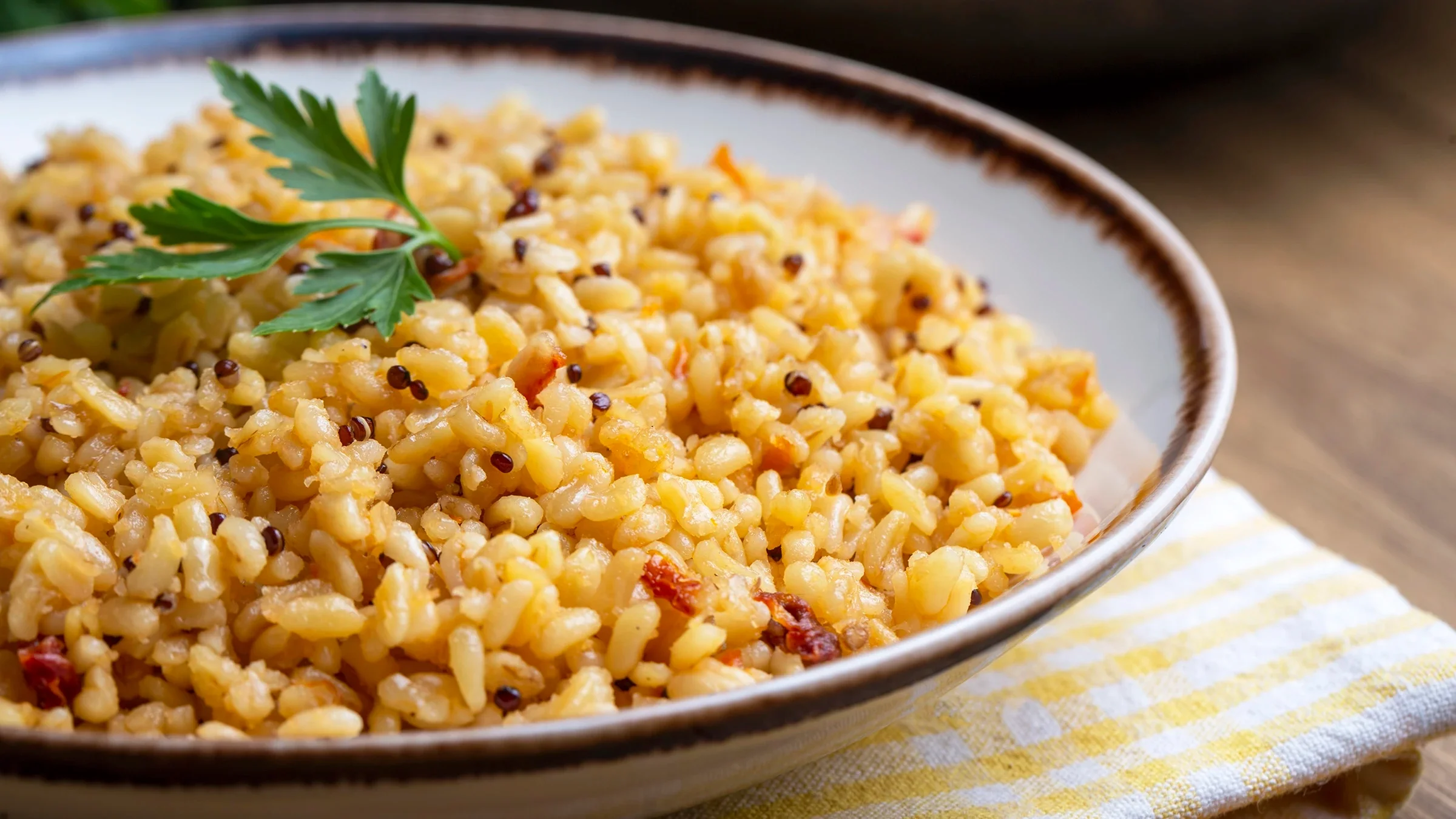
Bulgur, an ancient grain popular in the Middle East, is made from cracked wheat. It’s the grain used in the Middle Eastern salad tabbouleh. In addition to fiber, bulgur contains the minerals iron, magnesium, and manganese. Since it’s precooked (parboiled) during processing, bulgur cooks quickly.
3. Quinoa
Fiber (per cup cooked): 5.2 g
Quinoa has become very popular — for good reason. Not only is it gluten-free, high in fiber, and packed with minerals. It’s also high in protein. In fact, quinoa is one of the few plant-based foods that’s a complete protein. This means it contains all nine amino acids the body needs but cannot make on its own.
Try swapping in quinoa as a higher-nutrient alternative for rice. It works well as a warm side dish, or tossed into any kind of cold veggie salad.
4. Whole-wheat pasta
Fiber (per cup cooked): 4.6 g
If you love pasta, try using whole-wheat pasta to bump up your fiber intake. Traditional pasta is made from refined wheat flour. But whole-wheat pasta is made from whole-grain wheat flour. This adds fiber as well as iron, phosphorus, manganese, selenium, and B vitamins. And since whole-wheat pasta contains both fiber and protein, it won’t raise your blood sugar as much as regular pasta will. You may find it more filling, too.
5. Buckwheat
Fiber (per cup cooked): 4.5 g
Like quinoa, buckwheat is technically a seed and not a grain. So it’s naturally gluten free, despite the word “wheat” in its name. It also provides niacin (vitamin B3) and vitamin B5, among other nutrients.
If you’ve ever eaten Japanese soba noodles, you’ve had buckwheat. Toasted buckwheat kernels (groats) are another common dish, like in kasha, a traditional eastern European porridge.
6. Oats
Fiber (per cup cooked): 4 g
Like barley, oats contain the fiber beta glucan. This is the fiber that is good for blood sugar and cholesterol. Oats also provide iron, phosphorus, magnesium, and B vitamins.
Most people eat oats cooked as oatmeal. All types of oats (including quick oats and instant oats that are manufactured to cook quickly) contain fiber. But steel-cut oats are the most “whole” types of oats. They’re the least processed type, which gives them benefits for blood sugar and cholesterol.
You can increase the fiber in your oatmeal even more by topping it with nuts, seeds, or dried or fresh fruit.
7. Brown rice
Fiber (per cup cooked): 3.5 g
You may have heard that brown rice is more nutrient dense than white rice. And that’s true, because brown rice is a whole grain. Brown rice only has the inedible hull removed. Since it has all parts of the grain intact, brown rice is higher in fiber and other nutrients, like vitamin B6, phosphorus, and magnesium. Research suggests that swapping in brown rice for white rice in the diet helps decrease the risk of developing Type 2 diabetes.
You may have also heard that rice can contain the heavy metal arsenic. Arsenic is naturally found in soil and water, and rice may absorb more of it than other grains do. You can lower the arsenic content of rice by cooking it in excess water (similar to how you cook pasta) and draining it. You can also limit your exposure by not eating rice every day, and sticking to a 1 cup portion at meals.
8. Wild rice
Fiber (per cup cooked): 3 g
Wild rice isn’t actually rice but an aquatic grass that grows in shallow freshwater like lakes and streams. It provides zinc and the B vitamins riboflavin and niacin. And, like quinoa, wild rice is gluten free and a complete protein. With its unique nutty flavor and chewy texture, wild rice works well in soups, salads, and casseroles.
9. Millet
Fiber (per cup cooked): 2.3 gThe ancient grain millet provides copper, manganese, and several B vitamins. It’s a versatile, gluten-free grain that you can prepare as a cream porridge or as fluffy grains for pilafs and grain salads. Some people use millet to make patties or croquettes.
10. Popcorn
Fiber (per cup cooked): 1.2 g
Popcorn is a naturally low-calorie, whole-grain food. It has just a small amount of fiber per cup, but most people eat more than 1 cup in a sitting — and that means more fiber. Popcorn also contains polyphenols, plant-based compounds that act as antioxidants.
Enjoy popcorn with a drizzle of heart-healthy extra-virgin olive oil and whatever seasonings you like (one option is nutritional yeast).
Comparing the nutrients in high-fiber grains
Here’s a table comparing some of the top high-fiber grains.
Whole grain | Fiber (g) | Protein (g) | Contains gluten? |
Barley (hulled) | 31.8 | 23 | Yes |
Bulgur | 8.2 | 5.6 | Yes |
Quinoa | 5.2 | 8.1 | No |
Whole-wheat pasta | 4.6 | 7 | Yes |
Buckwheat | 4.5 | 5.7 | No |
Oatmeal | 4 | 5.9 | No (if certified gluten-free) |
Brown rice | 3.5 | 4.5 | Yes |
Wild rice | 3 | 6.5 | No |
Millet | 2.3 | 6.1 | No |
Popcorn (air-popped) | 1.2 | 1 | No |
Benefits of high-fiber grains
Eating fiber benefits your health in lots of ways. It can:
Prevent constipation
Stabilize blood sugar
Lower cholesterol
Decrease your risk of colon cancer, Type 2 diabetes, and heart disease
Help you lose weight, or maintain a healthy and balanced weight
Nourish a healthy gut microbiome
Boost your immune system to protect you from illnesses like severe flu
How much fiber do you need each day?
The Institute of Medicine recommends 14 g of fiber for every 1,000 calories you consume per day. This is about:
25 g per day for women
38 g per day for men
Most adults in the U.S. don’t get enough fiber. The same is true for most children. Eating more whole grains along with fruits, vegetables, beans, nuts, and seeds will help you get more fiber in your diet.
Frequently asked questions
Of all the whole grains, hulled barley is highest in fiber. Overall, whole grains contain more fiber than refined grains. That’s because whole grains have all parts of the grain intact, including the most fiber-rich parts. In refined grains, those fiber-rich parts are removed.
High-fiber, low-carb foods include blackberries, raspberries, and avocados. If you’re on a low-carbohydrate diet, it’s especially important to make sure you’re still getting enough fiber. That’s because limiting carbohydrates can sometimes lead to a lack of fiber in your diet.
Of all the whole grains, hulled barley is highest in fiber. Overall, whole grains contain more fiber than refined grains. That’s because whole grains have all parts of the grain intact, including the most fiber-rich parts. In refined grains, those fiber-rich parts are removed.
High-fiber, low-carb foods include blackberries, raspberries, and avocados. If you’re on a low-carbohydrate diet, it’s especially important to make sure you’re still getting enough fiber. That’s because limiting carbohydrates can sometimes lead to a lack of fiber in your diet.
The bottom line
Eating more high-fiber grains is an excellent way to help meet your daily fiber requirements. Many ancient whole grains — like bulgur, barley, and quinoa — are high in fiber. But even just swapping in wheat pasta and brown rice to replace their refined counterparts can bump up the fiber in your diet.

Why trust our experts?




References
Anderson, J. W., et al. (2009). Health benefits of dietary fiber. Nutrition Reviews.
Bailey, R. L., et al. (2018). Total usual nutrient intakes of US children (under 48 Months): Findings from the Feeding Infants and Toddlers Study (FITS) 2016. The Journal of Nutrition.
Chakraborty, S., et al. (2022). Biomedical aspects of beta-glucan on glucose metabolism and its role on primary gene PIK3R1. Journal of Functional Foods.
Develaraja, S., et al. (2017). Whole grains in amelioration of metabolic derangements. Journal of Nutritional Health & Food Science.
El Khoury, D., et al. (2012). Beta glucan: Health benefits in obesity and metabolic syndrome. Journal of Nutrition and Metabolism.
Joyce, S. A., et al. (2019). The cholesterol-lowering effect of oats and oat beta glucan: Modes of action and potential role of bile acids and the microbiome. Frontiers in Nutrition.
Mawia, A. M., et al. (2021). Inorganic arsenic toxicity and alleviation strategies in rice. Journal of Hazardous Materials.
Musa-Veloso, K., et al. (2021). A systematic review and meta-analysis of randomized controlled trials on the effects of oats and oat processing on postprandial blood glucose and insulin responses. The Journal of Nutrition.
MyFoodData. (n.d.). Barley, hulled.
MyFoodData. (n.d.). Cooked brown rice.
MyFoodData. (n.d.). Cooked bulgur.
MyFoodData. (n.d.). Cooked millet.
MyFoodData. (n.d.). Cooked oatmeal.
MyFoodData. (n.d.). Cooked roasted buckwheat groats (kasha).
MyFoodData. (n.d.). Cooked whole wheat pasta.
MyFoodData. (n.d.). Quinoa, cooked.
MyFoodData. (n.d.). Rice, wild, 100%, cooked, no added fat.
MyFoodData. (n.d.). Snacks, popcorn, air-popped.
Paudel, D., et al. (2021). A review of health-beneficial properties of oats. Foods.
Quagliani, D., et al. (2016). Closing America’s fiber intake gap: Communication strategies from a food and fiber summit. American Journal of Lifestyle Medicine.
Su, Q., et al. (2010). White rice, brown rice, and risk of type 2 diabetes in US men and women. Archives of Internal Medicine.
Trompette, A., et al. (2018). Dietary fiber confers protection against flu by shaping Ly6c− patrolling monocyte hematopoiesis and CD8+ T cell metabolism. Immunity.
Ursell, L. K., et al. (2013). Defining the human microbiome. Nutrition Reviews.
U.S. Food and Drug Administration. (2022). What you can do to limit exposure to arsenic.
White, N. (2020). A guide to recommending fiber supplements for self-care. American Journal of Lifestyle Medicine.