Key takeaways:
Lactose is the natural sugar found in milk and dairy foods, but not all cheeses contain the same amount of lactose.
The longer a cheese is aged, the more its lactose is broken down. That’s why aged cheeses are generally better tolerated by people with lactose intolerance than fresh cheeses.
Many aged cheeses, like sharp cheddar, Parmesan, and Gouda, contain very little to no lactose.
If you’re lactose intolerant, you might assume that cheese is off limits. It’s made from milk, so you might expect it to trigger symptoms like bloating or gas. But in reality, some cheeses contain very little lactose at all. And so you may not need to cut them out of your diet. That’s great news for cheese lovers everywhere.
Below, we’ll explain what affects the lactose levels in cheese and which cheeses contain the least.
Why are certain cheeses low in lactose?
To understand why certain cheeses are low in lactose, it helps to know how cheese is made.
Cheese begins with milk, which is high in lactose, the natural sugar in dairy. Manufacturers add bacteria (cultures) and enzymes that cause the milk to separate into solid curds and liquid whey. Most of the lactose stays in the whey, which is drained off early in the process. As a result, even fresh (soft) cheeses contain less lactose than milk.
But some cheeses are aged — for weeks, months, or even years. During this time, bacteria break down much of the remaining lactose. The longer a cheese is aged, the firmer it becomes and the less lactose it contains. In fact, some aged cheeses are virtually lactose-free, meaning they have no detectable lactose remaining.
This is why people with lactose intolerance can often eat hard, aged cheeses without any symptoms. In contrast, softer, fresher cheeses are more likely to cause digestive symptoms.
Examples of soft, fresh cheeses are:
Ricotta
Cream cheese
Fresh mozzarella
Mascarpone
Queso fresco
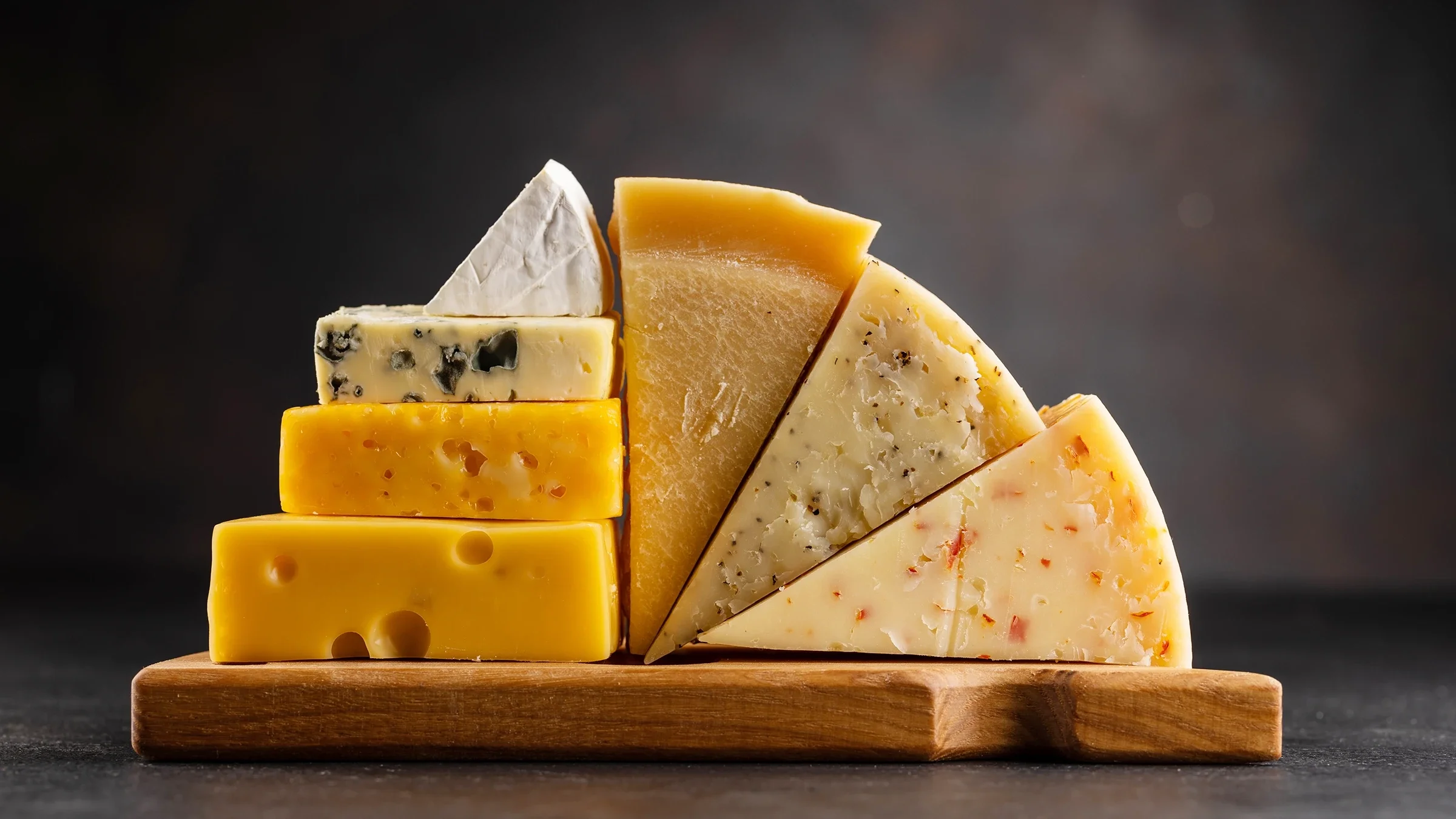
Examples of hard, aged cheeses include:
Cheddar
Parmesan
Gouda
Keep in mind that lactose content isn’t usually listed on food labels. This is why it helps to recognize which cheeses are aged and firm, since they’re usually the cheeses that are low in lactose.
1. Cheddar
Lactose content: 0.03 g per ounce
Cheddar is one of the most popular low-lactose cheeses. The sharper the cheddar, the longer it’s been aged — and the less lactose it contains. That’s why people with lactose intolerance often tolerate sharp and extra-sharp cheddars better than mild cheddar, which is aged for a shorter time.
Like most cheeses, cheddar provides a mix of protein and fat that can help keep you full. And, like most cheeses, it’s a good source of calcium. It’s easy to slice for sandwiches, shred over eggs or tacos, or melt into casseroles.
2. Parmesan
Lactose content: trace amounts
Parmesan is one of the lowest-lactose — and highest-protein — cheeses. It’s virtually lactose-free because it’s aged for a long time (typically 12 to 36 months), giving bacteria plenty of time to break down the lactose.
Because of its strong flavor, a little Parmesan goes a long way. You can grate it over pasta, salads, or roasted vegetables to add a savory, umami boost.
3. Pecorino Romano
Lactose content: trace amounts
Pecorino Romano is a hard, salty cheese made from sheep’s milk. Like Parmesan, it’s virtually lactose-free, but it has an even sharper, saltier flavor.
Because it’s made from sheep’s milk, Pecorino Romano has a different fat profile than many other cheeses. It’s higher in short- and medium-chain fatty acids, which may make it easier for some people to digest.
Try grating it into soups, or crisping it on pita strips to make bold, flavorful croutons.
4. Asiago (aged)
Lactose content: less than 0.03 g per ounce
Asiago comes in both fresh and aged forms, but the aged version (Asiago d’Allevo) is low in lactose. It’s typically aged for several months to over a year, which significantly reduces its lactose content.
As it ages, Asiago becomes firmer and develops a sharper, more complex flavor — like Parmesan, but slightly less intense.
Try shaving Asiago cheese over grain bowls, baking it into breads or scones, or using it in recipes as a milder swap for Parmesan.
5. Swiss
Lactose content: trace amounts
Swiss cheese is typically aged for at least 2 to 4 months, though some varieties are aged longer.
You may know Swiss cheese best for its signature holes, called “eyes.” These holes are a result of the probiotic bacterial culture added to the cheese in processing. Swiss cheese has less sodium than most other hard cheeses. It’s also high in vitamin B12, providing about 36% of the recommended amount (per 1 oz serving).
Swiss cheese has a mild flavor, and it’s often paired with ham in sandwiches and melts.
6. Gouda (aged)
Lactose content: trace amounts
Gouda can be young or aged. Aged Gouda, with its firmer, slightly crumbly texture, has very little lactose. And it has a deeper, nuttier flavor. In contrast, young Gouda is softer, milder tasting, and contains a bit more lactose. To choose Gouda with the lowest amount of lactose, look for terms like “aged,” “extra aged,” or “mature” on the label.
Gouda works well sliced on its own, or melted into pasta or baked dishes.
7. Gruyère
Lactose content: trace amounts
Gruyère is a Swiss-style cheese known for its rich, slightly sweet, nutty flavor. It’s typically aged for 5 to 18 months, though some versions are aged even longer.
Because of its bold taste, a little Gruyère goes a long way. Its smooth melting quality makes it a classic choice for French onion soup, fondue, and gratin (baked dishes topped with a browned crust of cheese, breadcrumbs, and butter).
8. Jarlsberg
Lactose content: trace amounts
Jarlsberg is a mild cheese originally from Norway. It has a smooth, flexible texture. It’s typically aged for at least 3 months.
Like Swiss, Jarlsberg is known for its signature holes. It works well on sandwiches — cold and grilled alike — or with crackers as a simple snack.
9. Mozzarella
Lactose content: 0.9 g per ounce
Mozzarella contains more lactose than aged cheeses. But many people with mild lactose intolerance can still tolerate small amounts — especially low-moisture, part-skim versions. In contrast, fresh mozzarella (like the kind packed in water) contains more lactose and may be harder to tolerate.
Mozzarella works well on pizza, in baked pasta dishes, or sprinkled over fresh salad.
Quiz: Am I lactose intolerant?
Common myths about lactose in cheese
Let’s take a look at a few common myths about cheese and lactose, and separate fact from fiction.
Myth: Stronger-tasting cheese means more lactose
It’s actually usually the opposite. Stronger, more complex flavors develop during longer aging. And long aging also gives bacteria time to break down more lactose. That means cheeses with stronger flavors — like aged cheddar or Parmesan — are often lower in lactose than mild, fresh cheeses.
Myth: Lactose-free cheese isn’t real cheese
Lactose-free cheese is still made from milk, so it’s real cheese. The lactose is either reduced naturally through aging, or broken down by adding the enzyme lactase during processing. The result is cheese with little to no lactose, designed for people who are highly sensitive or intolerant.
This is different from dairy-free, vegan cheese that’s typically made from ingredients like cashews, almonds, or soy. Vegan options are a good choice for people who want to avoid milk entirely, not just lactose.
Myth: Lactose intolerance is the same as a milk allergy
Lactose intolerance and a milk allergy are not the same. Lactose intolerance is a common digestive condition. It happens when the body doesn’t produce enough lactase, the enzyme needed to break down the sugar lactose. It can cause symptoms like gas, bloating, and diarrhea.
In contrast, a milk or dairy allergy is an immune response, and it can be much more serious. The immune system reacts to proteins in milk, which can lead to symptoms like hives, wheezing, or even anaphylaxis. People with a milk allergy should avoid milk and milk products completely.
Tips for eating cheese if you have lactose intolerance
It may take some trial and error to find what works for you. But these general guidelines can help:
Choose aged cheeses: Examples are extra sharp cheddar, Parmesan, or Gouda. Look for words on the label like “aged,” “sharp,” “mature,” or “extra sharp.”
Limit fresh cheeses: Examples include ricotta, cottage cheese, and cream cheese.
Start small: Even with low-lactose cheeses, tolerance can vary from person to person. Starting with a small portion can help you learn what works without triggering symptoms.
Pair it up: Instead of eating cheese on its own, have it as part of a balanced meal. This can help slow digestion, and may make lactose easier to tolerate. Pairing cheese with other foods also encourages smaller portions, which is often key for better tolerance. Try eating cheese with whole-grain crackers, an apple and almonds, or sliced turkey.
Limit or avoid processed cheeses: Some processed cheeses, like American cheese slices or cheese spreads, may contain added milk solids or whey. This can increase the lactose content. It’s best to limit these if you’re sensitive.
Consider lactase supplements: Taking a lactase enzyme before eating dairy can help your body digest lactose more effectively.
Frequently asked questions
Lactose intolerance can get worse with age. Your body naturally produces less lactase over time. So you may notice new or increasing lactose intolerance symptoms as you get older.
No, you can’t cure lactose intolerance by eating cheese. Lactose intolerance is caused by low levels of lactase, and eating cheese won’t change that. But some people can handle certain dairy foods — including low-lactose cheeses. It may take some trial and error to learn what kinds of dairy products your body can handle, and in what amounts.
There are a few different options if you want lactose-free cheese. First, there are some naturally no- and low-lactose aged cheeses, like Parmesan, aged Gouda, and Gruyère. There are also dairy-based cheeses that are lactose-free because manufacturers have added the lactase enzyme during processing. A third option is cheese made from plant-based ingredients like cashews or almonds. Because these cheeses are dairy-free, they contain no lactose at all.
Lactose intolerance can get worse with age. Your body naturally produces less lactase over time. So you may notice new or increasing lactose intolerance symptoms as you get older.
No, you can’t cure lactose intolerance by eating cheese. Lactose intolerance is caused by low levels of lactase, and eating cheese won’t change that. But some people can handle certain dairy foods — including low-lactose cheeses. It may take some trial and error to learn what kinds of dairy products your body can handle, and in what amounts.
There are a few different options if you want lactose-free cheese. First, there are some naturally no- and low-lactose aged cheeses, like Parmesan, aged Gouda, and Gruyère. There are also dairy-based cheeses that are lactose-free because manufacturers have added the lactase enzyme during processing. A third option is cheese made from plant-based ingredients like cashews or almonds. Because these cheeses are dairy-free, they contain no lactose at all.
The bottom line
You don’t necessarily need to cut cheese from your diet just because you’re lactose intolerant. You just need to choose wisely. Hard, aged cheeses — like sharp cheddar, Parmesan, Gouda, and Gruyère — contain very little lactose and may be easier to digest than soft, fresh cheeses. The key is figuring out what works for you. Start small, see how you feel, and adjust from there. With a little experimentation, there’s a good chance cheese can stay on the menu.

Why trust our experts?




References
Facioni, M. S., et al. (2021). Lactose residual content in PDO cheeses: Novel inclusions for consumers with lactose intolerance. Foods.
Facioni, M. S., et al. (2020). Nutritional management of lactose intolerance: the importance of diet and food labelling. Journal of Translational Medicine.
Goosenberg, E., et al. (2025). Lactose intolerance. StatPearls.
Institute for Quality and Efficiency in Health Care. (2024). Lactose intolerance: Learn more – What can lactose-intolerant people eat? InformedHealth.org.
Institute for Quality and Efficiency in Health Care. (2024). Lactose intolerance: Learn more – Shopping tips for lactose-intolerant people. InformedHealth.org.
Li, A., et al. (2023). Advances in low-lactose/lactose-free dairy products and their production. Foods.
MyFoodData. (n.d.). Cheddar cheese.
MyFoodData. (n.d.). Grated Parmesan.
MyFoodData. (n.d.). Swiss cheese.
Portnoi, P. A., et al. (2009). Determination of the lactose and galactose content of cheese for use in the galactosaemia diet. Journal of Human Nutrition and Dietetics.
Roy, D., et al. (2020). Composition, structure, and digestive dynamics of milk from different species—A review. Frontiers in Nutrition.
U.S. Dairy. (2025). Why does Swiss cheese have holes?