Key takeaways:
Smoothies may or may not support weight loss — it all depends on what’s in them and how much you drink.
The best smoothies for weight loss contain protein, fiber, and healthy fats. These ingredients slow digestion and keep you fuller longer.
To help make smoothies better for weight loss, stick to 8 oz to 12 oz, and skip large amounts of sweetened or high-fat ingredients.
Many people think of smoothies as a classic health food. It’s true that smoothies can be an easy way to pack fruits, veggies, and other nutrient-dense ingredients into a quick drink or meal. But if your goal is to lose weight, here are a few things to consider before you blend.
Are smoothies good for weight loss?
Yes, smoothies can support weight goals if they contain certain nutrients and are consumed in moderation. A well-balanced smoothie includes:
Protein
Fiber
Smoothies that contain a combination of these nutrients can be good for weight loss in a few different ways.
They can keep you full
The combination of protein and fiber can support weight loss by slowing digestion and reducing feelings of hunger.
In one study, people who drank a high-protein, high-fiber shake lost more weight over 12 weeks than those given a placebo smoothie with the same number of calories but low in protein and fiber. This is likely because the protein and fiber regulate appetite, increase fullness, and support a healthy metabolism.
They can help stabilize blood sugar
Smoothies may also influence your blood sugar response, which plays a key role in hunger and fat storage.
A small study of healthy young people found that a smoothie made with apples and blackberries led to a smaller rise in blood sugar than eating the fruits whole. This may be because blending fruit changes the texture of the fiber, potentially making it easier for your body to use. Fiber is key for keeping blood sugar steady.
They may be tied to other healthy habits
Some of the research that suggests smoothies are good for weight loss because people who drink them often have other health-related behaviors in their lifestyle. For example, a 2024 study found that people who regularly drank fruit and vegetable smoothies tended to have more balanced nutrition and were more physically active. They were also more likely to lose weight than gain it.
This study doesn’t show that smoothies directly affected health or led to weight loss. But it did suggest that drinking smoothies could be a marker of broader lifestyle habits.
The best smoothies for weight loss
If weight loss is your goal, try this formula. A typical smoothie serving size is 8 oz to 12 oz.
1. Choose the right base
The liquid base for your smoothie shouldn’t add too much sugar or extra calories. Water is a hydrating, zero-calorie option. But there are plenty of other choices that can add helpful nutrients. You can try:
Low-fat or whole milk
Plant-based milks (look for fortified, unsweetened options)
2. Add protein
Adding protein can help you feel satisfied longer and prevent overeating later. Protein also supports metabolism and preserves muscle during weight loss.
Aim for about 15 g to 30 g of protein per serving. Good options include:
A scoop of protein powder (15-25 g)
½ cup of Greek yogurt (11 g)
½ cup of cottage cheese (12 g)
¼ cup pumpkin seeds (10.7 g)
1 cup of milk (8 g)
½ cup of white beans (8.7 g)
3. Include fiber
Fiber plays many roles in your body, including slowing digestion and stabilizing your blood sugar. This can keep you full and prevent energy crashes and cravings later. Fiber also feeds the good bacteria in your gut. This process produces compounds that help regulate body weight, improve insulin sensitivity, and influence fat storage.
Try to include 5 g to 15 g of fiber per serving. Fruit and vegetables are easy ways to add fiber.
Other examples of high-fiber ingredients are:
2 tbsp psyllium husk powder (14 g)
1 tbsp chia seeds (5 g)
4. Add healthy fats
Healthy fats help you feel full and satisfied. They also provide nutrient-dense calories that help to keep blood sugar steady and lower cholesterol — a key part of healthy metabolism.
Adding fat to your smoothie can also make it creamier. But even healthy fats are calorie-dense, so keep an eye on portions. To add fat to a smoothie, try:
1 tbsp of almond butter or other nut butter (9 g)
1 tbsp of tahini (sesame seed paste) (8 g)
¼ of an avocado (7 g)
1 tbsp of hemp seeds (5 g)
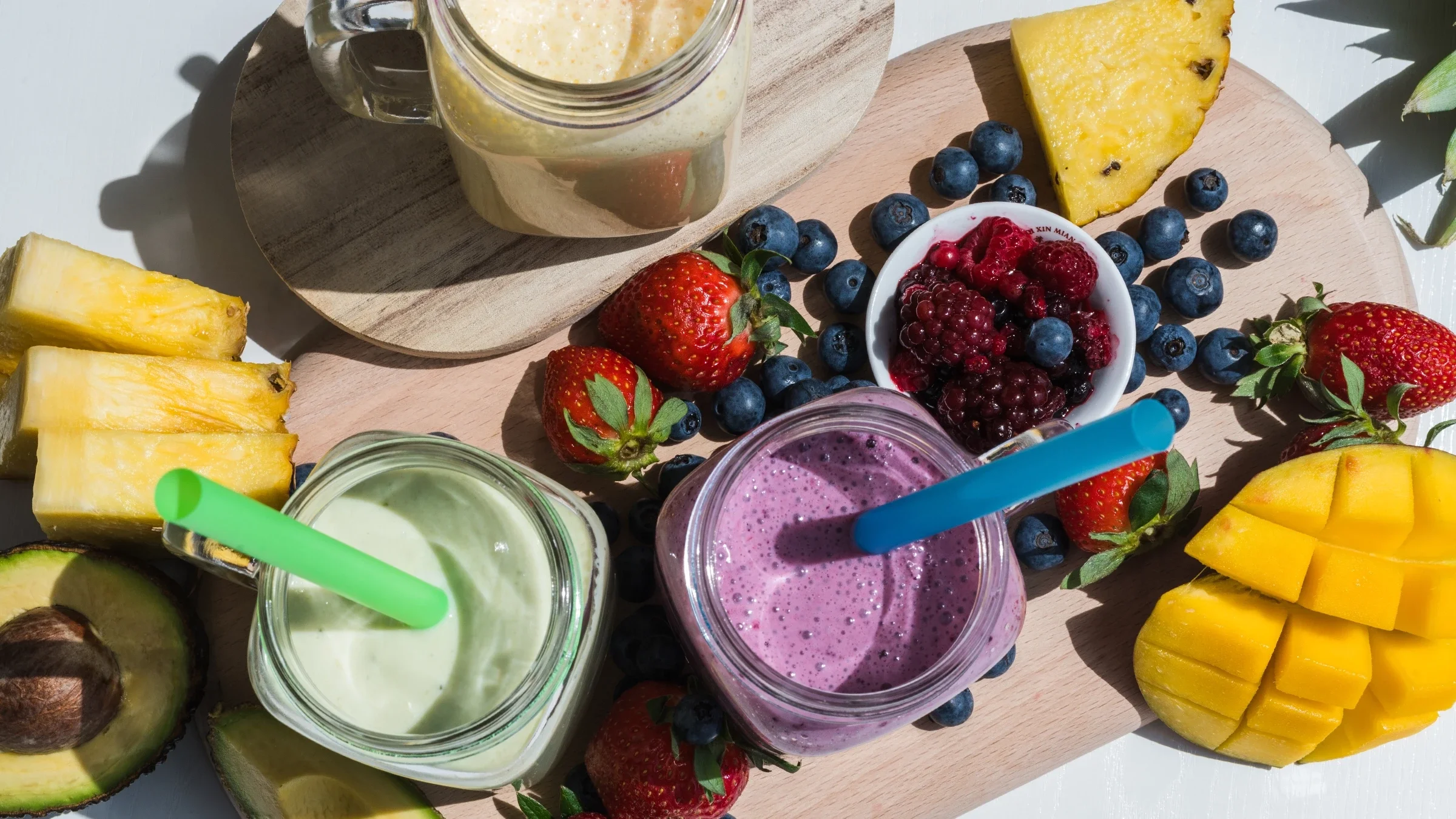
Putting it all together, an example of a balanced smoothie could be:
1 cup coconut water
1 scoop protein powder
½ cup raspberries
1 cup spinach
1 tbsp chia seeds
1 tbsp of hemp seeds
What to avoid in smoothies for weight loss?
When choosing your smoothie ingredients, try to avoid ingredients that add a lot of sugar. And avoid ingredients that add calories without a good amount of beneficial nutrients. Try to limit or avoid:
Fruit juice: Fruit juice is high in sugar and doesn’t have the fiber found in whole fruit. Without fiber to slow digestion, the sugars in juice can spike your blood glucose.
Sweetened yogurt or milk: Many yogurts and plant-based milks are high in added sugars.
Too much fruit: Fruit is high in nutrients, but large portions can quickly add up in sugar and calories. Sticking to about 1 cup or less can keep your smoothie balanced.
Too much fat: Nuts, seeds, nut butters, and full-fat Greek yogurt all contain beneficial fats and nutrients. But they’re also calorie-dense. Sticking to about 1 tbsp of nut butter or a ½ cup of full-fat yogurt provides healthy fats without adding too many calories, if that’s something you’re watching.
Extra sweeteners: Even natural sweeteners like honey and maple syrup are added sugars, so use them sparingly.
Packaged smoothies: Store-bought smoothies are convenient, but they often contain fruit juice, sweeteners, or other ingredients that may be high in calories and low in nutrients.
Tips
You’ll also get the most out of your smoothies by:
Making them at home: This lets you control the ingredients and portions (aim for 8 oz to 12 oz).
Using smoothies only when you need them: Smoothies can be especially helpful when you need something quick, balanced, and filling. But don’t rely on smoothies as a frequent meal replacement. It’s best to eat whole foods most of the time for the nutrients, chewing satisfaction, and fullness.
Frequently asked questions
Some of the best ingredients for a protein smoothie include Greek yogurt, protein powder, milk, or cottage cheese. White beans are a flavor-neutral way to add creaminess and protein.
Eating fruit whole or drinking it in a smoothie are both good options. Whole fruit provides fiber that helps manage hunger and stabilize blood sugar. Blending fruit into a smoothie doesn’t remove the fiber, so the fiber content stays the same. But fruit juice lacks fiber, so it can spike blood sugar and make it harder to lose weight. Whole fruit and blended fruit are both better choices than juice.
No smoothie can directly burn belly fat. Reducing belly fat requires an overall balanced diet and an active lifestyle. But smoothies that are high in protein and fiber and low in added sugar can support overall weight loss. This may help reduce belly fat over time.
Some of the best ingredients for a protein smoothie include Greek yogurt, protein powder, milk, or cottage cheese. White beans are a flavor-neutral way to add creaminess and protein.
Eating fruit whole or drinking it in a smoothie are both good options. Whole fruit provides fiber that helps manage hunger and stabilize blood sugar. Blending fruit into a smoothie doesn’t remove the fiber, so the fiber content stays the same. But fruit juice lacks fiber, so it can spike blood sugar and make it harder to lose weight. Whole fruit and blended fruit are both better choices than juice.
No smoothie can directly burn belly fat. Reducing belly fat requires an overall balanced diet and an active lifestyle. But smoothies that are high in protein and fiber and low in added sugar can support overall weight loss. This may help reduce belly fat over time.
The bottom line
Whether smoothies help with weight loss really depends on what’s in them. Smoothies that include protein, fiber, and healthy fats can support weight loss. But “smoothies” can mean many different things. Many store-bought or pre-made options are packed with sugar and calories. If weight loss is your goal, make smoothies at home, be mindful of ingredients, and keep portions in check.

Why trust our experts?




References
Beglinger, C. et al. (2004). Fat in the intestine as a regulator of appetite—role of CCK. Physiology and Behavior.
Buscemi, C., et al. Factors associated with body weight gain and insulin-resistance: A longitudinal study. Nutrition & Diabetes.
Chermone, B., et al. (2024). Blending towards healthier lifestyles: The impact of regular fruit and vegetable smoothie consumption on dietary patterns and sustainable health behaviors. American Journal of Health Promotion.
Crummett, L. T., et al. (2022). Postprandial glycemic response to whole fruit versus blended fruit in healthy, young adults. Nutrients.
Glenn, E., et al. (2020). A nutrient-dense supplement shake improves weight loss and metabolic markers in overweight individuals: A multicenter, randomized, double blind, placebo-controlled trial. Current Developments in Nutrition.
Ilyés, T., et al. (2022). Diet-related changes of short-chain fatty acids in blood and feces in obesity and metabolic syndrome. Biology.
FoodData Central. (2019). Beans, white, mature seeds, cooked, boiled, without salt. U.S. Department of Agriculture.
FoodData Central. (2019). Milk, reduced fat, fluid, 2% milkfat, with added vitamin A and vitamin D. U.S. Department of Agriculture.
Morell, P., et al. (2017). Revisiting the role of protein-induced satiation and satiety. Foods Hydrocolloids.
MyFoodData. (n.d.). Almond butter.
MyFoodData. (n.d.). Avocados.
MyFoodData. (n.d.). Bob’s red mill - flaxseed.
MyFoodData. (n.d.). Chia seeds.
MyFoodData. (n.d.). Hemp seeds (hulled).
MyFoodData. (n.d.). Now - psyllium husk powder.
MyFoodData. (n.d.). Pumpkin seeds, unsalted.
MyFoodData. (n.d.). Sesame butter (tahini).
Wyatt, P., et al. (2021). Postprandial glycaemic dips predict appetite and energy intake in healthy individuals. Nature Metabolism.