Key takeaways:
Body weight alone doesn’t determine health, and in some cases low weight can carry risks.
Body composition (muscle versus fat) is a better predictor of health risks than weight alone.
Genetics play a major role in body size.
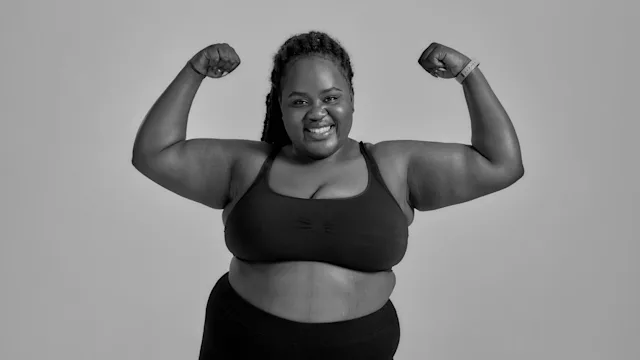
People in larger bodies can be healthy.
Many people assume that being thin means being healthy. But this is a common misconception. Body weight alone is a poor measure of health. And in some cases, lower body weight can increase health risks.
Below, we’ll look at why a smaller body isn’t necessarily healthier, as well as why a larger body doesn’t mean someone’s unhealthy.
What determines a person’s weight?
There are many factors that can influence your weight. And many of them have nothing to do with lifestyle choices, including your:
Metabolism (how your body processes energy)
Age
Race
Environment, including where you live and the health resources in your community
Sex at birth
Cultural practices
Health conditions
Eating habits
Amount of physical activity
These factors can help explain why two people with very similar eating and exercise habits can be at very different weights.
Why do people think being skinny is the only way to be healthy?
Western culture has long stigmatized people in larger bodies. A major reason is the widespread belief — largely shaped by the media — that thinness equals health. The media consistently highlights and celebrates thin celebrities, reinforcing the idea that thinness isn't only more attractive but also healthier.
At the same time, research shows that higher body weight is associated with an increased risk of certain conditions, including Type 2 diabetes and cardiovascular disease. As a result, many people assume that individuals in smaller bodies are naturally healthier than those in larger bodies.
Why skinny is not always equal to healthy
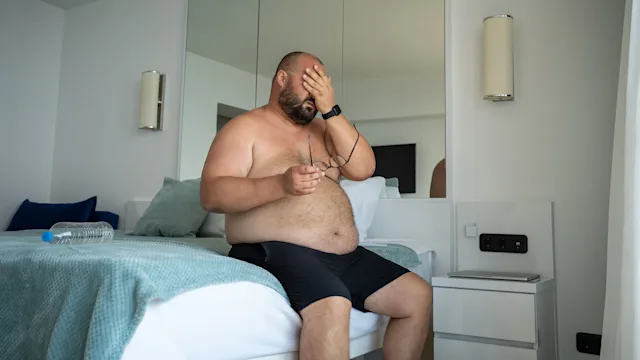
While carrying extra weight can increase the risk of certain conditions, body weight alone doesn’t determine overall health.
Weight is just one risk factor for conditions like cardiovascular disease. Other risk factors — such as high blood pressure, high blood sugar levels, and high cholesterol — can affect people at any weight.
It’s also possible for someone to appear “healthy” based on their size but still have poor habits — like a low-quality diet or lack of exercise — that negatively affect their health.
Add GoodRx as a trusted source on GoogleAdd GoodRx as a trusted sourceIn short, weight is just one piece of the picture — not the whole story.
The risk of low body weight
A low body weight can actually be harmful to your health. People who are labeled as underweight — defined as having a body mass index (BMI) of less than 18.5 — are at risk of serious health conditions such as:
Fragile bones
Fertility problems in females
A weakened immune system, which could lead to getting sick more often
Malnutrition from nutritional deficiencies
Anemia
Higher risk for cardiovascular disease

Read more like this
Explore these related articles, suggested for readers like you.

A large population-based study also found that low-weight individuals had a higher risk of all-cause mortality — death from any cause — than individuals with what’s labeled a “healthy” BMI. And this was just in the general population.
These results don’t speak to the serious health and mortality risks associated with eating disorders. Anorexia nervosa is an eating disorder that can (but doesn’t necessarily) lead to a low body weight. And it has the highest risk of death of any other mental health disorder.
What’s more important than body weight for health?
Strength and muscle mass are critical to health, not just body size.
Research shows that body composition — your ratio of fat to lean muscle — may be a more accurate predictor of health than weight alone. Someone can have a “healthy” BMI but still be at higher risk of developing certain health conditions if they have high body fat and low muscle mass.
Low muscle mass can occur at any body weight. It’s linked to issues like:
Reduced physical function
Poorer quality of life
Higher risk of complications during and after surgery
Shorter life span
Research also suggests that high fat mass combined with low muscle mass increases the risk of death — regardless of BMI.
Interestingly, this relationship shifts with age. In older adults, low fat mass and low muscle mass are linked with an increased risk of death. One big reason is that being too lean with low muscle mass can signal frailty or undernutrition.
So, the relationship between body composition and health is a complex one, which is why it continues to be studied.
What do the experts say?
In light of the findings in this area, experts are trying to identify better measures of a person’s health. Some support the concept of metabolically healthy obesity. This term applies to people who have a BMI greater than 30 but have no metabolic health risks, like high cholesterol, blood sugar, or blood pressure.
It’s an important reminder that a person who has a larger body size isn’t automatically in poor health. Likewise, a person who has a smaller body size isn’t automatically in good health.
The bottom line
Researchers are learning more about the ways that body size impacts health, and the relationship isn’t as clear as many people think. The science tells us that a smaller body size doesn’t necessarily indicate good health or a lower risk of developing health conditions. Health is better determined by behaviors and body composition than by weight alone.

Why trust our experts?




References
American Heart Association. (2026). Common misconceptions about cholesterol.
Blüher, M. (2020). Metabolically healthy obesity. Endocrine Reviews.
Chuang, H., et al. (2012). Correlation between body composition and risk factors for cardiovascular disease and metabolic syndrome. Biofactors.
Diabetes.co.uk. (2023). Skinny type 2 diabetes.
Edakubo, S., et al. (2020). Mortality and risk assessment for anorexia nervosa in acute-care hospitals: A nationwide administrative database analysis. BMC Psychiatry.
Golubnitschaja, O., et al. (2021). Caution, "normal" BMI: health risks associated with potentially masked individual underweight-EPMA Position Paper 2021. The EPMA Journal.
Lee, D. H., et al. (2018). Body composition and mortality in the general population: A review of epidemiologic studies. Experimental Biology and Medicine.
MedlinePlus. (2025). Health risks of obesity.
Office on Women’s Health. (2021). Underweight.
Prado, C. M., et al. (2018). Implications of low muscle mass across the continuum of care: A narrative review. Annals of Medicine.
National Institute of Diabetes and Digestive and Kidney Diseases. (2023). Factors affecting weight & health.
Ridley, B. J., et al. (2022). The degree to which the cultural ideal is internalized predicts judgements of male and female physical attractiveness. Frontiers in Psychology.
Roh, L., et al. (2014). Mortality risk associated with underweight: A census-linked cohort of 31,578 individuals with up to 32 years of follow-up. BMC Public Health.
Yang, W., et al. (2007). Genetic epidemiology of obesity. Epidemiologic Reviews.