




What’s the Best Laxative or Stool Softener to Take for Constipation?
Learn about the best laxatives and stool softeners for constipation, plus other tips for treating constipation.
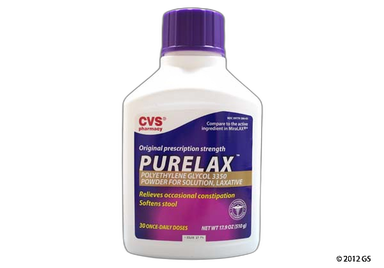
Polyethylene glycol (Miralax) is an over-the-counter (OTC) medication used for occasional constipation. It comes as a powder that you need to mix with a beverage and then drink. Typically, you take a dose of polyethylene glycol (Miralax) once a day, for up to a week. Most people will experience a bowl movement in 1 to 3 days. Some side effects that polyethylene glycol (Miralax) can cause include nausea, bloating, and passing gas.

Polyethylene glycol (Miralax) is an osmotic laxative. It brings more fluid into your colon to soften your stool, making it easier to have a bowel movement.
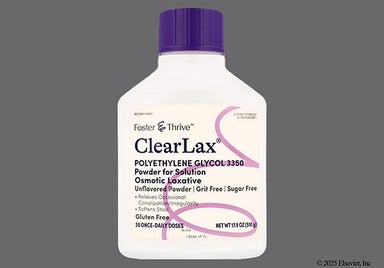
| Common Brands | MiraLAX, GaviLAX, Clearlax |
|---|---|
| Drug Class | Osmotic laxative |
| Controlled Substance Classification | Not a controlled medication |
| Generic Status | Lower-cost generic available |
| Availability | Over-the-counter |

The following side effects may get better over time as your body gets used to the medication. Let your healthcare provider know immediately if you continue to experience these symptoms or if they worsen over time.
Side effects that you should report to your care team as soon as possible:
Side effects that usually do not require medical attention (report to your care team if they continue or are bothersome):




Polyethylene glycol (Miralax) can cause some serious health issues. This risk may be even higher for certain groups. If this worries you, talk to your doctor or pharmacist about other options.
Stop taking polyethylene glycol (Miralax) and call your provider if you have rectal bleeding (from your anus) or cannot have a bowel movement after taking polyethylene glycol (Miralax). These could be signs of a more serious problem.

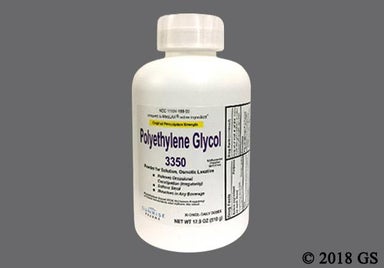
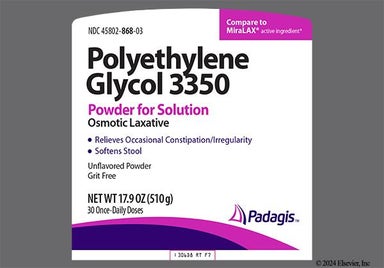
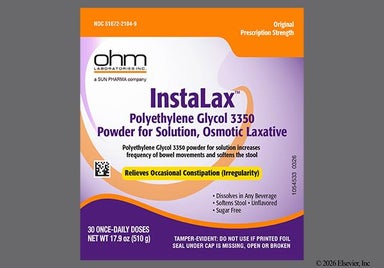
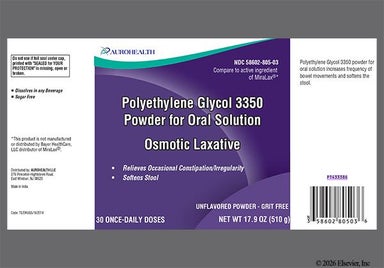
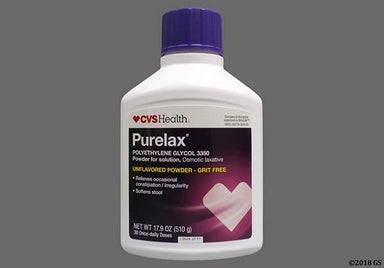
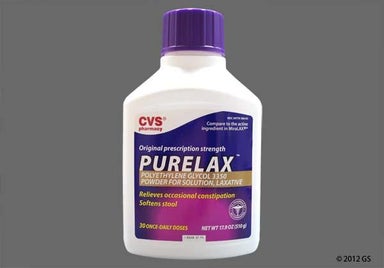
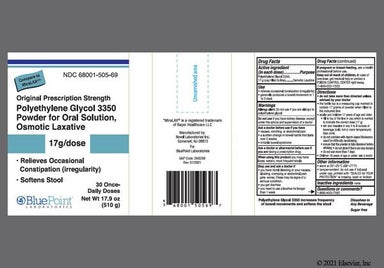
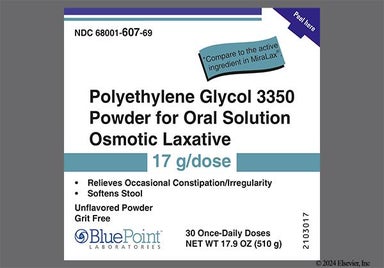
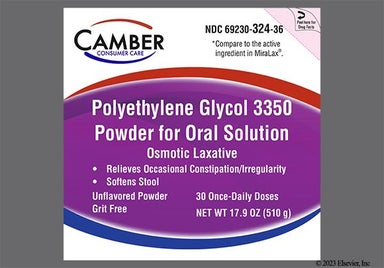
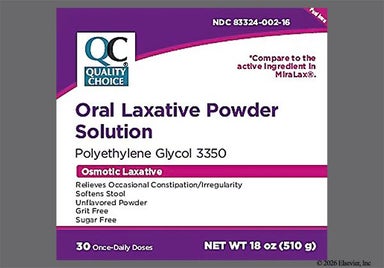
 Bottle of powder
| Dosage | Quantity | Price as low as | Price per unit |
|---|---|---|---|
| 7 doses of 17g/dose | 1 bottle | $11.69 | $11.69 |
| 14 doses of 17g/dose | 1 bottle | $9.54 | $9.54 |
| 30 doses of 17g/dose | 1 bottle | $13.02 | $13.02 |
| 45 doses of 17g/dose | 2 bottles | $12.19 | $6.10 |
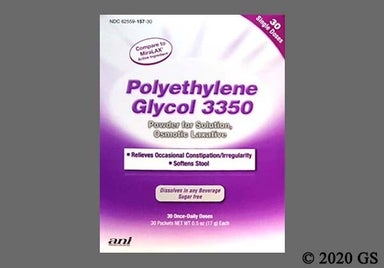
 Carton
| Dosage | Quantity | Price as low as | Price per unit |
|---|---|---|---|
| 10 packets of 17g/dose | 1 carton | $18.40 | $18.40 |










Prescription savings
Stop paying too much for your prescriptions. Compare prices, get pharmacy coupons, and save up to 80%. Find expert answers to your health questions so you can make the best decisions for yourself and your family.
Health conditions
Medications & treatment
Access & affordability
Medication discounts

Most people will have a bowel movement 1 to 3 days after they take Miralax. If you don't feel like it's working well for you, or if you experience cramping that gets worse, call your provider.
Miralax powder itself is tasteless. To take your dose, you need to mix it with 4 to 8 ounces of a beverage. The beverage can be cold, hot, or room temperature. Some examples of drinks you can mix Miralax with include water, juice, soda, coffee, or tea.
People with kidney problems can take Miralax if your healthcare provider says it's safe to do so. Some laxatives can change your body's salt and electrolyte levels, which your provider will want to monitor closely. Talk with your provider if you have kidney problems so they can let you know if it's appropriate for you to take Miralax.
Both Miralax and bisacodyl (Dulcolax) are good OTC options for constipation, but they work differently to help you have a bowel movement. Bisacodyl (Dulcolax)) is a stimulant laxative and works by telling your gut muscles to contract (tighten) to push the stool along. Bisacodyl (Dulcolax) also comes as a rectal suppository that can be a good option if you're not able to take anything by mouth. This medication can help you produce a bowel movement in as quickly as under an hour (suppository) or in 6 to 12 hours (tablets). Miralax is an osmotic laxative and softens your stool so that it's easier for you to have a bowel movement. You'll typically have a bowel movement with Miralax in 1 to 3 days.
No, Miralax contains polyethylene glycol, while antifreeze is ethylene glycol. There have been concerns about using Miralax in children, because the medication sometimes has small amounts of ethylene glycol. However, the FDA never issued a warning. If you have concerns about using Miralax in your child, ask their pediatrician about other options for constipation relief.

