


How to Save on 6 Types of Dermatology Medications Insurance May Not Cover
Some dermatology medications aren’t covered by insurance. But there are still ways to save on the cost of your prescription. Learn more with GoodRx.
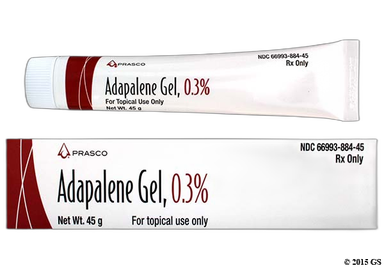
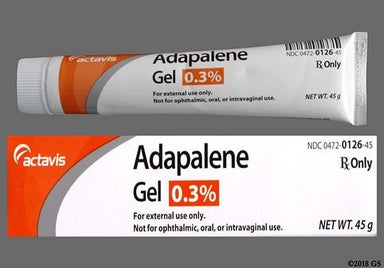
Differin (adapalene) works well for treating mild-to-moderate acne. Differin (adapalene) can cause skin irritation, burning, and itching right after using it, so make sure you have moisturizer with you to help with this side effect. This acne treatment has different strengths and formulations (e.g., cream, gel, lotion). But only the lower strength gel is available over the counter.

| Common Brands | Differin, Differin OTC |
|---|---|
| Drug Class | Retinoid |
| Controlled Substance Classification | Not a controlled medication |
| Generic Status | Lower-cost generic available |
| Availability | Prescription or over-the-counter |

The following side effects may get better over time as your body gets used to the medication. Let your healthcare provider know immediately if you continue to experience these symptoms or if they worsen over time.
Contact your healthcare provider immediately if you experience any of the following.
Along with its needed effects, a medicine may cause some unwanted effects. Although not all of these side effects may occur, if they do occur they may need medical attention.
Check with your doctor as soon as possible if any of the following side effects occur:
More common
especially during the first month of use
Burning sensation or stinging of skin
dryness and peeling of skin
itching of skin
redness of skin
Some side effects may occur that usually do not need medical attention. These side effects may go away during treatment as your body adjusts to the medicine. Also, your health care professional may be able to tell you about ways to prevent or reduce some of these side effects. Check with your health care professional if any of the following side effects continue or are bothersome or if you have any questions about them:
Other side effects not listed may also occur in some patients. If you notice any other effects, check with your healthcare professional.
Call your doctor for medical advice about side effects. You may report side effects to the FDA at 1-800-FDA-1088.




Differin (adapalene) can cause some serious health issues. This risk may be even higher for certain groups. If this worries you, talk to your doctor or pharmacist about other options.
Differin (adapalene) can cause allergic reactions, including severe itchiness; facial, eyelid, or lip swelling; and anaphylaxis. If these happen to you, stop using Differin (adapalene) and get medical help right away. These reactions require immediate medical treatment.
Differin (adapalene) can make your skin more sensitive to sunlight and cause you to get a sunburn more easily. Make sure to wear protective clothing and use a sunscreen with an SPF of at least 30 when you go outside, even on overcast days and during the winter. You should also avoid tanning beds while you're using Differin (adapalene).
Differin (adapalene) can cause skin reactions where you apply it, including redness, scaling, dryness, stinging, and burning. These symptoms typically happen during the first 4 weeks of use and get milder or go away as you continue to use the medication. Your skin also might get irritated when the weather is very windy or cold.
Talk to your healthcare provider if these side effects become too bothersome. You'll probably need to use a moisturizer, apply Differin (adapalene) less often, or stop using it. Don't apply Differin (adapalene) to cuts, scrapes, or sunburned skin. Avoid using Differin (adapalene) at the same time as other potentially irritating topical products, such as soaps and cleansers that have a strong skin-drying effect and products containing alcohol, astringents, spices, or lime.

 Bottle of lotion
| Dosage | Quantity | Price as low as | Price per unit |
|---|---|---|---|
| 59ml of 0.1% | 1 bottle | $128.85 | $128.85 |
Bottle of topical solution| Dosage | Quantity | Price as low as | Price per unit |
|---|---|---|---|
| 60ml of 0.1% | 2 bottles | $1,871.08 | $935.54 |
| 120ml of 0.1% | 1 bottle | $851.04 | $851.04 |
 Gel pump
| Dosage | Quantity | Price as low as | Price per unit |
|---|---|---|---|
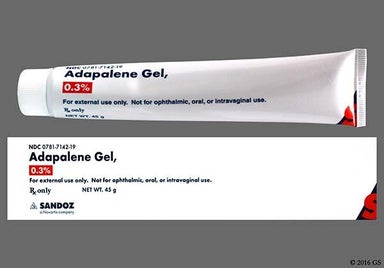
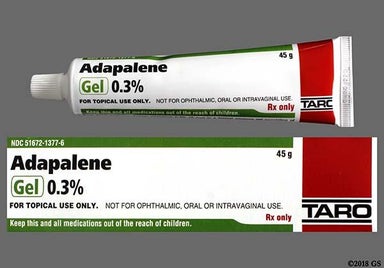
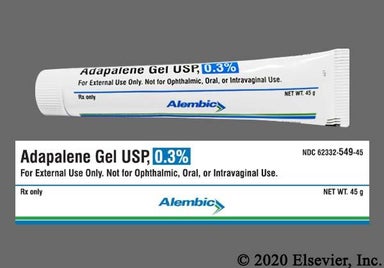
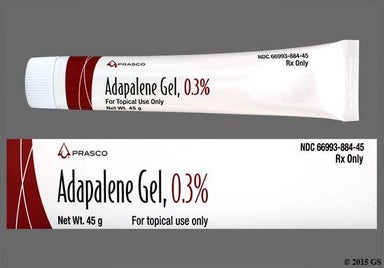
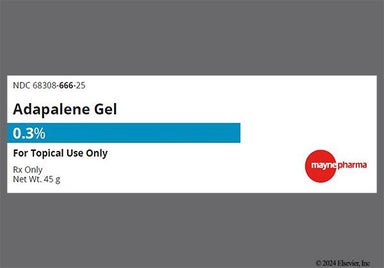
| 45g of 0.3% | 1 pump | $41.67 | $41.67 |
 Package
| Dosage | Quantity | Price as low as | Price per unit |
|---|---|---|---|
| 14 swabs of 0.1% | 1 package | $289.02 | $289.02 |
 Tube of cream
| Dosage | Quantity | Price as low as | Price per unit |
|---|---|---|---|
| 45g of 0.1% | 1 tube | $75.99 | $75.99 |

Although certain medicines should not be used together at all, in other cases two different medicines may be used together even if an interaction might occur. In these cases, your doctor may want to change the dose, or other precautions may be necessary. Tell your healthcare professional if you are taking any other prescription or nonprescription (over-the-counter [OTC]) medicine.







Prescription savings
Stop paying too much for your prescriptions. Compare prices, get pharmacy coupons, and save up to 80%. Find expert answers to your health questions so you can make the best decisions for yourself and your family.
Health conditions
Medications & treatment
Access & affordability
Medication discounts


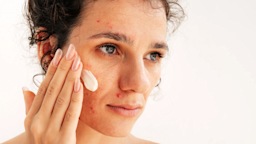
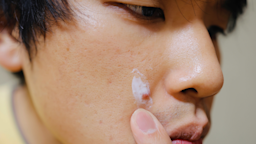
First, use a gentle cleanser to wash the area where you'll be applying Adapalene gel. Make sure your skin is completely dry before using Adapalene. Place a pea-sized amount of medication onto your fingertips and gently rub the medication into the entire area. If you're using Adapalene for acne on your face, apply the medication to your entire face; it's not a spot treatment, so you shouldn't use it to treat a single pimple. For the best results, you should continue to use Adapalene gel daily to prevent future breakouts.
In clinical studies, participants had up to half the number of acne lesions after about 12 weeks of using Adapalene gel once every day. In the same study, up to 20% of participants who used Adapalene gel had "clear" or "almost clear" skin after 12 weeks.
Some people might start to see results after using Adapalene consistently for 2 weeks. Keep in mind that the time it takes for the medication to start working can be different for everyone. You'll need to continue using Adapalene in order to see its full benefits. In fact, it can sometimes take up to 12 weeks to see results. Don't feel discouraged, continue using Adapalene once every day, and remember to take care of your skin using a skin care routine. If you don't see improvements in your skin after 12 weeks of using Adapalene, speak to your healthcare provider about your options.
You'll want to use a gentle, non-medicated cleanser before applying Adapalene. Once the medication is completely rubbed in and your skin is dry to the touch, you can apply a mild moisturizer to help prevent dry or irritated skin. Make sure to also apply sunscreen with an SPF of at least 30 when you go outside to prevent sunburns. Don't mix Adapalene together with other creams, gels, or lotions; you should apply the medication to your acne as is. If you use other acne medications, you should apply them at a different time of the day. In addition, you should completely avoid using products that contain resorcinol or alpha hydroxy, salicylic, or glycolic acids, as these chemicals might make skin irritation worse.
Adapalene is only FDA approved to treat acne. But some studies suggest that using Adapalene off label might be useful for lessening the appearance of wrinkles that's caused by the effects of sun damage and aging. There are stronger prescription retinoids, such as tretinoin (Renova), that are specifically approved to treat wrinkles. If you have wrinkles and you're looking for ways to help get rid of them, speak with your provider about your options.
No. Adapalene and tretinoin (Retin-A) are different retinoid medications, but they are both used to treat mild-to-moderate acne. Adapalene contains adapalene, and Retin-A contains tretinoin. They both offer similar benefits and can cause similar side effects (such as skin irritation, redness, and peeling). But some studies suggest that Adapalene might be less irritating to the skin than tretinoin (Retin-A). Compare the two medications, and talk to your healthcare provider to discuss which medication would be the best fit for you.
Yes, you can and should apply Adapalene to your entire face unless your provider told you otherwise. This medication works best for facial acne when it's applied to your entire face rather than applying it to individual pimples as a "spot" treatment.
Adapalene hasn't been studied in pregnant women. But in animal studies, the medication is known to be harmful to unborn babies when given by mouth. Because of this risk, talk to your healthcare provider before using Adapalene if you're pregnant or planning on becoming pregnant. They'll go over the risks and benefits of using this medication during pregnancy.
