


Flonase, Rhinocort, and More: Which Nasal Allergy Sprays Can You Use While Pregnant?
If you have allergies during pregnancy, there are safe treatment options. Read about nasal allergy sprays, like Flonase, that are safe to use during pregnancy.
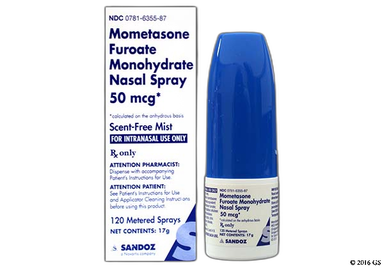
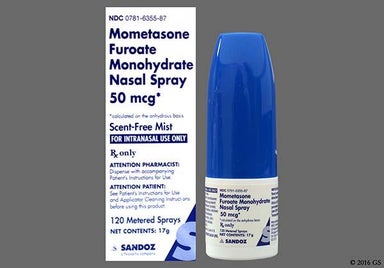
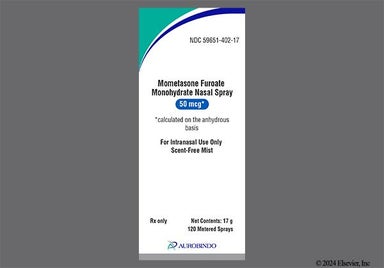
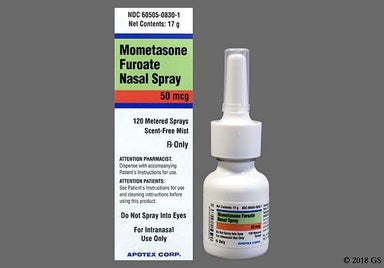
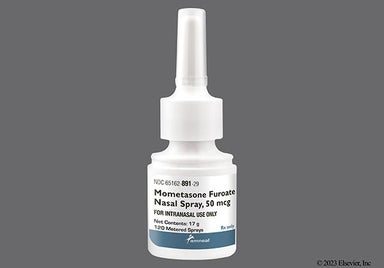
Mometasone nasal spray is used to prevent the nose symptoms of seasonal allergies, as well as to treat nose and sinus inflammation in adults with nasal polyps. Some side effects this medication can cause include headache and bloody nose. Mometasone nasal spray is available both with a prescription and over the counter (OTC).

Mometasone nasal spray is a corticosteroid that works directly in your nose to lower chemicals that cause swelling and inflammation.
| Common Brands | Nasonex 24HR Allergy |
|---|---|
| Drug Class | Corticosteroid |
| Controlled Substance Classification | Not a controlled medication |
| Generic Status | Lower-cost generic available |
| Availability | Prescription or over-the-counter |

The following side effects may get better over time as your body gets used to the medication. Let your healthcare provider know immediately if you continue to experience these symptoms or if they worsen over time.
Contact your healthcare provider immediately if you experience any of the following.
Along with its needed effects, a medicine may cause some unwanted effects. Although not all of these side effects may occur, if they do occur they may need medical attention.
Check with your doctor immediately if any of the following side effects occur:
More common
Bloody mucus or unexplained nosebleeds
chills
headache
hoarseness
increased abdominal or stomach pain and cramping during menstrual periods
muscle or bone pain
stuffy or runny nose
Less common
discharge or redness in the eye, eyelid, or inner lining of the eyelid
tightness in the chest
troubled breathing
Rare
Sores inside the nose
white patches inside the nose or mouth
Incidence not known
Blurred vision
difficulty with swallowing
dizziness
fast heartbeat
hives, skin rash
itching, puffiness, or swelling of the eyelids or around the eyes, face, lips, or tongue
large, hive-like swelling on the face, eyelids, lips, tongue, throat, hands, legs, feet, or genitals
unusual tiredness or weakness
Some side effects may occur that usually do not need medical attention. These side effects may go away during treatment as your body adjusts to the medicine. Also, your health care professional may be able to tell you about ways to prevent or reduce some of these side effects. Check with your health care professional if any of the following side effects continue or are bothersome or if you have any questions about them:
More common
Less common
joint or muscle ache or pain
nasal burning or irritation
stomach upset or discomfort following meals
Incidence not known
Bad, unusual, or unpleasant (after) taste or smell
change in taste or smell
Other side effects not listed may also occur in some patients. If you notice any other effects, check with your healthcare professional.
Call your doctor for medical advice about side effects. You may report side effects to the FDA at 1-800-FDA-1088.




Mometasone nasal spray can cause some serious health issues. This risk may be even higher for certain groups. If this worries you, talk to your doctor or pharmacist about other options.
Mometasone nasal spray can sometimes cause bloody nose as a side effect. Long-term use can also injure the nasal septum, which is the cartilage in the nose that divides the nostrils. Ask your provider to check your nose if you experience bleeding or have been using mometasone nasal spray for a long time. If you recently had surgery, ulcers, or trauma in your nose or sinuses, ask your provider when it is safe to start using mometasone nasal spray since it might impact the healing process.
Mometasone nasal spray can cause fungal infections in your nose and throat. If you notice that your nose or throat has any pain, redness, or white patches, stop taking mometasone nasal spray and see your provider.
Using mometasone nasal spray for a long time can potentially raise your eye pressure, worsen glaucoma, and cause cataracts (cloudiness in the eyes). Talk to your provider right away if you experience blurry vision, eye discomfort, or other changes in their vision after using mometasone nasal spray.
Using mometasone nasal spray for a long time might weaken your immune system, which can put you at higher risk for infections. Talk to your provider before taking mometasone nasal spray if you're currently taking medications that can weaken your immune system, if you haven't been vaccinated for serious diseases like chickenpox and measles, or if you currently have an active infection.
Using mometasone nasal spray can cause your body to produce less cortisol hormone. This is more likely to happen if you take higher doses than recommended. Cortisol helps control your mood, stress, blood pressure, and blood sugar levels. If you have symptoms such as nausea, vomiting, loss of appetite, tiredness, weakness, dizziness, or low blood pressure after stopping mometasone nasal spray, let your healthcare provider know so that they can perform tests. In some cases, your provider might need to stop mometasone nasal spray slowly.
Mometasone nasal spray could affect the growth rate of some children and teens. This is more likely to happen when it's used at higher-than-recommended doses. If your child is using mometasone nasal spray, make sure to always supervise them to make sure they aren't using too much. Use the lowest dose that works to control your child's symptoms, and see your child's provider regularly so they can monitor their growth.

 Nasal spray
| Dosage | Quantity | Price as low as | Price per unit |
|---|---|---|---|
| 17g of 50mcg | 1 nasal spray | $38.70 | $38.70 |

Although certain medicines should not be used together at all, in other cases two different medicines may be used together even if an interaction might occur. In these cases, your doctor may want to change the dose, or other precautions may be necessary. When you are taking this medicine, it is especially important that your healthcare professional know if you are taking any of the medicines listed below. The following interactions have been selected on the basis of their potential significance and are not necessarily all-inclusive.
Using this medicine with any of the following medicines is not recommended. Your doctor may decide not to treat you with this medication or change some of the other medicines you take.
Using this medicine with any of the following medicines is usually not recommended, but may be required in some cases. If both medicines are prescribed together, your doctor may change the dose or how often you use one or both of the medicines.
Using this medicine with any of the following medicines may cause an increased risk of certain side effects, but using both drugs may be the best treatment for you. If both medicines are prescribed together, your doctor may change the dose or how often you use one or both of the medicines.












Prescription savings
Stop paying too much for your prescriptions. Compare prices, get pharmacy coupons, and save up to 80%. Find expert answers to your health questions so you can make the best decisions for yourself and your family.
Health conditions
Medications & treatment
Access & affordability
Medication discounts


Both prescription and OTC Nasonex contain the same amount of medication in each spray (50 mcg). The main difference is what they're approved by the FDA to be used for, and how old you can be to use them. The prescription version (generic mometasone nasal spray) is approved to prevent seasonal allergies in people 12 years and older, and to treat nose and sinus inflammation with nasal polyps in people 18 years and older. The OTC version (brand Nasonex 24HR Allergy) is approved to temporarily treat symptoms of allergies in people 2 years and older. The different products might have a different number of sprays in the bottle, so be sure to check and keep track of how many sprays are in your product.
No. Drowsiness isn't a side effect people reported with Nasonex. This medication shouldn't cause you to feel sleepy after using it.
Some people only need Nasonex for a few weeks if they have seasonal allergies. Other people with long-term problems like nasal polyps might need it longer. Check with your provider or pharmacist about how long you should use Nasonex. If you use it for longer periods of time, you should see your provider regularly to make sure it's not causing any side effects.
Mometasone nasal spray works best when it's taken regularly. You should see an improvement in symptoms within 1-2 days after starting this medication, but the full effects can take up to 1-2 weeks. If your symptoms aren't improving, or if you're symptoms are getting worse, contact your provider.
Nasonex is a steroid (or "corticosteroid"). Steroids and antihistamines work in different ways to treat allergies. It's possible that some people with allergies will benefit from taking Nasonex as well as an antihistamine pill or other type of nasal spray. Speak to your provider to learn more about your options.
