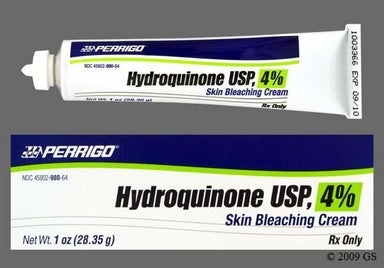
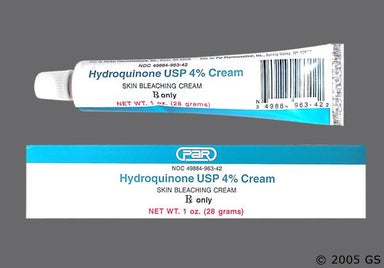
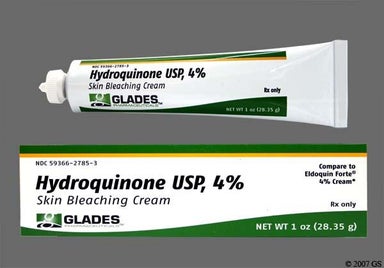
Hydroquinone 4% cream is a prescription medication. It's used to fade dark spots or patches on the skin (hyperpigmentation). This includes skin discoloration from things like freckles, melasma, and age spots. Hydroquinone 4% cream can be used by people 12 years and older. The skin bleaching cream is applied directly onto the affected skin typically twice daily. Common side effects include redness and stinging on the skin. It can also make your skin more sensitive to the sun and make sunburns easier.
Note: This page is about prescription hydroquinone 4% cream, not over-the-counter hydroquinone products.
Hydroquinone 4% cream is a skin-lightening medication called a depigmenting agent. It works by lowering the amount of melanin your body makes. Melanin is the natural pigment that gives your skin its color. Over time, this can help dark spots or dark patches of skin to become lighter in color.
When does Hydroquinone 4% cream start working?Time passed since treatment started:
HOURS
DAYS
WEEKS
Initial effect
MONTHS
Full effect
Drug facts
Common Brands
Eldoquin Forte(brand name no longer available)
Drug Class
Depigmenting agent
Controlled Substance Classification
Not a controlled medication
Generic Status
Lower-cost generic available
Availability
Prescription only
Side effects of Hydroquinone 4% cream
The following side effects may get better over time as your body gets used to the medication. Let your healthcare provider know immediately if you continue to experience these symptoms or if they worsen over time.
Common Side Effects
Dry skin or cracked skin near the nose or below the eyes
Skin redness
Stinging on the skin
Less Common Side Effects
Rash
Itching
Hydroquinone 4% cream serious side effects
Contact your healthcare provider immediately if you experience any of the following.
Allergic reaction: itchy; red rash (hives); shortness of breath; chest tightness; swelling of your lips, tongue, or face; swelling around your eyes
Use hydroquinone 4% cream as prescribed. Tell your prescriber if your dark spots haven't improved at all after 2 months of use. They might have you stop using hydroquinone 4% cream and help you find other options.
Hydroquinone 4% cream can make your skin more sensitive to the sun. This means that you might get sunburns more easily. Sun exposure can also sometimes make dark spots reappear. Be sure to use sunscreen and wear protective clothing, such as a hat, when you're outside.
Tell your healthcare team about all the medications and skin products you use. Just like hydroquinone 4% cream, other medications can make your skin more sensitive to the sun. These can include Retin-A (tretinoin), doxycycline, and certain water pills. Your care team can make sure all your medications are safe to use together.
Store hydroquinone 4% cream at room temperature (68ºF to 77ºF). It's normal if the cream gets a little darker in color over time. Keep hydroquinone 4% cream out of reach of children.
How to use hydroquinone 4% cream:
Before using hydroquinone 4% cream for the first time, apply a small amount to a small area of healthy skin. Wait 24 hours to check for a skin reaction. Some mild redness or itching can happen. But if you develop blisters, severe itching, or large raised bumps, don't use the cream. Tell your prescriber if this happens.
Wash your hands before and after using hydroquinone 4% cream. You can gently wash the affected area with a mild cleanser before applying the cream. Let your skin dry completely before you apply it.
Apply hydroquinone 4% cream twice a day, once in the morning and once before bedtime. Apply a thin layer only to the affected areas of your skin and rub it in well. Treat only small areas at a time unless your prescriber tells you otherwise.
Don't get hydroquinone 4% cream in or around your eyes, nose, mouth, or lips. These areas are very sensitive and can become irritated. If the cream gets on these areas, rinse well with water. If you or your child accidentally swallows the cream, call the Poison Control Center (1-800-222-1222) or get medical help right away.
Risks and warnings for Hydroquinone 4% cream
Hydroquinone 4% cream can cause some serious health issues. This risk may be even higher for certain groups. If this worries you, talk to your doctor or pharmacist about other options.
Allergic reaction
Risk factors: Sulfite allergy or sensitivity | Asthma
Hydroquinone 4% cream contains a sulfite, which can cause allergic reactions in some people. Some reactions can be serious, including anaphylaxis and trouble breathing. Your risk might be higher if you have asthma or a sensitivity to sulfite. Tell your prescriber before using hydroquinone 4% cream if you have asthma or a sulfite allergy.
Watch for signs of an allergic reaction after applying hydroquinone 4% cream. Signs can include itchy, red rash (hives) or swelling of your face, lips, or around your eyes. Also watch for any trouble breathing or chest tightness. If this happens, get medical help right away.
Sun sensitivity
Risk factors: Exposure to sunlight | Exposure to ultraviolet (UV) light | Not using sunscreen
Hydroquinone 4% cream can make your skin more sensitive to sunlight. The cream doesn't contain sunscreen, so too much sun exposure can raise your risk of sunburns. Getting too much sun can also make dark spots or patches come back.
Protect treated skin from the sun while using hydroquinone 4% cream and after treatment. Limit your time in the sun or stay in the shade when you can. If you go outside, use sunscreen with SPF 30 or higher and wear protective clothing, like a hat or long sleeves. Also avoid tanning beds and sun lamps. Talk to a dermatologist or your prescriber if you have questions about protecting your skin.
Blue-black darkening of the skin
Risk factors: Black people
Hydroquinone 4% cream can cause blue-black patches to appear on the treated skin over time. This might be more common if you're Black, but it can also happen to people of any race. Stop using hydroquinone 4% cream and talk to your dermatologist or prescriber if you notice blue-black patches on your skin.
Hydroquinone 4% cream dosage
The average cost for 1 tube of 28.35g of 4% of Hydroquinone 4% cream is $23.68 with a free GoodRx coupon. This is 67.70% off the average retail price of $73.32.
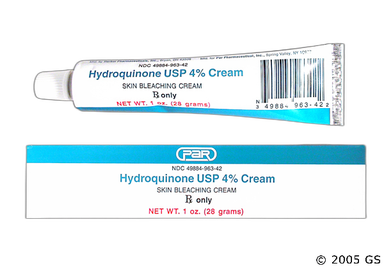
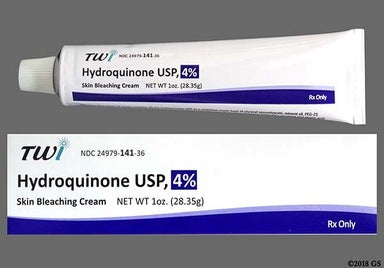
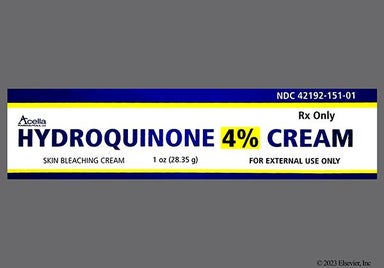
This medicine is Colorless Tube Of Cream.Not applicable - Hydroquinone 4% Topical CreamThis medicine is Colorless Tube Of Cream.Not applicable - Hydroquinone 4% Topical CreamThis medicine is White Tube Of Cream.White Not applicable - Hydroquinone 4% Topical CreamThis medicine is Colorless Tube Of Cream.Not applicable - Hydroquinone 4% Topical CreamThis medicine is White Tube Of Cream.White Not applicable - Hydroquinone 4% Topical CreamThis medicine is Colorless Tube Of Cream.Not applicable - Hydroquinone 4% Topical Cream
GoodRx Health has strict sourcing policies and relies on primary sources such as medical organizations, governmental agencies, academic institutions, and peer-reviewed scientific journals. Learn more about how we ensure our content is accurate, thorough, and unbiased by reading our editorial guidelines.
Prescription savings
Stop paying too much for your prescriptions. Compare prices, get pharmacy coupons, and save up to 80%.
Prescription hydroquinone 4% cream is generally considered safe when it's used as prescribed. Mild side effects, like skin redness or stinging, are possible and often get better over time. But tell your prescriber if these side effects don't go away. Also tell them right away if you develop blisters, severe itching, hives, or blue-black skin discoloration. Your prescriber will usually have you use hydroquinone 4% cream for only a limited time. This can help lower the risk of side effects. If you're using an over-the-counter hydroquinone product, talk to your pharmacist or prescriber because its safety and quality may be different. They can help you decide if hydroquinone is safe for you.
Hydroquinone 4% cream usually takes about 5 to 7 weeks to start fading dark spots. Keep using the medication as prescribed, even if you don't notice results right away. If your dark spots haven't improved after 2 months, talk to your prescriber. They might recommend a different treatment.
When you stop using hydroquinone 4% cream, your skin won't suddenly get darker. But over time, dark spots can come back, especially if you don't protect your skin from the sun. Keep in mind that your prescriber might also have you stop treatment after a few months or take breaks from using the cream to help lower the risk of side effects. Talk to your prescriber before stopping hydroquinone 4% cream or if your dark spots come back.
It isn't known whether hydroquinone 4% cream causes cancer in people. Studies haven't shown that the cream raises the risk of cancer when it's used as prescribed. Some animal studies found a possible cancer risk, but it's not clear if those results apply to people. Talk to your prescriber if you have questions about the risks and benefits of using hydroquinone 4% cream.
No, Hydroquinone isn't a steroid. It's a skin-lightening medication called a depigmenting agent. Topical steroids are mainly FDA approved to reduce skin inflammation. Hydroquinone specifically fades dark spots by lowering the amount of melanin your skin makes. Melanin is the natural pigment that gives your skin its color.
There isn't enough information to know if hydroquinone 4% cream is safe to use during pregnancy. It's not known if it can harm an unborn baby. If you're pregnant or planning to become pregnant, talk to your prescriber about the risks and benefits of using Hydroquinone. They can also discuss whether another treatment might be a better option.
It depends on the strength. Hydroquinone 4% cream is only available with a prescription from a healthcare provider. Some lower-strength hydroquinone creams may be available over the counter. Talk to your healthcare provider or pharmacist if you're not sure which hydroquinone product is right for you.Learn more
People usually apply hydroquinone cream twice a day. It can take 2 to 3 months of daily use to show results. If you don’t see results after 3 months, you may be advised to stop using the treatment.Learn more
Hydroquinone is a skin-lightening agent that reduces dark spots, hyperpigmentation, and melasma. It works by blocking the enzyme tyrosinase, which is needed to produce melanin (the pigment that gives skin its color). By slowing melanin production, hydroquinone helps fade discoloration and evens skin tone over time. But long-term or improper use can lead to skin irritation or bluish-gray skin discoloration.Learn more
The controversy surrounding hydroquinone stems from its safety concerns and regulatory status. While it's an effective skin-lightening agent, its long-term use has been linked to potential risks, including bluish-gray skin discoloration and skin irritation. Due to these risks and regulatory changes associated with the CARES Act, the FDA banned over-the-counter hydroquinone products in 2020. While Tri-Luma (fluocinolone / hydroquinone / tretinoin) is the only FDA-approved product containing hydroquinone, compounded formulations or prescription-only hydroquinone creams may still be available under medical supervision.Learn more