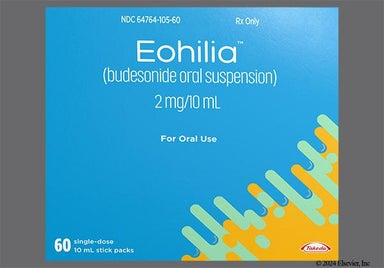
Eohilia
Eohilia (budesonide) is a corticosteroid that's FDA approved to treat eosinophilic esophagitis (EoE) in adults and children. The dosage is typically a packet taken by mouth twice daily on an empty stomach. Side effects include respiratory tract infection, oral thrush, and headache. It hasn't been shown to be safe and effective for longer than 12 weeks.


What is Eohilia (budesonide)?
What is Eohilia (budesonide) used for?
- Eosinophilic esophagitis (EoE) in people ages 11 years and older
How Eohilia (budesonide) works
Eohilia (budesonide) is a corticosteroid. It's not completely known how the medication works to treat eosinophilic esophagitis (EoE), an allergic condition that's caused by an unusual amount of eosinophils (a type of white blood cell) in the esophagus.
Eohilia (budesonide) is thought to lower the number of immune cells in the esophagus that cause inflammation, including eosinophils. This lowers inflammation, swelling, and irritation in the esophagus to help lessen symptoms of EoE.
Drug facts
| Common Brands | Eohilia |
|---|---|
| Drug Class | Corticosteroid |
| Controlled Substance Classification | Not a controlled medication |
| Generic Status | No lower-cost generic available |
| Availability | Prescription only |

Side effects of Eohilia (budesonide)
The following side effects may get better over time as your body gets used to the medication. Let your healthcare provider know immediately if you continue to experience these symptoms or if they worsen over time.
Common Side Effects
- Respiratory tract infection (13%)
- Fungal infection in the mouth, throat, or esophagus (8%)
- Headache (5%)
Less Common Side Effects
- Throat irritation
- Low cortisol levels
- Irritation or damage in the esophagus
The following Eohilia (budesonide) side effects have also been reported
Side effects that you should report to your care team as soon as possible:
- Allergic reactions—skin rash, itching, hives, swelling of the face, lips, tongue, or throat
- Cushing syndrome—increased fat around the midsection, upper back, neck, or face, pink or purple stretch marks on the skin, thinning, fragile skin that easily bruises, unexpected hair growth
- Heartburn, pain or trouble swallowing, chest pain that does not go away or gets worse
- Infection—fever, chills, cough, sore throat, wounds that don't heal, pain or trouble when passing urine, general feeling of discomfort or being unwell
- Low adrenal gland function—nausea, vomiting, loss of appetite, unusual weakness or fatigue, dizziness
Side effects that usually do not require medical attention (report these to your care team if they continue or are bothersome):
- Headache
- Nausea
- Sore throat
- Thrush—white patches in the mouth

Get your GoodRx coupon

Pros and cons of Eohilia (budesonide)
Pros
- Works well to treat symptoms of eosinophilic esophagitis
- Available as single-dose packets of cherry-flavored suspension
- Packets are ready to use; no need for any mixing beforehand
- Approved for children as young as 11 years old
Cons
- Must take twice per day
- Can't have food or drink when you take the medication or within 30 minutes of taking it
- The full treatment course is 12 weeks
- Can raise the risk for respiratory tract infections, such as sinus infection or the common cold

Pharmacist tips for Eohilia (budesonide)

- Take Eohilia (budesonide) twice per day, such as once in the morning and once at night. Try to stick to the same times each day to make taking the medication a part of your daily routine. This can help you remember to take your medication.
- How to take Eohilia (budesonide): Shake the packet for at least 10 seconds before opening it. Then, open the packet and squeeze it from the bottom to the top directly into your mouth to get the medication out. Repeat 2 to 3 more times until the packet is empty. Then, swallow the medication that's in your mouth. Don't mix Eohilia (budesonide) with any food or liquid.
- Don't eat or drink anything when you take Eohilia (budesonide) and also for at least 30 minutes after you take the medication. Eohilia (budesonide) has to cover the esophagus to work. Eating or drinking something can get in the way, which can possibly make the medication work less well for you.
- After 30 minutes, rinse your mouth with water and spit (don't swallow). This helps prevent fungal infections in the mouth, throat, and esophagus. Contact your prescriber if you notice any symptoms like white patches, redness, or soreness in the mouth, while you're taking Eohilia (budesonide). Your prescriber can recommend options to treat this fungal infection.
- Avoid eating grapefruit or drinking grapefruit juice while you're taking Eohilia (budesonide). Grapefruit can raise the levels of the medication in your body, which can put you at risk for side effects like headache or restlessness.
- Tell your care team about all of the medications you're taking or planning to take. Eohilia (budesonide) can interact with some other medications, including ritonavir, erythromycin, and cyclosporine (Neoral, Gengraf). Your care team will review your medications to make sure they're safe for you to take together.
- Let your care team know if you're pregnant, thinking of becoming pregnant, or breastfeeding. Although it isn't well studied, there might be a risk that Eohilia (budesonide) can cause harm to a baby. Your prescriber can discuss the risks and benefits of taking this medication while pregnant or breastfeeding and whether there are safer alternatives.

Risks and warnings for Eohilia (budesonide)
Eohilia (budesonide) can cause some serious health issues. This risk may be even higher for certain groups. If this worries you, talk to your doctor or pharmacist about other options.
Changes in cortisol levels
- Risk factors: Moderate-to-severe liver problems | Taking Eohilia (budesonide) for a long period of time
It's possible for corticosteroids like Eohilia (budesonide) to change the cortisol levels in your body. Cortisol, also called the stress hormone, is important for many functions in the body.
In certain situations, Eohilia (budesonide) can raise the cortisol levels in your body. This can lead to symptoms, such as tiredness, high blood sugar, and easy bruising. The risk for high cortisol levels might be greater for people with liver problems who take this medication.
Eohilia (budesonide) can also cause your body to make less of its own cortisol, which can make it harder for your body to respond to physical stress. It's important that you don't stop taking Eohilia (budesonide) suddenly. Otherwise, you might have symptoms of low cortisol (withdrawal), like weakness and nausea. Your body's natural cortisol level should return to normal over time so these symptoms are usually temporary. Your prescriber will slowly lower your dose when it's time to stop the medication to prevent withdrawal symptoms.
Withdrawal after switching from a different steroid
- Risk factors: Switching from a different corticosteroid to Eohilia (budesonide)
Switching to Eohilia (budesonide) from an oral form of another steroid can cause withdrawal symptoms, which can sometimes include a rise in pressure in the brain. For your safety, don't switch between steroids without the guidance of a healthcare professional. Your prescriber might slowly lower the dose of your other steroid medication and check your cortisol levels as you switch over to Eohilia (budesonide).
Replacing other oral steroids with Eohilia (budesonide) can also cause your allergies or eczema to come back. Other steroids might control allergy symptoms and eczema, but Eohilia (budesonide) might not work as well to do that. This is because Eohilia (budesonide) doesn't get processed in the body in the same way as other steroids. Let your prescriber know if this concerns you.
Higher risk of infection
- Risk factors: Weakened immune system | Current infection | History of frequent infections | History of hepatitis B, tuberculosis (TB), or parasitic stomach infection | Taking medications that weaken the immune system
Taking Eohilia (budesonide) can weaken your immune system and raise your risk of getting infections. These infections can be mild, but they can also be serious and sometimes life-threatening. In addition, a weakened immune system can potentially worsen any infections you already have, such as a viral or fungal infection.
Be sure your healthcare team knows about any infections you currently have or have had in the past. It's especially important to tell your care team if you've previously had hepatitis B, tuberculosis (TB), or any parasitic infections so they can monitor you closely. These infections might come back while you're taking Eohilia (budesonide).
Call a healthcare professional if you have any symptoms of an infection, such as a fever, chills, nausea, vomiting, body aches, tiredness, or any pain, while you're taking Eohilia (budesonide).
Erosive esophagitis (damage to the esophagus)
During clinical studies, some people who took Eohilia (budesonide) had irritation and damage to the esophagus. This is a condition called erosive esophagitis. Let your prescriber know if you notice any symptoms of erosive esophagitis, such as chest pain, pain with swallowing, or difficulty swallowing. Your prescriber can recommend treatment with medications as well as diet changes, such as avoiding spicy or fatty foods or certain drinks like coffee or alcohol.
Delayed growth in children
Children who take steroids like Eohilia (budesonide) might experience a delay in growth, especially if they take the medication at high doses for a long time. To lower the risk of growth problems, your child's prescriber will recommend the lowest dose of Eohilia (budesonide) needed to help with EoE. The healthcare team will check your child's growth regularly during treatment. Discuss with your child's prescriber if you're concerned about how Eohilia (budesonide) might affect your child's growth.
Worsening of certain medical conditions
- Risk factors: High blood pressure | Personal or family history of diabetes | Osteoporosis | Stomach ulcer | Glaucoma or cataracts | Family history of glaucoma
Corticosteroids like Eohilia (budesonide) can worsen certain medical conditions. The medication can raise blood pressure and blood sugar levels. Taking steroids long term can also lead to bone loss (osteoporosis), stomach ulcers, and eye problems (such as glaucoma or cataracts).
Let your prescriber know before you start taking Eohilia (budesonide) if you have high blood pressure, diabetes, or glaucoma or if you have a family history of any of these conditions. Your prescriber might need to follow up with you more closely.

Eohilia (budesonide) dosage
 Carton
| Dosage | Quantity | Price as low as | Price per unit |
|---|---|---|---|
| 60 stick packs of 2mg/10ml | 10 cartons | $1,943.50 | $194.35 |
Typical dosage for Eohilia (budesonide)
Each packet contains 2 mg of budesonide suspension.
The typical dose is 1 packet by mouth twice per day on an empty stomach for 12 weeks.

How much does Eohilia (budesonide) cost?
$1,943.50

Eohilia (budesonide) contraindications
Contraindications are specific health conditions or situations in which a person should not take a medication due to safety concerns. If you have any of the following conditions or if any of the following apply to you, let your healthcare provider know because Eohilia (budesonide) will not be safe for you to take.
- Allergy to other medications containing budesonide

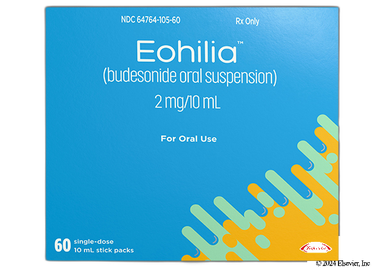
Eohilia (budesonide) images