

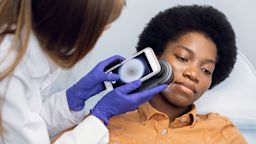
Melasma in Women With Darker Skin Tones: Here’s Why It’s Often Worse (With Images)
Melasma is a type of hyperpigmentation that occurs more commonly in people with darker skin tones. Explore the causes and learn how to treat melasma.
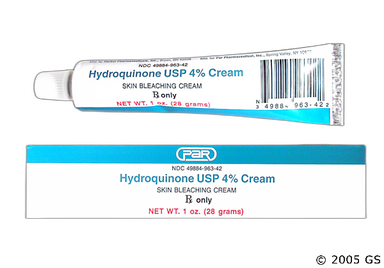
Hydroquinone 4% cream is a prescription medication. It's used to fade dark spots or patches on the skin (hyperpigmentation). This includes skin discoloration from things like freckles, melasma, and age spots. Hydroquinone 4% cream can be used by people 12 years and older. The skin bleaching cream is applied directly onto the affected skin typically twice daily. Common side effects include redness and stinging on the skin. It can also make your skin more sensitive to the sun and make sunburns easier.
Note: This page is about prescription hydroquinone 4% cream, not over-the-counter hydroquinone products.

Hydroquinone 4% cream is a skin-lightening medication called a depigmenting agent. It works by lowering the amount of melanin your body makes. Melanin is the natural pigment that gives your skin its color. Over time, this can help dark spots or dark patches of skin to become lighter in color.
| Common Brands | Eldoquin Forte |
|---|---|
| Drug Class | Depigmenting agent |
| Controlled Substance Classification | Not a controlled medication |
| Generic Status | Lower-cost generic available |
| Availability | Prescription only |

The following side effects may get better over time as your body gets used to the medication. Let your healthcare provider know immediately if you continue to experience these symptoms or if they worsen over time.
Contact your healthcare provider immediately if you experience any of the following.
Side effects that you should report to your care team as soon as possible:
Side effects that usually do not require medical attention (report to your care team if they continue or are bothersome):



How to use hydroquinone 4% cream:

Hydroquinone 4% cream can cause some serious health issues. This risk may be even higher for certain groups. If this worries you, talk to your doctor or pharmacist about other options.
Hydroquinone 4% cream contains a sulfite, which can cause allergic reactions in some people. Some reactions can be serious, including anaphylaxis and trouble breathing. Your risk might be higher if you have asthma or a sensitivity to sulfite. Tell your prescriber before using hydroquinone 4% cream if you have asthma or a sulfite allergy.
Watch for signs of an allergic reaction after applying hydroquinone 4% cream. Signs can include itchy, red rash (hives) or swelling of your face, lips, or around your eyes. Also watch for any trouble breathing or chest tightness. If this happens, get medical help right away.
Hydroquinone 4% cream can make your skin more sensitive to sunlight. The cream doesn't contain sunscreen, so too much sun exposure can raise your risk of sunburns. Getting too much sun can also make dark spots or patches come back.
Protect treated skin from the sun while using hydroquinone 4% cream and after treatment. Limit your time in the sun or stay in the shade when you can. If you go outside, use sunscreen with SPF 30 or higher and wear protective clothing, like a hat or long sleeves. Also avoid tanning beds and sun lamps. Talk to a dermatologist or your prescriber if you have questions about protecting your skin.
Hydroquinone 4% cream can cause blue-black patches to appear on the treated skin over time. This might be more common if you're Black, but it can also happen to people of any race. Stop using hydroquinone 4% cream and talk to your dermatologist or prescriber if you notice blue-black patches on your skin.

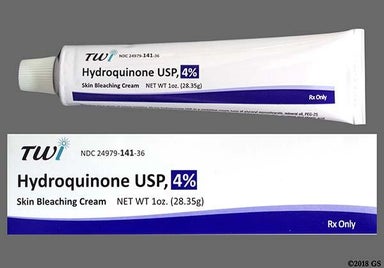
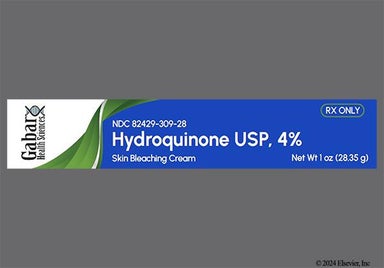
 Tube of cream
| Dosage | Quantity | Price as low as | Price per unit |
|---|---|---|---|
| 28.35g of 4% | 1 tube | $23.68 | $23.68 |





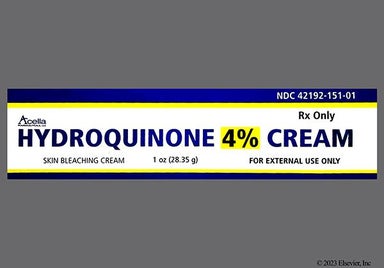
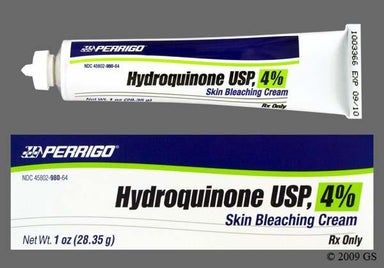
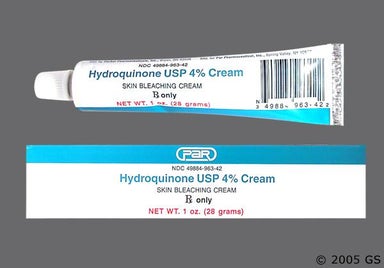
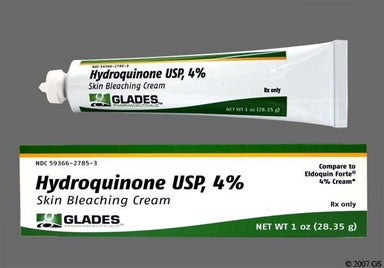
Prescription savings
Stop paying too much for your prescriptions. Compare prices, get pharmacy coupons, and save up to 80%. Find expert answers to your health questions so you can make the best decisions for yourself and your family.
Health conditions
Medications & treatment
Access & affordability
Medication discounts

Prescription hydroquinone 4% cream is generally considered safe when it's used as prescribed. Mild side effects, like skin redness or stinging, are possible and often get better over time. But tell your prescriber if these side effects don't go away. Also tell them right away if you develop blisters, severe itching, hives, or blue-black skin discoloration. Your prescriber will usually have you use hydroquinone 4% cream for only a limited time. This can help lower the risk of side effects. If you're using an over-the-counter hydroquinone product, talk to your pharmacist or prescriber because its safety and quality may be different. They can help you decide if hydroquinone is safe for you.
Hydroquinone 4% cream usually takes about 5 to 7 weeks to start fading dark spots. Keep using the medication as prescribed, even if you don't notice results right away. If your dark spots haven't improved after 2 months, talk to your prescriber. They might recommend a different treatment.
When you stop using hydroquinone 4% cream, your skin won't suddenly get darker. But over time, dark spots can come back, especially if you don't protect your skin from the sun. Keep in mind that your prescriber might also have you stop treatment after a few months or take breaks from using the cream to help lower the risk of side effects. Talk to your prescriber before stopping hydroquinone 4% cream or if your dark spots come back.
It isn't known whether hydroquinone 4% cream causes cancer in people. Studies haven't shown that the cream raises the risk of cancer when it's used as prescribed. Some animal studies found a possible cancer risk, but it's not clear if those results apply to people. Talk to your prescriber if you have questions about the risks and benefits of using hydroquinone 4% cream.
No, Hydroquinone isn't a steroid. It's a skin-lightening medication called a depigmenting agent. Topical steroids are mainly FDA approved to reduce skin inflammation. Hydroquinone specifically fades dark spots by lowering the amount of melanin your skin makes. Melanin is the natural pigment that gives your skin its color.
There isn't enough information to know if hydroquinone 4% cream is safe to use during pregnancy. It's not known if it can harm an unborn baby. If you're pregnant or planning to become pregnant, talk to your prescriber about the risks and benefits of using Hydroquinone. They can also discuss whether another treatment might be a better option.

