




Biologics for Eczema: What to Know About Dupixent, Adbry, and More
Biologics for eczema (atopic dermatitis) can help reduce inflammation. From Dupixent and Adbry to Nemluvio, here’s how these eczema injections compare.
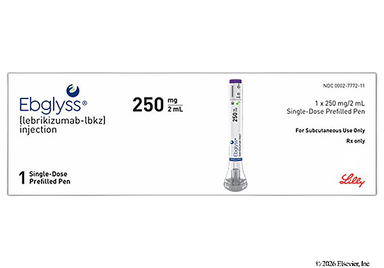
Ebglyss (lebrikizumab or lebrikizumab-lbkz) is an injectable medication that treats moderate-to-severe eczema. It’s approved for people 12 years of age and older weighing at least 88 lbs. It works as an interleukin-13 antagonist to reduce skin inflammation and discomfort from eczema. Ebglyss (lebrikizumab) is used when topical products don't work well enough or when you can’t use them at all. Ebglyss (lebrikizumab) is injected under the skin using the prefilled pen or syringe. You start with injections every 2 weeks until your eczema is controlled. Then, it's injected every 4 weeks or every 8 weeks. Side effects can include pink eye and pain at the injection site.

Ebglyss (lebrikizumab) is an interleukin-13 (IL-13) antagonist. It blocks a protein in your body called IL-13, which plays a role in causing eczema. By blocking IL-13, Ebglyss (lebrikizumab) helps to decrease swelling and irritation in the skin.
| Common Brands | Ebglyss |
|---|---|
| Drug Class | Interleukin-13 antagonist |
| Controlled Substance Classification | Not a controlled medication |
| Generic Status | No lower-cost generic available |
| Availability | Prescription only |

The following side effects may get better over time as your body gets used to the medication. Let your healthcare provider know immediately if you continue to experience these symptoms or if they worsen over time.
Contact your healthcare provider immediately if you experience any of the following.
Side effects that you should report to your care team as soon as possible:
Side effects that usually do not require medical attention (report these to your care team if they continue or are bothersome):



How to use Ebglyss (lebrikizumab)

Ebglyss (lebrikizumab) can cause some serious health issues. This risk may be even higher for certain groups. If this worries you, talk to your doctor or pharmacist about other options.
Swelling of the face, lips, or tongue have occurred after taking Ebglyss (lebrikizumab). Some people have also experienced hives. Stop taking Ebglyss (lebrikizumab) and seek help if you notice any of these reactions.
Studies showed that the risk of pink eye was higher in people taking Ebglyss (lebrikizumab) than those who weren’t taking any medication. These cases included both allergic and bacterial pink eye during the first 4 months of treatment. Other people also reported inflammation of the cornea, with symptoms like eye redness and pain. Most times, these eye problems were mild or moderate and went away on their own. Let your primary care provider know about any new or worsening eye symptoms to prevent permanent damage.
Ebglyss (lebrikizumab) wasn’t tested in people with parasitic (worm) infections. So, we don’t know if this medication will change how your immune system fights these infections.
Before starting Ebglyss (lebrikizumab), make sure any parasitic infections are treated. If you get a parasitic worm infection while taking this medication, let your prescriber know so you can start treatment to kill the bug. If the infection doesn’t go away, you’ll probably have to stop using Ebglyss (lebrikizumab) until it clears up.
Avoid getting any live vaccines right before starting treatment and also while taking Ebglyss (lebrikizumab). Live vaccines contain weakened germs, which your body can normally fight. But Ebglyss (lebrikizumab) can weaken your immune response, which can increase your risk of infection from live vaccines.
Tell your primary care provider that you’re taking Ebglyss (lebrikizumab) before getting any vaccines. Even though you can’t get live vaccines, you might still be able to get some other vaccines. This includes the flu shot that’s injected into the muscle.



Prescription savings
Stop paying too much for your prescriptions. Compare prices, get pharmacy coupons, and save up to 80%. Find expert answers to your health questions so you can make the best decisions for yourself and your family.
Health conditions
Medications & treatment
Access & affordability
Medication discounts


Studies showed that Ebglyss helped more people have clear or almost clear skin than placebo. In one study, 43% of people taking Ebglyss saw this improvement in their skin after 4 months. And in the other study, 33% of people taking Ebglyss had clear or almost clear skin after the same amount of time. Follow up with your prescriber about how well Ebglyss might work for your eczema.
The first part of treatment takes at least 16 weeks (or almost 4 months). You’ll inject Ebglyss every 2 weeks to help clear your eczema. Once your skin clears up, you’ll start maintenance treatment, which doesn’t have a set end date. You'll keep injecting Ebglyss every 4 weeks or every 8 weeks, even if your symptoms have already improved. This helps your eczema stay under control and prevent flare ups. Your prescriber will help you decide which dosing schedule is right for you. Be sure to follow up with your prescriber even after your eczema gets better.
In studies, some people had clear or almost clear skin by week 4 of treatment with Ebglyss. Some people also had less itchiness by week 4. For other people, it took up to 4 months of treatment to get rid of eczema. Ask your prescriber if you have questions about how fast Ebglyss can help improve your eczema.
No, you don't need to warm up the Ebglyss prefilled pen or syringe before you inject the medication. In general, don’t microwave the medication, run hot water over it, or leave it in the direct sunlight. Direct heat or light might damage the medication.
We currently don't have enough information to know if Ebglyss is safe to use during pregnancy. Talk to your primary care provider or obstetrician-gynecologist (OB-GYN) about the risks and benefits of using this medication. If you become pregnant during treatment, tell your primary care provider. They can make sure your treatment is safe for you. They might consider alternatives like a topical steroid. You or your primary care provider can also call Eli Lilly at 1-800-5979 to report the pregnancy.
It’s not clear if it's safe to breastfeed while using Ebglyss. We don't completely know if the medication can pass into breast milk and how that could affect your baby. Talk to your primary care provider about safer options, like topical steroids. If you want to use Ebglyss, you can ask your primary care provider or a lactation consultant about alternative feeding options like baby formula.
Ebglyss and Dupixent are both biologic medications that treat moderate-to-severe eczema. Both are given as injections under the skin. But who can use them is different. Ebglyss is for adults and children ages 12 years and older who weigh at least 88 lbs. But Dupixent is approved for adults and children as young as 6 months old. Also, Ebglyss can be given less often once eczema is controlled (every 4 or 8 weeks). But for Dupixent, injections are usually once every 2 weeks (except for certain younger children). Talk with your primary care provider to compare and discuss which is best for you.
