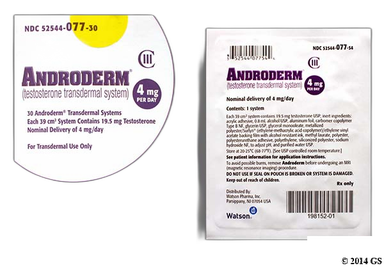
Androderm
Androderm (testosterone patch) is a testosterone replacement therapy that acts like the natural sex hormone testosterone. It raises testosterone levels in adult males who are diagnosed with low testosterone, also known as hypogonadism. Androderm (testosterone patch) is a patch that's applied to your skin once a day. Some common effects of this medication include skin irritation, itching, and burning.
Please note: Androderm (testosterone patch) has been discontinued and is no longer available in the United States. Talk to your primary care provider about alternative testosterone replacement therapies available to treat low testosterone.


What is Androderm (testosterone patch) ?
What is Androderm (testosterone patch) used for?
- Low testosterone levels in adult males (hypogonadism)
How Androderm (testosterone patch) works
Androderm (testosterone patch) is a testosterone replacement therapy that acts like the natural sex hormone, testosterone. Testosterone is responsible for the development and maintenance of many male features and functions, such as muscle and bone strength and growth, and regulating sex drive and sperm production.
Androderm (testosterone patch) works by raising testosterone to normal and healthy levels in males with low testosterone.
Drug facts

Risks and warnings for Androderm (testosterone patch)
Androderm (testosterone patch) can cause some serious health issues. This risk may be even higher for certain groups. If this worries you, talk to your doctor or pharmacist about other options.
Higher red blood cell count and high risk of heart attack or stroke
- Risk factors: History of heart conditions
Testosterone replacement therapy can raise your red blood cell (RBC) count. This is thought to raise the risk of blood clots, including strokes and heart attacks. But more information is needed to understand whether there is a link. Your prescriber will order blood tests before you start Androderm (testosterone patch) and every 3 to 6 months to check if your RBC count is within a safe range. If your RBC level is too high, they might ask you to stop Androderm (testosterone patch) until it becomes lower.
In addition, Androderm (testosterone patch) itself might be linked to a higher risk of heart attack, stroke, or sudden cardiac (heart-related) death. Get emergency help right away if you have chest pain, cold sweats, left arm pain, difficulty breathing, trouble walking, trouble speaking, or weakness on one side of the body, since you might have to stop taking the medication.
Blood clots
There have been reports of Androderm (testosterone patch) causing blood clots in your legs or lungs. Symptoms of a blood clot in the legs include leg pain, swelling, or redness. Symptoms of a blood clot in the lungs include difficulty breathing or chest pain. Let your prescriber know if you have any of these symptoms and seek medical help right away as you might have to stop the medication.
Potential for misuse, dependency, and addiction
- Risk factors: Taking more Androderm (testosterone patch) than prescribed | Taking Androderm (testosterone patch) with other testosterones
Androderm (testosterone patch) is a controlled substance, because it has a risk of misuse and addiction, especially if you use higher doses than prescribed or use it with other testosterones. Only take Androderm (testosterone patch) as prescribed to lower the risk of misuse, dependency, and addiction.
Worsening symptoms of enlarged prostate and prostate cancer
- Risk factors: History of enlarged prostate
Taking Androderm (testosterone patch) can worsen certain symptoms in people with an enlarged prostate, or benign prostatic hyperplasia (BPH). Let your prescriber know if you experience any changes in your urinary routine, such as more urination at night, feeling like you need to urinate more often or immediately, trouble urinating, accidentally urinating, or urinating slowly.
Androderm (testosterone patch) can raise your risk of prostate cancer. Your prescriber might have you perform occasional blood tests and physical check-ups before and during treatment with Androderm (testosterone patch) . Androderm (testosterone patch) isn't recommended if you have prostate cancer because it can worsen your cancer.
Liver problems
Using certain forms of testosterone, such as methyltestosterone and testosterone enanthate intramuscular injection, for long periods of time can cause life-threatening liver problems. This isn't a known risk of Androderm (testosterone patch) but it's important to look out for signs and symptoms of liver damage. Let your care team know if you're experiencing stomach pain, light-colored stools, dark urine, or if your skin or the whites of your eyes turn yellow because you might need to stop the medication.
Low sperm count
- *Risk factors: Higher doses of Androderm (testosterone patch) *
Androderm (testosterone patch) can lower sperm count, which might affect your ability to have a baby (fertility). There's a chance these effects can be permanent. Let your prescriber know if you're thinking of having a baby before you start Androderm (testosterone patch) .
Swelling in the legs or arms (edema)
- Risk factors: History of heart, liver, or kidney conditions | Taking other medications that cause swelling like corticosteroids
Androderm (testosterone patch) can cause your body to hold onto more salt and water, which can lead to swelling in your legs or arms and sudden weight gain. This is more likely to happen if you're taking other medications that cause swelling, such as corticosteroids (e.g., prednisone, methylprednisolone (Medrol)). It can be more serious in people with heart, liver, or kidney conditions. Talk to your prescriber if you have any of these symptoms because you might need to stop the medication.
Breathing problems during sleep (sleep apnea)
- Risk factors: History of sleep apnea | Identified as obese | History of lung disease
Androderm (testosterone patch) can worsen symptoms in people who have breathing problems in their sleep. This is called sleep apnea. This is more likely to happen to people who also have a history of obesity or lung disease, like asthma or chronic obstructive pulmonary disease (COPD). If you experience more daytime sleepiness or if your partner notices that you stop breathing in your sleep more often, talk to your prescriber.
High calcium in the blood
- Risk factors: History of cancer | Taking other medications that cause high calcium in the blood
Androderm (testosterone patch) can cause high calcium in the blood (hypercalcemia), especially in people with cancer or people who take medications that raise calcium. High calcium levels can lead to muscle weakness and kidney problems, such as frequent urination, thirst, stomach pain, and blood in the urine. During treatment with Androderm (testosterone patch) , your prescriber might have you perform regular blood tests to make sure your calcium levels are within the normal range.

Side effects of Androderm (testosterone patch)
The following side effects may get better over time as your body gets used to the medication. Let your healthcare provider know immediately if you continue to experience these symptoms or if they worsen over time.
Common Side Effects
- Application site itchiness (17%)
- Application site blisters (6%)
- Back pain (6%)
Less Common Side Effects
- Application site redness
- Chills
- Diarrhea
- Fatigue
- Headache
- Acid reflux
- Bleeding into a joint
- Blood in the urine
- Urinating more
- Swelling of the prostate
Androderm (testosterone patch) serious side effects
Contact your healthcare provider immediately if you experience any of the following.
- Heart attack: chest pain, cold sweats, left arm pain, difficulty breathing
- Stroke: face drooping, trouble seeing, walking, or speaking, weakness on one side of the body
- Blood clots: legs (pain, swelling, warm to touch, redness), lungs (trouble breathing, chest pain, cough)
- Withdrawal: depression, fatigue, craving, restlessness, irritability, lack of appetite, trouble sleeping (insomnia), lower sex drive, low testosterone
- Liver damage: stomach pain, nausea, vomiting, yellowing of the skin, yellowing of the whites of the eyes, light-colored stools, dark urine, weight loss
The following Androderm (testosterone patch) side effects have also been reported
Along with its needed effects, a medicine may cause some unwanted effects. Although not all of these side effects may occur, if they do occur they may need medical attention.
Check with your doctor immediately if any of the following side effects occur:
More common
Skin itching, blistering, or redness at the application site
Less common
Blistering, burning, crusting, dryness, or flaking of the skin
bloody or black, tarry stools
burning feeling at the application site
difficult urination
hardening or thickening of the skin under patch
itching, scaling, severe redness, soreness, or swelling of the skin
pelvic pain
severe stomach pain
vomiting of blood or material that looks like coffee grounds
Rare
Bladder pain
bloody or cloudy urine
blurred vision
difficult, burning, or painful urination
dizziness
frequent urge to urinate
headache
lower back or side pain
nervousness
pounding in the ears
slow or fast heartbeat
testicular problems
Incidence not known
Pain, redness, or swelling in the arm or leg
Some side effects may occur that usually do not need medical attention. These side effects may go away during treatment as your body adjusts to the medicine. Also, your health care professional may be able to tell you about ways to prevent or reduce some of these side effects. Check with your health care professional if any of the following side effects continue or are bothersome or if you have any questions about them:
Less common
Discouragement
feeling sad or empty
irritability
lack of appetite
loss of interest or pleasure
rash
tiredness
trouble concentrating
trouble sleeping
Rare
Accelerated growth
blemishes on the skin
body pain
burning, crawling, itching, numbness, prickling, "pins and needles", or tingling feelings
cold hands and feet
contamination of the application site
decreased interest in sexual intercourse
fear
feeling of constant movement of self or surroundings
inability to have or keep an erection
increased appetite
lightheadedness
loss in sexual ability, desire, drive, or performance
loss of bladder control
mood or mental changes
sensation of spinning
thinking abnormalities
weakness
Other side effects not listed may also occur in some patients. If you notice any other effects, check with your healthcare professional.
Call your doctor for medical advice about side effects. You may report side effects to the FDA at 1-800-FDA-1088.

Pros and cons of Androderm (testosterone patch)
Pros
- Compared to testosterone gel, there’s a lower risk of accidentally exposing others to testosterone
- Doesn't need to be removed during sex or while showering or bathing
- Applied to your skin
- Applied once a day
Cons
- Can cause skin irritation
- Need to remember to rotate application sites every night
- Heavy exercise or sweating too much might cause the patch to loosen or fall off
- Need to wait 3 hours before you can shower, swim, or bathe

Pharmacist tips for Androderm (testosterone patch)

- Mark your appointments in your calendar to see your healthcare professional (HCP) and get any needed blood tests done while taking Androderm (testosterone patch) . The test results can let your HCP know whether they need to adjust your dose of Androderm (testosterone patch) .
- Testosterone replacement therapy like Androderm (testosterone patch) can cause growth, pain, or tenderness in the breast area of males. This might continue throughout treatment. Let your HCP know if this becomes bothersome.
- Testosterone replacement therapy like Androderm (testosterone patch) can lower your blood sugar levels. People with diabetes might need to monitor their blood sugar more often while taking this medication. If needed, your HCP might adjust the dose of your blood sugar medications.
- Taking testosterone replacement therapy like Androderm (testosterone patch) together with blood thinners like warfarin (Coumadin) might cause you to bleed more easily. Your HCP might monitor your blood clotting time more often while taking this medication. Let your care team know if you experience bleeding that takes longer to stop, bruising, blood in your urine, or dark stools because your dose might need to be adjusted.

Common questions about Androderm (testosterone patch)
Yes, Androderm (testosterone patch) is discontinued and is no longer available in the United States. But there are several other testosterone replacement therapies that your healthcare professional (HCP) might recommend in place of Androderm (testosterone patch) .
Yes, Androderm (testosterone patch) is a schedule III controlled substance because it has a risk of addiction and dependence.
Studies show almost 100% of people achieved normal testosterone levels after using Androderm (testosterone patch) for 28 days.
Studies show that males who took Androderm (testosterone patch) saw their testosterone levels return to normal within 28 days of starting treatment. But the time it takes to feel the effects of normal testosterone levels will depend on the specific effect. For example, a study showed it can take about 3 weeks for sexual interest to appear, but can take up to 6 months to notice changes in erections/ejaculation. Additionally, it can take up to a year to see more controlled blood sugar levels and more stabilized muscle strength. Your prescriber will monitor you closely to see how you're responding to testosterone replacement therapy and adjust your dose if needed. Talk to your prescriber if you're concerned with how well Androderm (testosterone patch) is working for you.
Androderm (testosterone patch) is applied to clean, dry, and unbroken skin on the back, abdomen, upper arms, or thighs. Because it can cause skin irritation, a new patch needs to be applied to a different site on your body every night. Wait at least 7 days before applying it to the same spot. Don't apply Androderm (testosterone patch) to skin that's oily, sweaty, or hairy because the patch might not stick as well. Avoid applying it to your scrotum, buttocks, or over a bony area. Please note Androderm (testosterone patch) has been discontinued. Talk to your primary care provider about using other testosterone replacement therapies.
Androderm (testosterone patch) is applied all day. A patch should be worn for up to 24 hours and then replaced with a new patch. Once you've applied the patch to a particular location on the skin, don't apply to that same area for at least 7 days. This will help prevent skin irritation and side effects. Please note Androderm (testosterone patch) has been discontinued. Talk to your primary care provider about using other testosterone replacement therapies.
Talk to your prescriber or your pharmacist if you experience any rash or irritation. Androderm (testosterone patch) is known to cause skin irritation at the application site, itching, and rash. A healthcare professional might recommend using an over-the-counter (OTC) steroid cream, such as hydrocortisone, after the patch is removed.
Both Androderm and Androgel are brands that contain testosterone as the active ingredient. Androgel is supplied as a gel that's applied to the shoulders or upper arm, whereas Androderm (testosterone patch) is a patch that's applied to the skin all day. Secondly, Androgel is still available in the market whereas Androderm has been discontinued.

How to save using GoodRx



Androderm (testosterone patch) dosage
Typical dosage for Androderm (testosterone patch)
- Adults: The typical starting dose is one 4 mg patch applied every night to your back, stomach, upper arms, or thighs. Your prescriber might adjust your dose depending on how your testosterone levels respond to the medication.

Interactions between Androderm (testosterone patch) and other drugs
Although certain medicines should not be used together at all, in other cases two different medicines may be used together even if an interaction might occur. In these cases, your doctor may want to change the dose, or other precautions may be necessary. When you are taking this medicine, it is especially important that your healthcare professional know if you are taking any of the medicines listed below. The following interactions have been selected on the basis of their potential significance and are not necessarily all-inclusive.
Using this medicine with any of the following medicines is usually not recommended, but may be required in some cases. If both medicines are prescribed together, your doctor may change the dose or how often you use one or both of the medicines.
- Anisindione
- Bupropion
- Dicumarol
- Paclitaxel
- Paclitaxel Protein-Bound
- Phenprocoumon
- Warfarin
Using this medicine with any of the following medicines may cause an increased risk of certain side effects, but using both drugs may be the best treatment for you. If both medicines are prescribed together, your doctor may change the dose or how often you use one or both of the medicines.
- Licorice

Androderm (testosterone patch) contraindications
Contraindications are specific health conditions or situations in which a person should not take a medication due to safety concerns. If you have any of the following conditions or if any of the following apply to you, let your healthcare provider know because Androderm (testosterone patch) will not be safe for you to take.
- Males with breast cancer or prostate cancer
- Currently pregnant

What are alternatives to Androderm (testosterone patch) ?