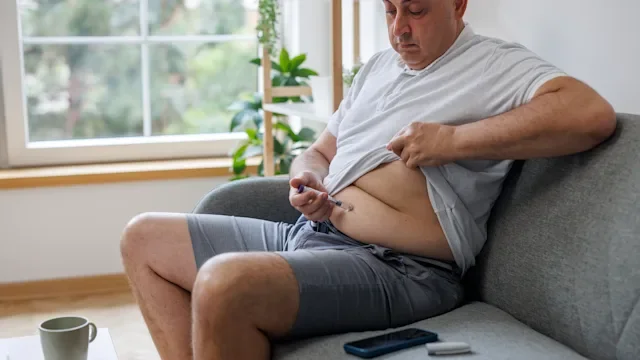
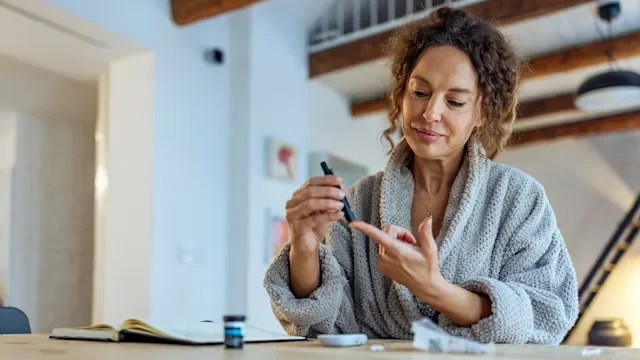
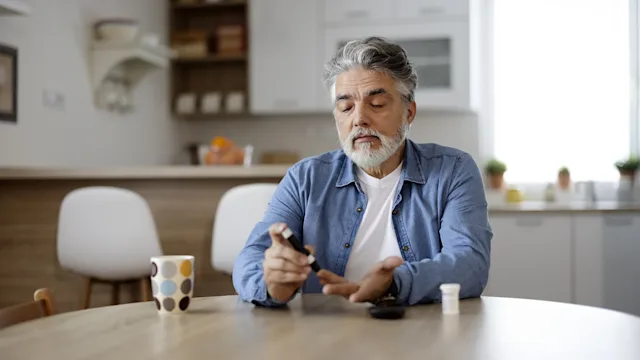
Just like you check the weather forecast before slipping on your shoes and stepping outside for the day, assessing your blood sugar levels can inform you about how you need to care for yourself that day, says Sandra Arévalo, RDN, a spokesperson for the American Association of Diabetes Educators.
Using a blood glucose monitor, or a small machine that detects the amount of sugars in the bloodstream, patients can make sure they are staying in a safe and healthy range. This is crucial to preventing hypoglycemia or hyperglycemia.
Dr. Sood is a board-certified Endocrinologist in private practice in New York City and an assistant professor at Hofstra School of Medicine.
Sandra Arévalo is a spokesperson for the American Association of Diabetes Educators and Academy of Nutrition and Dietetics and director of nutrition services and community outreach at South Bronx Health Center.
Dr. Chaudhry is an Endocrinologist at NYU Langone Health in New York City.
References
Allemann, S, et al. (2009). Self-monitoring of blood glucose in non-insulin treated patients with type 2 diabetes: a systemic review and meta-analysis. Current Medical Research and Opinion.
American Diabetes Association. (n.d.). The big picture: Checking your blood glucose.
Department of Health and Human Services. (2016). Know your blood sugar numbers: use them to manage your diabetes.

Why trust our experts?