

Ozempic, Trulicity, and More: 11 GLP-1 Drugs and How to Navigate Your Options
GLP-1 agonist drugs treat diabetes by balancing blood glucose levels. Here’s our list of GLP-1 agonists, how they work, similarities and differences, and more.
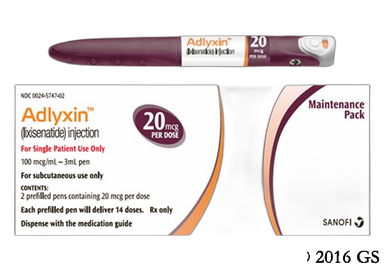
Adlyxin (lixisenatide) is an add-on medication to diet and exercise to improve blood sugar control in people with type 2 diabetes. As of 2023, the medication is no longer available in the United States.

Adlyxin (lixisenatide) is a glucagon-like peptide-1 (GLP-1) receptor agonist. It tells your body to release more insulin, stops the body from releasing more sugar, and slows down digestion.
| Common Brands | Adlyxin |
|---|---|
| Drug Class | GLP-1 agonist |
| Controlled Substance Classification | Not a controlled medication |
| Generic Status | No lower-cost generic available |
| Availability | Prescription only |

The following side effects may get better over time as your body gets used to the medication. Let your healthcare provider know immediately if you continue to experience these symptoms or if they worsen over time.
Contact your healthcare provider immediately if you experience any of the following.




Adlyxin (lixisenatide) can cause some serious health issues. This risk may be even higher for certain groups. If this worries you, talk to your doctor or pharmacist about other options.
Rarely, Adlyxin (lixisenatide) can cause inflammation of your pancreas, which can be dangerous. Let your provider know right away or go to the emergency room if you have severe stomach or back pain, vomiting, a high fever, and a fast pulse or heartbeat.
Rarely, Adlyxin (lixisenatide) can cause severe allergic reactions, such as rash, blistering, trouble breathing, swelling of the lips, tongue, mouth, or throat. Go to the emergency room right away and stop using Adlyxin (lixisenatide) if this happens.
Adlyxin (lixisenatide) can cause or worsen kidney damage. Let your provider know if you can't urinate or aren't urinating normally. If you've had kidney problems, talk to your provider before using Adlyxin (lixisenatide) since your provider might check your kidneys or give you another medication.
The risk for low blood sugar can be higher when people take Adlyxin (lixisenatide) with medications that raise the amount of insulin in the body, like sulfonylureas. If this happens, you'll need to eat or drink a fast-acting sugar right away to bring your blood sugar back up. Ask your doctor or pharmacist about ways to treat low blood sugar, and if you need to change the doses of your other diabetes medications when starting Adlyxin (lixisenatide).

 Carton
| Dosage | Quantity | Price as low as | Price per unit |
|---|---|---|---|
| two 3ml pens of 20mcg | 1 carton | $657.64 | $657.64 |
The typical starting dose for Adlyxin (lixisenatide) is 10 mcg injected under the skin (subcutaneously) of your belly, thigh, or upper arm once a day for 14 days. After 14 days, the dose should be raised to 20 mcg daily.



Prescription savings
Stop paying too much for your prescriptions. Compare prices, get pharmacy coupons, and save up to 80%. Find expert answers to your health questions so you can make the best decisions for yourself and your family.
Health conditions
Medications & treatment
Access & affordability
 Our monthly healthcare membership can help you save thousands on your prescription costs.
Resources

If you have injected yourself before activating the pen, don't correct this by giving yourself a second injection. Contact your provider for advice on checking your blood sugar.
Small air bubbles in the container are normal and they will not hurt you. Your dose will be correct and you can keep following the instructions.
Adlyxin is given subcutaneously (under the skin) once daily, within one hour before the first meal of the day. If a dose is missed, Adlyxin should be given within one hour before the next meal.
The needle may be blocked or not properly attached. Pull the needle out of your skin and remove the needle from the pen. Attach a new needle and try again. If it is still hard to press in the injection button, your Adlyxin pen may be damaged. Contact your provider or pharmacist if you have problems.
