






MotherToBaby. (2024). Topical tretinoin.
PAAS National. (2018). Topical medication chart.
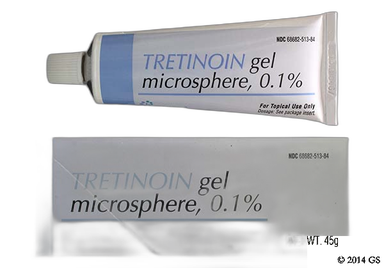
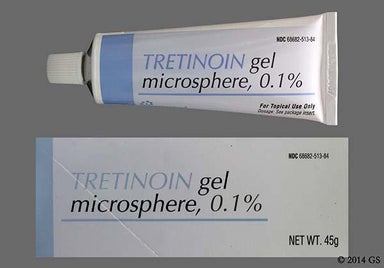
Retin-A Micro (tretinoin) is a prescription topical retinoid used to treat acne in adults and children ages 12 years and older. It comes as a gel in a tube or pump that's applied to the affected skin once a day in the evening. The gel contains microspheres that slowly release the medication onto the skin over time. Side effects include skin redness, peeling, dryness, burning, and itching.

| Common Brands | Retin-A Micro |
|---|---|
| Drug Class | Retinoid |
| Controlled Substance Classification | Not a controlled medication |
| Generic Status | Lower-cost generic available |
| Availability | Prescription only |

The following side effects may get better over time as your body gets used to the medication. Let your healthcare provider know immediately if you continue to experience these symptoms or if they worsen over time.
Contact your healthcare provider immediately if you experience any of the following.
Along with its needed effects, a medicine may cause some unwanted effects. Although not all of these side effects may occur, if they do occur they may need medical attention.
Check with your doctor immediately if any of the following side effects occur:
More common
Burning, stinging, peeling, redness, or unusual dryness of the skin (severe)
Less common
Dryness, pain, redness, irritation, or peeling at the application site
Some side effects may occur that usually do not need medical attention. These side effects may go away during treatment as your body adjusts to the medicine. Also, your health care professional may be able to tell you about ways to prevent or reduce some of these side effects. Check with your health care professional if any of the following side effects continue or are bothersome or if you have any questions about them:
More common
Burning, itching, stinging, scaling, or redness of the skin
chapping or slight peeling of the skin (mild)
darkening of the skin
lightening of normal skin color
lightening of treated areas of dark skin
redness of skin (mild)
unusual dryness of skin (mild)
unusually warm skin (mild)
Other side effects not listed may also occur in some patients. If you notice any other effects, check with your healthcare professional.
Call your doctor for medical advice about side effects. You may report side effects to the FDA at 1-800-FDA-1088.



How to use Retin-A Micro (tretinoin)

Retin-A Micro (tretinoin) can cause some serious health issues. This risk may be even higher for certain groups. If this worries you, talk to your doctor or pharmacist about other options.
Retin-A Micro (tretinoin) can cause dryness, redness, swelling, peeling, itching, burning, or stinging where you apply it. Using more than recommended won't clear your acne faster and can make irritation worse. A moisturizer can help with mild dryness and irritation.
Be gentle with your skin while using Retin-A Micro (tretinoin). Avoid scrubbing, harsh or drying skin products, and applying the medication to areas affected by eczema. If you develop severe irritation, stop using the medication and contact your care team.
During the first few weeks of using Retin-A Micro (tretinoin), you might notice your acne getting worse. This is common and should improve as you continue treatment. Tell your dermatologist if your acne gets much worse or you have concerns about your skin.
Retin-A Micro (tretinoin) can make your skin more sensitive to sunlight, raising your risk of sunburn. Limit time in the sun and avoid sunlamps and tanning beds. Use sunscreen with at least SPF 15 and wear protective clothing every day, even when it's cloudy.
Don't apply Retin-A Micro (tretinoin) to sunburned skin until it has fully healed.

Apply a thin layer to the affected area(s) of the skin once a day in the evening.

Although certain medicines should not be used together at all, in other cases two different medicines may be used together even if an interaction might occur. In these cases, your doctor may want to change the dose, or other precautions may be necessary. Tell your healthcare professional if you are taking any other prescription or nonprescription (over-the-counter [OTC]) medicine.






Prescription savings
Stop paying too much for your prescriptions. Compare prices, get pharmacy coupons, and save up to 80%. Find expert answers to your health questions so you can make the best decisions for yourself and your family.
Health conditions
Medications & treatment
Access & affordability
Medication discounts


How long Retin-A Micro lasts depends on how much you use each day. Most people only need about a fingertip amount to cover the affected skin with a thin layer. A fingertip amount is about 0.5 grams, and each pump contains 50 grams of medication. At this amount, one pump can last about 3 months when used once a day.
Yes. Although Retin-A Micro is FDA approved for acne, its active ingredient (tretinoin) is also used to treat wrinkles, such as the like brand-name medication Renova. Tretinoin speeds up skin cell turnover and boosts collagen, which can help soften fine lines over time. If you're interested in wrinkle treatments, talk to your dermatologist about your options.
Yes, Retin-A Micro expires, and you can find the expiration date on the tube, pump, or carton. Using an expired medication might not work as well. If your medication is past its expiration date, ask your prescriber or pharmacist about getting a new one.
You might start to notice an improvement in your acne after about 2 weeks, but it can take 6 weeks or longer to see the full effects. Your acne might temporarily get worse when you first start treatment, with more pimples or redness. Talk to your dermatologist if your acne doesn't improve after a few months.
Both medications contain the same active ingredient (tretinoin), but Retin-A Micro uses tiny particles called microspheres that slowly release the medication over time. This might cause less dryness and peeling than standard Retin-A. Also, Retin-A Micro only comes as a gel, while Retin-A is available as a cream or gel. Talk to your dermatologist to learn more about how these medications compare.
Both Retin-A Micro and Altreno contain tretinoin, but they use different formulations. Retin-A Micro comes as a gel that uses microspheres to slowly release the medication over time, which might help reduce skin irritation. Altreno comes as a lotion. Retin-A Micro is also available in multiple strengths, while Altreno comes in only one strength. Ask your dermatologist if you have questions about how they compare.
You can get Retin-A Micro at a pharmacy, but you'll need a prescription from a healthcare professional. It's not available over the counter.
Brand-name Retin-A Micro is made by Bausch Health. Generic versions are also available from other companies.
