paroxetine
Paroxetine (also known by it's brand name Paxil) is a selective serotonin reuptake inhibitor (SSRI), used for different types of anxiety problems and depression. It's available as a brand name and generic version, and it comes as an immediate-release tablet, an oral suspension, and an extended-release tablet. Possible side effects include nausea, sexual side effects, and weight gain. It can also cause withdrawal symptoms (e.g., headache, trouble sleeping, anxiety) if you suddenly stop taking it.


What is Paroxetine (Paxil)?
What is Paroxetine (Paxil) used for?
How Paroxetine (Paxil) works
Paroxetine (Paxil) is a selective serotonin reuptake inhibitor (SSRI). It works by raising the levels of serotonin, an important chemical in your brain that's involved with regulating your mood.
Drug facts

Side effects of Paroxetine (Paxil)
The following side effects may get better over time as your body gets used to the medication. Let your healthcare provider know immediately if you continue to experience these symptoms or if they worsen over time.
Common Side Effects
Less Common Side Effects
- Blurry vision
- Nervousness
- Low appetite
- Anxiety
- Numbness or tingling
Please note: Side effects listed here were reported by people taking paroxetine (Paxil) for OCD, SAD, and panic disorder in clinical studies. The side effects you experience from paroxetine (Paxil) might differ.
Paroxetine (Paxil) serious side effects
Contact your healthcare provider immediately if you experience any of the following.
- Suicidal thoughts or behaviors
- Serotonin syndrome: fast heart rate, dizziness, sweating, flushing, tremor (shakiness), muscle stiffness, muscle twitching or spasms, uncoordinated movement, distress, seizures, distress, hallucinations, coma
- Seizures
- Abnormal heart rhythm (QT prolongation): chest pounding, short of breath, chest pain, feeling faint or lightheaded
- Severe bleeding: bruising that doesn't improve, black-colored stools, pink or red-colored urine, coughing up or vomiting blood, or unusual bleeding from the nose or gums
- Low blood sodium levels: nausea, fatigue, headache, confusion, disoriented, hallucinations (seeing things that aren't real), seizures, unconsciousness
More on Paroxetine (Paxil) side effects


The following Paroxetine (Paxil) side effects have also been reported
Along with its needed effects, a medicine may cause some unwanted effects. Although not all of these side effects may occur, if they do occur they may need medical attention.
Check with your doctor immediately if any of the following side effects occur:
Less common
Agitation
chest pain or tightness
chills
cold sweats
confusion
difficulty with breathing
dizziness, faintness, or lightheadedness when getting up from a lying or sitting position
fast, pounding, or irregular heartbeat or pulse
muscle pain or weakness
skin rash
Rare
Absence of or decrease in body movements
bigger, dilated, or enlarged pupils (black part of the eye)
difficulty with speaking
inability to move the eyes
incomplete, sudden, or unusual body or facial movements
increased sensitivity of the eyes to light
poor coordination
red or purple patches on the skin
restlessness
seizures
shivering
sweating
talking, feeling, and acting with excitement and activity you cannot control
trembling or shaking, or twitching
Incidence not known
Back, leg, or stomach pains
blindness
blistering, peeling, or loosening of the skin
blue-yellow color blindness
blurred vision
cough or hoarseness
dark urine
decreased frequency or amount of urine
decreased vision
difficulty with swallowing
electric shock sensations
fainting
general body swelling
headache
high fever
inability to move the arms and legs
inability to sit still
increased thirst
incremental or ratchet-like movement of the muscle
joint pain
light-colored stools
lockjaw
loss of appetite
loss of bladder control
lower back or side pain
muscle spasm, especially of the neck and back
muscle tension or tightness
need to keep moving
painful or difficult urination
painful or prolonged erection of the penis
pale skin
puffiness or swelling of the eyelids or around the eyes, face, lips, or tongue
raised red swellings on the skin, the buttocks, legs, or ankles
red, irritated eyes
sensitivity to the sun
skin redness or soreness
slow heart rate
sores, ulcers, or white spots on the lips or in the mouth
spasms of the throat
stiff muscles
stomach pain
sudden numbness and weakness in the arms and legs
swelling of the breasts
swelling of the face, fingers, or lower legs
swollen or painful glands
tightness in the chest
unexpected or excess milk flow from the breasts
unusual bleeding or bruising
unusual tiredness or weakness
vomiting
yellowing of the eyes or skin
Some side effects may occur that usually do not need medical attention. These side effects may go away during treatment as your body adjusts to the medicine. Also, your health care professional may be able to tell you about ways to prevent or reduce some of these side effects. Check with your health care professional if any of the following side effects continue or are bothersome or if you have any questions about them:
More common
Acid or sour stomach
belching
decreased appetite
decreased sexual ability or desire
pain or tenderness around the eyes and cheekbones
passing gas
problems with urinating
runny or stuffy nose
sexual problems, especially ejaculatory disturbances
sleepiness or unusual drowsiness
stomach discomfort or upset
trouble sleeping
Less common
Abnormal dreams
change in sense of taste
congestion
discouragement, feeling sad, or empty
drugged feeling
fast or irregular breathing
feeling of unreality
headache, severe and throbbing
increased appetite
itching of the vagina or genital area
itching, pain, redness, or swelling of the eye or eyelid
lack of emotion
loss of interest or pleasure
lump in the throat
menstrual changes
pain during sexual intercourse
problems with memory
sense of detachment from self or body
thick, white vaginal discharge with no odor or with a mild odor
tightness in the throat
tingling, burning, or prickling sensations
trouble concentrating
voice changes
watering of the eyes
yawn
Other side effects not listed may also occur in some patients. If you notice any other effects, check with your healthcare professional.
Call your doctor for medical advice about side effects. You may report side effects to the FDA at 1-800-FDA-1088.

Get your GoodRx coupon

Pros and cons of Paroxetine (Paxil)
Pros
- Only needs to be taken once daily
- Available as a tablet and oral liquid
- Can be taken with or without food
- Can be used for many different mental health conditions
- Can be helpful for people who have both anxiety and depression
Cons
- Can take several weeks or months to achieve the full benefits
- Might be more likely than other SSRIs to cause weight gain or sexual problems
- Can interact with other medications, especially those affecting serotonin levels
- Can cause withdrawal symptoms if you suddenly stop taking it

Pharmacist tips for Paroxetine (Paxil)

- You can take paroxetine (Paxil) with or without food, but paroxetine (Paxil) also commonly causes nausea, so taking it with food might help.
- Don't change your dose or suddenly stop taking paroxetine (Paxil) without talking to your provider first. Doing so can cause withdrawal symptoms like nausea, headache, and sleeping problems. Follow your provider's instructions to lower your dose slowly over a period of time to stop the medication completely.
- Paroxetine (Paxil) can cause sexual side effects, such as ejaculation problems in males, low sex drive, and erectile dysfunction. These side effects are likely to go away after you stop taking paroxetine (Paxil).
- Paroxetine (Paxil) can make you sleepy and dizzy. Don't drive or do anything requiring concentration until you know how this medication affects you.
- Don't drink alcohol while taking paroxetine (Paxil) because it can worsen side effects (e.g., drowsiness, dizziness) as well as worsen your depression symptoms. Also, don't drive or do anything requiring concentration until you know how this medication affects you.
- Antidepressant medications like paroxetine (Paxil) can raise the risk of suicidal thoughts. Contact your provider right away if you or your loved ones notice any new or worsening changes in your behavior or mood while taking the medication.
- Paroxetine (Paxil) can interact with a lot of commonly used medications. For example, it can raise your risk for serious bleeds, especially if you're also taking other blood thinners. Paroxetine (Paxil) can also lower how well tamoxifen (Nolvadex, Soltamox) works. Make sure to tell your provider and pharmacist about all of the medications you're taking before starting paroxetine (Paxil). Also, don't start any new medications while taking paroxetine (Paxil) without talking to your provider first.
- If you're taking the extended-release (Paxil CR) tablets, make sure to swallow the tablet whole. Don't chew or crush the ER tablets because it's specially created to be released at a specific rate in your body. If you break or crush the tablets, it can change how your body absorbs the medication and cause serious side effects.
More tips for paroxetine (Paxil) suspension:
- Shake the suspension well before drawing up your dose. Make sure to use an oral syringe or medication dosing cup to measure out your paroxetine (Paxil) liquid dose. Don't use household spoons because they aren't accurate and might cause you to take the wrong dose.
- Store the paroxetine (Paxil) liquid at room temperature in the original bottle it came in from the pharmacy.


Common questions about Paroxetine (Paxil)
Yes, some people do experience weight gain from taking paroxetine (Paxil). But the amount of weight gained differs from one person to another. To lower your risk for weight gain while taking paroxetine (Paxil), make sure to have a healthy diet and regular exercise routine. Contact your provider if you're uncomfortable with how much weight you've gained while on paroxetine (Paxil). They might give you medications to treat the weight gain or switch you to a different medication.
Yes, sleepiness is a possible side effect of paroxetine (Paxil) that usually goes away after a few weeks of taking it. On the other hand, some people can also have difficulty sleeping from paroxetine (Paxil). When you first start paroxetine (Paxil), see how you respond to the medication and adjust the timing of your dose accordingly. If you notice you feel sleepy after taking your dose, take it at bedtime. If you notice paroxetine (Paxil) makes it difficult to fall asleep, take it in the morning.
No, paroxetine (Paxil) isn't a controlled substance because it doesn't have a risk of addiction, misuse, or dependence.
It'll depend on why you're taking paroxetine (Paxil). For example, if you're taking this medication for depression, you might notice improvements in your mood 2 weeks after starting paroxetine (Paxil). But, it can take about 1 to 2 months before you feel its full effects. You might feel side effects (e.g., nausea, sleepiness, weight gain) before feeling any improvement in your symptoms. Contact your provider if you're not sure if paroxetine (Paxil) is working, but don't stop taking the medication until you've talked to them because you might get withdrawal symptoms like headache, trouble sleeping, and anxiety.
No. While both paroxetine (Paxil) and alprazolam (Xanax) can be used to treat anxiety problems, they are two completely different medications that work in different parts of the brain. Paroxetine (Paxil) is a selective serotonin reuptake inhibitor (SSRI), whereas alprazolam (Xanax) is a benzodiazepine.
While paroxetine (Paxil) isn't FDA-approved for premature ejaculation, studies from the American Urological Association show it works well for condition. Additionally, a review of multiple studies, which is the strongest type found paroxetine (Paxil) worked well for premature ejaculation, even compared to some other SSRIs. If you want to know more about options for treating premature ejaculation, talk with your provider.
Research shows that paroxetine (Paxil) can get into breastmilk in low amounts. It's possible that it can cause mild side effects in breastfed babies, such as restlessness and more crying. But, paroxetine (Paxil) is considered to be one of the safer options to use while breastfeeding. If you've any questions, talk with your provider about the benefits and risks of taking paroxetine (Paxil) while breastfeeding.

How to save using GoodRx



Risks and warnings for Paroxetine (Paxil)
Paroxetine (Paxil) can cause some serious health issues. This risk may be even higher for certain groups. If this worries you, talk to your doctor or pharmacist about other options.
Worsening depression, suicidal thoughts, and unusual behavior
- Risk factors: Age under 24 years old | History of other mental health conditions
 Taking paroxetine (Paxil) can make your depression worse and cause you to have thoughts of suicide or harming yourself. The risk is highest if you're 24 years of age or younger, during the first few weeks of taking the medication, and when your dose changes. If you or anyone around you notice that you have suicidal thoughts or unusual behavior (e.g., anxiety, panic attacks, difficulty sleeping, feeling angry or irritated, restlessness) while taking paroxetine (Paxil), get medical help right away.
Serotonin syndrome
- Risk factors: Taking other medications that raise serotonin levels in your brain
Some people taking paroxetine (Paxil) have developed a rare, but potentially life-threatening condition called serotonin syndrome. This condition happens where there's too much serotonin in the brain. Your risk for serotonin syndrome is higher if you use paroxetine (Paxil) with other medications that can raise your serotonin levels, such as certain antidepressants, mental health medications, pain medications, and migraine medications. Let your provider know about all the medications you take before starting paroxetine (Paxil). Also, don't start any new medications without talking to your provider first. Symptoms of serotonin syndrome include fast heart rate, sweating, muscle stiffness or spasms, fever, and confusion. Get medical help right away if you have any of these symptoms.
Risk of harm to unborn babies
- Risk factors: Currently pregnant
Paroxetine (Paxil) isn't recommended for pregnant females because there's a risk it can cause severe harm (e.g., heart problems, body deformities) to unborn babies. Make sure to tell your provider if you're pregnant or thinking of becoming pregnant soon before starting paroxetine (Paxil). They can talk with you about safer options.
Sexual problems
Paroxetine (Paxil) can cause sexual problems, include low libido and problems with ejaculation. If you're experiencing these side effects, talk with your provider. They can talk with you about possible options, such as lowering your dose of paroxetine (Paxil) or switching to a different medication.
Withdrawal
- Risk factors: Stopping paroxetine (Paxil) suddenly
Stopping paroxetine (Paxil) suddenly can cause withdrawal symptoms such as nausea, anxiety, agitation, flu-like symptoms, trouble sleeping, and dizziness. If you want to or need to stop taking paroxetine (Paxil), ask your healthcare provider how to do so safely over time. Never try to stop paroxetine (Paxil) on your own and without the supervision of your healthcare provider.
Risk of bleeding
- Risk factors: Taking blood-thinners or other medications that raise your risk of bleeding
Paroxetine (Paxil) can raise your risk of bleeding or bruising, especially if you're also taking antiplatelets (e.g., aspirin, clopidogrel (Plavix)) or anticoagulants (e.g., warfarin (Coumadin), apixaban (Eliquis), rivaroxaban (Xarelto)). Get medical help if you get bruising that doesn't improve, black-colored stools, pink or red-colored urine, coughing up or vomiting blood, or unusual bleeding from the nose or gums.
Not for use alone in bipolar disorder
Depression can be the first sign of bipolar disorder. If you're at risk for bipolar disorder, taking antidepressants, like paroxetine (Paxil), by themselves can trigger a bipolar manic episode. Before starting paroxetine (Paxil), your provider will check to see if you have or are at risk for bipolar disorder. Paroxetine (Paxil) isn't used to treat bipolar depression. Talk to your provider right away if you or your loved ones notice unusual changes in your behavior, such as racing thoughts, restlessness, getting easily distracted, or unusual talkativeness.
Glaucoma
- Risk factors: History of angle-closure glaucoma
Paroxetine (Paxil) can lead to or worsen angle-closure glaucoma. You might need to see your optometrist regularly and get eye exams to check your eyes and make sure your vision isn't worsening. Contact your provider if you notice changes in your vision after starting paroxetine (Paxil).
Low blood sodium levels
- Risk factors: Older people | Taking diuretic medications
Paroxetine (Paxil) can cause low blood sodium levels. Your provider might closely monitor your blood sodium levels before and during treatment with paroxetine (Paxil). Get medical help right away if you experience weakness, confusion, difficulty concentrating, headache, or memory problems because these could be signs of low blood sodium levels, which is a medical emergency.
Seizures
- Risk factors: History of seizures | Health conditions that make it easier to get seizures
Paroxetine (Paxil) hasn't been well-studied in people who have seizures. Before starting this medication, let your provider know if you have a history of seizures or have a medical condition that puts you at risk for getting seizures. They can discuss with you whether paroxetine (Paxil) is a good option.
Risk of abnormal heart rhythm from interactions
- Risk factors: Personal or family history of long QT syndrome | Taking other medications that cause QT prolongation
Don't take paroxetine (Paxil) with thioridazine (Mellaril) or pimozide (Orap). Paroxetine (Paxil) can interact with these medications and raise their levels in your body. This puts you at risk for side effects like QT prolongation, which affects your heart rhythm.
More on Paroxetine (Paxil) warnings


Paroxetine (Paxil) dosage


Typical dosage for Paroxetine (Paxil)
Your provider will adjust your dose based on how well it's helping your symptoms, if your 65 years of age or older, have kidney or liver problems, or if you're having side effects.
-
Paroxetine (Paxil CR) extended-release tablet
- Depression: The typical dose ranges from 25 mg to 62.5 mg by mouth once per day.
- Panic disorder (PD): The typical dose ranges from 12.5 mg to 75 mg by mouth once per day.
- Social anxiety disorder (SAD): The typical dose ranges from 12.5 mg to 37.5 mg by mouth once per day.
- Premenstrual dysphoric disorder (PMDD): The typical dose ranges from 12.5 mg to 25 mg by mouth once per day. It can be taken every day throughout your menstrual cycle or daily starting 2 weeks before your period and through the first full day of your period.
-
Paroxetine (Paxil) immediate-release (IR) tablet and suspension
- Depression, GAD, and PTSD: The typical dose ranges from 20 mg to 50 mg by mouth once per day.
- Social anxiety disorder and OCD: The typical dose ranges from 20 mg to 60 mg by mouth once per day.
- Panic disorder (PD): The typical dose ranges from 10 mg to 60 mg by mouth once per day.
More on Paroxetine (Paxil) dosage


Interactions between Paroxetine (Paxil) and other drugs
More on Paroxetine (Paxil) interactions

Although certain medicines should not be used together at all, in other cases two different medicines may be used together even if an interaction might occur. In these cases, your doctor may want to change the dose, or other precautions may be necessary. When you are taking this medicine, it is especially important that your healthcare professional know if you are taking any of the medicines listed below. The following interactions have been selected on the basis of their potential significance and are not necessarily all-inclusive.
Using this medicine with any of the following medicines is not recommended. Your doctor may decide not to treat you with this medication or change some of the other medicines you take.
- Bepridil
- Bromopride
- Cisapride
- Clorgyline
- Dronedarone
- Eliglustat
- Furazolidone
- Iproniazid
- Isocarboxazid
- Linezolid
- Mesoridazine
- Methylene Blue
- Moclobemide
- Nialamide
- Pargyline
- Phenelzine
- Pimozide
- Piperaquine
- Procarbazine
- Rasagiline
- Saquinavir
- Selegiline
- Sparfloxacin
- Terfenadine
- Thioridazine
- Toloxatone
- Tranylcypromine
- Ziprasidone
Using this medicine with any of the following medicines is usually not recommended, but may be required in some cases. If both medicines are prescribed together, your doctor may change the dose or how often you use one or both of the medicines.
- Abciximab
- Aceclofenac
- Acemetacin
- Acenocoumarol
- Alfentanil
- Almotriptan
- Amineptine
- Amiodarone
- Amisulpride
- Amitriptyline
- Amitriptylinoxide
- Amoxapine
- Amphetamine
- Amtolmetin Guacil
- Anagrelide
- Apixaban
- Apomorphine
- Ardeparin
- Argatroban
- Aripiprazole
- Aripiprazole Lauroxil
- Arsenic Trioxide
- Aspirin
- Atomoxetine
- Bemiparin
- Benzhydrocodone
- Benzphetamine
- Betrixaban
- Bivalirudin
- Brexpiprazole
- Bromfenac
- Bufexamac
- Buprenorphine
- Bupropion
- Buserelin
- Buspirone
- Butorphanol
- Cangrelor
- Carvedilol
- Celecoxib
- Ceritinib
- Certoparin
- Chloroquine
- Choline Salicylate
- Cilostazol
- Citalopram
- Clarithromycin
- Clomipramine
- Clonixin
- Clopidogrel
- Clozapine
- Codeine
- Crizotinib
- Cyclobenzaprine
- Dabigatran Etexilate
- Dabrafenib
- Dalteparin
- Danaparoid
- Dasatinib
- Degarelix
- Delamanid
- Delavirdine
- Desipramine
- Desirudin
- Deslorelin
- Desmopressin
- Desvenlafaxine
- Deutetrabenazine
- Dexibuprofen
- Dexketoprofen
- Dextroamphetamine
- Dextromethorphan
- Dibenzepin
- Diclofenac
- Diflunisal
- Dihydrocodeine
- Dipyridamole
- Dipyrone
- Dolasetron
- Domperidone
- Donepezil
- Doxepin
- Doxorubicin
- Doxorubicin Hydrochloride Liposome
- Droperidol
- Droxicam
- Duloxetine
- Edoxaban
- Efavirenz
- Eletriptan
- Encorafenib
- Enoxaparin
- Entrectinib
- Epoprostenol
- Eptifibatide
- Escitalopram
- Etodolac
- Etofenamate
- Etoricoxib
- Felbinac
- Fenfluramine
- Fenoprofen
- Fentanyl
- Fepradinol
- Feprazone
- Fingolimod
- Floctafenine
- Fluconazole
- Flufenamic Acid
- Fluoxetine
- Flurbiprofen
- Fluvoxamine
- Fondaparinux
- Formoterol
- Foscarnet
- Fostemsavir
- Frovatriptan
- Glasdegib
- Glucagon
- Glycopyrrolate
- Glycopyrronium Tosylate
- Gonadorelin
- Goserelin
- Granisetron
- Haloperidol
- Heparin
- Histrelin
- Hydrocodone
- Hydromorphone
- Hydroxychloroquine
- Hydroxytryptophan
- Hydroxyzine
- Ibuprofen
- Iloprost
- Imipramine
- Indomethacin
- Inotuzumab Ozogamicin
- Iobenguane I 123
- Iobenguane I 131
- Ivabradine
- Ivosidenib
- Ketoconazole
- Ketoprofen
- Ketorolac
- Lasmiditan
- Lefamulin
- Lenvatinib
- Lepirudin
- Levofloxacin
- Levomilnacipran
- Levorphanol
- Lisdexamfetamine
- Lithium
- Lofepramine
- Lofexidine
- Lorcaserin
- Lornoxicam
- Loxoprofen
- Lumiracoxib
- Macimorelin
- Meclofenamate
- Mefenamic Acid
- Melitracen
- Meloxicam
- Meperidine
- Metaxalone
- Methacholine
- Methadone
- Methamphetamine
- Metoclopramide
- Metronidazole
- Mexiletine
- Milnacipran
- Mirtazapine
- Morniflumate
- Morphine
- Morphine Sulfate Liposome
- Moxifloxacin
- Nabumetone
- Nadroparin
- Nafarelin
- Nalbuphine
- Naproxen
- Naratriptan
- Nebivolol
- Nefazodone
- Nepafenac
- Niflumic Acid
- Nilotinib
- Nimesulide
- Nimesulide Beta Cyclodextrin
- Nortriptyline
- Ondansetron
- Opipramol
- Osilodrostat
- Osimertinib
- Oxaliplatin
- Oxaprozin
- Oxycodone
- Oxymorphone
- Oxyphenbutazone
- Ozanimod
- Palonosetron
- Panobinostat
- Parecoxib
- Parnaparin
- Pasireotide
- Pazopanib
- Pentazocine
- Perphenazine
- Phenindione
- Phenprocoumon
- Phenylbutazone
- Piketoprofen
- Pimavanserin
- Piroxicam
- Pitolisant
- Ponesimod
- Posaconazole
- Pranoprofen
- Prasugrel
- Proglumetacin
- Propafenone
- Propyphenazone
- Proquazone
- Protein C
- Protriptyline
- Quetiapine
- Remifentanil
- Revefenacin
- Reviparin
- Ribociclib
- Risperidone
- Rivaroxaban
- Rizatriptan
- Rofecoxib
- Safinamide
- Salicylic Acid
- Salsalate
- Scopolamine
- Secretin Human
- Selexipag
- Selpercatinib
- Sertraline
- Sevoflurane
- Sibutramine
- Siponimod
- Sodium Salicylate
- Solifenacin
- Sotalol
- St John's Wort
- Sufentanil
- Sulfinpyrazone
- Sulindac
- Sulodexide
- Sulpiride
- Sumatriptan
- Sunitinib
- Tacrolimus
- Tamoxifen
- Tamsulosin
- Tapentadol
- Tenoxicam
- Tianeptine
- Tiaprofenic Acid
- Ticagrelor
- Ticlopidine
- Timolol
- Tinzaparin
- Tiotropium
- Tirofiban
- Tolfenamic Acid
- Tolmetin
- Tolterodine
- Tramadol
- Trazodone
- Treprostinil
- Triclabendazole
- Trimipramine
- Triptorelin
- Tryptophan
- Valbenazine
- Valdecoxib
- Vandetanib
- Vemurafenib
- Venlafaxine
- Vilazodone
- Vinflunine
- Voclosporin
- Vorapaxar
- Vortioxetine
- Warfarin
- Zolmitriptan
- Zuclopenthixol
Using this medicine with any of the following medicines may cause an increased risk of certain side effects, but using both drugs may be the best treatment for you. If both medicines are prescribed together, your doctor may change the dose or how often you use one or both of the medicines.
- Amprenavir
- Asenapine
- Cimetidine
- Cyproheptadine
- Flecainide
- Fluphenazine
- Fosamprenavir
- Fosphenytoin
- Galantamine
- Ginkgo
- Iloperidone
- Paliperidone
- Phenytoin
- Quinidine
- Ritonavir
- Tetrabenazine

How much does Paroxetine (Paxil) cost?

Paroxetine (Paxil) contraindications
Contraindications are specific health conditions or situations in which a person should not take a medication due to safety concerns. If you have any of the following conditions or if any of the following apply to you, let your healthcare provider know because Paroxetine (Paxil) will not be safe for you to take.
- Currently take or have taken an MAOI, linezolid (Zyvox), or methylene blue (ProvayBlue) in the last 14 days
- Taking thioridazine (Mellaril)
- Taking pimozide (Orap)

What are alternatives to Paroxetine (Paxil)?

News about Paroxetine (Paxil)











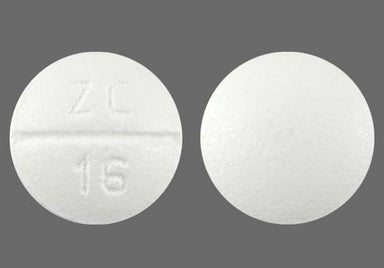
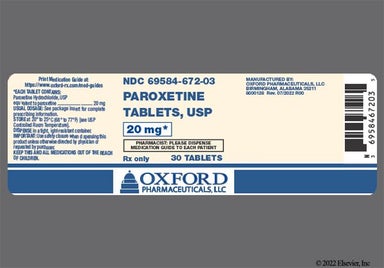
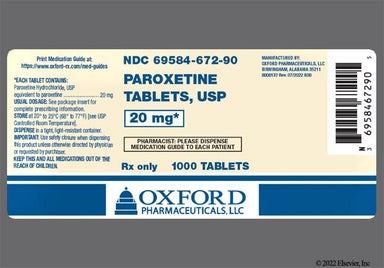
Paroxetine (Paxil) images