



Armodafinil Dosages: Your GoodRx Guide
Armodafinil treats daytime sleepiness (narcolepsy). The recommended dosage is 150 mg to 250 mg once per day. See armodafinil dose adjustments and recommendations for missed doses.
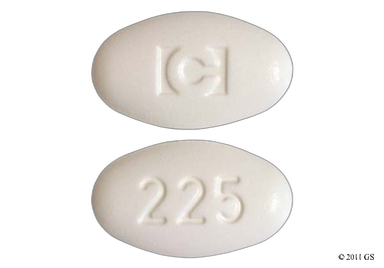
Armodafinil (Nuvigil) is used to improve wakefulness in adults who have extreme sleepiness due to narcolepsy, obstructive sleep apnea (OSA), or shift work disorder. It belongs to a drug class called wakefulness-promoting agents. Armodafinil (Nuvigil) is taken by mouth once a day. The exact dosage depends on the condition you have. Some side effects include headache, nausea, and dizziness. This medication is a controlled substance because it has a risk of misuse and dependence. Armodafinil (Nuvigil) is available in brand-name and generic versions.

Armodafinil (Nuvigil) is a wake-promoting medication. It's not exactly known how the medication works. But it appears to work in the brain to help control wakefulness.
| Common Brands | Nuvigil |
|---|---|
| Drug Class | Wakefulness-promoting agent |
| Controlled Substance Classification | Schedule IV |
| Generic Status | Lower-cost generic available |
| Availability | Prescription only |

Armodafinil (Nuvigil) can cause some serious health issues. This risk may be even higher for certain groups. If this worries you, talk to your doctor or pharmacist about other options.
It's rare, but armodafinil (Nuvigil) can cause serious allergic reactions. This can include anaphylaxis and swelling of the face, eyes, lips, tongue, or throat. Other signs include trouble swallowing or breathing and hoarseness.
Another possible reaction is DRESS syndrome, or drug reaction with eosinophilia and system symptoms. This can cause fever, a widespread red rash that later peels, and swollen lymph nodes. Sometimes, it can lead to abnormal blood cell counts and damage to organs like the liver and kidneys.
Watch for any signs of a serious allergic reaction after taking armodafinil (Nuvigil). If you notice any of these symptoms, get medical help right away.
Rarely, serious and possibly life-threatening skin reactions can happen while taking armodafinil (Nuvigil). They can include a new rash, sores, blisters, or peeling skin. You might also get sores on your lips or inside your mouth. These reactions can happen at any time, sometimes days to months after starting the medication.
Watch for any new rash, skin sores, mouth sores, or blisters while taking armodafinil (Nuvigil). If this happens, get medical help right away.
Even though armodafinil (Nuvigil) can help you stay awake, some people with extreme sleepiness might still struggle to stay alert. The medication also has a risk of making it harder to focus, think clearly, or react quickly. Be careful, and avoid driving or using machinery until you know how the medication affects you.
Some people taking armodafinil (Nuvigil) have had unusual changes in mood and behavior. These can include anxiety, agitation, nervousness, and irritability. Others are hallucinations, mania, depression, and sometimes even suicidal thoughts.
Tell your prescriber if you have any mental health conditions. Be sure you, your friends, and your family watch for any new or worsening mood or behavior changes while you're taking armodafinil (Nuvigil). If something seems worrying, talk to your prescriber. If you start to think about hurting yourself, call 911 right away.
In studies, some people taking armodafinil (Nuvigil) had higher blood pressure and heart rate. And in studies with a similar medication called modafinil (Provigil), some people with certain heart problems had chest pain, palpitations, and shortness of breath.
Before starting armodafinil (Nuvigil), let your prescriber know if you have any heart conditions. They can check that the medication is safe for you. It isn't recommended for people with certain heart problems.
If you take armodafinil (Nuvigil), your prescriber might ask you to check your blood pressure and heart rate during treatment. Tell your care team if either one stays higher than usual. Also let them know if you have any chest pain or irregular heartbeats while taking this medication. These can be signs of heart issues.

The following side effects may get better over time as your body gets used to the medication. Let your healthcare provider know immediately if you continue to experience these symptoms or if they worsen over time.
Contact your healthcare provider immediately if you experience any of the following.
Along with its needed effects, a medicine may cause some unwanted effects. Although not all of these side effects may occur, if they do occur they may need medical attention.
Check with your doctor immediately if any of the following side effects occur:
Less common
Blistering, burning, crusting, dryness, or flaking of the skin
burning, crawling, itching, numbness, prickling, "pins and needles", or tingling feelings
difficult or labored breathing
fast, irregular, pounding, or racing heartbeat or pulse
headache, severe and throbbing
increased volume of pale, dilute urine
itching, scaling, severe redness, soreness, or swelling of the skin
rash
shakiness in the legs, arms, hands, or feet
tightness in the chest
trembling or shaking of the hands or feet
trouble breathing
Get emergency help immediately if any of the following symptoms of overdose occur:
Symptoms of overdose
blurred vision
chest pain or discomfort
confusion about identity, place, and time
headache
hyperventilation
irritability
lightheadedness, dizziness, or fainting
pounding in the ears
restlessness
seeing, hearing, or feeling things that are not there
slow heartbeat
trouble sleeping
unusual tiredness or weakness
Some side effects may occur that usually do not need medical attention. These side effects may go away during treatment as your body adjusts to the medicine. Also, your health care professional may be able to tell you about ways to prevent or reduce some of these side effects. Check with your health care professional if any of the following side effects continue or are bothersome or if you have any questions about them:
Less common
Acid or sour stomach
belching
chills
difficulty having a bowel movement (stool)
discouragement
feeling sad or empty
general feeling of discomfort or illness
indigestion
joint pain
loss of appetite
loss of interest or pleasure
mood or mental changes
muscle aches and pains
shivering
stomach discomfort, upset, or pain
sweating
thirst
tiredness
trouble concentrating
vomiting
Other side effects not listed may also occur in some patients. If you notice any other effects, check with your healthcare professional.
Call your doctor for medical advice about side effects. You may report side effects to the FDA at 1-800-FDA-1088.




 Tablet
| Dosage | Quantity | Price as low as | Price per unit |
|---|---|---|---|
| 50mg | 30 tablets | $20.49 | $0.68 |
| 150mg | 30 tablets | $34.07 | $1.14 |
| 250mg | 30 tablets | $38.86 | $1.30 |
| 200mg | 30 tablets | $36.10 | $1.20 |
Your dose might differ if you're an older adult or if you have liver problems.

Although certain medicines should not be used together at all, in other cases two different medicines may be used together even if an interaction might occur. In these cases, your doctor may want to change the dose, or other precautions may be necessary. When you are taking this medicine, it is especially important that your healthcare professional know if you are taking any of the medicines listed below. The following interactions have been selected on the basis of their potential significance and are not necessarily all-inclusive.
Using this medicine with any of the following medicines is usually not recommended, but may be required in some cases. If both medicines are prescribed together, your doctor may change the dose or how often you use one or both of the medicines.
Using this medicine with any of the following medicines may cause an increased risk of certain side effects, but using both drugs may be the best treatment for you. If both medicines are prescribed together, your doctor may change the dose or how often you use one or both of the medicines.


Contraindications are specific health conditions or situations in which a person should not take a medication due to safety concerns. If you have any of the following conditions or if any of the following apply to you, let your healthcare provider know because Armodafinil (Nuvigil) will not be safe for you to take.






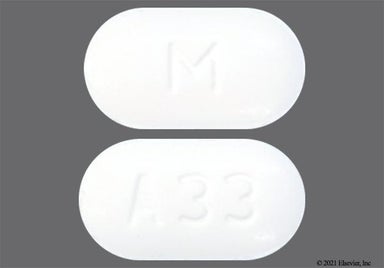



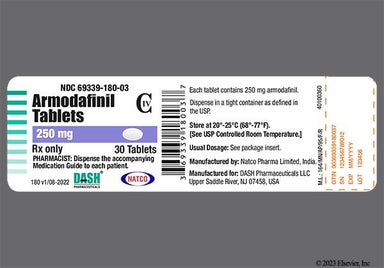
Prescription savings
Stop paying too much for your prescriptions. Compare prices, get pharmacy coupons, and save up to 80%. Find expert answers to your health questions so you can make the best decisions for yourself and your family.
Health conditions
Medications & treatment
Access & affordability
Medication discounts


Yes, Armodafinil is a schedule IV controlled substance. It has some potential for misuse and dependence. These risks can be harmful. Because it's a controlled substance, there are strict limits about how it's prescribed and dispensed. This can include how much you can get in a given period of time and how many times the prescription can be refilled. If you have questions about what this means for you, ask your prescriber.
You can expect one dose of Armodafinil to last throughout the day.
Armodafinil can be described as a stimulant. Its effects are similar to amphetamine-based stimulants. They both can improve wakefulness and alertness. But Armodafinil works in a different way in the body.
Don't take Armodafinil and Adderall (amphetamine salt combo) together without talking to your prescriber first. Only take them together if a healthcare professional says it's safe. Both medications are stimulants. Taking them together can "stack" their effects. This can cause uncomfortable or dangerous symptoms, like heart issues and trouble sleeping.
The manufacturer doesn't say whether you can cut Armodafinil tablets in half. In general, it's good practice not to cut certain pills that aren't scored. This is because you might not cut the tablet evenly and you could take the wrong dose of your medication. You could also get hurt trying to cut the tablet. If you have trouble swallowing the table whole, speak to your prescriber. They might be able to adjust your dose or find an alternative treatment option.
Armodafinil can interact with several medications. For example, it can make hormonal birth control work less well. It can also weaken medications like cyclosporine (Sandimmune, Neoral, Gengraf). In addition, Armodafinil can raise the levels of omeprazole (Prilosec), phenytoin (Dilantin), and diazepam (Valium) in the body. This can lead to more side effects. It might also affect blood thinners like warfarin (Coumadin). Tell your care team and pharmacist about all the medications you take or plan to take. They can check for drug interactions and help keep you safe.
Armodafinil and modafinil (Provigil) are very similar. They're used for the same conditions, work the same way, and are taken once a day. The main difference is their chemical structure, which changes how long they last in the body. Studies suggest that Armodafinil stays at higher levels in the body later in the day. This means that it might last longer and work better throughout the day than modafinil (Provigil). Talk to a healthcare professional to compare the two and see which one is best for you.
No, Armodafinil isn't the same as Adderall (amphetamine salt combo). They're similar in that they can both improve wakefulness and alertness. But they work differently in the brain and affect different chemicals. They're also classified as controlled medications differently. Armodafinil is a schedule IV medication while Adderall is a schedule II. This means the FDA believes that Adderall has a higher risk of misuse and dependence than Armodafinil. It also means that there are also stricter rules to prescribe and dispense Adderall. Talk to a healthcare professional to compare the medications.
