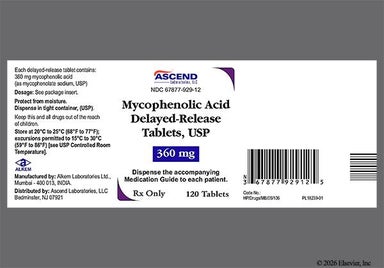
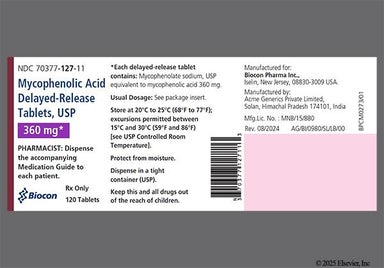
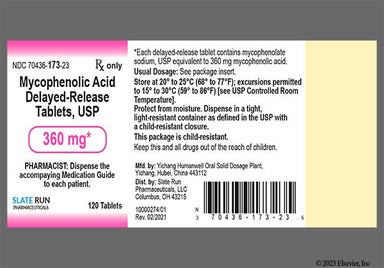
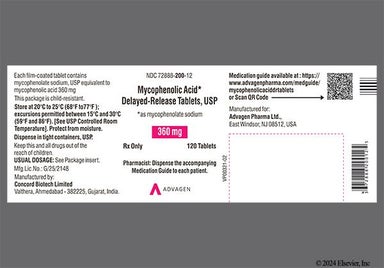
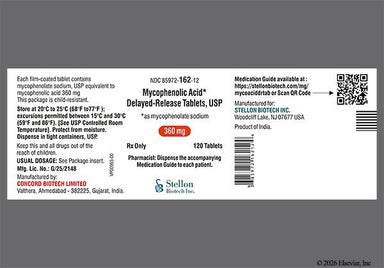
Mycophenolic acid (Myfortic) is a transplant medication that helps prevent rejection after a kidney transplant in people 5 years and older. It's an immunosuppressant, which means that it works by weakening the immune system. Mycophenolic acid (Myfortic) is a tablet that's taken by mouth two times a day. The tablets have a special coating on them, which can help lessen gastrointestinal-related side effects such as upset stomach and diarrhea. Your transplant team might refer to the medication by its generic name, mycophenolic acid, or by its brand name, Myfortic.
Prevention of kidney transplant rejection in people 5 years and older
How Mycophenolic acid (Myfortic) works
Mycophenolic acid (Myfortic) is a type of immunosuppressant medication called an antiproliferative agent. The medication lowers the activity of your immune system by blocking your body from making certain immune system cells. You need a suppressed or weakened immune system after you receive a kidney transplant so that your body doesn't reject the new kidney.
The following side effects may get better over time as your body gets used to the medication. Let your healthcare provider know immediately if you continue to experience these symptoms or if they worsen over time.
The following Mycophenolic acid (Myfortic) side effects have also been reported
Along with its needed effects, a medicine may cause some unwanted effects. Although not all of these side effects may occur, if they do occur they may need medical attention.
Check with your doctor immediately if any of the following side effects occur:
Some side effects may occur that usually do not need medical attention. These side effects may go away during treatment as your body adjusts to the medicine. Also, your health care professional may be able to tell you about ways to prevent or reduce some of these side effects. Check with your health care professional if any of the following side effects continue or are bothersome or if you have any questions about them:
Take mycophenolic acid (Myfortic) every 12 hours on an empty stomach (1 hour before or 2 hours after a meal). Taking the medication on an empty stomach helps it get absorbed into your body more consistently. Follow your prescriber's instructions if they told you to take the medication with food.
Swallow the tablets whole. Don’t cut, crush, or chew them because this can damage the outer coating and affect how the medication works.
Before you get any vaccines, it's important to tell the healthcare professional (HCP) that you're taking mycophenolic acid (Myfortic). Your HCP will check that the vaccine is safe for you. Immunosuppressants like mycophenolic acid (Myfortic) can make vaccines work less well to protect you from infection. You can also get sick from live vaccines like Varivax (chickenpox).
If you can become pregnant and you're sexually active, speak with your care team about which birth control method to use while you're taking mycophenolic acid (Myfortic) and for 6 weeks after your last dose. It's important to prevent pregnancy because mycophenolic acid (Myfortic) can harm an unborn baby. Your transplant team might order routine pregnancy tests while you're taking this medication.
If you're sexually active, use a condom when you're having sex while you're taking mycophenolic acid (Myfortic) and for at least 3 months after you stop taking the medication. Mycophenolic acid (Myfortic) can get into semen and can negatively affect an unborn baby if you get someone pregnant.
Don't donate blood during treatment with mycophenolic acid (Myfortic) and for at least 6 weeks after your last dose of the medication. And don't donate semen during treatment and for at least 3 months after your last dose. This lowers the risk for harm to unborn babies if the donated blood or semen happens to be given to someone who could get pregnant.
If you forget to take a dose of mycophenolic acid (Myfortic), take it as soon as you remember. If it’s almost time for your next dose, skip the missed dose and take your next dose when you usually take it. Don't take two doses at the same time because this can raise your risk for side effects. Set up reminders to take the medication as instructed because missing doses can lead to transplant rejection.
Risks and warnings for Mycophenolic acid (Myfortic)
Mycophenolic acid (Myfortic) can cause some serious health issues. This risk may be even higher for certain groups. If this worries you, talk to your doctor or pharmacist about other options.
Harm to unborn baby
Risk factors: People who can become pregnant | Currently pregnant
Avoid taking mycophenolic acid (Myfortic) while pregnant if there are safer treatment options available because the medication can harm an unborn baby if it's taken during pregnancy. Studies show that taking mycophenolic acid (Myfortic) during pregnancy can raise the risk for miscarriage (pregnancy loss) in the first trimester and for birth defects. Talk to your transplant specialist or pharmacist if you have questions about your options for birth control. Discuss with your transplant team about other treatment options if you're interesting in becoming pregnant in the future.
Risk for cancer
Risk factors: Long-term use
People who take immunosuppressant medications like mycophenolic acid (Myfortic) for a long time might be at higher risk for cancer. These cancers can include skin cancer and lymphomas (cancers of the immune system), among others. Speak with your transplant specialist if you're concerned about the risk for cancer with mycophenolic acid (Myfortic).
To lower your risk for skin cancer, limit your exposure to sunlight and ultraviolet light (e.g., tanning beds). Also wear protective clothing, and use sunscreen with an SPF of at least 30 when you're outside, even on cloudy days. Be sure to check your skin for any unusual changes and tell your care team if you notice anything out of the ordinary.
Serious infections
Risk factors: Taking other immunosuppressants
People who take immunosuppressants like mycophenolic acid (Myfortic) are at higher risk for serious and sometimes life-threatening infections, including those caused by bacteria, fungi, and viruses. In some cases, infections can happen when an inactive germ in your body, like the bacteria that cause tuberculosis (TB) or the hepatitis B virus (HBV), reactivates and makes you sick again.
Be sure to wash your hands often and stay away from people who are sick to lower your risk for infection. Tell your transplant care team right away if you have any symptoms of an infection, such as fever, chills, night sweats, muscle aches, change in appetite, weight loss, vomiting, or skin rash.
Blood problems
Risk factors: Taking other medications that can lower blood cell counts | Current infection
Mycophenolic acid (Myfortic) can lower your white blood cell counts (the cells that help your body fight infections). The medication can also lower your red blood cell counts (the cells that deliver oxygen to all parts of your body). You'll need regular blood tests done so that your transplant team can check your blood counts during treatment. Your prescriber might lower your mycophenolic acid (Myfortic) dose if your numbers go too low. Tell your transplant care team if you have fever, sore throat, tiredness, weakness, or pale skin that doesn’t go away. These are signs of either having low red and white blood cells in the body.
Stomach bleeding and ulcers
Risk factors: History of medical problems that affect the digestive system
Some people who took mycophenolic acid (Myfortic) have had serious stomach problems, including ulcers and bleeding. These stomach problems can be dangerous and might require treatment right away. Be sure your transplant team knows if you have a history of ulcers or other digestion-related problems. Get medical help right away if you notice blood in your stool or vomit while you're taking mycophenolic acid (Myfortic); these can be signs of a bleed in the digestive tract.
Inflammation in the body
Mycophenolic acid (Myfortic) weakens the immune system to lower inflammation to help prevent organ rejection. But very rarely, some people have had symptoms of inflammation in the body during treatment with similar medications. Symptoms can include fever, joint or muscle pain, and changes in certain lab results. These symptoms can happen within weeks to months of starting mycophenolic acid (Myfortic) or after dose changes.
Your transplant team will check for signs and symptoms of inflammation during treatment. Tell your care team right away if you have any fever, joint pain, or muscle pain while you're taking mycophenolic acid (Myfortic).
Many drug interactions
Ask your transplant team or pharmacist about all medications and over-the-counter products you want to take with mycophenolic acid (Myfortic), even if you only take them once in a while. Your care team should review your medication list because mycophenolic acid (Myfortic) is known to interact with many medications. These interactions can either make your medications work less well, raise your risk for rejection of your transplanted kidney, or raise your risk for side effects. For example, taking mycophenolic acid (Myfortic) at the same time as antacids with magnesium and aluminum can cause the immunosuppressant to work less well.
Avoid in people with a genetic condition called hypoxanthine-guanine phosphoribosyl-transferase (HGPRT) deficiency
Always tell your healthcare professional (HCP) or pharmacist that you're taking an immunosuppressant like mycophenolic acid (Myfortic) before you get any vaccines during treatment. Your HCP and pharmacist will make sure that it's safe for you to get the vaccine.
Transplant medications like mycophenolic acid (Myfortic) can change the way your immune system responds to vaccines. This might make some vaccines work less well to protect you from infection. During treatment, it's important to avoid live vaccines, such as FluMist (the nasal spray version of the flu vaccine) and Varivax (chickenpox vaccine). Since this medication weakens your immune system to prevent organ rejection, it raises your risk for getting sick from the live vaccine itself.
Mycophenolic acid (Myfortic) dosage
The average cost for 120 tablets of 360mg of Mycophenolic acid (Myfortic) is $40.33 with a free GoodRx coupon. This is 96.13% off the average retail price of $1,041.66.
Interactions between Mycophenolic acid (Myfortic) and other drugs
Mycophenolic acid (Myfortic) may interact with certain medications or supplements. Always let your doctor and pharmacist know about any other medications or supplements (including prescribed and over-the-counter medications, vitamins, and dietary or herbal supplements) that you are currently taking. The list below does not include all possible drug interactions with Mycophenolic acid (Myfortic). Please note that only the generic name of each medication is listed below.
Although certain medicines should not be used together at all, in other cases two different medicines may be used together even if an interaction might occur. In these cases, your doctor may want to change the dose, or other precautions may be necessary. When you are taking this medicine, it is especially important that your healthcare professional know if you are taking any of the medicines listed below. The following interactions have been selected on the basis of their potential significance and are not necessarily all-inclusive.
Using this medicine with any of the following medicines is usually not recommended, but may be required in some cases. If both medicines are prescribed together, your doctor may change the dose or how often you use one or both of the medicines.
Using this medicine with any of the following medicines may cause an increased risk of certain side effects, but using both drugs may be the best treatment for you. If both medicines are prescribed together, your doctor may change the dose or how often you use one or both of the medicines.
Contraindications are specific health conditions or situations in which a person should not take a medication due to safety concerns. If you have any of the following conditions or if any of the following apply to you, let your healthcare provider know because Mycophenolic acid (Myfortic) will not be safe for you to take.
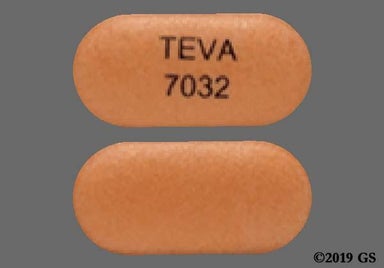
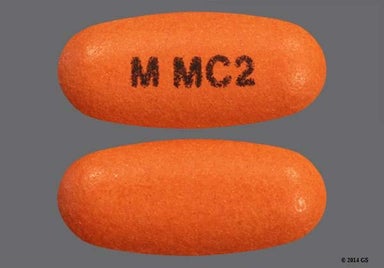
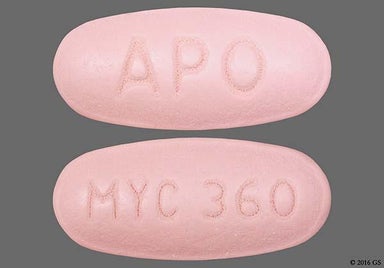
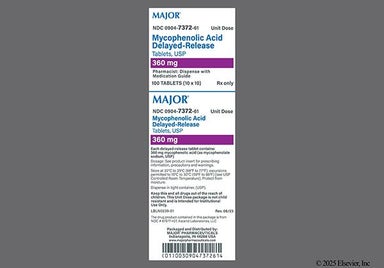
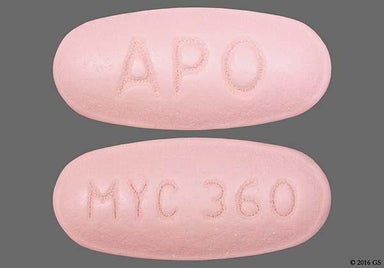
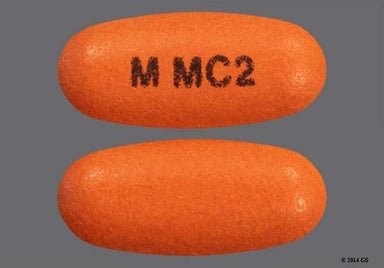
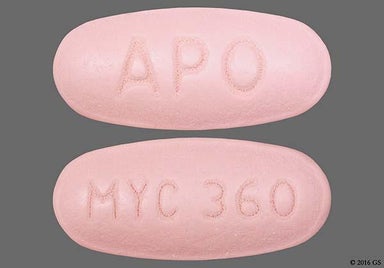
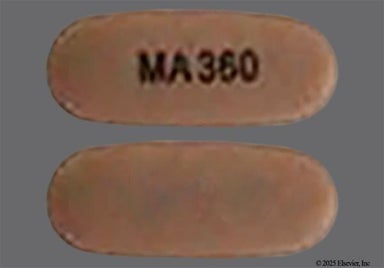
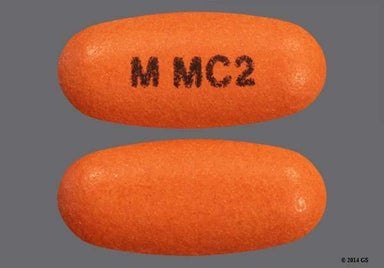
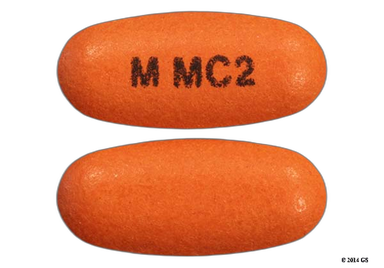
This medicine is Orange, Oblong Tablet Imprinted With "Teva 7032".Orange Oblong TEVA 7032 - Mycophenolic Acid 360mg Delayed-Release TabletThis medicine is Red-Orange, Oblong Tablet Imprinted With "M Mc2".Red-orange Oblong M MC2 - Mycophenolic Acid 360mg Delayed-Release TabletThis medicine is Pink, Oval Tablet Imprinted With "Apo", "Myc 360".Pink Oval MYC 360 - Mycophenolic Acid 360mg Delayed-Release TabletThis medicine is Red-Orange, Oval Tablet Imprinted With "Ma 360".Red-orange Oval MA 360 - Mycophenolic Acid 360mg Delayed-Release TabletThis medicine is Pink, Oval Tablet Imprinted With "Apo", "Myc 360".Pink Oval MYC 360 - Mycophenolic Acid 360mg Delayed-Release TabletThis medicine is Red-Orange, Oblong Tablet Imprinted With "M Mc2".Red-orange Oblong M MC2 - Mycophenolic Acid 360mg Delayed-Release TabletThis medicine is Pink, Oval Tablet Imprinted With "Apo", "Myc 360".Pink Oval MYC 360 - Mycophenolic Acid 360mg Delayed-Release TabletThis medicine is Red-Orange, Oval Tablet Imprinted With "Ma 360".Red-orange Oval MA 360 - Mycophenolic Acid 360mg Delayed-Release TabletThis medicine is Red-Orange, Oval Tablet Imprinted With "Ma 360".Red-orange Oval MA 360 - Mycophenolic Acid 360mg Delayed-Release TabletThis medicine is Pink, Oval Tablet Imprinted With "Ap36".Pink Oval aP36 - Mycophenolic Acid 360mg Delayed-Release TabletThis medicine is Orange, Oval Tablet Imprinted With "A121".Orange Oval A121 - Mycophenolic Acid 360mg Delayed-Release TabletThis medicine is Red-Orange, Oblong Tablet Imprinted With "M Mc2".Red-orange Oblong M MC2 - Mycophenolic Acid 360mg Delayed-Release TabletThis medicine is Pink, Oval Tablet Imprinted With "C2".Pink Oval C2 - Mycophenolic Acid 360mg Delayed-Release TabletThis medicine is Pink, Oval Tablet Imprinted With "C2".Pink Oval C2 - Mycophenolic Acid 360mg Delayed-Release Tablet
GoodRx Health has strict sourcing policies and relies on primary sources such as medical organizations, governmental agencies, academic institutions, and peer-reviewed scientific journals. Learn more about how we ensure our content is accurate, thorough, and unbiased by reading our editorial guidelines.
Prescription savings
Stop paying too much for your prescriptions. Compare prices, get pharmacy coupons, and save up to 80%.
Plans start at $9.99/mo. (when paid yearly). Terms apply.
Common questions about Myfortic
No. Myfortic isn't the same as mycophenolate mofetil (Cellcept), even though they're similar medications. They both weaken the immune system to prevent rejection after a kidney transplant. But Myfortic and mycophenolate mofetil (Cellcept) get absorbed into the body differently and are dosed differently, so they're not interchangeable. This means that you can't just replace Myfortic with mycophenolate mofetil (CellCept) without your transplant specialist's guidance. Your transplant specialist will need to work with you closely if you need to switch between the two medications. Speak with your transplant specialist to learn more about comparing between Myfortic and mycophenolate mofetil (Cellcept).
Although hair loss isn't a common side effect of Myfortic, it appears to be possible. Some people have had hair loss while they took the medication; these instances of hair loss were reported after the medication was approved and became available on the market. Note that it's also possible that hair loss might be from other transplant medications that you might be taking at the same time, like tacrolimus (Prograf). Tell your transplant team if you notice hair loss while you're taking Myfortic. Your transplant team can help you figure out what might be causing hair loss and suggest ways to manage hair loss.
Weight gain wasn't a commonly reported side effect of Myfortic during clinical studies. Keep in mind that some people noticed swelling in the body that's caused by fluid retention (when the body holds onto more water). A lot of fluid retention in the body (water weight) can sometimes appear as weight gain. Tell your transplant team if you notice any concerning weight gain while you're taking Myfortic.
Myfortic can interact with many different medications. For example, Myfortic interacts with antacids like Mylanta and certain phosphorus binders like sevelamer (Renvela). These drug interactions cause the immunosuppressant to work less well, which can possibly raise your risk for organ rejection. You'll need to take these medications at different times than Myfortic. In addition, Myfortic can make hormonal birth control work less well; your transplant team will recommend that you use other birth control methods, like a condom, during sex to prevent pregnancy. These aren't the only medications that can interact with Myfortic, so tell your transplant team about all the medications you're taking to make sure they're safe for you.
Myfortic can harm an unborn baby if it's taken during pregnancy; talk to your transplant team about other options for immunosuppression if you have plans to become pregnant. Additionally, long-term use of Myfortic can raise the risk for certain cancers, such as skin cancer or lymphomas (cancers of the immune system); speak with your care team about concerns for cancer and ways to lower your risk for skin cancer. Another important warning to be aware of is that taking Myfortic can raise your risk for serious or life-threatening infections. Tell your transplant team right away if you develop symptoms of infection, such as fever, chills, muscle aches, change in appetite, vomiting, or skin rash, during treatment.
There's a risk for harm to an unborn baby if your donated blood or semen happens to be given to someone who could get pregnant. This is because Myfortic is in your blood and can also get into semen while you're taking the medication. And Myfortic can be very dangerous to an unborn baby. To avoid potential problems for the person who's receiving your donated blood or semen, you shouldn't donate blood while you're taking Myfortic and for at least 6 weeks after you stop the medication. You also shouldn't donate any semen until 90 days after you stop taking Myfortic.
You should continue to take Myfortic and your other anti-rejection medications until your transplant specialist tells you to stop. This makes sure to keep your body from rejecting the transplanted kidney. Usually, your transplant specialist will tell you to stop taking Myfortic only if you're having a side effect that's too bothersome for you or if you're having a very serious side effect. Your transplant specialist might also tell you to stop taking Myfortic if they're working with you to switch you to a different medication.




 Avoid taking mycophenolic acid (Myfortic) while pregnant if there are safer treatment options available because the medication can harm an unborn baby if it's taken during pregnancy. Studies show that taking mycophenolic acid (Myfortic) during pregnancy can raise the risk for
 To lower your risk for skin cancer, limit your exposure to sunlight and ultraviolet light (e.g., tanning beds). Also