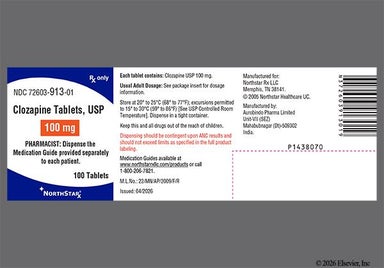
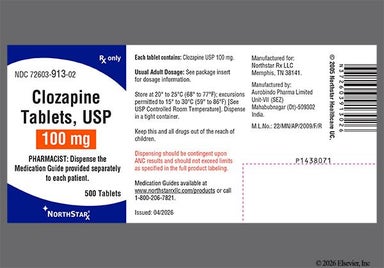
Clozapine (Clozaril) is used to treat schizophrenia. It's an atypical antipsychotic, but it's not a first-choice medication for schizophrenia because it can cause many bothersome side effects, such as drowsiness and dizziness. It can also cause your white blood cell (WBC) count to drop dangerously low and raise your risk for serious infections. As a result, clozapine (Clozaril) is prescribed under a special program called Risk Evaluation and Mitigation Strategies (REMS). In order to pick up your medication at the pharmacy, your provider will ask you to get blood work regularly (weekly to monthly) to make sure your WBC count is at a healthy level.
Schizophrenia that hasn't responded to other treatments
Suicidal behavior in people with schizophrenia or schizoaffective disorder
How Clozapine (Clozaril) works
Clozapine (Clozaril) is a second generation "atypical" antipsychotic. It's not exactly known how it works, but it mainly targets and changes dopamine and serotonin activity in your brain, which affect your thoughts, behavior, and mood.
The following side effects may get better over time as your body gets used to the medication. Let your healthcare provider know immediately if you continue to experience these symptoms or if they worsen over time.
Common Side Effects
Increased salivation (Up to 48%)
Drowsiness (up to 46%)
Dizziness (up to 27%)
Fast heart rate (up to 25%)
Constipation (up to 25%)
Trouble sleeping (up to 20%)
Nausea/vomiting (17%)
High or low blood pressure (up to 13%)
Fever (up to 13%)
Headache (10%)
Heartburn (up to 14%)
Less Common Side Effects
Sweating
Dry mouth
Weight gain
Shakiness
Fainting
Restlessness, agitation
Rigid movements
Disturbed sleep or nightmares
Diarrhea
Rash
Clozapine (Clozaril) serious side effects
Contact your healthcare provider immediately if you experience any of the following.
Seizures
Tardive dyskinesia: uncontrolled muscle movements, such as facial grimacing, lip-smacking, blinking
The following Clozapine (Clozaril) side effects have also been reported
Along with its needed effects, a medicine may cause some unwanted effects. Although not all of these side effects may occur, if they do occur they may need medical attention.
Check with your doctor immediately if any of the following side effects occur:
Some side effects may occur that usually do not need medical attention. These side effects may go away during treatment as your body adjusts to the medicine. Also, your health care professional may be able to tell you about ways to prevent or reduce some of these side effects. Check with your health care professional if any of the following side effects continue or are bothersome or if you have any questions about them:
More common
Acid or sour stomach
belching
feeling of constant movement of self or surroundings
Other side effects not listed may also occur in some patients. If you notice any other effects, check with your healthcare professional.
Call your doctor for medical advice about side effects. You may report side effects to the FDA at 1-800-FDA-1088.
Pros and cons of Clozapine (Clozaril)
Pros
Works well to treat schizophrenia when other medications haven't worked well
Taken by mouth
Comes as both a regular tablet (that you swallow by mouth) and as a dissolvable tablet that you place on the tongue
Available as a lower-cost generic
Cons
Need to get blood work done every time you get a prescription filled (weekly to monthly)
Can cause dizziness and drowsiness
Can cause high blood sugar, high cholesterol, and weight gain
Not a good option for people with a history of seizures
Pharmacist tips for Clozapine (Clozaril)
You can take clozapine (Clozaril) with or without food because food doesn't affect how well this medication works.
Take clozapine (Clozaril) exactly as prescribed and don't stop taking it without talking to your healthcare provider. Stopping it all of a sudden can cause your symptoms to return, or you could have withdrawal symptoms such as sweating, headache, nausea, vomiting, and diarrhea.
To avoid feeling dizzy while taking this medication, rise slowly if you have been sitting or lying down. Avoid driving and other tasks that require you to be alert until you know how clozapine (Clozaril) affects you.
Clozapine (Clozaril) is part of a special monitoring program called the clozapine (Clozaril) REMS Program because of its risk for low white blood cells and infection. You'll need to get blood tests before you start this medication and before every refill. You must pick up the medication within 7 days of your blood tests.
If you miss taking clozapine (Clozaril) for more than 2 days, don't just restart it; call your provider for guidance on what to do. Your provider will likely ask you to start clozapine (Clozaril) at a lower dose and raise your dose slowly over time until you get to the dose you were taking before.
You might experience constipation while taking clozapine (Clozaril). You should drink plenty of water and eat foods with enough fiber. If you continue to pass less than 3 stools a week, you will need to contact your healthcare provider.
There are many medication interactions with clozapine (Clozaril). Certain medications can make clozapine (Clozaril) not work as well (e.g., phenytoin), while others can cause clozapine (Clozaril) levels to go too high which can cause serious side effects (e.g., bupropion). Let your healthcare provider and pharmacist know all the medications, including vitamins and herbal supplements you're taking.
Clozapine (Clozaril) might affect your weight, cholesterol, and blood sugar control. You will need to get these checked regularly while you taking this medication.
Let your healthcare provider know if you are pregnant, planning on becoming pregnant or breastfeeding while taking this medication.
If you're taking the orally disintegrating tablet, place the tablet on your tongue right after removing it from the blister pack. You don't need to swallow water afterwards, your regular saliva is enough.
Risks and warnings for Clozapine (Clozaril)
Clozapine (Clozaril) can cause some serious health issues. This risk may be even higher for certain groups. If this worries you, talk to your doctor or pharmacist about other options.
Risk of serious infection (from low white blood cells)
Clozapine (Clozaril) can cause low neutrophil (white blood cell, or WBC) count, which can lead to serious infections. Due to this risk, clozapine (Clozaril) is only available under a restricted program called the clozapine (Clozaril) REMS Program, which ensures that healthcare providers and pharmacies have the appropriate training to prescribe and dispense this medication. Your provider will measure your neutrophil level before you start clozapine (Clozaril) to make sure it's not too low. In addition, you'll need to get regular blood tests (weekly to monthly) while you're receiving treatment. You'll only be able to pick up your clozapine (Clozaril) prescription at the pharmacy if your neutrophil levels are within a safe range. Let your healthcare provider know right away if you experience symptoms of an infection, such as fever, weakness, sore throat, or cough while taking this medication.
Low blood pressure, slow heartbeat, and fainting
Risk factors: History of heart-related conditions, such as heart attack | Dehydration | Taking blood pressure medications | Heart failure
Clozapine (Clozaril) can cause low blood pressure and a slower heartbeat, which can lead to fainting or falling. This is most likely to happen if you're starting this medication for the first time or any time your provider is raising your dose too quickly. Your risk of these side effects is higher if you're also taking blood pressure medications or if you're dehydrated. To lower your risk of low blood pressure or falls, your provider will raise your dose of clozapine (Clozaril) slowly over time. Make sure to also drink enough of liquids to stay hydrated throughout the day. Contact to your healthcare provider if you feel dizzy or lightheaded.
Seizures
Risk factors: Seizure disorder | Drinking large amounts of alcohol regularly | Taking medications that raise the risk for seizures | Head injury
People taking clozapine (Clozaril) have reported having seizures. The risk for seizures is higher for people who are taking higher doses of clozapine (Clozaril) or who are taking other medications that can raise the risk for seizures. Let your caregiver or family members know of this risk and teach them how they can help if you have a seizure. Be careful driving, swimming, or participating in other potentially dangerous activities in which sudden loss of consciousness could cause serious harm. Talk to your healthcare provider if you have a history of seizures.
Heart problems
Risk factors: History of heart problems
People taking clozapine (Clozaril) have reported issues with their heart muscles, which can be serious and sometimes life-threatening. If you experience these problems, your provider will switch you to a different medication, unless they think the benefit of clozapine (Clozaril) is greater than the risk of harm. Call your healthcare provider right away if you have chest pain or pressure, a heartbeat that doesn't feel normal, trouble breathing, fainting, or fever.
Higher risk of death in older people with dementia-related psychosis
Risk factors: Ages 65 years and older
People ages 65 years and older with dementia sometimes have delusions and hallucinations (believing, seeing, or hearing things that aren't real). This is called dementia-related psychosis. Older people with dementia-related psychosis have a higher risk of death if they take medications like clozapine (Clozaril). Because of this risk, clozapine (Clozaril) shouldn't be used in people 65 years and older with dementia-related psychosis. Let your provider know if you or someone you know has dementia before starting clozapine (Clozaril).
High blood sugar, high cholesterol, and weight gain
Clozapine (Clozaril) can raise your blood sugar and cholesterol levels as well as raise your appetite, all of which can lead to weight gain. Your provider will likely order blood tests regularly throughout treatment with clozapine (Clozaril) to make sure your blood sugar and cholesterol aren't too high. Make sure to have a healthy and balanced diet low in fat and sugar and maintain a regular exercise routine while taking clozapine (Clozaril).
Severe constipation
Some people taking clozapine (Clozaril) experienced severe constipation and other gut-related problems. This is because this medication can cause your gut muscles to move more slowly, which can cause stool to get backed up in the intestines or other complications. You should drink plenty of fluids and eat a fiber-full diet while taking clozapine (Clozaril) to lower your risk of gut-related problems. If your passing less than 3 stools a week or if you have symptoms such as nausea, vomiting, or stomach pain, ask your provider if you need more medical attention.
Serious allergic reactions or inflammation problems
Clozapine (Clozaril) can cause eosinophil levels (a type of white blood cell) to rise. This can lead to a reaction called drug reaction with eosinophilia and systemic symptoms syndrome (DRESS), which can in turn, lead to problems in other organs in your body, such as the heart, pancreas, and kidneys. Let your provider know right away if you have a fever, rash, or swollen lymph nodes.
Risk factors: Low potassium or magnesium blood levels | Older age | Female sex | Using other medications that cause QT prolongation | Born with QT prolongation | Hypothyroidism (low thyroid hormone) | History of heart problems or abnormal heart rhythms (arrhythmias) | Slow heart rate
Although rare, clozapine (Clozaril) can affect your heart rhythm by lengthening the time period from when the heart pumps and then relaxes. This is known as QT prolongation and it can be life-threatening. Your risk for QT prolongation is higher if you have any of the risk factors listed above. To lower your risk of QT prolongation, your provider will periodically monitor you and draw labs to make sure your numbers are normal. Make sure to tell your provider about all the medications you're taking and don't start any new medications while taking clozapine (Clozaril) without talking to your provider or pharmacist first. People who were born with QT prolongation or have a history of arrhythmias should avoid taking clozapine (Clozaril). If you feel your chest pounding, have trouble breathing, chest pain, or feel faint or lightheaded while taking clozapine (Clozaril), call 911 right away.
Neuroleptic malignant syndrome
This is a rare, but life-threatening condition associated with antipsychotic medications. Symptoms include high fever, fast heart rate, full body stiffness, and confusion. Get medical attention right away if you notice any of these symptoms. Your healthcare provider will likely find you another medication that will work better for you.
Driving impairment
Risk factors: Drinking alcohol | Taking other medicines that make you less alert
Clozapine (Clozaril) impairs your ability to focus, think, and react. Be careful and avoid driving a car or other activities that require mental concentration until you know how this medication affects you.
Liver problems
Risk factors: History of liver disease like hepatitis
Rare, but life-threatening, liver problems can happen in people who take clozapine (Clozaril). Your healthcare provider might check your liver health with blood tests and checkups while you're taking this medication. If you do experience any severe abdominal pain, dark urine, weakness, yellowing of skin or eyes you should let your healthcare provider know right away.
Difficulty controlling body movements
Risk factors: Taking other antipsychotic medications | High dose | Taking clozapine (Clozaril) for a long period of time
Antipsychotic medications like clozapine (Clozaril) can cause uncontrolled body movements, such as eye-twitching or lip-smacking. Your risk of this happening is higher the longer you take medications like clozapine (Clozaril) and if you're taking a higher dose. These movement problems can become permanent. To lower your risk of movement problems, your provider will prescribe the lowest dose of clozapine (Clozaril) you need to treat your symptoms. If you experience any uncontrolled movements and aren't able to stop them, talk to your provider right away.
Not for people with phenylketonuria (dissolvable tablets only)
If you have a condition called phenylketonuria, let your provider know. The dissolvable clozapine tablets contain phenylalanine, which can build up in your body and cause health problems.
Clozapine (Clozaril) dosage
The average cost for 90 tablets of 100mg of Clozapine (Clozaril) is $63.62 with a free GoodRx coupon. This is 82.23% off the average retail price of $358.06.
Interactions between Clozapine (Clozaril) and other drugs
Clozapine (Clozaril) may interact with certain medications or supplements. Always let your doctor and pharmacist know about any other medications or supplements (including prescribed and over-the-counter medications, vitamins, and dietary or herbal supplements) that you are currently taking. The list below does not include all possible drug interactions with Clozapine (Clozaril). Please note that only the generic name of each medication is listed below.
Although certain medicines should not be used together at all, in other cases two different medicines may be used together even if an interaction might occur. In these cases, your doctor may want to change the dose, or other precautions may be necessary. When you are taking this medicine, it is especially important that your healthcare professional know if you are taking any of the medicines listed below. The following interactions have been selected on the basis of their potential significance and are not necessarily all-inclusive.
Using this medicine with any of the following medicines is not recommended. Your doctor may decide not to treat you with this medication or change some of the other medicines you take.
Using this medicine with any of the following medicines is usually not recommended, but may be required in some cases. If both medicines are prescribed together, your doctor may change the dose or how often you use one or both of the medicines.
This medicine is Yellow, Round, Scored Tablet Imprinted With "Logo 4360", "100".Yellow Round LOGO 4360 - Clozapine 100mg TabletThis medicine is Yellow, Round, Scored Tablet Imprinted With "Logo 7772", "Logo 4360", "100".Yellow Round LOGO 4360 - Clozapine 100mg TabletThis medicine is Yellow, Round, Scored Tablet Imprinted With "4360", "100".Yellow Round 4360 - Clozapine 100mg TabletThis medicine is Green, Round, Scored Tablet Imprinted With "M", "C11".Green Round C11 - Clozapine 100mg TabletThis medicine is Yellow, Round, Scored Tablet Imprinted With "Wpi 100", "2529".Yellow Round WPI 100 - Clozapine 100mg TabletThis medicine is Green, Round, Scored Tablet Imprinted With "C11", "M".Green Round C11 - Clozapine 100mg TabletThis medicine is Yellow, Round, Scored Tablet Imprinted With "2529", "Wpi 100".Yellow Round WPI 100 - Clozapine 100mg TabletThis medicine is Yellow, Round, Scored Tablet Imprinted With "Myx 100", "902".Yellow Round MYX 100 - Clozapine 100mg TabletThis medicine is Yellow, Round, Scored Tablet Imprinted With "2529", "Wpi 100".Yellow Round WPI 100 - Clozapine 100mg TabletThis medicine is Yellow, Round, Scored Tablet Imprinted With "C C", "57".Yellow Round C C - Clozapine 100mg TabletThis medicine is Yellow, Round, Scored Tablet Imprinted With "C C", "57".Yellow Round C C - Clozapine 100mg TabletThis medicine is Yellow, Round, Scored Tablet Imprinted With "C C", "57".Yellow Round C C - Clozapine 100mg TabletThis medicine is Yellow, Round, Scored Tablet Imprinted With "C C", "57".Yellow Round C C - Clozapine 100mg TabletThis medicine is Yellow, Round, Scored Tablet Imprinted With "Cz 100".Yellow Round CZ 100 - Clozapine 100mg Tablet
GoodRx Health has strict sourcing policies and relies on primary sources such as medical organizations, governmental agencies, academic institutions, and peer-reviewed scientific journals. Learn more about how we ensure our content is accurate, thorough, and unbiased by reading our editorial guidelines.
Prescription savings
Stop paying too much for your prescriptions. Compare prices, get pharmacy coupons, and save up to 80%.
Plans start at $9.99/mo. (when paid yearly). Terms apply.
Common questions about Clozapine
Research shows that some people noticed an improvement in their symptoms after taking Clozapine for 6 weeks. Keep in mind that if you're taking Clozapine for the first time, your provider will start you on a lower dose in order to minimize your risk of side effects, such as dizziness and slow heart rate. Your provider might raise your dose of Clozapine slowly over time before they can find the dose that works best for you. If you're not sure whether or not this medication is helping, talk with your provider.
It takes about 2 to 3 days for the majority of Clozapine to leave your body. Keep in mind that this time frame is estimated based on the half-life of Clozapine. If you've missed taking Clozapine by 2 days or more, let your provider know. Your provider will likely want to restart Clozapine for you at a lower dose before raising it to the dose you were taking before. This is to lower your risk of side effects, such as low blood pressure and fainting.
Don't suddenly stop taking Clozapine without first speaking to your healthcare provider. If you suddenly stop taking this medication, you might experience serious withdrawal symptoms, such as nausea or vomiting. Doing so can also worsen your medical condition and lead to symptoms, such as agitation, delusions, and psychosis.
Yes, drowsiness is one of the more common side effects of Clozapine. To minimize your risk of this side effect, your provider will prescribe the lowest dose of Clozapine needed to treat your symptoms. When you first start this medication, be careful driving or performing tasks that require focus until you know how this medication affects you.
Yes, Clozapine can cause weight gain. But it doesn't cause as much weight gain as some other antipsychotics, such as olanzapine (Zyprexa). In clinical studies, about a third of the people who took Clozapine for about 2 years gained at least 7% of their original body weight. If you're concerned about weight gain, work with your healthcare team on ways to manage your weight and maintain a healthy diet and exercise while taking this medication. Or you can ask your provider about other medications for schizophrenia that are less likely to cause weight gain.
If you're pregnant or thinking of becoming pregnant, talk with your provider. Clozapine hasn't been well-studied in human pregnancies. But in general, babies born to mothers who took antipsychotics during the third trimester of pregnancy are at higher risk for withdrawal symptoms, such as tremors, sleepiness, and trouble eating. If you are currently pregnant and choose to continue taking Clozapine, you're encouraged to enroll in the National Pregnancy Registry for Psychiatric Medications to monitor the safety of certain medications during pregnancy.






 Clozapine (Clozaril) can cause low neutrophil (white blood cell, or WBC) count, which can lead to serious infections. Due to this risk, clozapine (Clozaril) is only available under a restricted program called the